As the global energy structure accelerates its transition towards cleanliness and low carbon, photovoltaic power generation, as a pillar of renewable energy, continues to see an increase in installed capacity. However, photovoltaic panels are often exposed to outdoor elements, and pollutants such as dust, sand, and bird droppings can severely affect their light transmittance, potentially reducing power generation efficiency by 5% to 30%.
Traditional manual cleaning methods are not only inefficient and costly but also pose safety risks, making large-scale application in large photovoltaic power plants even more challenging. To address this industry pain point, photovoltaic cleaning robots have emerged. With their automated, intelligent, and efficient cleaning capabilities, they have become a key tool for ensuring the power generation efficiency of photovoltaic power plants and improving operational maintenance levels, acting as the “invisible guardians” of cost reduction and efficiency enhancement in the photovoltaic industry.
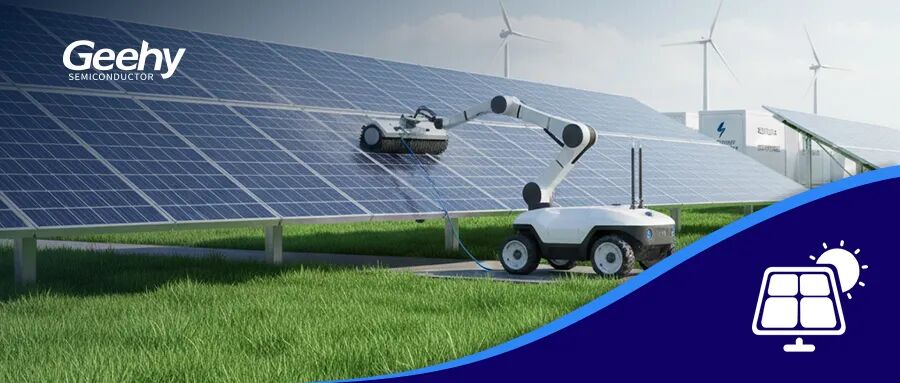
The Photovoltaic Cleaning Robot Industry is Experiencing Explosive Growth
Driven by the “dual carbon” goals and the continuous growth of photovoltaic installed capacity, the photovoltaic cleaning robot market is entering a golden development period. According to research institutions, the global photovoltaic robot market size is expected to be around $1.5 to $2 billion in 2023, and it is projected to exceed $5 billion by 2030, with a compound annual growth rate of 18% to 22%.
Core Architecture of Photovoltaic Cleaning Robots
-
Walking Structure: Acting as the “legs”, it autonomously moves and positions itself between photovoltaic arrays through precise wheeled or tracked designs.
-
Cleaning System: Acting as the “hands”, it integrates high-speed roller brushes, water spraying, scraping, and vacuuming devices to efficiently remove stains from the panels.
-
Sensing System: Acting as the “eyes”, it uses sensors to identify panel boundaries in real-time, avoid obstacles, and detect the degree of staining.
-
Control System: Acting as the “brain”, it is responsible for path planning and coordinating the operation of various modules, serving as the core of the machine’s performance.
-
Power Management: Acting as the “heart”, it manages battery power supply and intelligent charging and discharging, ensuring long-lasting endurance and autonomous recharging.
The performance level of the control system directly determines the intelligence level and operational reliability of the photovoltaic cleaning robot, with the chip serving as the core of the control system, playing a crucial role.
Jihai’s Triple Chip Combination Creates a “Strong Heart” for Photovoltaic Robots
Jihai closely follows industry development needs and can provide a “control + motor + drive” chip combination solution, injecting efficient and stable “core” power into photovoltaic cleaning robots.
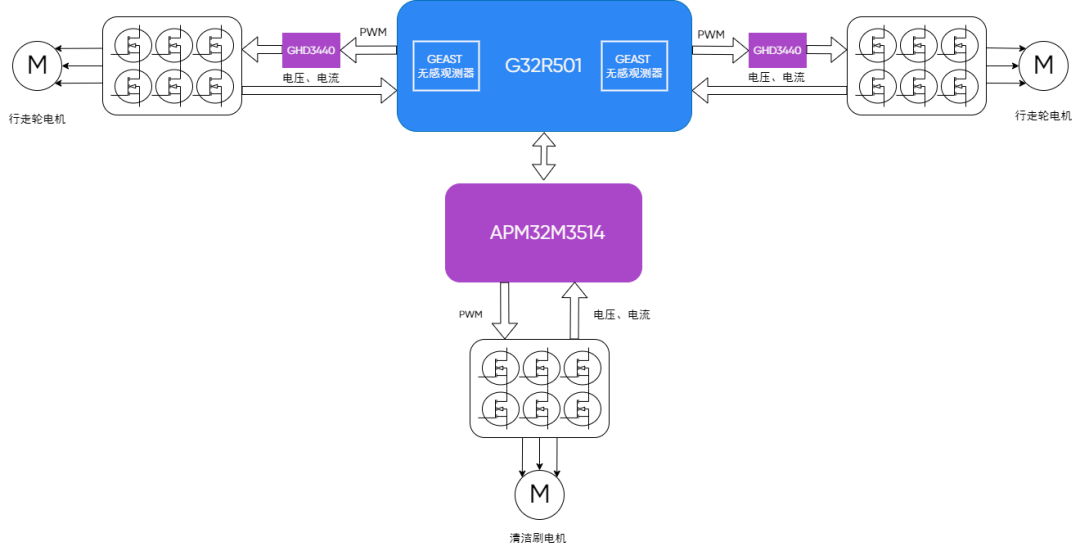
Photovoltaic Cleaning Robot Solution Block Diagram
G32R501 Real-Time Control MCU
Smart Brain, Empowered by Edge AI
As the main control brain of the photovoltaic cleaning robot, the G32R501 is responsible for driving the wheels to perform complex actions such as moving straight, turning, and overcoming obstacles, while processing sensing data in real-time to dynamically adjust cleaning strategies. It is equipped with a Cortex-M52 efficient dual-core processor, with a clock speed of up to 250MHz, providing powerful real-time response and computing capabilities to easily handle complex path planning and multitasking challenges.
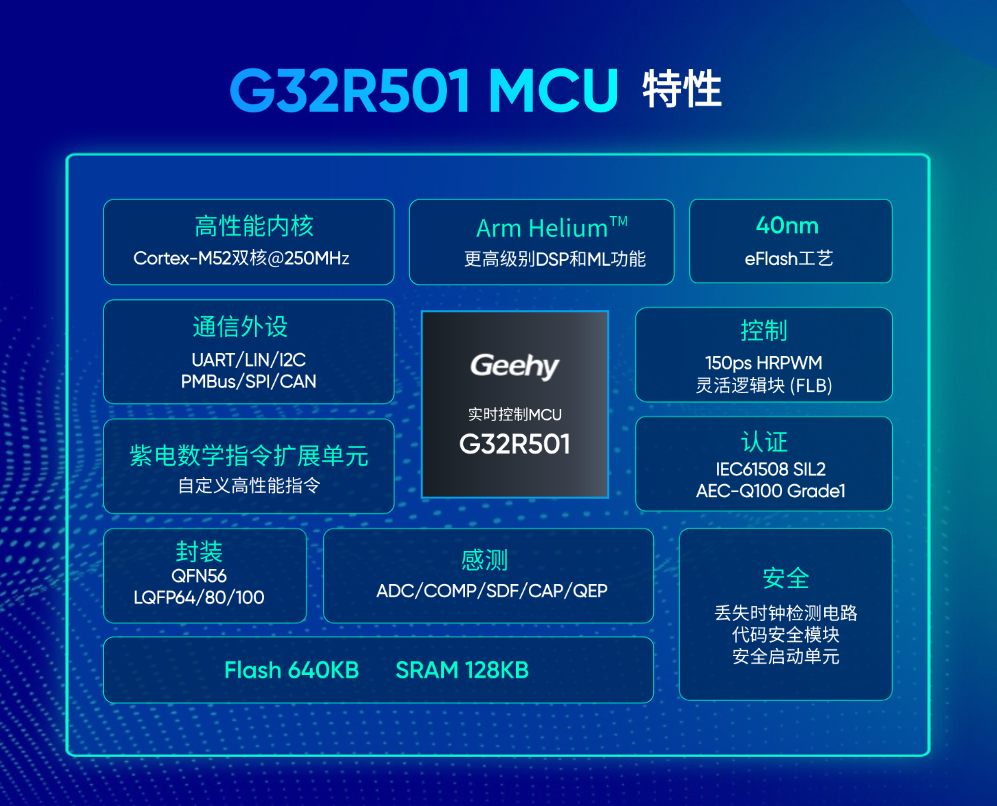
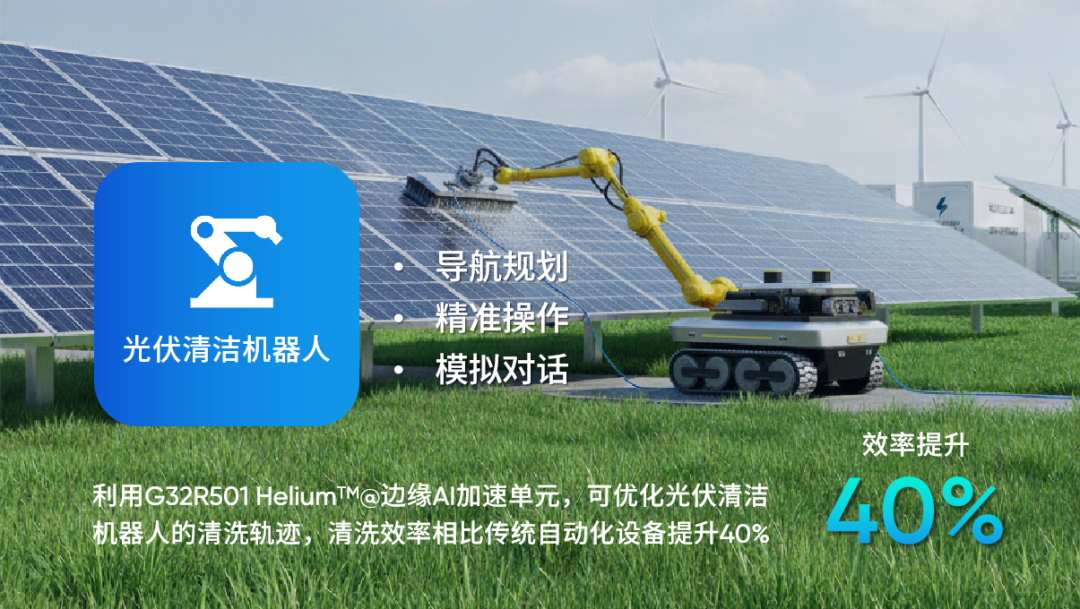
In dual-wheel drive control, the G32R501 can achieve precise torque and speed control of the motor through the FOC algorithm, ensuring smooth and stable machine movement. Additionally, combined with the built-in GEAST sensorless observer, it can accurately obtain rotor information without the need for additional position sensors, simplifying system design, reducing costs, and enhancing reliability. Furthermore, the chip integrates a HeliumTM@ edge AI acceleration unit and Jihai’s self-developed Zidian mathematical instruction extension unit, which can efficiently optimize cleaning trajectories, improving cleaning efficiency by 40% compared to traditional automation equipment.
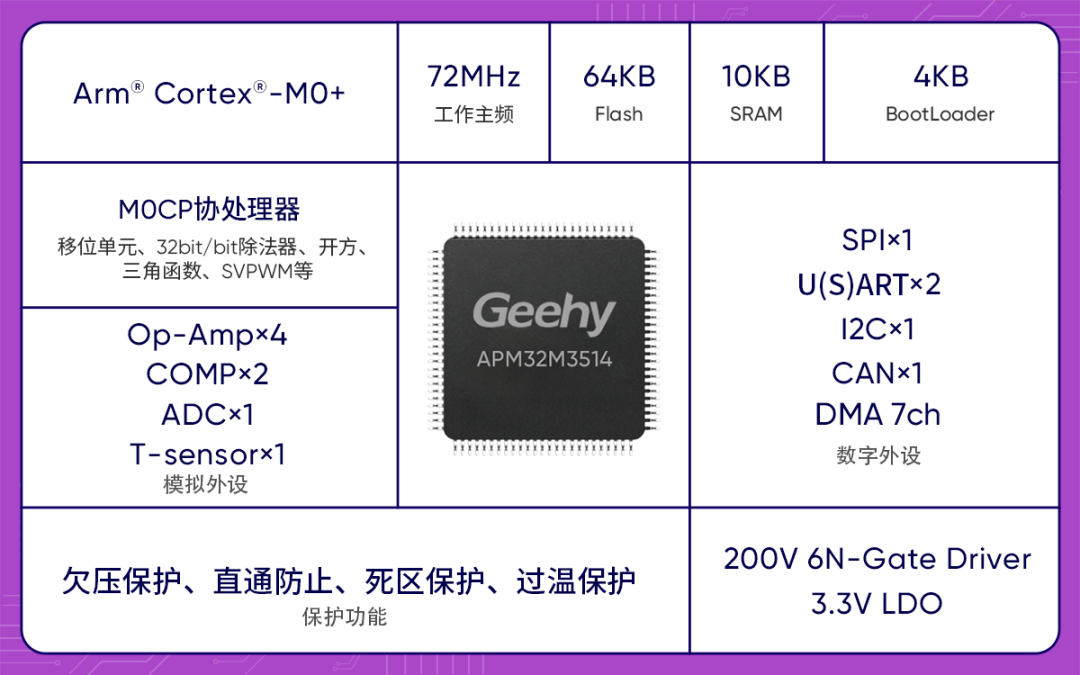
APM32M3514 Motor Control SoC
Power Core, Precise Execution
The APM32M3514 is primarily responsible for controlling the cleaning roller brush motor, equipped with a Cortex-M0+ core, with a clock speed of 72MHz, and integrates an M0CP hardware acceleration coprocessor. Through Jihai’s self-developed ecological algorithm platform, it can achieve precise adjustment of roller brush speed and torque, ensuring powerful stain removal while avoiding damage to the photovoltaic panel coating due to improper speeds.
It integrates a 3.3V high-performance LDO, rich analog peripheral resources, and hardware protection mechanisms such as overcurrent and overtemperature, significantly enhancing system response speed and operational safety, providing reliable support for the motor drive of photovoltaic cleaning robots.
GHD3440 Motor Gate Driver
Muscle Power, Strong Output
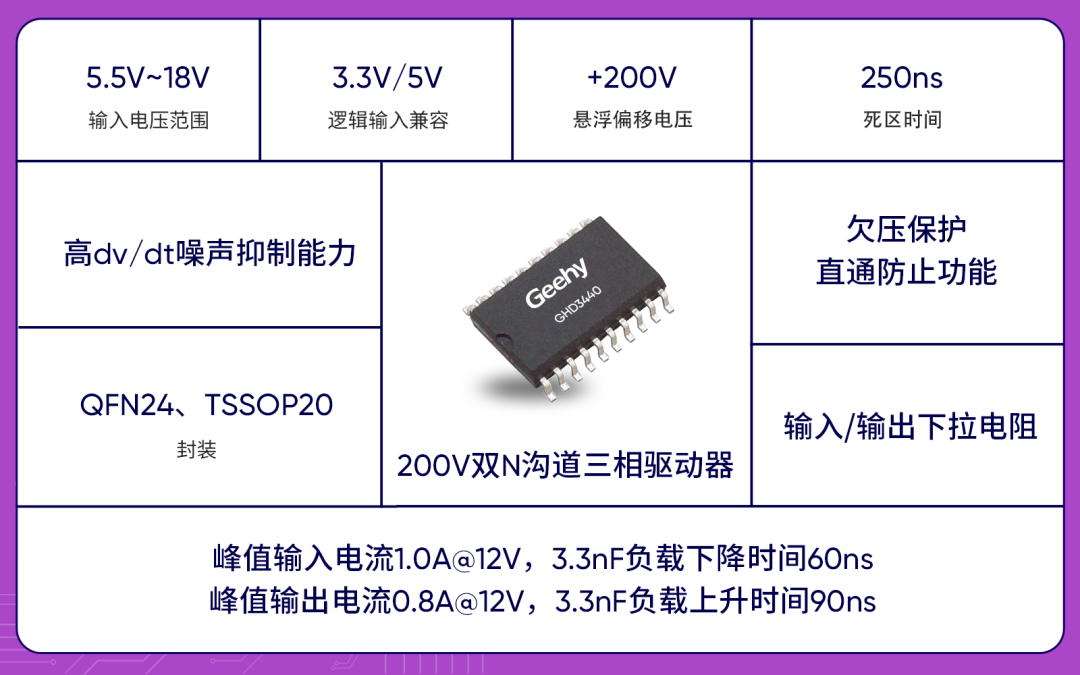
The GHD3440 is a 200V dual N-channel three-phase driver, primarily used to drive the walking motor and cleaning roller brush motor’s power MOSFETs, converting MCU/SoC signals into strong currents to enhance the power output efficiency and motion stability of the equipment.
The GHD3440 adopts a dual-channel design, supporting 3.3V/5V logic input compatibility, with strong driving capability, supporting high voltage and high current applications; it features a built-in 250ns dead time, supporting undervoltage protection and direct-through prevention, effectively ensuring the long-term reliable operation of the photovoltaic cleaning robot’s motors.
From vast desert power stations to distributed commercial and industrial rooftops, photovoltaic cleaning robots are becoming an important force in safeguarding green energy. Jihai provides a high-performance, highly integrated, and reliable chip comprehensive solution for photovoltaic cleaning robot applications with the combination of “G32R501 + APM32M3514 + GHD3440”, helping photovoltaic operation and maintenance move towards intelligence, efficiency, and energy conservation.
In the future, Jihai will continue to deepen the application of technology in the energy field, using innovative chips and solutions to assist in the global transition to clean energy and contribute solidly to sustainable development.