PCB (Printed Circuit Board) is the core component used in electronic devices to support and connect electronic components.
It achieves electrical connections between components such as resistors, capacitors, and integrated circuits by etching conductive copper foil on an insulating substrate to form circuit paths.
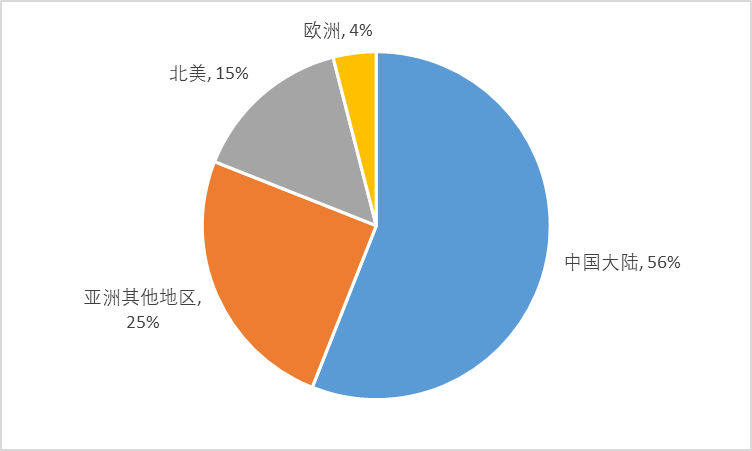
PCB Market Distribution
The global PCB market is dominated by Asia, with mainland China being the largest production base, expected to reach a production value of $41.213 billion in 2024, accounting for 56% of the global total value of $73.565 billion.
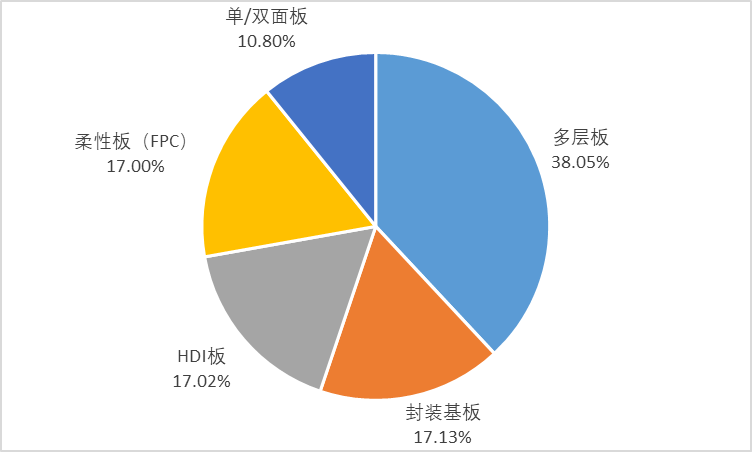
PCB Classification and Proportions
Single-sided Board: Conductive copper foil is laid out on one side of the substrate, suitable for simple circuits such as power switches and LED lighting in low-cost electronic devices.
Double-sided Board: Copper is covered on both sides and can interconnect layers through vias, suitable for moderately complex circuits such as consumer electronics control boards and instruments.
Flexible Board (FPC): Made from flexible substrates like polyimide (PI) or polyester (PET), it can be bent and folded, suitable for space-constrained or dynamic connection scenarios such as mobile phone camera modules, wearable devices, and automotive wiring harnesses.
HDI Board: Mainly used in high-frequency and high-density scenarios such as smartphones and AI servers..
Packaging Substrate: The core carrier for chip packaging..
Multilayer Board: Composed of three or more alternating conductive layers and insulating dielectric layers, interconnected through blind holes, buried holes, or through holes, widely used in high-performance fields such as computer motherboards, communication devices, and servers. Common layer counts range from 4 to 28 layers, with high-end products exceeding 50 layers.
Related CompaniesMarket Positioning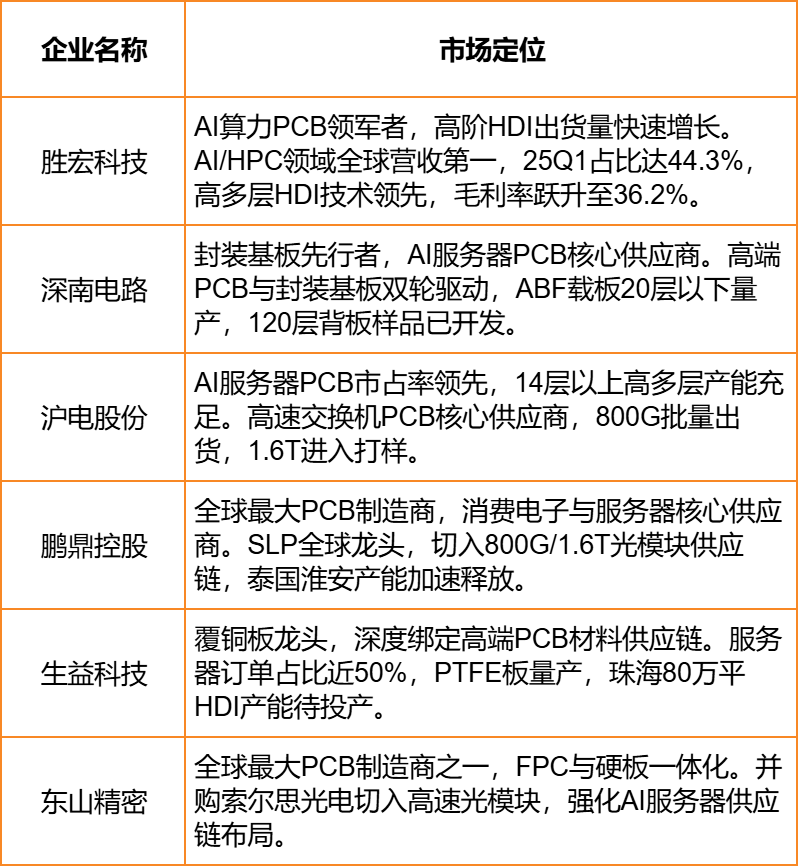 Risk Warning:The above content is for reference only and does not constitute investment advice.