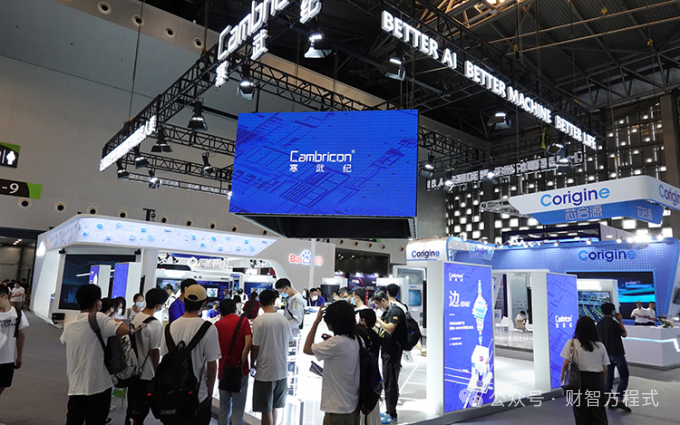
Stock Price Myth: The Peak Moment of 1464.98 Yuan
On August 27, 2025, at 14:37, a historic scene unfolded in the A-share market. According to Tonghuashun real-time quotes, Cambricon (688256) stock price broke through 1464.98 yuan, with a market value reaching 615 billion yuan, briefly surpassing Kweichow Moutai to claim the title of “king of stocks.” Behind the red numbers flashing on trading software was the frenzy of 307,000 buy orders sealing the price limit, along with alerts from 91 brokerage firms across the market announcing the “milestone of domestic substitution” news.
This capital frenzy began with a sudden surge at 10:09 AM—after ByteDance announced an additional 1 billion yuan procurement order, the stock price skyrocketed from 1280 yuan, triggering two trading halts within 15 minutes. A private equity manager in Beijing lamented in a social media post: “When AI chip stocks are more expensive than liquor, are we investing in computing power or a bubble?” This question became particularly sharp three trading days later when the stock price peaked and then fell back to 587.7 billion yuan, leaving behind a long upper shadow in the candlestick pattern.
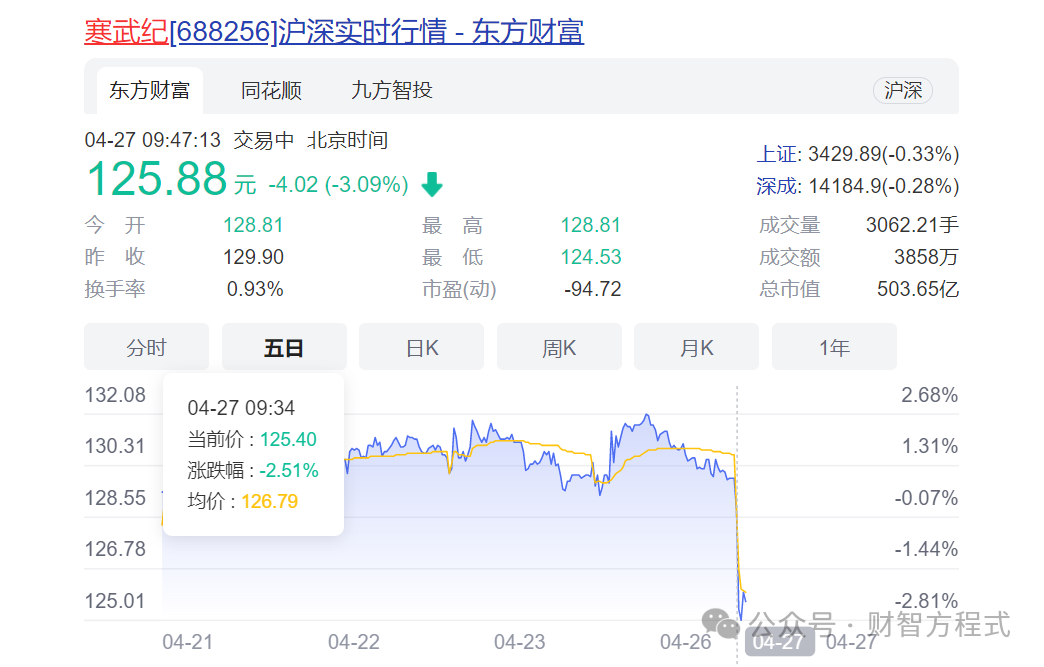
Cambricon’s stock price trend chart for 2025
Origin of Entrepreneurship: From the Institute of Computing Technology to a Star on the Sci-Tech Innovation Board
In March 2016, a remarkable company emerged from the laboratory of the Institute of Computing Technology, Chinese Academy of Sciences. Founded by the “genius brothers” Chen Yunji and Chen Tianshi, Cambricon is named after the “Cambrian Explosion,” aiming to usher in a new era of artificial intelligence computing. This team, originating from a 10-person academic group, had already published the foundational papers for deep learning processors, known as the “DianNao” series, as early as 2014.

Cambricon’s headquarters office environment in 2016
Within just one year of its establishment, Cambricon experienced a critical turning point—the first commercial processor IP Cambricon-1A was successfully integrated into Huawei’s Kirin 970 chip, bringing the concept of “AI smartphones” to the consumer market for the first time. In July 2020, this company, which had been established for only four years, went public on the Sci-Tech Innovation Board as the “first AI chip stock,” with its market value exceeding 100 billion yuan on the first day, creating the “Cambricon speed” in the capital market.
However, controversies soon followed: at that time, the company had accumulated losses exceeding 1.6 billion yuan, yet enjoyed a market premium with a price-to-earnings ratio of 3000 times. This capital feast reflects the common dilemma in the AI chip industry—high R&D investment versus the long game of commercialization, which has since become the main theme of Cambricon’s growth.
Technical Breakthrough: From the Siyuan Series to the Benchmark of Domestic Computing Power
After Huawei terminated its cooperation in 2019, Cambricon faced a dire situation of technical isolation. This laboratory-born company chose to drive innovation through “architectural innovation + Chiplet technology,” writing a breakthrough story for domestic computing power with the Siyuan series chips.
The Siyuan 590 became a turning point—this 7nm process chip achieved inference performance at INT8 precision reaching 80%-90% of NVIDIA’s A100, while its price was only 27% of that. In ByteDance’s Douyin recommendation system, the Siyuan 590 reduced content distribution latency from 200ms to 80ms, supporting 420,000 recommendation requests per second, which improved user retention time by 19%. Through the Chiplet technology of “building blocks,” the computing modules were split into independent chiplets, allowing the Siyuan 370 to achieve 256 TOPS of computing power while reducing costs by 40%.
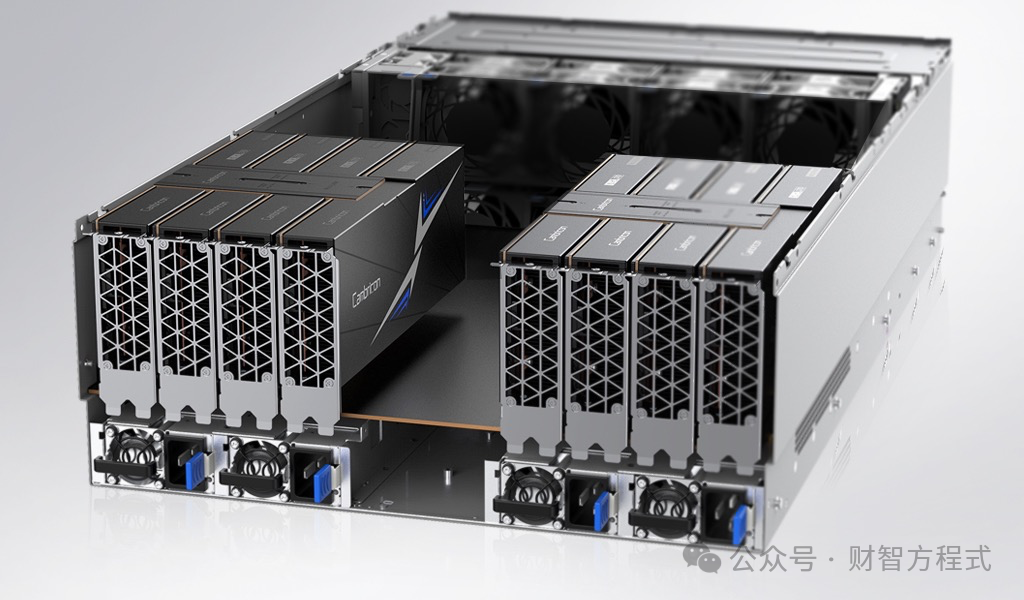
Deployment scenario of Cambricon data center chips
The cost of technological breakthroughs is enormous R&D investment: in 2024, R&D expenses reached 1.216 billion yuan, accounting for a staggering 91.3% of revenue. This “blood transfusion-style innovation” has resulted in a total of 760 patents, but has also left the company with negative net profits for seven consecutive years. As the Siyuan series formed full-scenario coverage from cloud to edge, Cambricon was walking a tightrope between technological breakthroughs and commercial survival.
Commercial Explosion: The Billion Market Value Rush Under Policy Tailwinds
In the first half of 2025, Cambricon delivered an “explosive” performance report: revenue reached 2.881 billion yuan, a year-on-year increase of 4347.82%, and net profit surged from a loss of 530 million yuan to a profit of 1.038 billion yuan. This explosion stemmed from a triple resonance of logic: domestic substitution driven by U.S. sanctions (with an expected 40% market share for domestic AI chips in 2025), concentrated procurement contributing 79.15% of revenue from a single client, and the implementation of government computing power projects driven by the “East Data West Calculation” strategy.
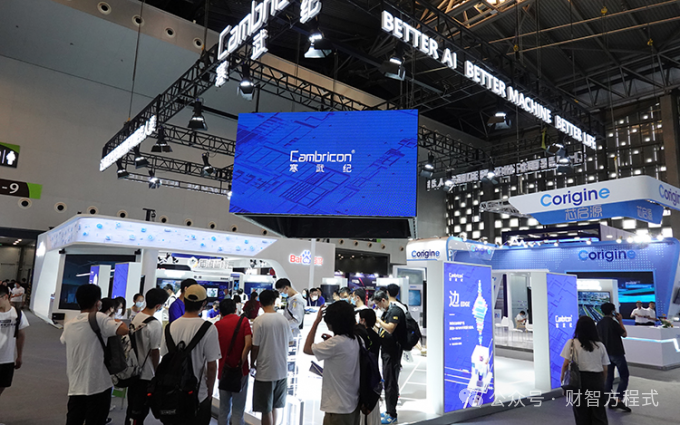
Institutional opinions are sharply divided: Goldman Sachs raised its target price to 1835 yuan, believing that if shipment volume increases by 89% annually, the market value could reach 800 billion yuan; however, skepticism from the market has never ceased—4300 times price-to-earnings ratio requires annual shipment growth of 89% to support it, with significant customer concentration risk. This divergence is vividly reflected in stock price fluctuations, as the market value surged to 615 billion yuan on August 27, only to fall back to 587.7 billion yuan within three trading days.
Future Challenges: Ecological Shortcomings and the Ceiling of Domestic Substitution
While the market is crazy about the story of “China’s NVIDIA,” Cambricon is facing survival tests from “internal and external pressures.” Externally, Huawei Ascend builds a full-stack ecological barrier with a 28% market share; internally, a cash reserve of 638 million yuan is insufficient to cover a net operating cash flow deficit of -1.399 billion yuan. The most critical gap lies in ecology—NVIDIA’s CUDA platform is like a highway, while Cambricon’s NeuWare resembles a rural road: the number of developers is less than 1% of its competitor, and migrating applications requires reconstructing 70% of the code.
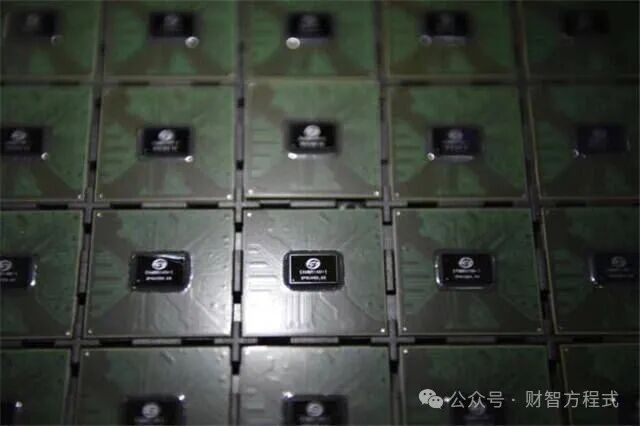
Concrete comparison of ecological gaps:
- NVIDIA: The CUDA ecosystem supports millions of optimized libraries, with over a million developers
- Cambricon: The richness of NeuWare operators is only 60% of CUDA, with limited toolchain compatibility
- Result: The unit price of Siyuan 590 is 20% higher, but its computing power is only 30% of NVIDIA’s H100.
Founder Chen Tianshi admitted at the 2025 performance meeting: “Self-sufficient computing power requires the efforts of three generations.” This heavy statement reveals the harsh reality of China’s chip industry breakthrough. As we witness the capital miracle of Cambricon with a 5117 times price-to-earnings ratio, we must also reflect: in the long race of global chip industry competition, a 43 times revenue growth is just the starting point, not the end.
→Do you think Cambricon can break through the ecological bottleneck within three years? Is the real opportunity for domestic AI chips in technology or policy? Feel free to share your views in the comments section.