Profile of an Exemplary Figure
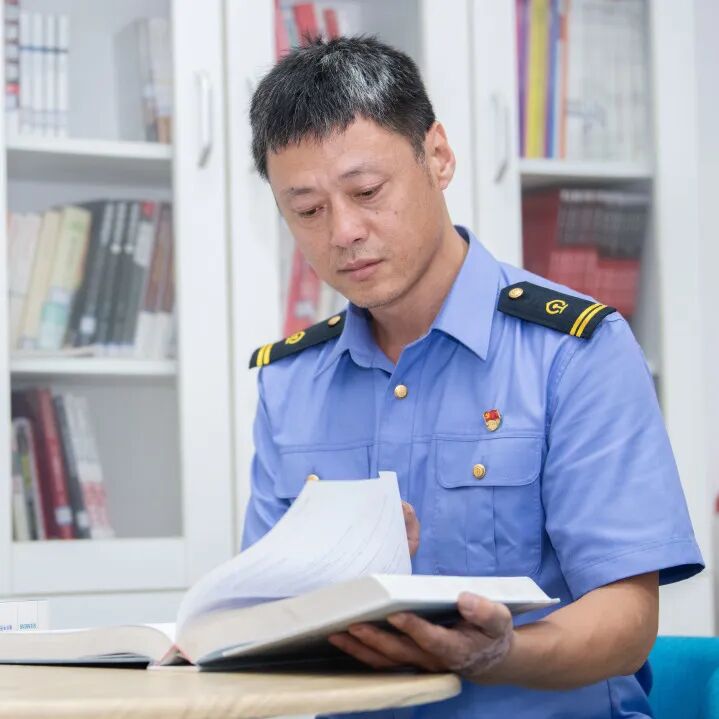
Wang Yong, a member of the Communist Party of China, is the Deputy Director of the Beijing West Maintenance Workshop of the Beijing Railway Bureau Group Co., Ltd. and the leader of the “Wang Yong Innovation Studio.” He has received numerous honors, including the Beijing Labor Model, the Capital Labor Medal, and the title of Outstanding Communist Party Member across the railway network.
A CR400AF high-speed train, capable of speeds up to 350 km/h, consists of over 40,000 components, involving various technical fields such as mechanics, metallurgy, materials, and power electronics. Each component must undergo extremely rigorous precision maintenance before being put into operation, and the safe operation of each train relies on the dedicated efforts of professional maintenance personnel.
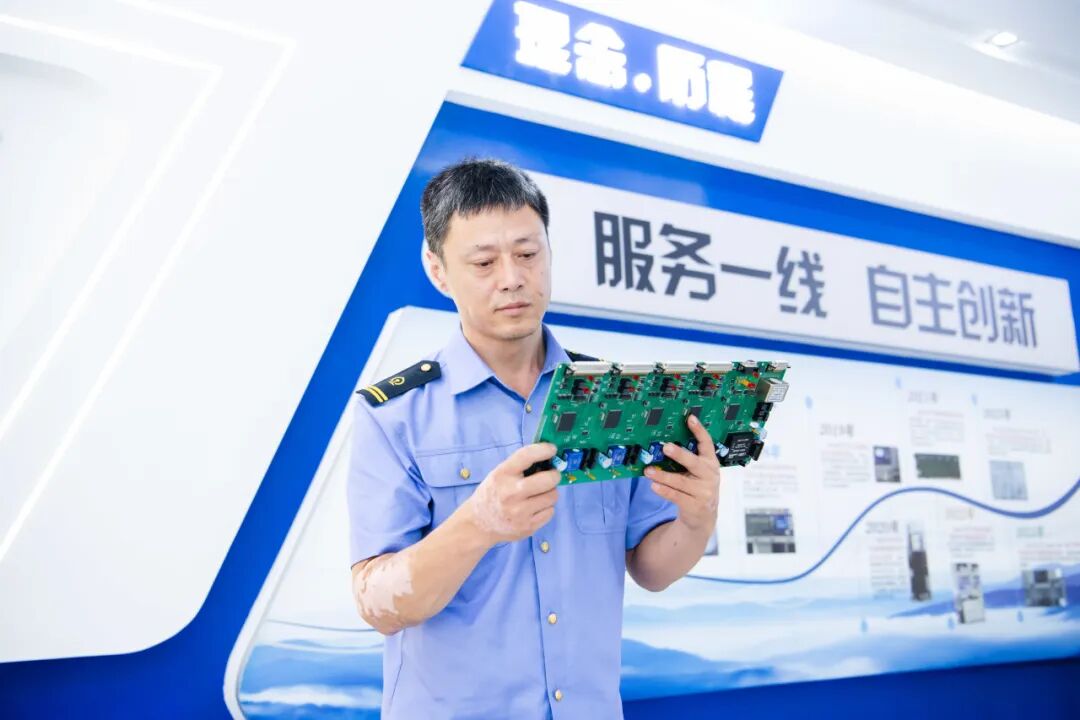
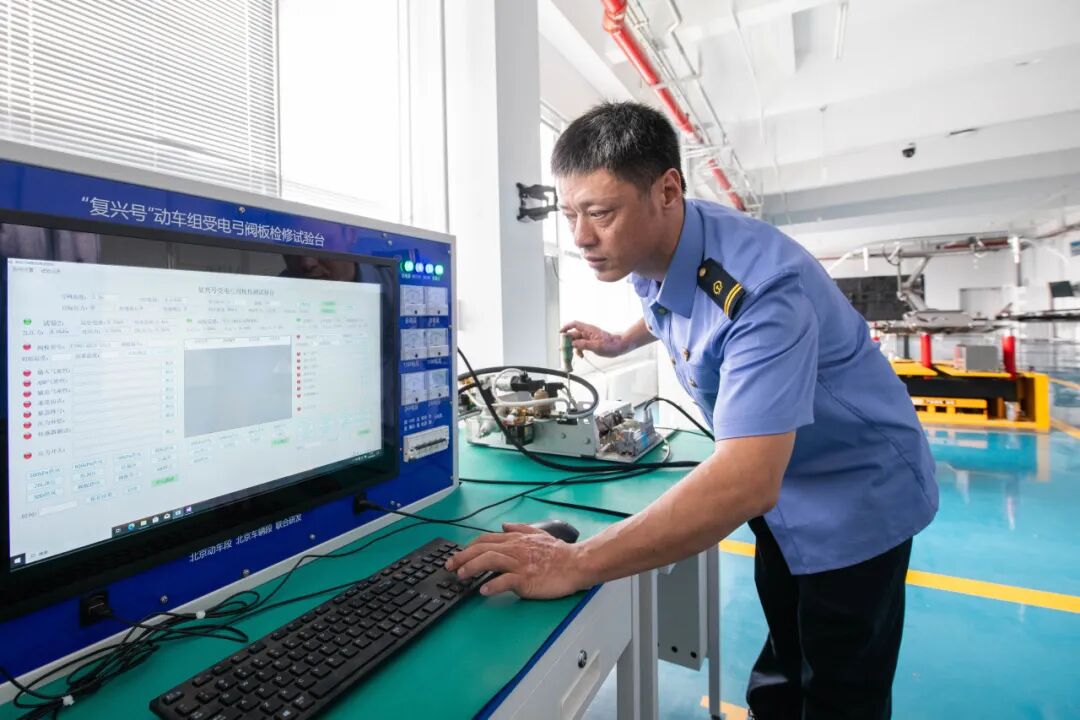
“Using this test bench to perform a ‘CT scan’ on the pantograph valve plate allows for precise detection of the operational status of the precision components on the internal circuit board,” said Wang Yong, Deputy Director of the Beijing West Maintenance Workshop and leader of the “Wang Yong Innovation Studio.” He led his team to collaborate with experts from within and outside the railway system to develop the “CR400AF pantograph valve plate maintenance test bench,” achieving the first independent maintenance of the entire process, workflow, and elements of the CR400AF high-speed train pantograph.
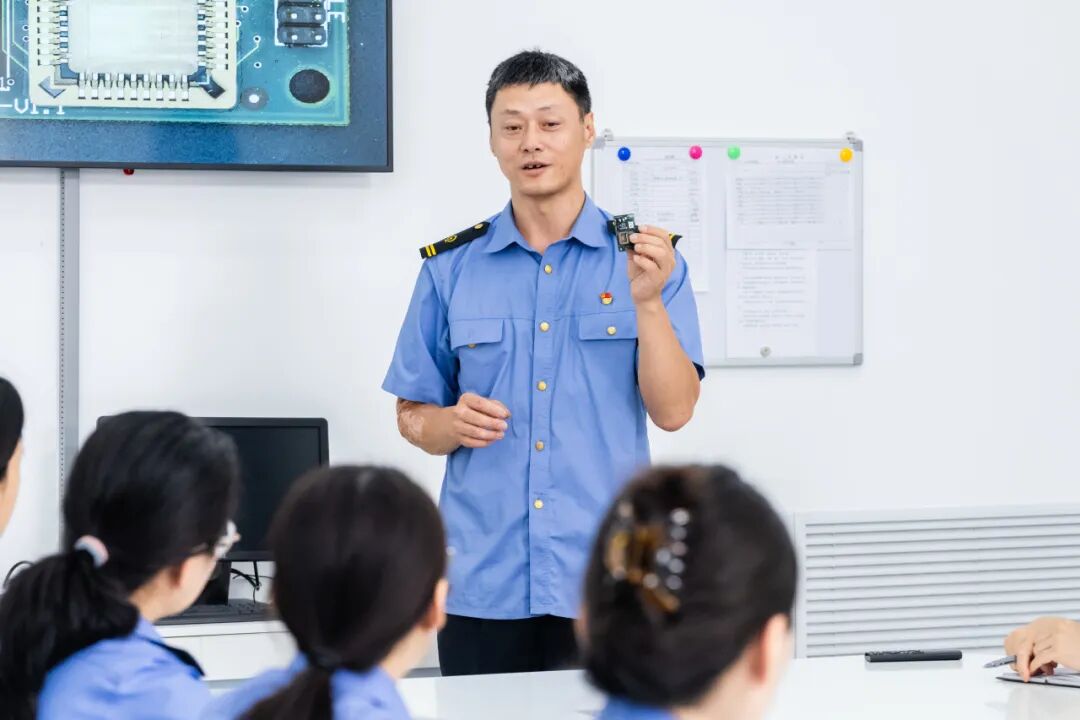
Born in 1976, Wang Yong has grown from a vehicle fitter with a secondary vocational education to a well-known expert in the railway system. He has led his team to break through technical barriers multiple times, presiding over more than 200 scientific research projects, saving the company over 80 million yuan in costs. Additionally, he has achieved cross-domain innovations in the fields of CR400AF train maintenance, locomotive maintenance, and intelligent analysis of rail flaw detection.
Self-Taught: Curious, Resilient, and Mastering Digital Circuit Boards
In 1993, at the age of 17, Wang Yong embarked on his educational journey at the Fengsha Railway Maintenance Station, just 2 kilometers from his home.
This rural boy, who grew up by the railway, was admitted to Taiyuan Railway Mechanical School. “My father was a well-known carpenter in the area, and he hoped I would succeed when I grew up!” Wang Yong was influenced by his father’s meticulous spirit from a young age.
In 1997, Wang Yong graduated and became a vehicle fitter at the Beijing Maintenance Depot. Upon starting his job, he felt a significant gap, as he had to disassemble passenger car bogies using a 25-kilogram wrench every day. “I wanted to make it easier for everyone to work,” Wang Yong recalled.
Curious and research-oriented, Wang Yong created a lightweight new tool from 8mm steel plates to replace the heavy wrench, saving effort and time, which impressed the veteran workers around him. “I felt that what I did was particularly valuable.” When recalling his first innovation, Wang Yong’s eyes sparkled with pride.
In that era, few questioned work methods, and even fewer were adept at applying new tools, but Wang Yong succeeded.
In 2006, when the Qinghai-Tibet Railway opened, trains began to run on the “Roof of the World,” and new passenger cars were put into service. The Beijing Maintenance Depot selected a group of young employees with strong comprehensive abilities for electrical maintenance work on passenger cars, and Wang Yong was among them.
At that time, some core components of electrical equipment on trains were imported, and if the electronic display screen broke, it would take three months to replace it. “We can’t wait; we need to find a way to fix it quickly.” Whenever faced with difficulties, Wang Yong would think of every possible solution.
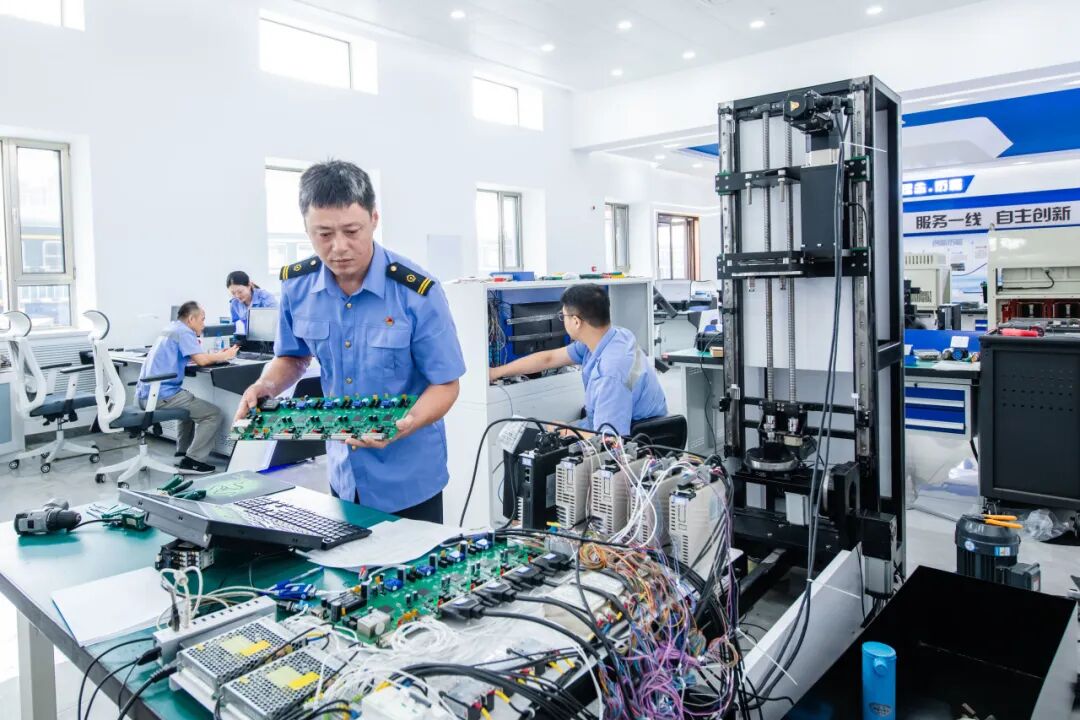
He visited shops in Zhongguancun repeatedly, learning through conversations and thoroughly studying circuit boards, mastering digital circuit technology, and ultimately repairing the display screen, laying the foundation for his innovative path.
As challenges continued to arise, the resilient Wang Yong tackled them one by one.
The gateway is a key device for information interconnection on trains, and foreign manufacturers have set up multiple technical barriers. Repairing a gateway worth 7,600 yuan costs 3,000 yuan each time.
The core circuit board of the gateway has a neuron chip the size of a fingernail, integrating 3 CPUs and 64 pins, with a soldering precision of less than 0.02 millimeters, equivalent to one-third the diameter of a human hair. “If I can master the technology to replace the chip, I can save a huge amount of money,” Wang Yong resolved.
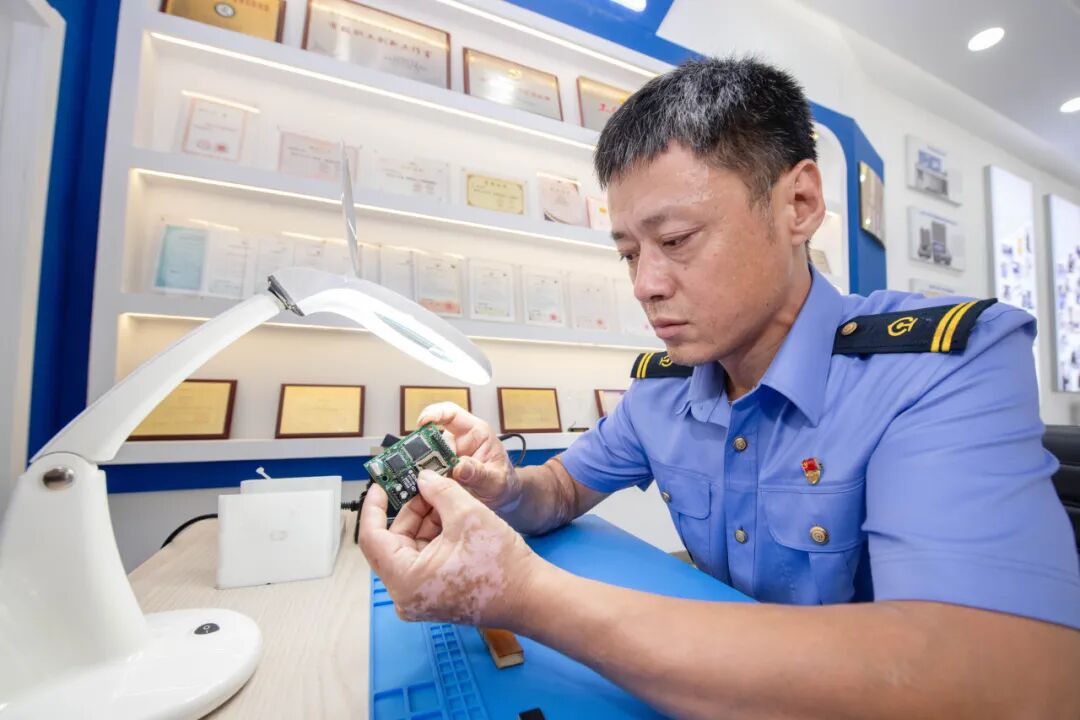
It is easy in theory but difficult in practice. Wang Yong experimented repeatedly on the test bench, and within just three months, he developed a manual chip replacement technique, resulting in over 500,000 yuan worth of digital circuit boards being “reborn” that month.
“In tackling technical challenges, I received guidance and help from several well-known experts, and I learned the significance of innovation from them,” Wang Yong expressed with gratitude.
Two Fortuitous Encounters: Aligning with ‘National Craftsmen’ and ‘Role Models of the Era’ to Achieve Extraordinary Results in Ordinary Positions
In 2015, when Wang Yong was stumped by the challenge of manually replacing the neuron chip in the gateway, he happened to see a documentary titled “National Craftsmen” on television. Gu Qiuliang, the chief assembly fitter of the “Jiaolong” manned submersible, achieved precision of 0.02 millimeters for the national treasure.
Gu Qiuliang’s “two strands” (1 strand equals 0.01 millimeters) fitting technique gave Wang Yong hope for reviving the faulty gateway. After several twists and turns, he contacted Gu Qiuliang, explained his background, and described his problem. The “National Craftsman” was moved by Wang Yong’s persistence and generously shared his “two strands” skills.
“Without the right tools, you can’t handle delicate work! The ‘two strands’ technique requires a good feel and strengthens the coordination of hand, eye, and brain,” Wang Yong practiced countless times with heavy pliers and files, transforming fitting techniques into the manual chip replacement technique for repairing digital circuit boards, making the manual replacement of the gateway neuron chip a reality.
Like Gu Qiuliang taught him, Wang Yong passed on the “two strands” technique to everyone in his studio. Currently, the team’s technology has upgraded from replacing 64-pin chips to 176-pin chips, enabling them to repair high-value circuit boards for high-speed trains.
“I learned the spirit of focus and pursuit of excellence from Gu Qiuliang, while the patriotism of Shan Xinghua serves as a beacon, guiding my research work,” Wang Yong reflected meaningfully.
Wang Yong’s encounter with “Role Model of the Era” and Chief Researcher of the China Academy of Railway Sciences, Shan Xinghua, occurred at the 2023 Second National Craftsmen Innovation Exchange Conference. At the exhibition of the “CR200J Communication/Multiple Unit Body Wiring Testing Device” developed by Wang Yong’s team, many experts came to learn about the maintenance technology of the CR400AF “Green Giant.”
“With this device, we now only need 2 people and 20 minutes to complete the testing of 216 full-length wiring connections, improving work efficiency by nearly 40 times,” Wang Yong introduced to the audience.
“Seeing you in uniform is very familiar; I am also a railway person!” Shan Xinghua said while touring Wang Yong’s project. Wang Yong was particularly excited to meet the head of the 12306 system. During their conversation, Shan Xinghua advised Wang Yong to use more domestic technology and equipment for research and development.
“Shan Xinghua’s ideas are very forward-looking and strategic,” Wang Yong expressed with deep respect.
Currently, the “Wang Yong Innovation Studio” is testing and certifying the maintenance test bench for passenger car fire alarm systems, with all core equipment and software being domestically produced. Once this project is promoted and applied, it will solve the problem of relying on external manufacturers for the maintenance and calibration of existing passenger car fire alarm systems.
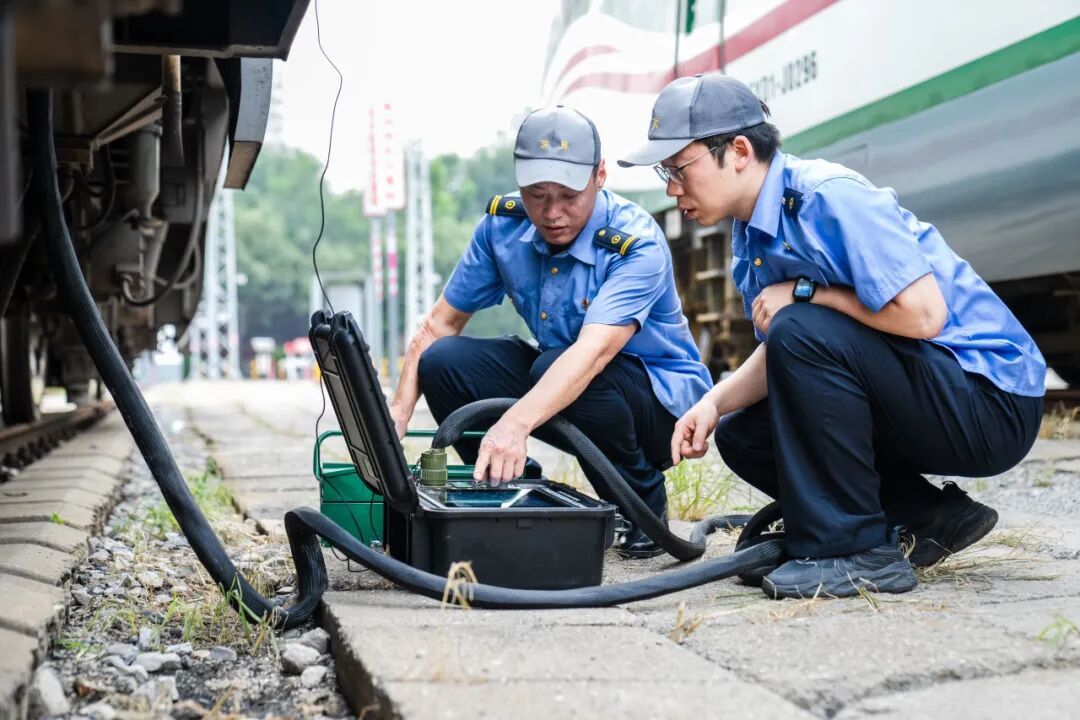
“We must keep core technologies in the hands of the Chinese people.” In recent years, as the only railway system worker craftsman at the Capital Craftsman Academy, Wang Yong has frequently visited various universities and enterprises to share and spread the spirit of model workers, labor, and craftsmanship.
Passing the Torch: From One Person to a Team, Together Shouldering the Mission of Innovation
Entering the “Wang Yong Innovation Studio” located at the Beijing West Maintenance Depot, the eight characters “Serving the Frontline, Independent Innovation” catch the eye. From less than 8 square meters to 48 square meters, and now to 350 square meters, the studio has over 10 different functional self-developed test benches, 1 CNC machine, and 10 employees, creating approximately 10 million yuan in benefits for the depot each year.
In 2013, in an 8-square-meter workspace, Wang Yong was focused on solving a problem that had stumped German experts for years: the electronic anti-skid device of the passenger car braking system would freeze every winter after entering China, causing train failures.
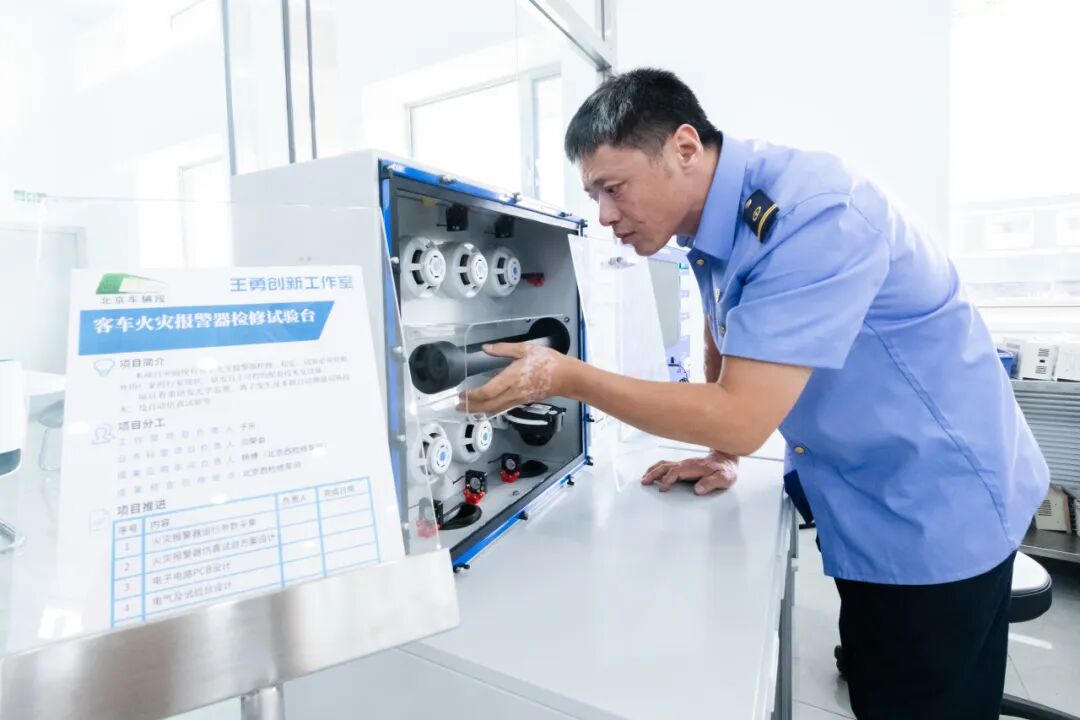
“I repeatedly flipped through books and searched for materials, discovering the principle of ‘pressure dew point,’ and combined it with my professional knowledge to conduct many experiments to crack the problem.” Wang Yong boldly proposed a method of artificially stimulating the electronic anti-skid device to “sneeze,” expelling the internal accumulated water that caused freezing, thus effectively solving the issue.
From testing on one passenger car to applying it to all passenger cars assigned to the Beijing Maintenance Depot, and then to all passenger cars across the national railway, Wang Yong’s technical method was included in the “Railway Passenger Car Operation and Maintenance Regulations.”
In 2015, Wang Yong was invited multiple times to Beijing Jiaotong University to teach over 100 passenger car maintenance technicians from across the railway system about the troubleshooting methods for the electronic anti-skid device of the passenger car braking system. In the same year, the “Wang Yong Innovation Studio” was officially established.
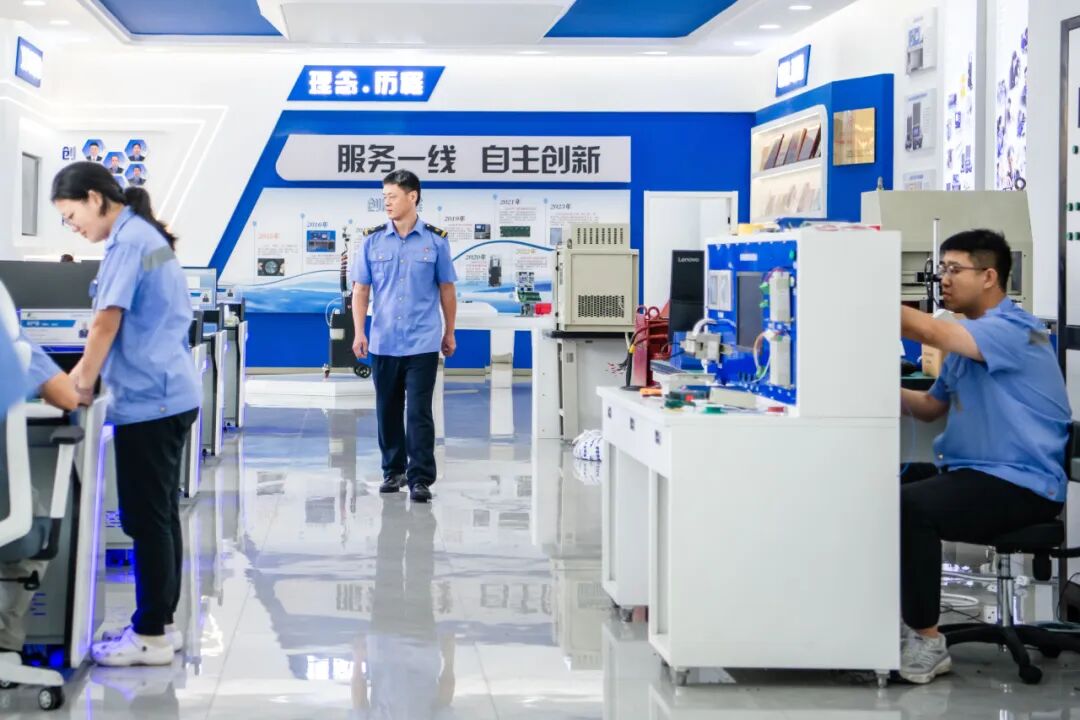
“Our mission is to be guided by on-site needs, continuously innovate, and transform innovative results into applications. Only by cultivating more high-skilled talents can we complete more new project developments.” As the leader of the studio, Wang Yong pays close attention to the technical improvement and career planning of each “comrade.” He teaches hands-on and one-on-one, having trained 46 high-skilled backbones for the company, 7 of whom have mastered the “two strands” manual chip replacement technique.
“Wang Yong is a ‘workaholic.’ At first, everyone didn’t quite understand him, but now they all admire him,” said Zhao Yanqiang, the class leader of the “Wang Yong Innovation Studio.” He was the first to learn the “two strands” manual chip replacement technique from Wang Yong, and under Wang Yong’s influence, he actively engaged in technical reform work, designing and producing 43 small tools that significantly improved maintenance efficiency, achieving 6 national invention patents.
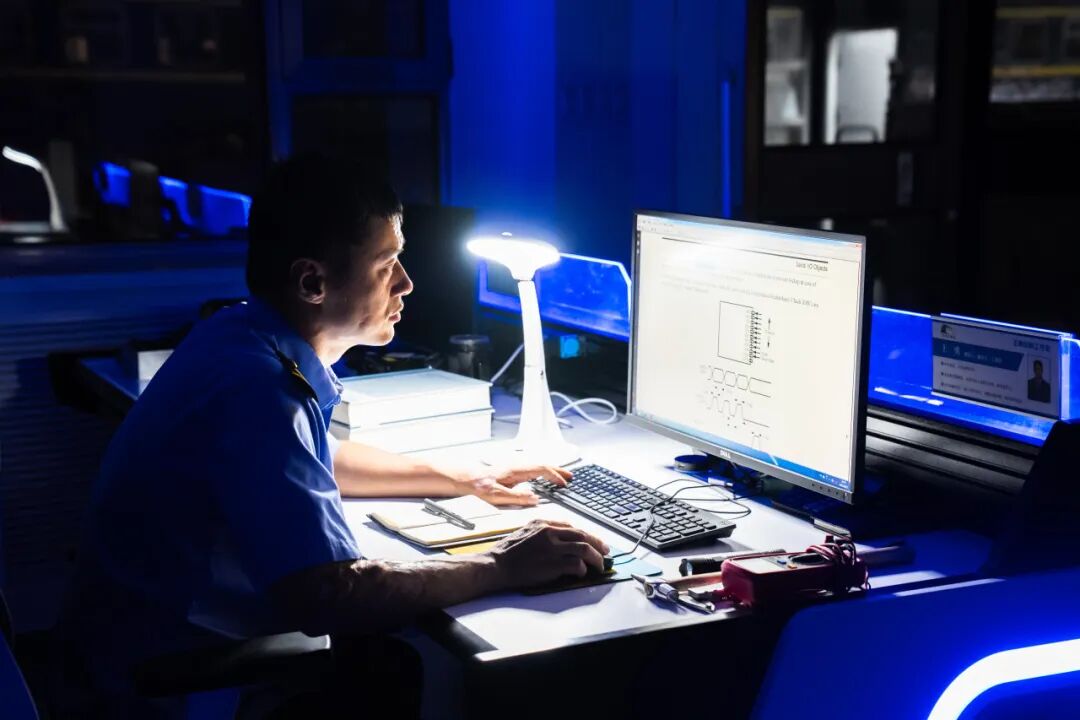
“AI recognition verification for crew inspection images, input/output circuit board debugging, gateway test bench assembly…” The whiteboard next to Wang Yong’s workstation is filled with work plans.
In recent years, Wang Yong has led his team to create multiple “miracles” that have amazed both domestic and foreign technical experts, with well-known companies offering him high salaries. “The achievements are due to the encouragement of the company and the support of colleagues; the results belong to the team, and they are also the company’s and the nation’s,” Wang Yong firmly replied.
To achieve a “two-way rush” between talent and technology, the China Railway Beijing Bureau Group Co., Ltd. has implemented an expert pool system across various fields and systems, with Wang Yong being one of the first experts included in the pool, collaborating with more railway technical backbones to tackle “bottleneck” challenges.
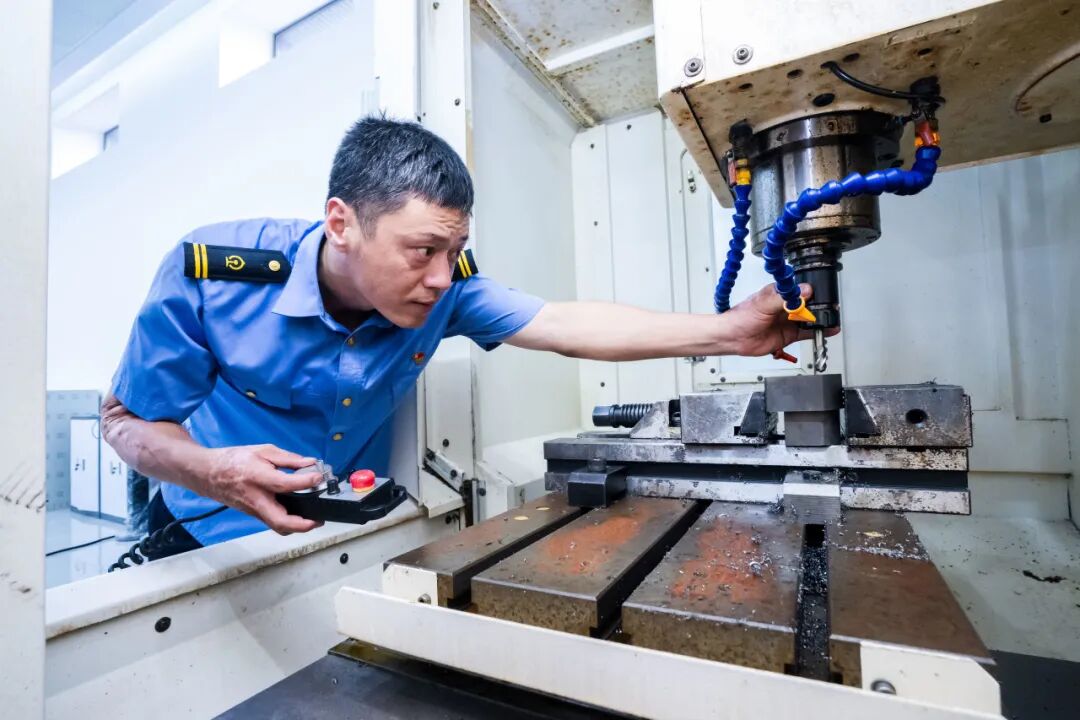
“In the new era, skilled talent has better policies for growth, more sustainable motivation for development, and a broader stage for personal advancement. We will continue to work hard and go further on the path of innovation,” Wang Yong expressed with confidence about the future.
Interview Notes: Twenty-Eight Years of Craftsmanship
Upon first meeting Wang Yong, he was sitting in front of the test bench, carefully inspecting each solder joint of the circuit board chip through a magnifying glass, with a serious expression.
Wang Yong’s office desk and bookshelf are filled with books and materials. It is very fitting to describe him as a “learning worker.” He has translated and studied over 400 original English technical documents, written more than 40,000 words of work notes, drawn over 3,000 diagrams, presided over more than 200 scientific research projects, and authored 12 academic papers… He has turned many “impossibilities” into “possibilities,” and this sense of responsibility and pioneering spirit has illuminated our hearts.
Getting close to Wang Yong, we deeply feel a heart that forever pursues excellence. It is this relentless pursuit over 28 years that has allowed him to dance a brilliant life on circuit boards.
Source: China Railway
Editor: Yao Fang
Proofreader: Geng Qiang
Second Review: Xiong Zeliang
Third Review: Li Xiaotong