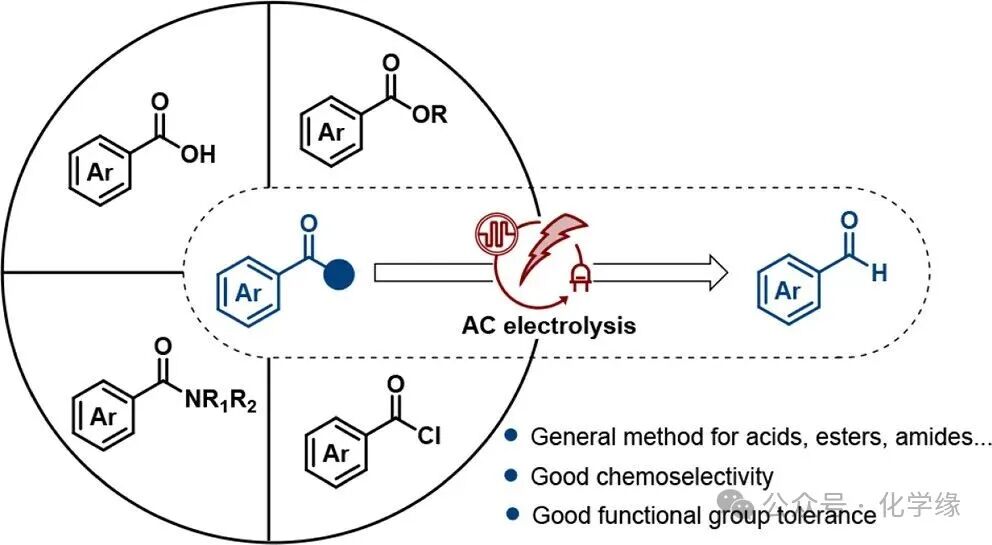
The team of Academician Qi-Lin Zhou from Nankai University reported an electrochemical method that selectively reduces various aromatic carboxylic acids and their derivatives to aldehydes using a silicon-assisted electroreduction strategy combined with alternating current (AC) electrolysis. This approach demonstrates high chemical selectivity, a broad substrate scope, and good functional group compatibility under mild conditions, enabling the efficient synthesis of various aromatic aldehydes.
Abstract
The selective electroreduction of aromatic carboxylic acid derivatives is widely recognized as a significant transformation in organic chemistry. However, achieving both selectivity and generality across a broad range of carboxylic acid derivatives remains challenging. Building on recent advances in selective electroreduction, we report an electrochemical method for the selective reduction of diverse aromatic carboxylic acids and their derivatives to aldehydes via a silicon-assisted electroreduction strategy with alternating current (AC) electrolysis. This protocol exhibits high chemoselectivity, a wide substrate scope, and good functional group compatibility under mild conditions, thus enabling the efficient synthesis of a diverse range of aromatic aldehydes. Mechanistic studies suggest the involvement of a ketyl radical intermediate, highlighting the critical role of silicon moieties in the formation of final aldehyde products.
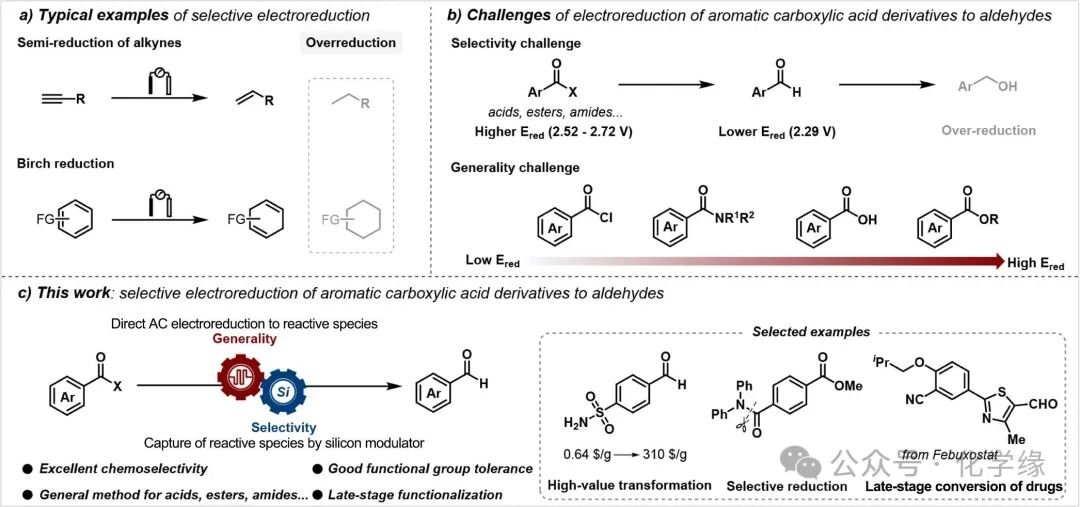
Figure 1 Overview of selective electroreduction, challenges, and innovations of this work
Organic electrochemistry has developed rapidly over the past decade, primarily due to its ability to circumvent the need for stoichiometric oxidants or reductants in traditional reactions. Therefore, it is recognized as a green alternative to traditional reactions while providing opportunities to explore new reaction activities—achieved by generating highly reactive and controllable radical species within electrochemical cells. By precisely controlling the applied current, potential, or other operational parameters to achieve redox potential control, this method can suppress side reactions and prevent excessive reduction of intermediates, thereby enhancing chemical selectivity and reaction efficiency. These inherent advantages have propelled the development of selective electroreduction reactions. For example, highly selective electrochemical semi-hydrogenation reactions of alkynes have been successfully developed under mild conditions. Similarly, electrochemical Birch-type reduction reactions, previously limited to harsh reducing conditions, now exhibit greater functional group tolerance and broader application prospects. These examples highlight how electrochemical methods can complement chemical reduction strategies in terms of selectivity and sustainability.
Advancements in these selective electroreduction techniques provide new pathways for the selective reduction of aromatic carboxylic acid derivatives to aldehydes, but the process also faces the challenge of over-reduction that needs to be addressed. Selective reduction of readily available aromatic carboxylic acid derivatives offers a convenient route for synthesizing structurally diverse aromatic aldehydes. Although traditional methods have achieved good results on specific substrates, they mostly rely on hydride reagents and Lewis acid additives. In terms of electrochemical methods, while there have been early reports on the electrochemical reduction of aromatic carboxylic acid derivatives, their substrate applicability is limited, selectivity is low, and functional group tolerance is poor. Therefore, developing a universal method for the selective reduction of aromatic carboxylic acid derivatives to aldehydes remains significant. However, the challenges faced in this electrochemical reduction process lie in how to achieve both selectivity and universality simultaneously. The key obstacle in the selective reduction of carboxylic acid derivatives is that aldehydes typically have lower reduction potentials than their corresponding carboxylic acid derivatives, making them more prone to over-reduction to alcohols. Furthermore, significant differences in the reactivity of acids, esters, amides, and acyl halides complicate the establishment of a universal electrochemical reduction method applicable to carboxylic acid derivatives.
The authors reported progress in advancing this transformation process through an alternating current (AC) assisted reduction strategy for synthesizing aromatic aldehydes. This system can directly convert carboxylic acid derivatives of varying reactivity into similar high-reactivity intermediates. Traditionally viewed as simple hydrogen carriers, trialkylsilyl groups are repositioned here as efficient traps for capturing these electrochemical reduction intermediates, thus achieving precise selective control. The notable features of this method include: (1) direct electroreduction of carboxylic acid derivatives to generate aldehydes; (2) silicon-assisted reduction process achieving excellent chemical selectivity; (3) a universal AC electrolysis method applicable to various carboxylic acid derivatives; (4) no need for pre-activation or hydride reagents, with broad functional group tolerance; (5) applicable for late-stage modifications of bio-related molecules and drugs, demonstrating practical synthetic potential; (6) employing sophisticated AC electrolysis strategies for synchronous control and utilization of dual electrodes.
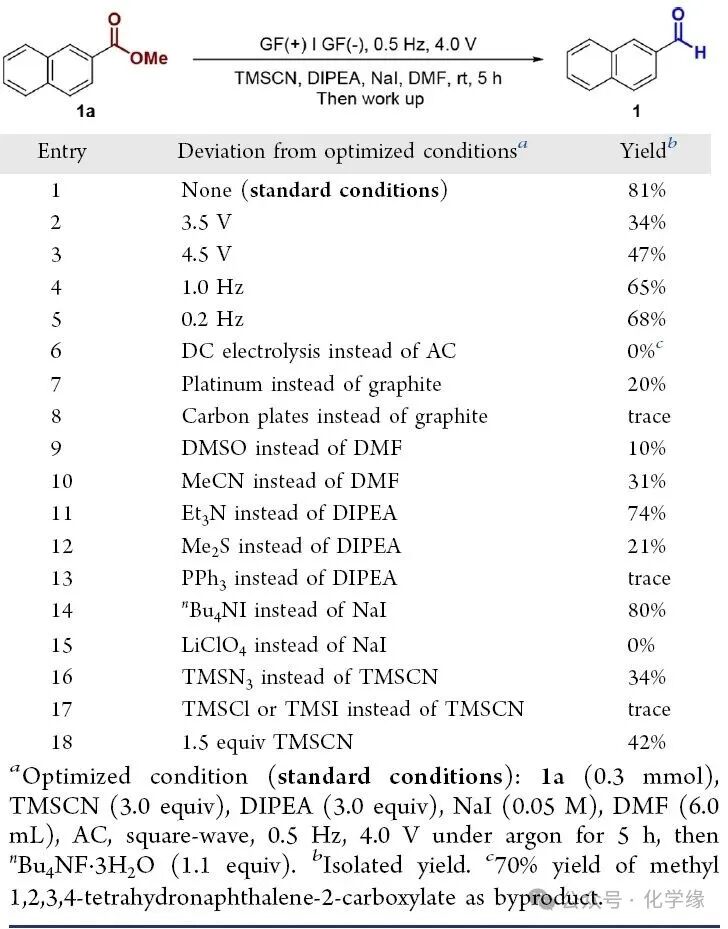
Figure 2 Optimization of reaction conditions
Using 2-methoxybenzoic acid methyl ester (1a) as a model substrate, the study optimized reaction conditions and found that this ester compound could be efficiently reduced to 2-methoxybenzaldehyde (1) under 0.5 Hz alternating current electrolysis conditions in an undivided electrolysis cell, achieving a yield of 81%. Under a peak-to-peak voltage (Vpp) of 4.0 V, using N,N-diisopropylethylamine (DIPEA) as the electron donor and trimethylsilyl cyanide (TMSCN) as the silicon source, a relatively high yield was obtained. When the voltage was reduced to 3.5 volts, the reaction was significantly suppressed, while increasing to 4.5 volts achieved complete conversion with a yield of 47%. Adjusting the frequency slightly decreased the yield. Direct current electrolysis produced by-products 1,2,3,4-tetrahydronaphthalene-2-carboxylic acid methyl ester, with a yield of 70%, rather than the target product. NaI was confirmed as an efficient supporting electrolyte, n-Bu4NI performed comparably to NaI, while LiClO4 was completely ineffective. These results highlight the importance of iodides in the reaction. Among the silicon additives evaluated, trimethylsilyl azide (TMSN₃) yielded lower results, while trimethylsilyl chloride (TMSCl) and trimethylsilyl iodide (TMSI) produced only trace amounts of product. Additionally, reducing the amount of TMSCN led to a decrease in yield.
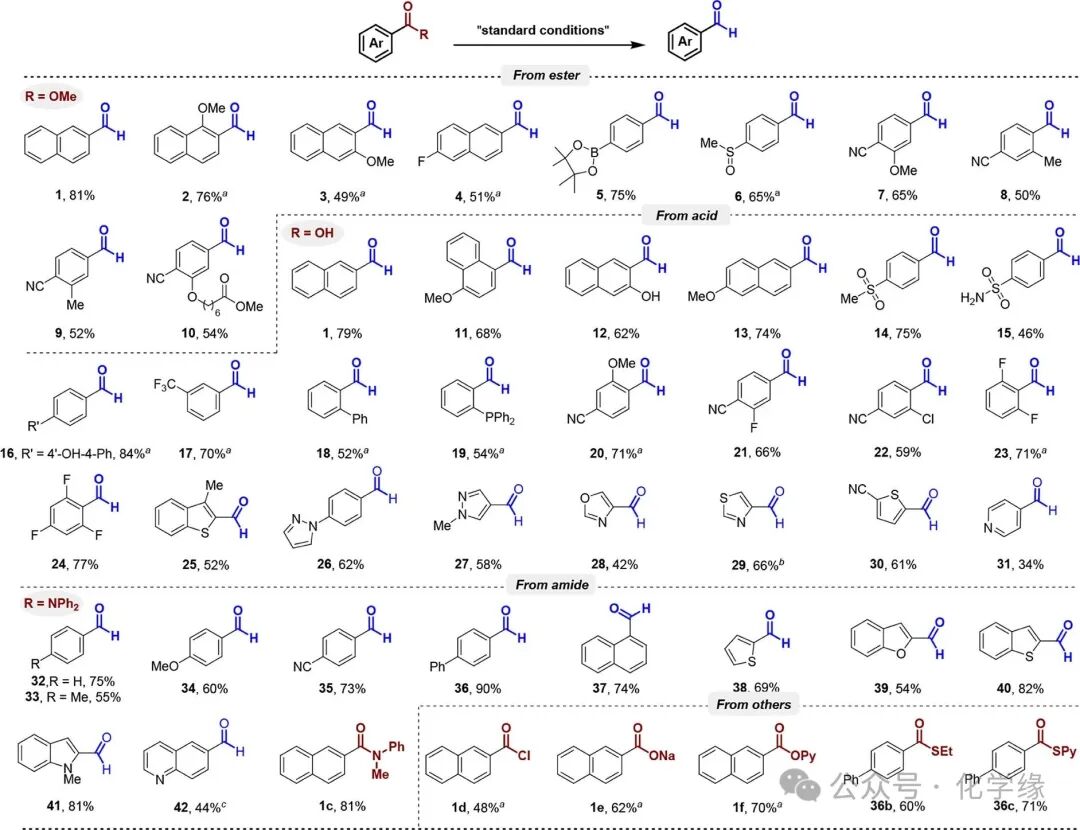
Figure 3 Substrate scope of aryl carboxylic acid derivatives
Under optimized conditions, we investigated the reduction reactions of various carboxylic acid derivatives. Through this method, different esters could be reduced to their corresponding aldehydes. The reaction system tolerated various functional groups, including methoxy, fluorine, pyran boronic esters, sulfonyl, and cyano groups. This method is also applicable for the reduction of acid compounds. Acid substrates containing methoxy, hydroxyl, sulfoxide, sulfonamide, trifluoromethyl, phenyl, diarylphosphine, cyano, fluorine, and aromatic heterocycles (including N-heterocycles, S-heterocycles, O-heterocycles) achieved moderate to good yields. The method is suitable for the reduction of amide compounds connected to phenyl groups containing nitrogen atoms, and is also effective for acyl chlorides, sodium carboxylates, pyridine esters, and thiol esters, fully demonstrating its universality in the reduction reactions of carboxylic acid derivatives.
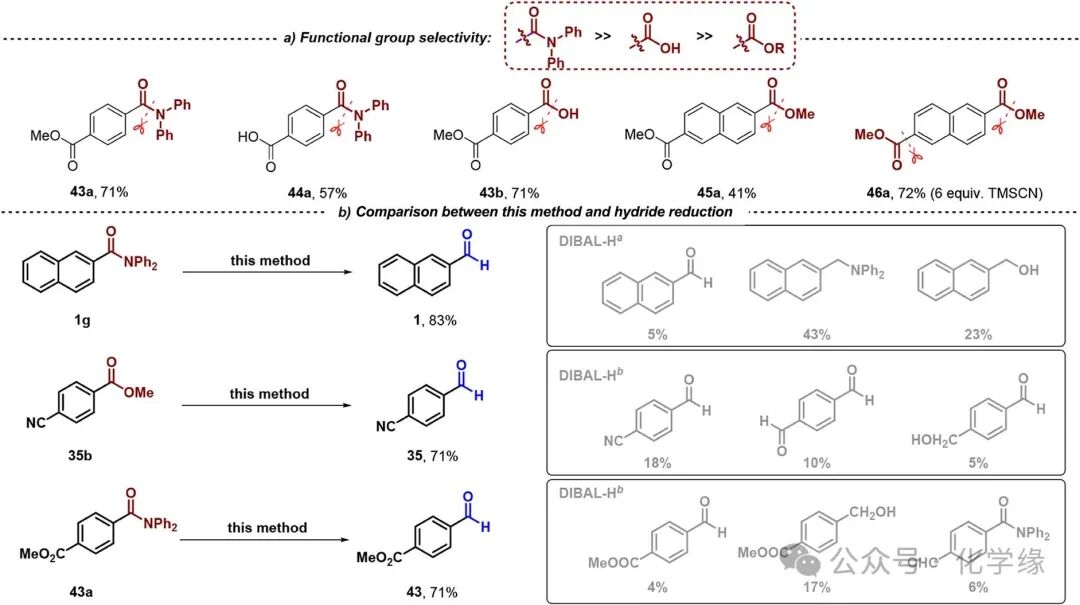
Figure 4 Functional group selectivity and comparison of this method with hydride reduction methods
Standard conditions: DIBAL-H reduction conditions: carboxylic acid derivatives (0.3 mmol), DIBAL-H (2.0 equiv, 1.0 M in hexane), DCM (1.5 mL), -78 °C.
Systematic studies revealed a hierarchical reactivity trend: amides exhibit stronger reducibility compared to acids, while acids show higher reactivity than esters. This hierarchical reactivity allows for precise chemical selective modifications of the target carboxyl group while maintaining the integrity of other carboxyl groups, showcasing the exceptional capability of this electrochemical method in modulating reaction selectivity. When treated with 3.0 equivalents of TMSCN, a carboxyl group can be retained in dicarboxylic compounds; while using 6.0 equivalents of TMSCN, complete reduction to dialdehydes occurs. This demonstrates the tunability of the method for synthesizing useful intermediates.
Subsequently, this protocol was compared with traditional methods across various substrates. This protocol exhibited superior performance, achieving yields of 83%, 71%, and 71% for compounds 1, 35, and 43. In contrast, when using DIBAL-H under optimized conditions (even at -78 °C), a large number of by-products were formed, and the yield of the target aldehydes was less than 20%. These comparative experimental results indicate that this protocol possesses exceptional selectivity and universality in the reduction of different carboxylic acid derivatives.
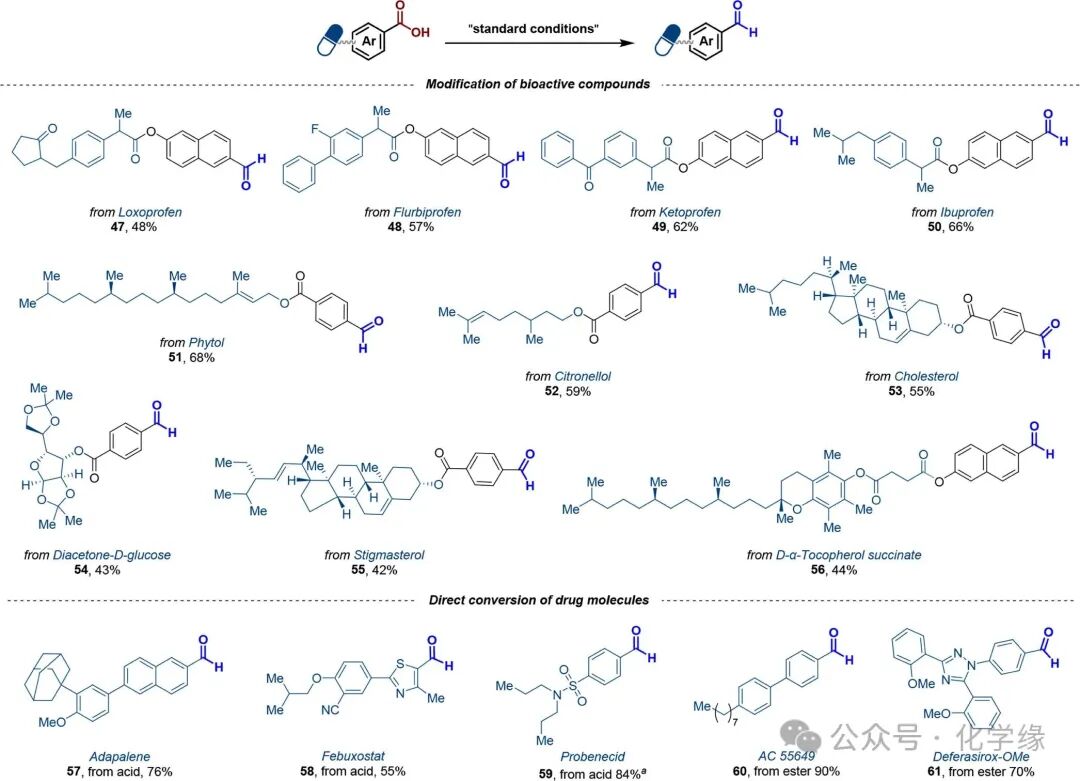
Figure 5 Application of carboxylic acid derivative electroreduction method in the modification of bioactive molecules
Due to the significant impact of aldehyde groups on drug activity and their ease of transformation, introducing aldehyde groups into natural products and drug molecules can significantly enhance the efficiency of new drug development. This method allows for the easy introduction of aldehyde groups into various bioactive molecules and their derivatives. This achievement further confirms the value of electroreduction technology as a powerful tool for the late-stage modification and transformation of bioactive molecules.
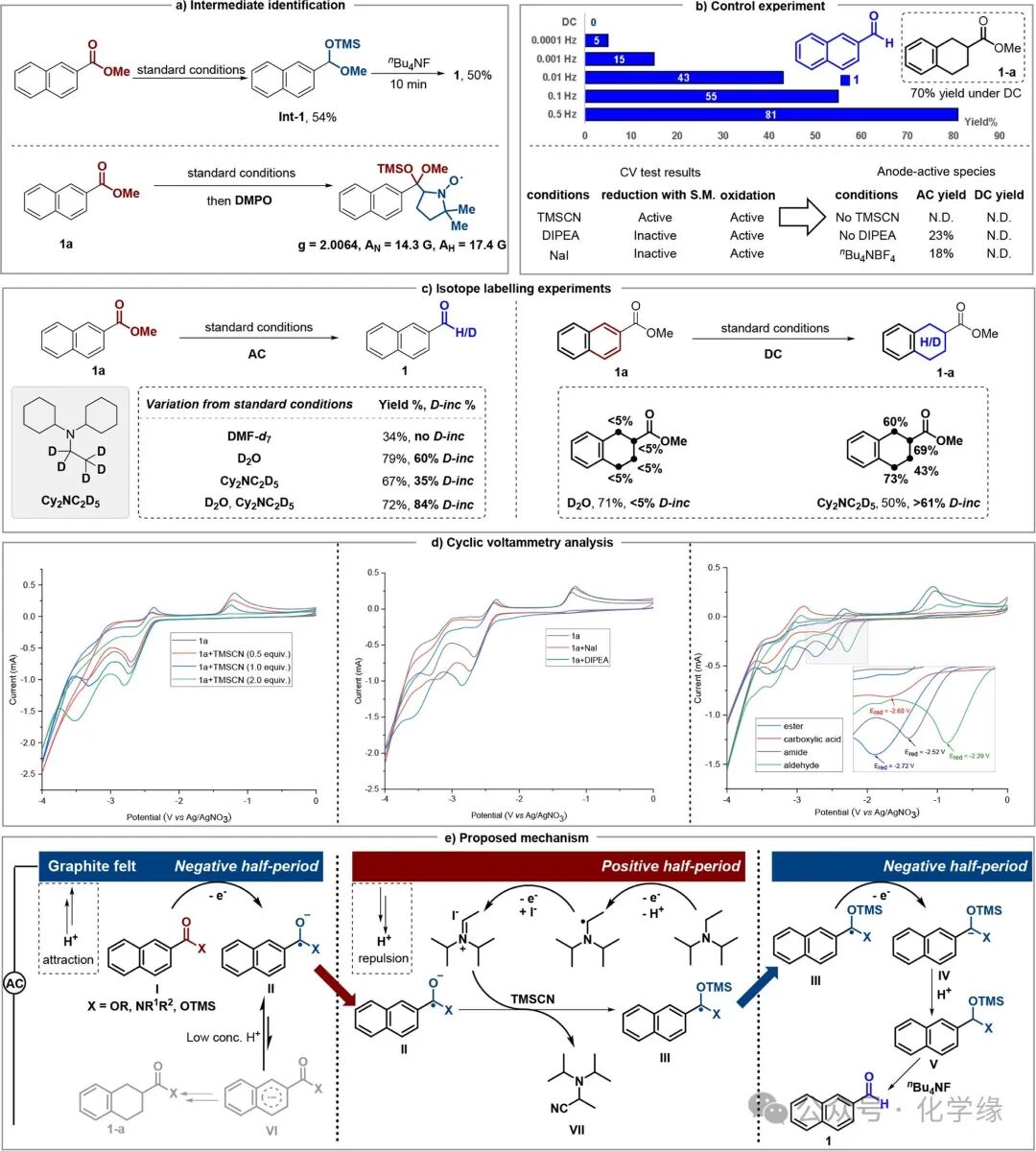
Figure 6 Mechanistic studies
Through isolation experiments and radical trapping assays, the reaction intermediates were studied, and the roles of acid-base conditions and reaction components were explored using cyclic voltammetry (CV) and control experiments. Key intermediates int-1 were successfully isolated during the ester reduction process. This intermediate is believed to form through the interaction of TMSCN with the aldehyde generated from the ester reduction, which is then converted to the final product after treatment with n–Bu4NF. Radical trapping experiments confirmed the involvement of radicals: the addition of the spin trap agent 5,5-dimethyl-1-pyrroline N-oxide (DMPO) resulted in a significant electron paramagnetic resonance (EPR) signal attributed to the benzyl radical. Furthermore, CV-assisted control experiments revealed: (1) a decrease in product yield with reduced AC frequency, and under direct current conditions, the yield of by-product 1-a reached 70%; (2) oxidatively active species (such as DIPEA, NaI) significantly affect yield, with by-product VII detected by high-resolution mass spectrometry (HRMS); (3) the reduced radical species react with TMSCN, eliminating the oxidation peak that should originate from the electron-volatile transition state—this peak may be related to the oxidation of TMSCN. Omitting TMSCN leads to complete disappearance of the product, while excluding DIPEA or NaI results in a sharp decrease in yield (due to the oxidation of DIPEA lacking sufficient proton sources or stabilizers). Isotope labeling experiments elucidated the source of hydrogen in the aldehyde group: using DMF-d7 as a solvent yielded product 1 (yield 34%, D-inc was 0%); adding D2O or replacing DIPEA with Cy2NCD2CD3 yielded 79% (D-inc was 60%) and 67% (D-inc was 35%) yields, respectively. Simultaneously using D2O and Cy2NCD2CD3 raised D-inc to 84%, indicating that the source of hydrogen in the aldehyde group comes from trace water in the system and DIPEA.DC deuterated experiments showed:1 equivalent of D2O resulted in D-inc<5%, while 1-a yield reached 70%; 3 equivalents of deuterated dibenzylamine under DC conditions resulted in D-inc reaching 61%, while 1-a yield reached 50%. This confirms that direct current promotes the generation of more protons than alternating current, driven by two key factors: first, the electrostatic attraction under direct current further concentrates protons at the cathode; second, the formation of by-product 1-a requires more electrons than the product 1, which in turn leads to intensified oxidation of DIPEA and the generation of more protons. These effects collectively promote the formation of by-product 1-a. This phenomenon may be related to alternating current preventing the graphite felt electrode with a high surface area and high activity from contributing excess electrons. Cyclic voltammetry analysis indicates that the reduction potential of 1-naphthaldehyde is lower than that of its precursors (acid, ester, amide)—this explains why avoiding over-reduction of aldehydes is challenging. The order of reduction potentials for carboxylic acid derivatives (amide < acid < ester) aligns with the observed reaction selectivity.
Finally, a proposed reaction mechanism is presented: AC first reduces 2-methoxybenzoic acid methyl ester to the radical anion II; with the assistance of oxidized DIPEA, TMSCN reacts with II to generate III; under high proton conditions (such as under direct current), II undergoes side reactions (such as Birch reduction, complete hydrogenation); subsequently, III is reduced to IV, and IV generates V (int-1); V is treated with n–Bu4NF to ultimately yield product 1.
In summary: A silicon-assisted alternating current electrochemical scheme has been developed to selectively reduce various aromatic carboxylic acid derivatives to aldehydes. This method is easy to operate, exhibits excellent chemical selectivity, and has broad substrate compatibility, providing a promising solution for the selective reduction of aromatic carboxylic acid derivatives. Through this method, various carboxylic acid derivatives (including acids, esters, and amides) and bioactive molecules have been successfully converted directly into aromatic aldehydes. Mechanistic studies further elucidate the critical role of silicon reagents and AC electrolysis in modulating the electron transfer pathways during the electroreduction process.
Article Information:
Electroreduction of Aromatic Carboxylic Derivatives to Aldehydes
Yu-Jia Chen, Pengfei Xie, Lei Zhang, Anzai Shi, Youai Qiu*, and, Qi-Lin Zhou*
DOI: 10.1021/jacs.5c14069
We hope this article inspires you, and let us work together for a better future!