The Electronics Enthusiast Network reports (by Wu Zipeng) that the 13th Semiconductor Equipment and Core Components and Materials Exhibition (CSEAC 2025) main forum and the 13th Annual Conference of the China Electronic Equipment Industry Association for Semiconductor Equipment was grandly opened by Taihu Lake in Wuxi. This year’s conference, themed “Strengthening Strategic Leadership, Deepening Innovation Drive, and Building a New High Ground for the Semiconductor Equipment Industry Together,” gathered top experts and industry leaders in the domestic semiconductor equipment field.During the keynote speech session, Li Jinxiang, Deputy Secretary-General of the China Electronic Equipment Industry Association and expert member of the Ministry of Industry and Information Technology’s Electronic Science and Technology Committee, and Wang Ping, Party Secretary and General Manager of China Electronics Technology Group Corporation, along with other heavyweight guests, shared industry insights on key topics such as semiconductor equipment innovation in the post-Moore’s era, progress in domestic equipment for mature processes, and the innovation path of the equipment industry in the AI era, injecting strong intellectual momentum into the development of China’s semiconductor equipment industry and outlining a clear path for the future development of the industry.
State-Owned Enterprises Taking Responsibility, Breaking Through Challenges in the Post-Moore’s Era
Wang Ping delivered a speech titled “Opportunities and Challenges of Semiconductor Equipment Innovation in the Post-Moore Era,” providing an in-depth analysis of industry development trends and corporate practices.From the perspective of opportunities, in the post-Moore era, the explosion of artificial intelligence and computing power has become a core driver, and the development path of integrated circuits has shifted towards diversification, bringing good opportunities for chip technology upgrades and manufacturing equipment innovation. The equipment field presents three major characteristics: mature processes and special processes have become important strongholds for domestic equipment, advanced process fields are the main battleground for continuous breakthroughs, and the area beyond Moore’s Law has opened up a new track, providing differentiated development space for domestic equipment; at the same time, equipment development is shifting from specialization to platformization, and the R&D model is also leveraging AI empowerment to achieve a leap from following imitation to proactive R&D.In terms of challenges, at the international level, under the great power game, China’s semiconductor equipment autonomy faces severe tests, with the U.S. entity list and tariff policies bringing many uncertainties; at the domestic level, the semiconductor equipment field has entered a “Warring States era,” where international giants implement low-price dumping and high-end restrictions based on policy advantages, and leading domestic enterprises are starting to layout platformization, further intensifying market competition.In response to these opportunities and challenges, the Electronics Technology Group is carrying out various practices:
- Improving governance systems, implementing internal reforms, creating new production relationships, clarifying the positioning and responsibilities of research institutes, industrial companies, and listed platforms, and forming a scientific development path;
- Promoting deep integration of technological innovation and industrial innovation, continuously strengthening advantageous products, undertaking market safety responsibilities in the RF field, carrying out both proactive and disruptive technological innovations, and actively integrating into an open innovation industrial ecosystem;
- Building a “Equipment + Capital” development pattern, enhancing resource acquisition capabilities through capital operations, optimizing resource allocation through value investment, and forming a virtuous cycle of technology, industry, and finance.
Acknowledging the Value of Mature Processes, Filling the Gaps in Domestic Production
Li Jinxiang’s speech focused on the progress of domestic equipment for integrated circuit mature processes, providing key references for industry development.Li Jinxiang first clarified the definitions and market positions of mature processes and special processes: mature processes generally refer to processes from 150nm to 22nm, while special processes are dedicated manufacturing processes developed based on mature processes to meet specific application market demands; mature special processes above 28nm occupy 80% of the semiconductor industry’s market share and are an important source of market for equipment and materials. He pointed out that special processes are widely used in automotive chips, optoelectronic chips, RF chips, etc., and have very high requirements for equipment — for example, automotive chips need to operate safely within a temperature range of -40°C to 150°C, which imposes higher standards on equipment and materials support.Regarding the current state of equipment, Li Jinxiang categorized integrated circuit equipment into five categories and analyzed the development status of domestic equipment one by one:
- Graphic generation equipment: Domestic prototypes of lithography machines have entered production line R&D verification, but the mass production scale is relatively small; coating and developing equipment performs well but is limited by imported lithography machines; measurement equipment remains a long-standing shortcoming.
- Chip manufacturing thin film additive equipment: Solid film equipment basically meets demand; liquid phase film copper plating equipment needs to improve maturity; gas phase film equipment categories are complete, but some special processes are still controlled by foreign countries.
- Chip manufacturing subtractive process equipment: CMP (Chemical Mechanical Polishing) and dry etching equipment perform well; wet cleaning equipment has huge potential and needs further exploration.
- Chip manufacturing material modification equipment: Ion implanters have high-energy large beam flow shortcomings; activation equipment technology needs breakthroughs.
- Chip manufacturing measurement equipment: There are many types of equipment, but core equipment such as time analysis equipment is less involved, and electron beam detection technology lags behind foreign countries.
Finally, Li Jinxiang proposed four suggestions for the development of domestic equipment:
- Attach great importance to equipment training, learn from foreign experiences to establish a complete training system, and introduce technologies such as VR to enhance engineers’ operational capabilities;
- Keep pace with the development of special processes, increase R&D efforts for 28nm metal gate and germanium-silicon mass production equipment, and equipment companies need to strengthen process research to provide BKM (Best Known Method) solutions;
- Focus on breakthroughs in measurement equipment, especially in the independent development of equipment software, and pay attention to the full lifecycle cost and operational efficiency of equipment;
- Fill the gaps in special process equipment, reduce COO (Cost of Ownership), and enhance the economic and social returns of equipment companies.
AI Empowerment, Leading the Innovation Path of the Equipment Industry
Chen Ji, President of Beijing North Huachuang Microelectronics Equipment Co., Ltd., shared the strategic layout and innovative practices of North Huachuang in the AI era with the topic “The Innovation Path of the Integrated Circuit Equipment Industry in the AI Era.”Chen Ji pointed out that artificial intelligence is leading a new round of technological revolution and industrial transformation, from the popularization of chips to the widespread application of AI chips, AI will reshape various industries. It is expected that by 2030, the AI market size will reach trillions of dollars, which will drive nearly 40% growth in global semiconductor equipment, and the semiconductor equipment market in mainland China will continue to expand accordingly.In the AI ecosystem, chip equipment is an important cornerstone. Integrated circuits are the key industrial technology supporting economic development, and AI chips, as the hardware core, impose higher requirements on performance, speed, capacity, stability, and power consumption. The front-end process continuously pursues improvements in transistor density, from FinFET to GAA (Gate-All-Around) to CFET (Complementary Field Effect Transistor), and storage technology is also continuously evolving — these technological innovations all rely on equipment iteration and upgrading, “one generation of technology corresponds to one generation of equipment,” while requiring collaborative innovation of components.North Huachuang actively explores intelligent equipment innovation, learning from the experiences of major international manufacturers applying AI to enhance productivity, equipment utilization, and process quality, proposing to “endow equipment with AI capabilities”: through process optimization, monitoring, and control, injecting new productive forces into equipment. Intelligent equipment is not simply about adding software functions, but needs to combine AI application needs, break through hardware protocols and system bottlenecks, and build a new pattern of open interconnection and sustainable evolution. Specific practices include: in intelligent recipe optimization, combining basic principles of machines with AI calculations to shorten R&D cycles and reduce costs; in intelligent scheduling and monitoring simulation, significantly improving equipment output and product yield through multi-dimensional model training.Regarding the high-quality development of the equipment industry, Chen Ji stated: In 2024, China’s integrated circuit equipment revenue will account for 6% of the global market, and North Huachuang’s revenue ranks sixth globally — although there has been phased progress, there is still huge room for growth. Industrial development relies on system engineering innovation and high-quality collaboration, from materials and components to equipment, each link needs to build high-quality standards to form a closed-loop ecological chain. North Huachuang launched multiple new devices this year and integrated resources to improve the product line, and in the future will move towards the “AI Equipment +” era, providing comprehensive solutions for customers and contributing to the development of China’s semiconductor industry.
Independent Innovation, Exploring New Paths for Domestic Equipment Breakthroughs
Wang Xi, Vice President of Sales at Shanghai Semei Semiconductor Equipment Co., Ltd., elaborated on the breakthrough path for domestic equipment from the perspectives of the new global semiconductor development situation and Semei’s independent innovation practices with the topic “Breakthroughs of Domestic Equipment in the New Pattern: Technological Innovation and New Path Exploration.”Regarding the new global semiconductor development situation, Wang Xi pointed out: In the global integrated circuit industry ecosystem, the market size of electronic terminal products exceeds $5 trillion, and the semiconductor equipment market exceeds $110 billion; China’s manufacturing accounts for over 60% in terminal consumer markets such as smartphones, laptops, white goods, and new energy vehicles, with some categories even reaching 80%, providing strong support for the semiconductor industry. However, there is still a trade deficit in China’s integrated circuit imports and exports, and the internal driving force for industrial development is strong. From the perspective of global wafer foundry capacity, mainland China and Taiwan are the main suppliers, and mainland China’s wafer factory construction scale is leading, resulting in strong demand for semiconductor equipment. In 2023-2024, the global semiconductor equipment market size is stable at over $110 billion, and although the mainland Chinese market has experienced short-term fluctuations due to external pressures, the long-term trend is stable.In terms of independent innovation practices, Wang Xi emphasized: In the face of U.S. equipment controls and technological blockades, domestic equipment must break free from path dependence and explore independent innovation and new paths. Semei has carried out multiple original innovations in wet processes, advanced packaging, furnace tubes, front-end coating and developing, PECVD (Plasma Enhanced Chemical Vapor Deposition), and panel-level advanced packaging:
- In the wet process field: Launched TEBO ultrasonic technology, which can achieve ultra-fine structure cleaning without damaging the bubble steady state; developed Tahoe technology, which combines trough cleaning with single wafer cleaning, reducing sulfuric acid usage by 75% while precisely controlling particles; combined supercritical drying equipment with TEBO ultrasonic technology to achieve efficient cleaning and drying of ultra-fine multi-layer 3D structures, with the supercritical drying equipment adopting a unique vertical opening and closing design to reduce carbon dioxide usage.
- In advanced packaging electroplating technology: Controlled uniformity through first and second anode technologies to solve the electric field concentration problem at the notch.
- In the furnace tube field: Developed ultra-high temperature furnace tubes (temperature above 1250°C), using a flat design to solve the wafer bridging problem.
- In front-end coating and developing Track: Adopted a vertical cross structure to enhance equipment output and efficiency, adapting to the needs of the new generation of lithography machines.
- In the PECVD field: Innovatively adopted a three-head design, which can flexibly adapt to different processes and optimize uniformity.
- In the panel-level advanced packaging field: Developed horizontal electroplating equipment, solving the electric field control problem at the corners of square pieces through unique anode design and “running light” power supply method, which won the Technical Innovation Award from the U.S. 3D inCites Association.
Wang Xi also mentioned that independent innovation must be based on IP (Intellectual Property) protection, while increasing R&D investment and promoting the “re-globalization” process with an open mindset to achieve continuous breakthroughs and development of domestic equipment.
Uniting Industry Forces, Building a New High Ground for Semiconductor Equipment
From the responsibility and strategic breakthroughs of China Electronics Technology Group to the deep cultivation of mature process domestic equipment by the China Electronic Equipment Industry Association, to North Huachuang’s innovative exploration in the AI era, and Semei Semiconductor’s independent breakthrough practices — these enterprises, as the core forces of China’s semiconductor equipment industry, are driving the industry forward with their respective practices. In the face of the opportunities and challenges of the post-Moore era, as well as the complex international competitive environment, China’s semiconductor equipment industry needs to further strengthen collaborative cooperation, fill technological gaps, increase R&D investment, leverage emerging technologies such as AI to empower equipment innovation, continuously enhance the industry’s autonomous controllability, and work together to build a technology-leading, globally competitive Chinese semiconductor equipment industry.

Statement: This article is original from the Electronics Enthusiast Network and must be cited as above. For group communication, please add WeChat elecfans999, for submission of interview requests, please send an email to [email protected].
More Hot Articles to Read
-
11 Semiconductor Equipment Companies H1: Etching Equipment Sold 5 Billion, Highest Net Profit Soared 73%
-
Alibaba Unveils: Self-Developed AI Chip 100% Domestic, No Need for TSMC Foundry
-
Xiaomi Enters the Game, Another Storage Boom!
-
Labubu Takes Off! Consumer-Level 3D Printing Industry Chain Takes Flight
-
Ministry of Industry and Information Technology: By 2030, Satellite Communication Users Exceed 10 Million! Industry Chain Takes Off?
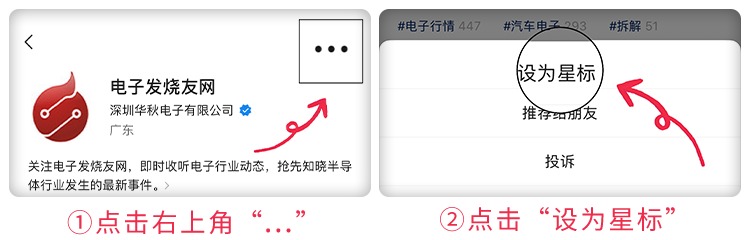
Click to Follow and Star Us
Set us as a star to not miss any updates!