Research Background
Lipid nanoparticles (LNPs) are an ideal carrier for delivering various drugs with poor in vivo stability, and they are widely used in drug development strategies for proteins, nucleic acids, and more. The launch of the world’s first siRNA drug, Patisiran, marked the transition of LNPs from laboratory research to clinical application, further highlighting their potential. Consequently, LNP technology has also been extensively applied in subsequent mRNA vaccines, such as the COVID-19 vaccine.
Conventional LNPs are primarily composed of ionizable cationic lipids, cholesterol, polyethylene glycol (PEG) lipids, and helper lipids. Among these, PEG lipids serve as a key component to prolong the circulation time of drugs in the body and enhance overall stability. However, as foreign lipid components, PEG lipids can exhibit certain immunogenicity, leading to issues such as complement activation-related pseudoallergy (CARPA), accelerated blood clearance (ABC), and reduced efficacy upon repeated administration. Furthermore, since PEG-modified components are widely used in everyday products, healthy individuals may already have anti-PEG antibodies, further hindering their clinical application.
Carbohydrates, such as glycosylated lipids, possess high hydrophilicity, biocompatibility, and structural diversity, and are currently considered ideal substitutes for PEG lipids. Maltodextrins (maltooligosaccharides) have emerged as potential candidates due to their natural origin, biodegradability, and lack of immunogenicity.
Recently, the journal Journal of the American Chemical Society reported a study titled Glycolipids Substitute PEG Lipids in Lipid Nanoparticles for mRNA Delivery, which designed and synthesized maltodextrin-based glycolipid molecules (G7B2) to replace the PEG lipids in the Moderna lipid nanoparticle formulation, achieving high evaluations in various delivery efficiency assessment systems.
Research Content
The study first employed a one-pot Borch reduction amination reaction to covalently link maltodextrin with alkyl diamines of varying chain lengths (C12-C18) to prepare candidate substitute compounds. Subsequently, the synthesized glycolipids were used to replace the PEG lipids in the LNP formulation. By comparing oligosaccharides of different sugar chain lengths, it was found that the sugar chain length is crucial for liposome stability.
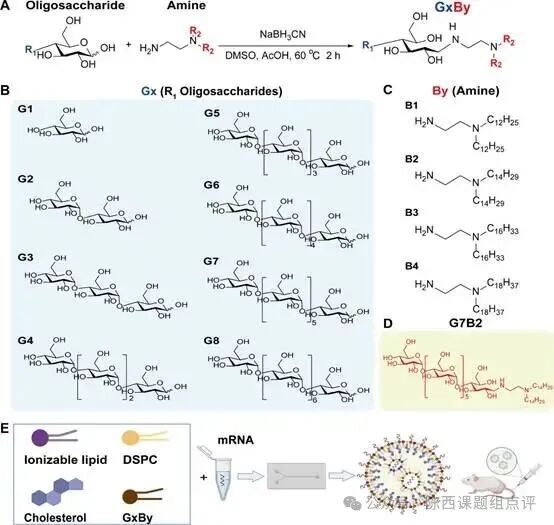
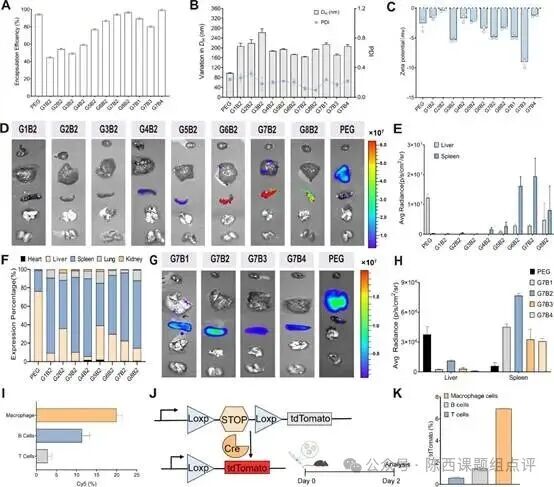
After screening several relatively stable glycolipid candidates in vitro, the study compared the in vivo and in vitro delivery efficiency of glycolipid-substituted PEG lipids in LNPs. Experimental results showed that the glycolipid (G7B2) linked to maltotriose and C14 alkyl diamine exhibited the most effective mRNA delivery efficiency across various cell lines. Additionally, this LNP demonstrated significantly enhanced splenic accumulation, unlike the hepatic accumulation exhibited by PEG lipids.
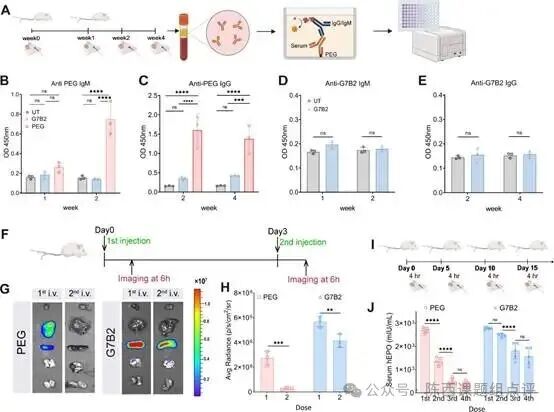
Due to the immunogenicity of PEG lipids, the study assessed the immunogenicity of the glycolipid-substituted LNP. Experimental results indicated that the glycolipid-substituted LNP did not elicit significant immune responses (IgM/IgG elevation) and maintained stable delivery efficiency even after multiple administrations. Finally, the therapeutic potential of the glycolipid-substituted LNP was evaluated by establishing a B16F10-OVA melanoma model and administering the glycolipid-coated OVA-mRNA vaccine treatment, which demonstrated significant tumor suppression effects and extended survival. Moreover, the glycolipid-substituted LNP exhibited high safety and stability, without causing severe hepatic toxicity, further showcasing its application potential.
Conclusion and Outlook
In summary, the study designed and developed a maltodextrin-based glycolipid molecule (G7B2) by covalently coupling maltotriose with C14 alkyl diamine to replace the PEG lipids in traditional LNP components. Experimental validations in vivo and in vitro showed that it not only possesses strong delivery efficiency and splenic targeting but also reduces immunogenicity and hepatic toxicity. It can ensure therapeutic efficiency while maintaining stability and safety after multiple administrations, demonstrating its potential for future use in the delivery of proteins, nucleic acids, and other drugs.
Author of this article:LJQ
Original link:https://pubs.acs.org/doi/10.1021/jacs.5c16448