Hello everyone, today I would like to share a recent research progress published in J. Am. Chem. Soc..The title is: Bayesian Optimization for Multicomponent Supramolecular Systems.The corresponding authors of this work are fromEindhoven University of Technology,E. W. Meijer and Tom F. A. de Greef..
In supramolecular systems, multicomponent molecules self-assemble through non-covalent interactions to achieve functions that cannot be realized by single components alone. However, the diversity of non-covalent interactions makes the design space of multicomponent molecular systems highly complex, and traditional mechanism-based models struggle to accurately derive and optimize these systems. In contrast, Bayesian Optimization (BO) can efficiently explore high-dimensional parameter spaces under limited experimental conditions, thus providing a powerful tool for the rapid discovery and customization of functional supramolecular systems.
The authors extend BO to the supramolecular design space and demonstrate it through three representative cases.1. The effectiveness of BO in accelerating the exploration of assembly energy landscapes (mapping complex phase diagram boundaries); 2. The BO framework finds optimal parameter values for specific target performances (the helical content of supramolecular copolymers before and after covalent modification); 3. The BO guides the design of multicomponent supramolecular materials (network transitions of four-component hydrogels). First, the authors utilize their previously reported research on the thermodynamic mass balance model of (S)-PorZn supramolecular polymerization in a methylcyclohexane/ethanol system to efficiently simulate experimental measurements, thereby quickly testing and evaluating the BO strategy that maps the assembly energy landscape.(Figure 1)
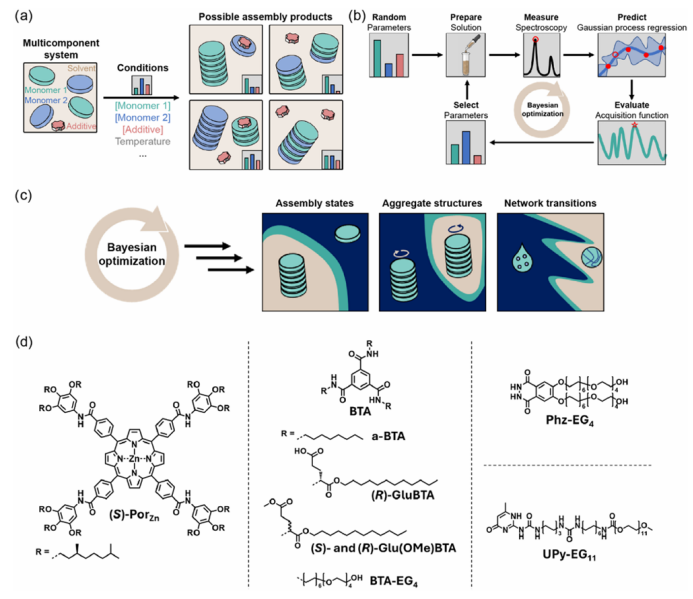
Figure 1. Application of BO in multicomponent supramolecular systems..
The authors used BO to study the assembly states of the above system as a function of temperature and concentration. The BO framework includes iterative steps:(1) Predict the assembly energy landscape using Gaussian Process Regression (GPR) based on existing sampling data;(2) Select new sampling points through acquisition functions;(3) Simulate the selected data points using the mass balance model.The authors applied exploratory (selecting points with the highest predictive uncertainty to increase knowledge), exploitative (selecting points with the highest predicted values to pursue local optima), and mixed (balancing exploration and exploitation) acquisition functions, tracking the performance of GPR predictions against the true values of the model using the R² evaluation. The results indicate that the BO framework outperforms random sampling regardless of the acquisition function used, with the mixed acquisition function performing the best. The authors simulated artificial data errors to assess the robustness of BO. The results show that when the goal is higher predictive accuracy, the importance of data accuracy significantly increases; when experimental errors are high, small batch experiments should be adopted to minimize the total number of required experiments. The authors then experimentally validated BO, focusing sampling points on the monomer-polymer transition region, and the constructed assembly energy landscape closely resembled the energy landscape predicted by the mass balance model (R² = 0.86).(Figure 2)
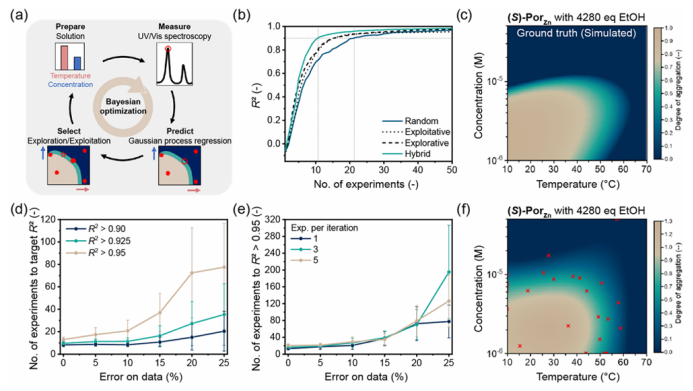
Figure 2. Accelerating the mapping of assembly energy landscapes using BO..
Next, the authors validated the functionality of BO in achieving target performance optimization in supramolecular systems. The authors studied a chiral supramolecular system composed of three co-assembled benzene-1,3,5-tricarboxamide (BTA) monomers. The chiral glutamic acid BTA (Glu-BTA) can be covalently modified to form glutamic acid 5-methyl ester BTA (Glu(OMe)-BTA), thereby altering the helical content of the copolymer. By controlling the initial BTA mixture ratio using BO, the authors enhanced the helical changes. The authors introduced an expected improvement (EI) acquisition function into the established BO framework, and the results indicated that the EI function was more efficient than other acquisition functions. Subsequently, the authors experimentally validated BO with the optimal components found in simulated data, showing that the helical changes in this system were significantly higher than the maximum values reported previously.(Figure 3)
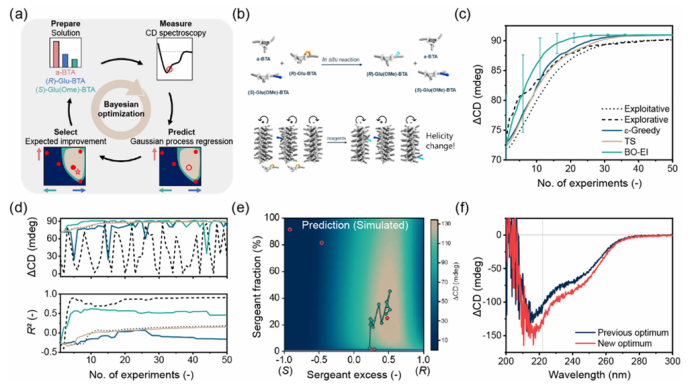
Figure 3. Application of BO in covalent modification of supramolecular polymer systems.
Finally, the authors used BO to control supramolecular networks in aqueous phases. They applied BO to map the supramolecular network of UPy-EG₁₁ and BTA-EG₄ in the presence of the surfactant dodecyltrimethylammonium bromide (OTAB) during the hydrogel-solution transition. Using the assembly energy landscape obtained from BO, the authors plotted the concentration of OTAB and monomer equivalents as variables. The results indicated that the appropriate ratio of each monomer relative to OTAB could be determined from the assembly energy landscape, achieving sequential supramolecular network transitions in water. The authors then attempted to enrich the system further by introducing a fourth component, Phz-EG₄. Due to the introduction of additional phase transitions, careful adjustment of the system composition was required to avoid overlapping gelation concentrations. The authors, using BO, quickly obtained the assembly energy landscape of Phz-EG₄ in the presence of OTAB with only 27 experiments, and through comprehensive analysis, determined the appropriate ratio to achieve three sequential hydrogel-solution transitions, while also measuring the corresponding changes in complex viscosity of the network transition. They conducted control experiments based on the predicted phase diagrams of Phz-EG₄ and OTAB in water under conditions with (gray) and without (green) 0.19 equivalents of BTA-EG₄, indicating the non-orthogonality of Phz-EG₄ and BTA-EG₄. This further demonstrates the advantages of BO in the design of complex multicomponent supramolecular systems. (Figure 4)
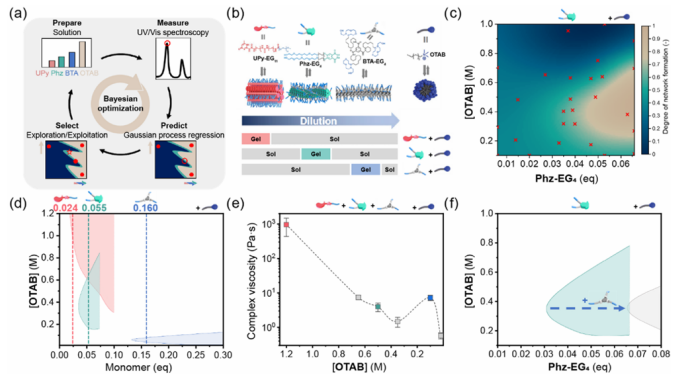
Figure 4. BO for controlling network transitions in multicomponent supramolecular polymer systems..
In summary, the authors demonstrate the powerful application prospects of BO in the depiction of assembly energy landscapes, optimization of covalent modifications, and control of aqueous supramolecular networks. The universality and efficiency of BO not only reduce reliance on prior knowledge and expert intuition but also highlight the advantages of data-driven approaches in addressing multidimensional challenges.
Authors:ZXY Reviewed by:ZHR
DOI: 10.1021/jacs.5c08539
Link: https://doi.org/10.1021/jacs.5c08539
Previous article