Container technology and virtualization technology (commonly referring to virtual machine technology) play a core role in cloud computing and system architecture, but there are essential differences between the two in terms of architecture, performance, isolation, and application scenarios. The following analyzes their differences from five dimensions:1. Technological Architecture Innovation: Lightweight and Efficiency Revolution1. Shared Kernel vs Independent OS
- Containers: Directly share the host operating system kernel, isolating process views through namespaces, and limiting resource usage with control groups (Cgroups), packaging only the application and its dependencies to form a lightweight “sandbox”.
- Virtual Machines: Rely on a hypervisor to virtualize the hardware layer, with each virtual machine needing to run a complete operating system (Guest OS), leading to resource redundancy (such as duplicate system kernels and drivers).
→ Container resource usage is only in the MB range, while virtual machines require GB levels, allowing a single machine to deploy containers at a density more than 10 times that of virtual machines.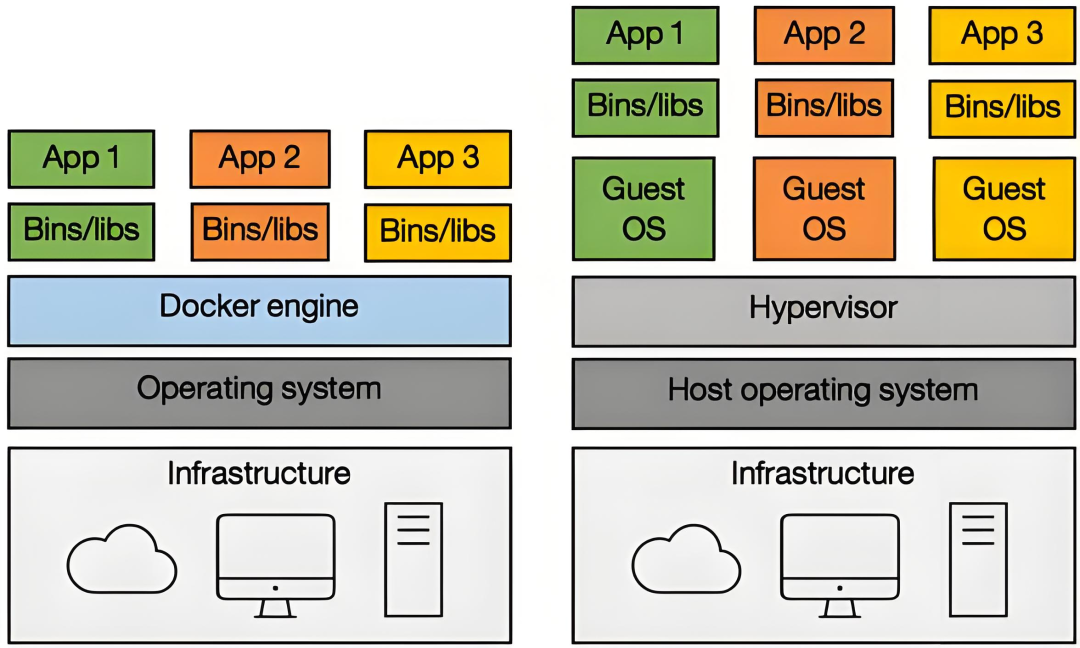 2. Performance Loss Differences
- Containers directly call the host kernel, with I/O and CPU performance close to native applications (loss < 2%);
- Virtual machines experience 5%-15% performance loss due to hypervisor instruction conversion and hardware simulation.
→ In high-concurrency scenarios (such as microservices), container throughput is significantly improved.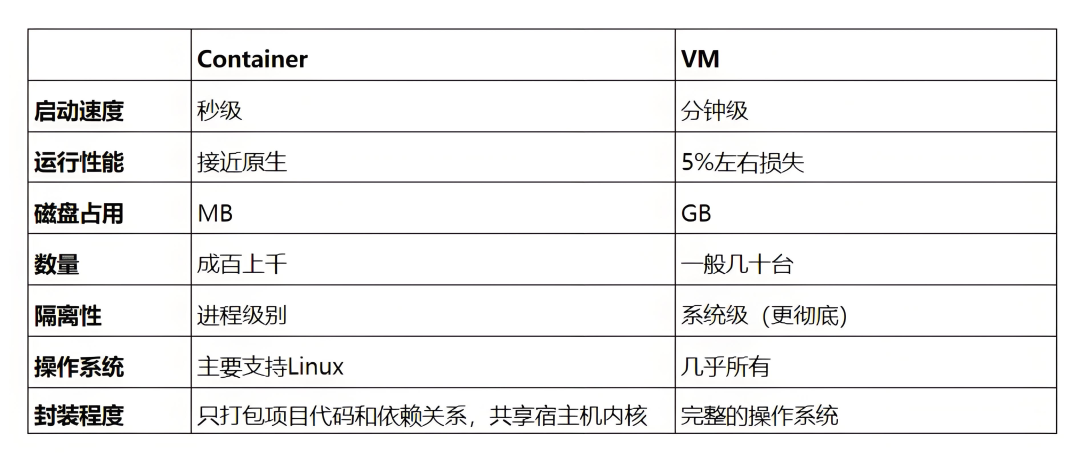 2. Core Advantages: Driving Cloud-Native Transformation1. Second-Level Startup and Elastic Scaling
- Containers do not need to load an operating system, with an average startup time of < 1 second (virtual machines require minutes), supporting rapid scaling under burst traffic.
- Case Study: During e-commerce promotions, a container cluster can scale hundreds of instances within 10 seconds, while virtual machines require several minutes.
2. Resource Utilization Improvement of 50%+Virtual machines often have CPU utilization below 60% due to exclusive OS resources; containers share the kernel, achieving resource utilization rates of 80%-90% on a single machine, reducing hardware costs by 30%-50%.→ Enterprise server consolidation rates increase, reducing virtual machine licensing costs.3. Natural Fit for DevOps and CI/CD
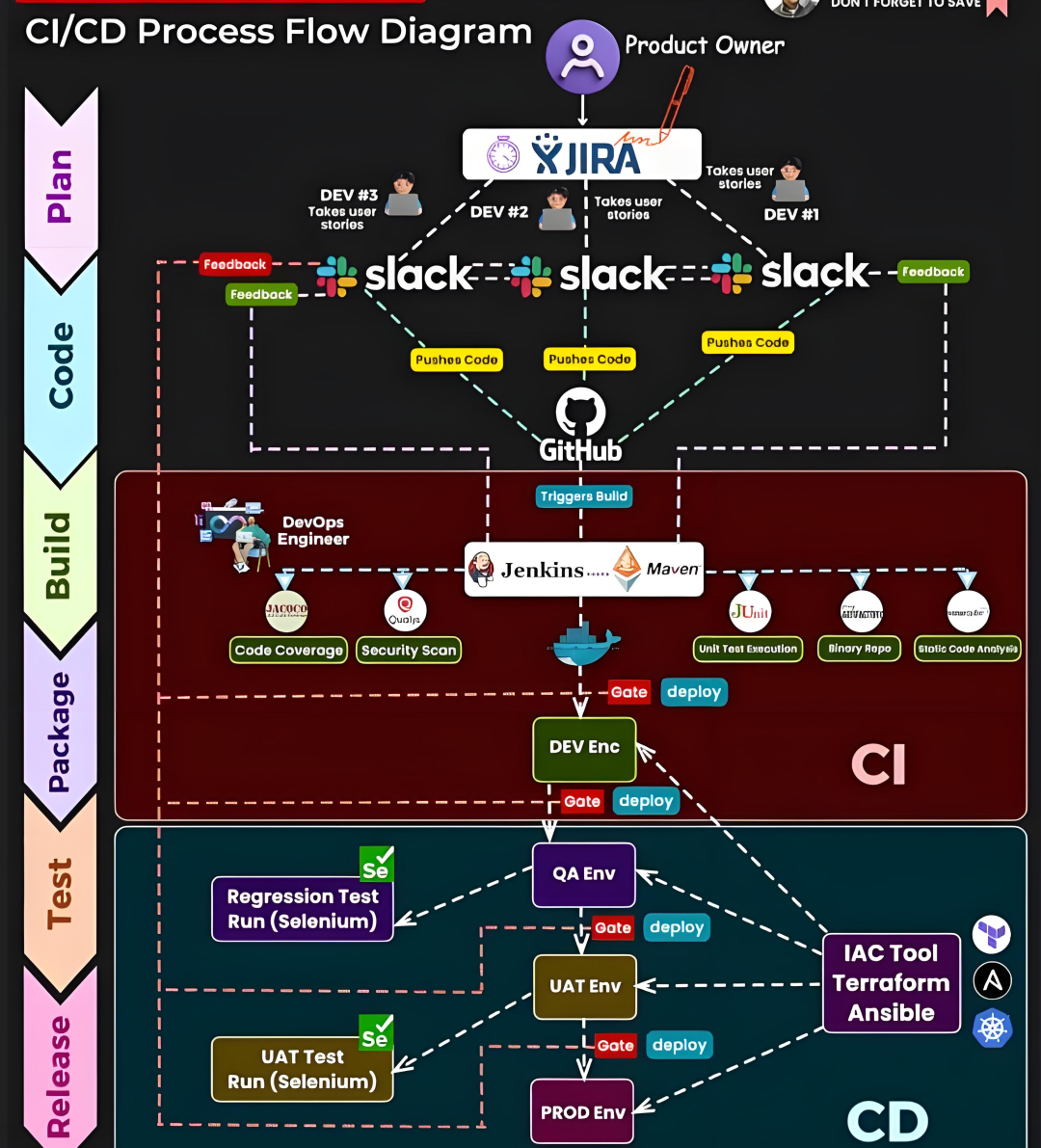
- Image Standardization: Container images (Docker Images) encapsulate applications and environments, achieving “build once, run anywhere”, completely solving the differences between development and production environments.
- Automated Pipelines: Integration of containers with Kubernetes supports automated building, testing, and deployment (e.g., GitLab CI + Helm), shortening release cycles from “days” to “minutes”.
 4. Seamless Migration in Hybrid and Multi-Cloud EnvironmentsContainer images do not depend on underlying infrastructure, allowing seamless migration between virtual machines, bare metal, and public clouds (AWS/Azure), avoiding compatibility issues caused by hypervisor differences in virtual machines.Ecological Collaboration: Explosive Growth of Cloud-Native Technologies1. Kubernetes Becomes the “Cloud Operating System”
- The container orchestration tool Kubernetes unifies cluster resource management, providing service discovery, load balancing, and self-healing capabilities, solving the challenges of large-scale container operations.
- Statistics: 78% of enterprise container clusters use Kubernetes for management, while tools in the virtual machine era were fragmented (vSphere/OpenStack).
2. Popularization of Microservices Architecture
- The lightweight characteristics of containers perfectly align with the microservices design principle of “small and independent”, allowing each service to be containerized, updated, and scaled independently.
- Case Study: Netflix achieves thousands of deployments daily through containerized microservices.
3. New Scenarios for Edge Computing
- The low resource overhead of containers is suitable for edge devices (such as IoT gateways), enabling real-time data processing locally (e.g., factory equipment monitoring), reducing cloud dependency.
Replacement, Not Substitution: The Indispensable Scenarios for Virtual MachinesAlthough containers lead in efficiency, virtual machines remain irreplaceable in the following scenarios:1. Strong Isolation Requirements: Financial and government systems require hardware-level isolation (e.g., core banking databases).
- VM: Strong isolation, each VM has an independent kernel, making it difficult for vulnerabilities or attacks to spread across VMs (e.g., a virus only affects a single VM).
- Containers: Process-level isolation, sharing the kernel poses risks (e.g., kernel vulnerabilities may affect all containers), requiring reliance on Seccomp and AppArmor to enhance security.
2. Heterogeneous OS Environments: Windows applications or legacy systems depend on specific OS kernels.3. Hybrid Architecture Trends: Containers run on top of virtual machines (e.g., AWS EKS based on EC2), balancing security and agility.
Don’t want to miss the article content? After reading, please click“Looking ” and add a“Follow”, your support is my motivation for creation
Looking forward to your one-click support (like, look, share~)