As global manufacturing transitions towards intelligence and automation, China, as a major manufacturing power, is actively promoting factory upgrades centered around artificial intelligence (AI) and robotics. This is not only a necessary choice to address challenges such as rising labor costs and demographic changes but also a key pathway for the high-quality development of China’s manufacturing industry.
Background: The Urgent Need for Manufacturing Transformation
In recent years, as the demographic dividend gradually disappears and international competition intensifies, China’s manufacturing industry faces immense pressure to transform and upgrade. Traditional manufacturing models can no longer meet the demands for efficient, flexible, and personalized production. Meanwhile, the rapid development of AI and robotics technology presents new opportunities for the manufacturing sector. Through intelligent transformation, factories can enhance production efficiency, reduce costs, and optimize product quality.
Main Initiatives
1. Policy Guidance and Support
The Chinese government places great importance on intelligent manufacturing and has introduced a series of policies to promote the application of AI and robotics technology in the manufacturing sector. For example, the “Made in China 2025” initiative explicitly proposes to accelerate the development of intelligent manufacturing, promote breakthroughs in key technologies, and build industrial ecosystems. Local governments have also established special funds to support enterprises in their intelligent transformation.
2. Technological Innovation and Industrial Collaboration
Chinese companies are continuously increasing their R&D investments in areas such as AI algorithms, industrial robots, sensors, and the industrial internet. Leading enterprises like Huawei, Alibaba, Haier, and Midea are actively laying out smart factories and promoting collaborative innovation among industry, academia, and research. For instance, Haier’s “Lighthouse Factory” has achieved a high level of automation and intelligence in production processes through the large-scale application of AI and robotics.
3. Smart Factory Construction
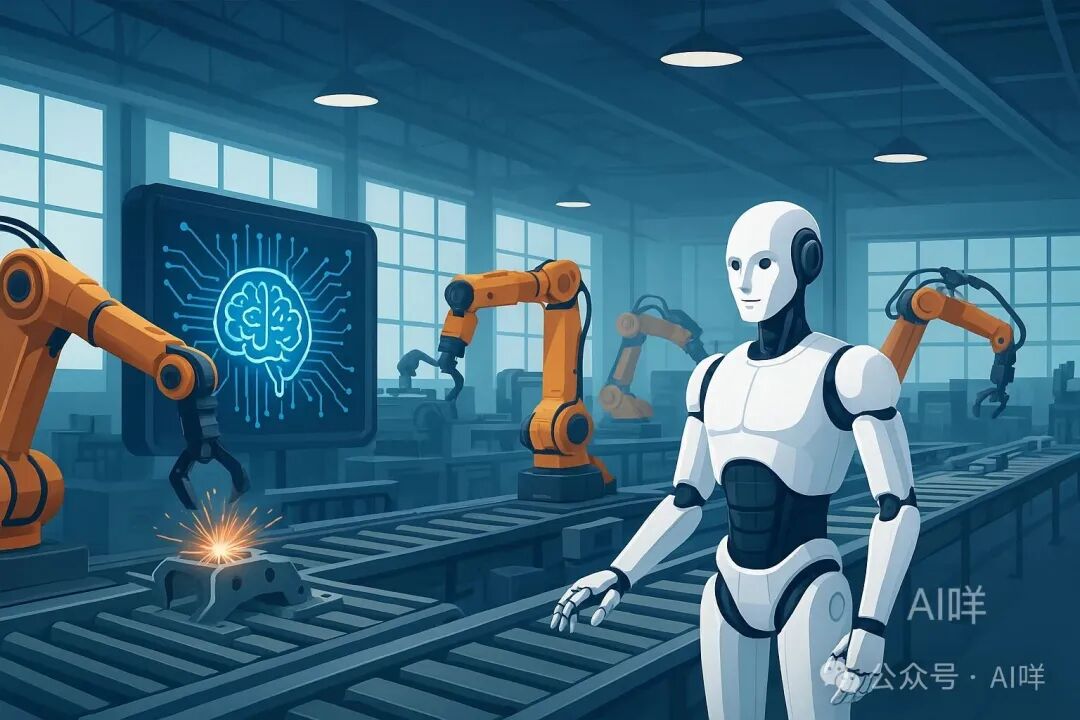
More and more Chinese manufacturing enterprises are beginning to build smart factories, adopting AI-driven production scheduling, quality inspection, and equipment maintenance systems. Industrial robots are widely used in welding, assembly, and handling processes, significantly enhancing production efficiency and safety. New models such as smart warehousing and unmanned transportation are also accelerating their implementation.
4. Talent Development and Industrial Ecosystem Construction
To support factory upgrades, both the government and enterprises are intensifying efforts to cultivate talent in intelligent manufacturing. Universities are offering programs related to intelligent manufacturing and robotics, while companies enhance employee skills through school-enterprise cooperation and internal training. At the same time, a complete industrial ecosystem encompassing hardware, software, and system integration is forming around intelligent manufacturing.
Challenges Faced
Despite significant progress, China’s factory upgrades still face multiple challenges:
- Dependence on Core Technologies: Key technologies such as high-end AI chips and precision sensors still rely on imports, and breakthroughs in independent innovation are urgently needed.
- Transformation Difficulties for SMEs: Funding, technology, and talent shortages slow down the intelligent transformation of small and medium-sized enterprises.
- Data Security and Privacy Protection: The vast amount of data generated by smart factories raises new issues regarding data security and corporate privacy.
- Incomplete Standard System: The standards related to intelligent manufacturing are not yet well-established, affecting industrial collaboration and large-scale promotion.
With the continuous advancement of AI and robotics technology, the intelligent upgrade of China’s manufacturing industry will further accelerate. It is expected that by 2030, smart factories will be widely adopted across various industries such as automotive, electronics, home appliances, and pharmaceuticals, pushing Chinese manufacturing towards the mid-to-high end of the global value chain.
The strategy of upgrading factories centered around AI and robotics is becoming a key driving force for the transformation and upgrading of China’s manufacturing industry. Through policy guidance, technological innovation, smart factory construction, and talent development, China’s manufacturing sector is rapidly moving towards a new stage of intelligence, digitization, and high-quality development.