If not seen with one’s own eyes, many might find it hard to imagine: by 2024, one in every two new energy vehicles in China will be equipped with domestically produced power semiconductor chips. Indeed, the era of automotive “chips” has quietly arrived, and China Resources Microelectronics is one of the driving forces behind this wave of intelligence and electrification. Who would have thought that a local company, once obscure in the consumer electronics field like mobile phones, is now rapidly reshaping the landscape of core components in new energy vehicles.
Looking back over the past year, the global automotive market has been tumultuous. Chip shortages, rising raw material prices, and the wave of intelligence have intensified industry reshuffling. China Resources Microelectronics has also become a focal point in this major upheaval. Data shows that in the first half of 2024, the revenue of China Resources’ power semiconductor business grew by an astonishing 45% year-on-year, especially with its penetration rate in the new energy vehicle and intelligent connected vehicle markets climbing steadily. Industry insiders generally believe that domestic automotive chips are no longer a “spare tire” but are now a “main force” directly competing with international giants like Tesla and Infineon.
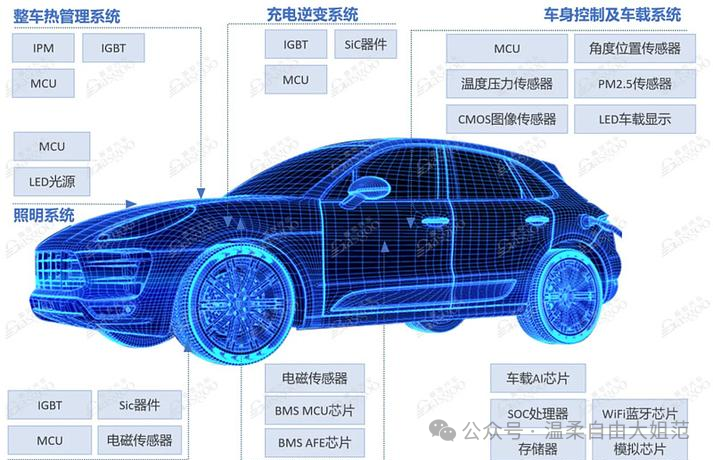
When it comes to China Resources Microelectronics, some readers may not be very familiar. Its history is not complicated: it can be traced back to the semiconductor industry’s beginnings in southern China in the 1980s, and it has steadily developed for nearly 40 years. Unlike those “overnight success” companies, China Resources Microelectronics is more like a low-key craftsman, deeply engaged in multiple product lines including power semiconductors, MCUs (microcontrollers), and sensors. Especially in power semiconductor chips, China Resources has long established a complete set of self-research capabilities in core automotive modules such as electric drive, electric control, and fast charging. This ability to connect from the underlying architecture to upper-level applications is rare even in Asia. In the past, domestic car manufacturers were constrained in the core chip field, facing passive pricing and technical limitations. Now, the rise of China Resources has become a key part of China’s efforts to “break the bottleneck” and achieve self-control in the automotive sector.
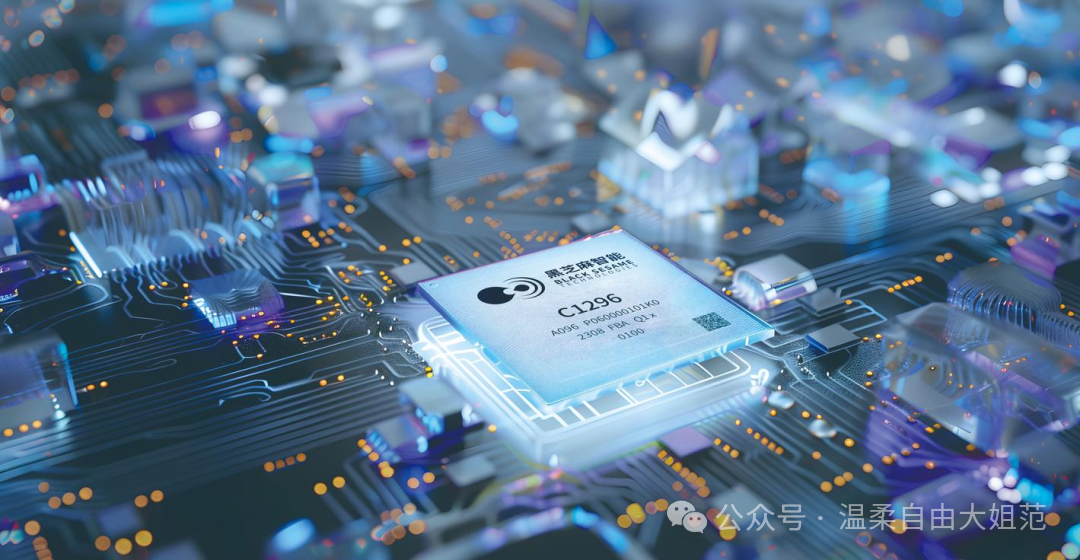
Speaking of the new generation of China Resources automotive chips, the most significant change is the major leap in architecture and process technology. The new generation of products generally adopts more advanced 90nm, 65nm, or even smaller node processes, resulting in lower power consumption, stronger performance, and a qualitative leap in reliability. Taking its flagship IGBT module as an example, the conduction loss has been reduced by 15%, and the heat exchange efficiency has improved by 20%, which not only enhances the range of electric vehicles but also significantly improves acceleration response and driving experience. On the surface, these are cold, hard data, but once you drive the car, the push-back feeling and smoothness of the ride become immediately apparent. Visually, these chips are small and exquisite, yet they contain immense energy. Compared to the previous generation of products, they are not only 15% smaller in size but also have a higher packaging density, adapting to the integration needs of various vehicle platforms. Compared to mainstream competitors (such as Infineon and ON Semiconductor), China Resources has not fallen behind in stability performance under high-voltage fast charging and extreme conditions. In fact, in some extreme scenarios, the adaptive temperature control and abnormal power-off protection capabilities of domestic chips are superior to those of imported brands.
Many people focus on the changes in the entire vehicle: appearance, interior, configuration, but few realize that chip technology is quietly reshaping the soul of the automobile. The introduction of the new generation of automotive-grade chips from China Resources has significantly enhanced the intelligent cockpit, autonomous driving, and overall vehicle energy management of electric vehicles. For example, the computing power of the intelligent cockpit MCU has improved, resulting in faster response times for voice interaction and gesture recognition; the redundancy control for automatic parking and L2+ level assisted driving systems is also more reliable. Looking at overall vehicle energy consumption, with efficient MOSFETs and IGBT modules, the losses in the electric drive system have been significantly reduced, naturally improving range performance. While storage capacity and space optimization are traditional “hard indicators”, the progress in chips has also made battery layout and wiring harness integration more flexible, indirectly enhancing rear space and trunk capacity. It can be said that the upgrade of China Resources chips, on the surface, appears to be a technical accumulation, but in reality, it represents a leap in user experience.
In terms of interior, intelligent configurations have become standard for the new generation of models. Large central control screens, full LCD instrument panels, AR-HUD head-up displays, and other high-tech equipment rely on the brainpower provided by chips. The high-performance MCUs and image processing units from China Resources ensure multi-screen interaction, smooth touch, and immersive interactive experiences. Although the chips themselves are “invisible and intangible”, their energy efficiency improvements and intelligent capabilities directly determine the stability of comfort features such as in-car voice assistants, ambient lighting, and seat massage. Higher-level assisted driving functions, such as adaptive cruise control, automatic lane change, and AEB (automatic emergency braking), all rely on the support of highly reliable chips. The domestic solutions centered around China Resources have also achieved OTA (over-the-air) remote upgrades and customized services, providing users with more personalized choices and ongoing value.
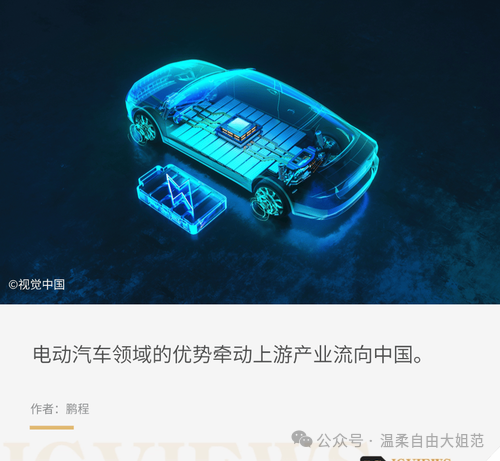
In terms of the power system, the combination of China Resources’ IGBT and SiC (silicon carbide) module solutions brings higher conversion efficiency and lower energy losses to the electric drive system. For example, a mainstream pure electric SUV equipped with China Resources chips consumes 8% less energy per 100 kilometers compared to competitors, accelerates from 0 to 100 km/h in just 6.5 seconds, and can recharge 400 kilometers of range in just 30 minutes. Compared to competitors like Tesla Model Y and BYD Song PLUS EV, the China Resources chip solution has advantages in cost control and production stability, with a wider price range and more flexible configurations to meet the needs of different consumer levels. In terms of market performance, models equipped with China Resources power semiconductors have already surpassed a 30% penetration rate in the domestic new energy vehicle market in 2024, with users generally praising them for being “more stable to drive”, “charging faster”, and “more worry-free to use”.
Consumer psychology is undergoing subtle changes. In the past, buying a car meant looking at the engine and brand, but now more and more users care about “chip configuration” and “intelligent level”. The recognition of domestic chips among consumers is gradually rising, especially among the younger generation, who are more focused on technology, intelligence, and vehicle costs. Compared to the traditional “joint venture halo”, local brands are gaining their market voice through technological advancements and price advantages. China Resources has perfectly tapped into this wave of intelligence and domestic substitution, with its chip solutions not only making vehicles smarter but also enhancing user experience in terms of cost-effectiveness.
The industry trend is evident. The penetration rate of new energy vehicles continues to break records, with intelligent driving, connectivity, and vehicle-cloud collaboration becoming mainstream trends. As leading automakers like Tesla, BYD, and Xpeng accelerate their self-developed chip efforts, the domestic semiconductor supply chain is maturing. China Resources’ strategy is also quietly transforming: on one hand, it collaborates deeply with domestic mainstream automakers to create customized chip solutions that meet various scenario needs; on the other hand, it increases R&D investment, continuously laying out in cutting-edge technology fields such as SiC and third-generation semiconductors to seize future technological heights. In the face of international competition, China Resources is no longer merely a follower but is gradually forming differentiated competitive barriers through localization, flexibility, and cost advantages.
Undeniably, China Resources power semiconductor chips also have shortcomings, such as the need for further verification of stability under extreme high and low temperatures. Compared to international giants, there is still a significant gap in brand influence and global market expansion. However, the flaws do not overshadow the merits; as a “core” driving force behind the rise of intelligent vehicles in China, China Resources is rewriting the industry landscape with tangible technological advancements and market performance. Moving forward, in the wave of deep integration of new energy and intelligence, can China Resources further break boundaries and go global? This is not only a suspense for the industry but also a common expectation for every Chinese automotive professional.
So, what do you think about the trend of “domestic chip localization” in automobiles? If it were you, would you choose a smart electric vehicle equipped with domestic chips? How confident are you in local companies like China Resources? Feel free to share your thoughts and reasons in the comments section.