3DP is one of the 3D printing technologies, and here I will explain the working principles of 3DP technology.
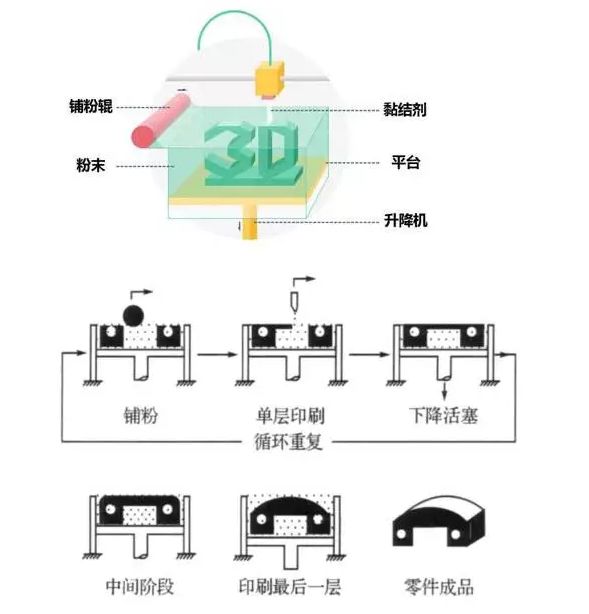
3DP (Three Dimensional Printing and Gluing), also known as Binder Jetting or Inkjet Powder Printing. In terms of working method, three-dimensional printing is closest to traditional two-dimensional inkjet printing. Similar to the SLS process, 3DP also creates parts by binding powder into a whole, but instead of using laser melting for binding, it uses a binder ejected from a nozzle.
Working Principles:
1) The feeding method of 3DP is the same as that of SLS, where the powder is evenly spread on the printing platform using a horizontal roller;
2) The colored glue is pressurized and delivered to the print head for storage;
3) The printing process resembles that of a 2D inkjet printer, where the system mixes the colored glue according to the color of the three-dimensional model and selectively sprays it onto the powder surface. The powder binds into a solid when it encounters the glue;
4) After one layer of binding is complete, the printing platform descends, and the horizontal roller spreads the powder evenly again before starting a new layer of binding. This process repeats layer by layer until the entire model is bound;
5) After printing is complete, the unbound powder is recovered, the powder on the model’s surface is blown off, and the model is soaked in transparent glue, giving it a certain strength.
Advantages of 3DP Technology:
1) No need for high-cost components like lasers. It is cost-effective and easy to operate and maintain.
2) High processing speed, capable of printing models at a vertical construction speed of 25 mm/hour.
3) Can print color prototypes. This is the biggest advantage of this technology, as it prints color prototypes without the need for post-coloring. Currently, most 3D printed human figures in 3D experience centers use this technology.
4) No support structures. Like SLS, the powder can support overhanging parts, and the powder can be recycled after printing, making it environmentally friendly and cost-saving.
5) The price of consumables and forming materials is relatively low, resulting in low printing costs.
Disadvantages of 3DP Technology:
1) The strength of gypsum is low, making it unsuitable for functional materials. Moreover, the printed products tend to be fragile.
2) The surface feels slightly rough, which is a common drawback of processes using powder as forming material.