In our daily work and life, we often use various electronic or electrical products, such as computers, mobile phones, televisions, refrigerators, washing machines, etc.These products, if we take them apart, will reveal a green board like the one below.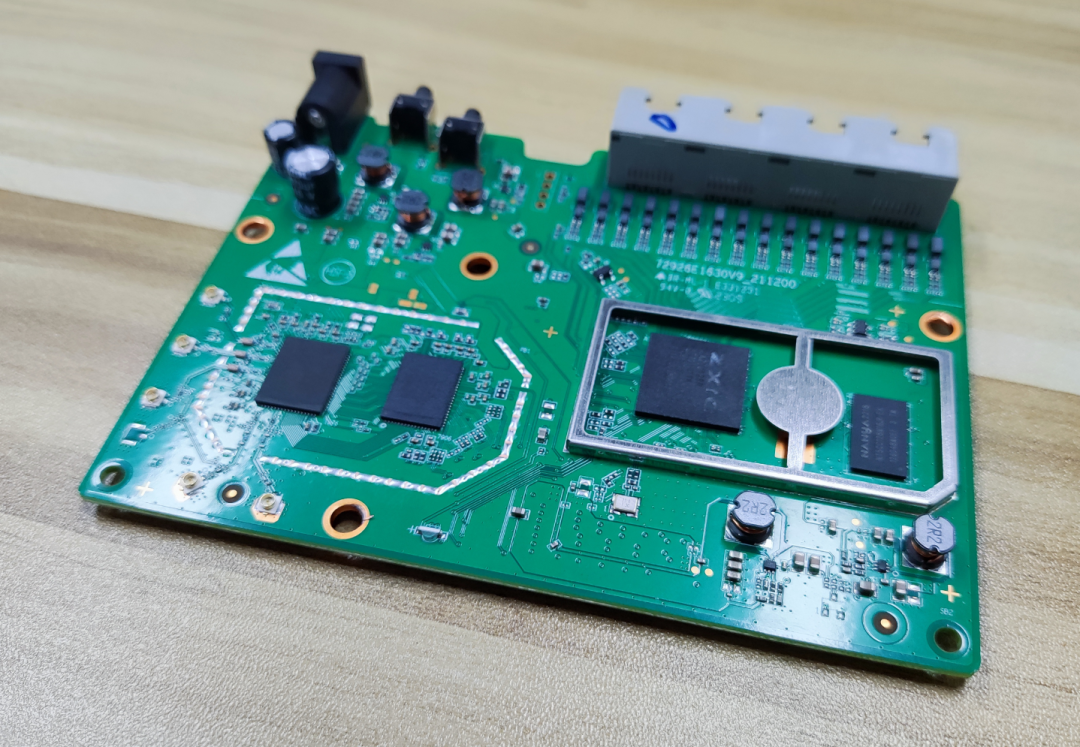 Sometimes it may be blue or black.Everyone knows that this green board is called a circuit board. A more official name is printed circuit board, or PCB (Printed Circuit Board; sometimes referred to abroad as PWB, Printed Wire Board).On the PCB, many electronic components are soldered, such as capacitors, resistors, inductors, etc.We can also see some black square components.That’s right, this component is likely to be a chip (called a chip in English).█ Definition of ChipA chip is actually a rather vague term.For electronic devices, it is hidden inside and is very important, equivalent to a car’s engine or a person’s heart, hence the term “core”. In terms of shape, it comes in pieces, hence the term “chip”. Together, it is called “chip”.Generally speaking, a chip is an integrated circuit (integrated circuit). The two can be equated and used interchangeably.An integrated circuit is relatively easy to define. It refers to a micro-circuit formed by integrating electronic components such as transistors, resistors, capacitors, and diodes on a single substrate through specific technology.If this substrate is made of semiconductor materials (such as silicon), or if the integrated circuit is made from semiconductor material wafers, it belongs to a semiconductor integrated circuit.In traditional terms, when we talk about integrated circuits, we are mostly referring to semiconductor integrated circuits. Therefore, sometimes the terms semiconductor, chip, and integrated circuit are often used interchangeably.If we look closely, there are still some differences between chips and integrated circuits.Some industry perspectives believe that:Integrated circuits are circuits, which are basic units emphasizing the achievement of a certain function, such as a specific logical operation. In scenarios like circuit design, this term is used more frequently.On the other hand, a chip is a more macro and productized concept. After design, manufacturing, packaging, and testing, it takes on a directly usable product form, which is considered a chip. When emphasizing usage, people tend to use the term “chip” more often, such as CPU chips, AI chips, baseband chips, etc.Some define a chip as: “a general semiconductor component product that contains one or more integrated circuits and can achieve a specific function”. In other words, a chip is a general term for semiconductor component products.In comparison, the distinction between semiconductors and integrated circuits is clearer:Semiconductors include: integrated circuits + discrete devices + optoelectronic devices + sensors.The main difference between integrated circuits and the other three lies in the degree of integration. The number of transistors in an integrated circuit is far greater than that in discrete devices, optoelectronic devices, and sensors. Moreover, the substrate materials are generally different.Currently, the combined market size of optoelectronic devices, discrete devices, and sensors accounts for only about 10% of the total semiconductor market size.Therefore, we can say that integrated circuits are the most important component of semiconductors.█ Classification of ChipsA chip is a set of circuits that achieve specific functions. It has a modular characteristic that allows manufacturers to quickly design and develop products, reducing development difficulty and shortening development cycles.For decades, semiconductor technology has rapidly developed under the guidance of Moore’s Law, with chip sizes becoming smaller and accommodating more circuits, significantly reducing the size, cost, and power consumption of electronic products.It has not only improved our quality of life but also led the information technology revolution, propelling the progress of human civilization.

With chips, we have mobile phones.Today, chips have a very wide range of applications and have spawned many categories.The World Semiconductor Trade Statistics (WSTS) classification is quite authoritative and official. They categorize all integrated circuits into: analog (Analog), micro (Micro), logic (Logic), and memory (Memory).On an unofficial level, the classification is relatively casual.By function, we often classify chips into: computing chips, memory chips, communication chips, sensing chips, energy chips, and interface chips.Some well-known types of chips include: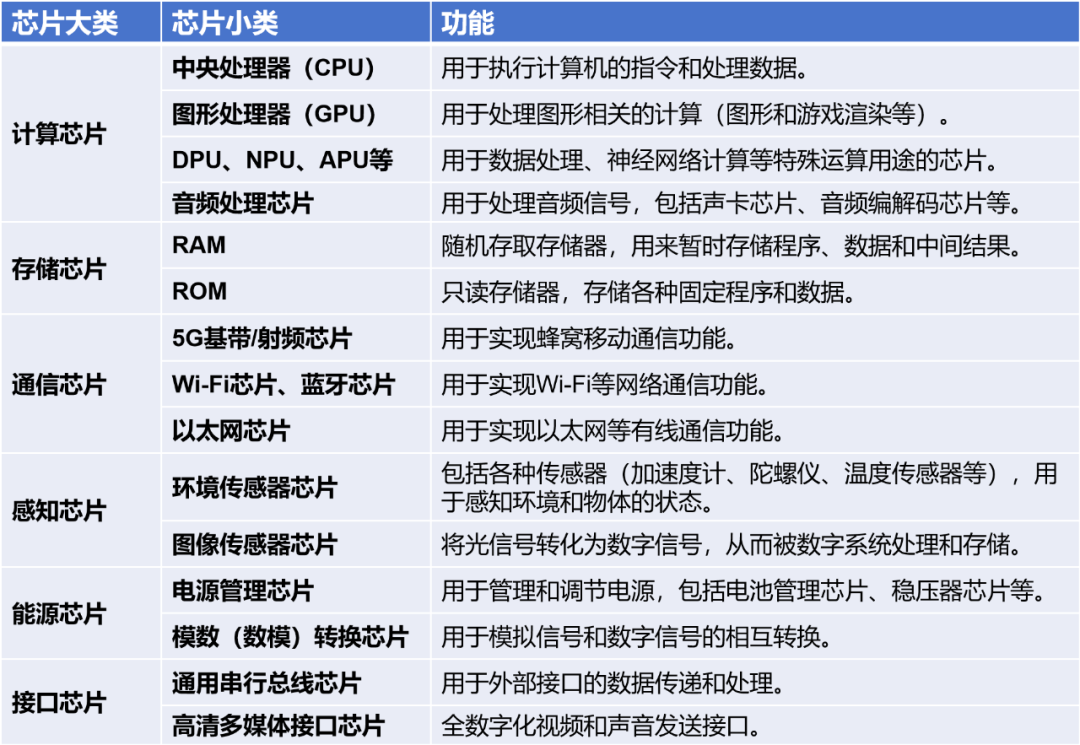 By grade, chips can be divided into consumer-grade, industrial-grade, automotive-grade, military-grade, and aerospace-grade. By design philosophy, they can also be classified into general-purpose chips (CPU, GPU, etc.) and dedicated chips (ASIC).We can also classify them by process technology, such as the commonly heard 28nm, 14nm, 7nm, and 5nm. Alternatively, we can classify them by semiconductor materials, such as silicon (Si), germanium (Ge), gallium arsenide (GaAs), and gallium nitride (GaN). These will be introduced later when we discuss the chip manufacturing process.
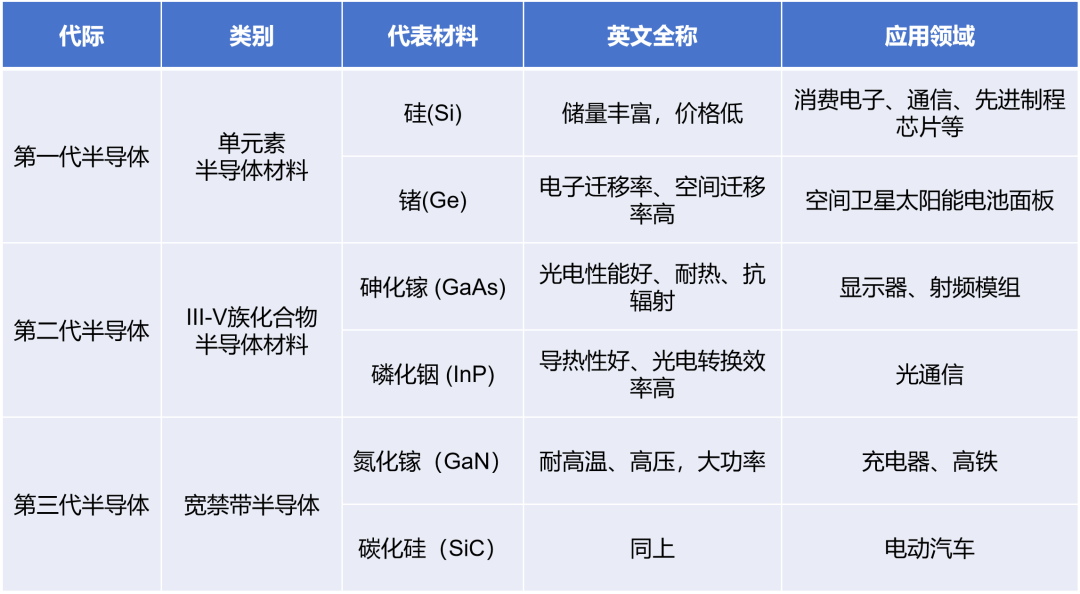
In fact, besides electrical chips, we have also developed optical chips (such as silicon photonics technology), which use light instead of current to transmit signals.From the perspective of integrated circuits, there are many classifications.By manufacturing process, integrated circuits can be divided into semiconductor integrated circuits and film integrated circuits (film integrated circuits use metals and ceramics, etc.). Film integrated circuits can be further divided into thick-film (thick-film) integrated circuits and thin-film (thin-film) integrated circuits.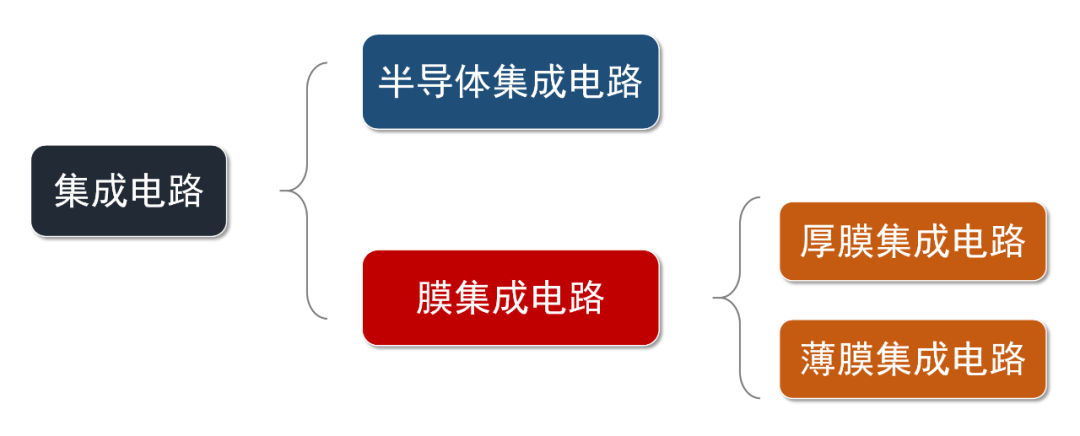 By circuit properties, we can also classify them into digital integrated circuits, analog integrated circuits, and mixed-signal integrated circuits.Digital integrated circuits, as the name suggests, process digital signals. They appear most frequently around us, such as microprocessors (CPU, GPU, etc.), digital signal processors (DSP), and microcontrollers (MCU), all of which are digital integrated circuits.Analog integrated circuits are more commonly used in sensors, power chips, operational amplifiers, etc., mainly for amplifying, filtering, demodulating, and mixing analog signals.Mixed-signal integrated circuits integrate both analog and digital circuits onto one chip. You might guess that analog-to-digital (ADC) and digital-to-analog (DAC) conversion chips belong to this category.Based on the number (scale) of microelectronic devices integrated on the chip, integrated circuits can be classified into the following categories:
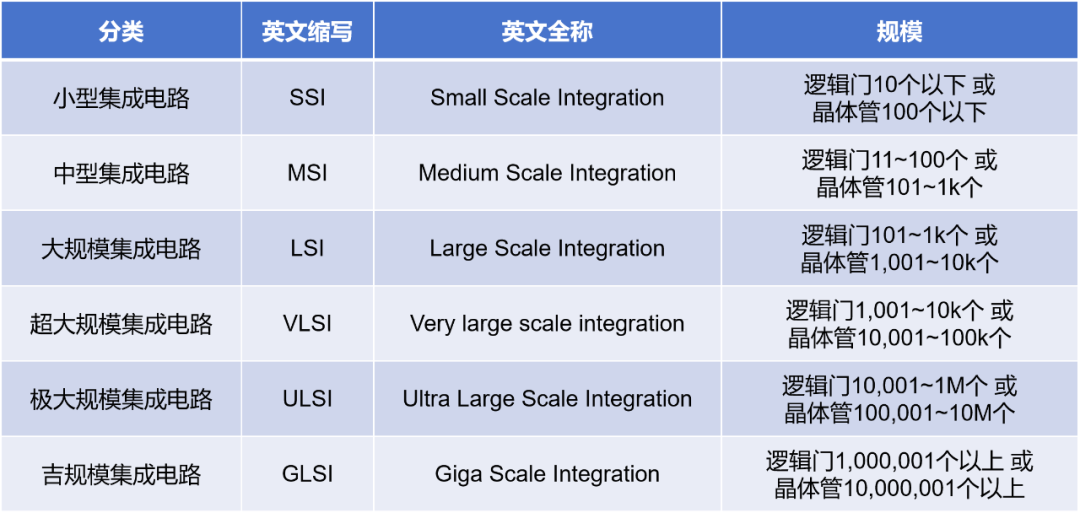 More professionally, based on conductivity type, integrated circuits can also be divided into bipolar integrated circuits and unipolar integrated circuits.Bipolar integrated circuits have complex manufacturing processes and higher power consumption, with representative types including TTL, ECL, HTL, LST-TL, STTL, etc.Unipolar integrated circuits have simpler manufacturing processes, lower power consumption, and are easier to produce large-scale integrated circuits, with representative types including CMOS, NMOS, PMOS, etc.The above terms will be explained in detail when we later discuss the working principles of chips.█ Internal Structure of a ChipEarlier, we mentioned that chips appear as black square pieces.Sometimes, they also have a silver metal cover (for enhanced protection and heat dissipation). For example, our CPU:
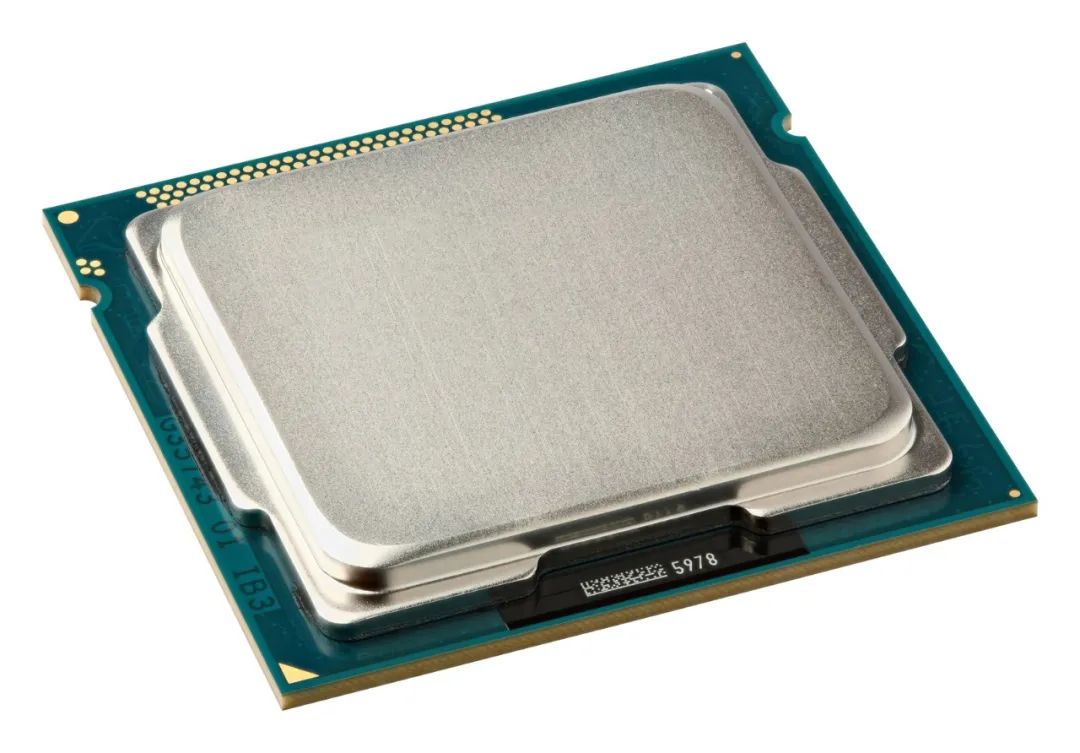 CPU Cover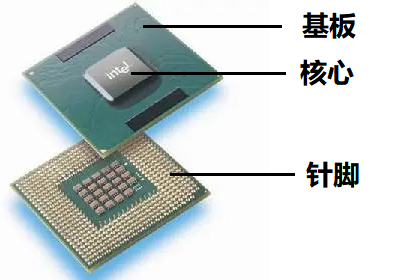
CPU Appearance
A chip becomes like this only after packaging (a step in the chip manufacturing process).We need to remove the “shell” to truly see the internal core of the chip. Under a microscope, it looks like this: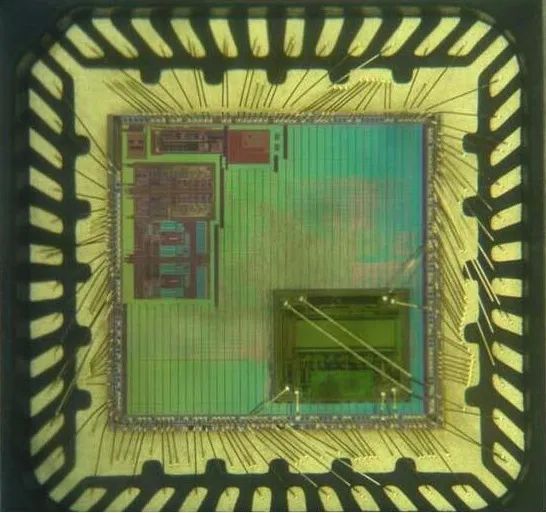 The outer circle is made up of pins. The thin lines are the lead wires. The square part in the middle is the actual circuit of the chip.If we zoom in further, it looks like this:
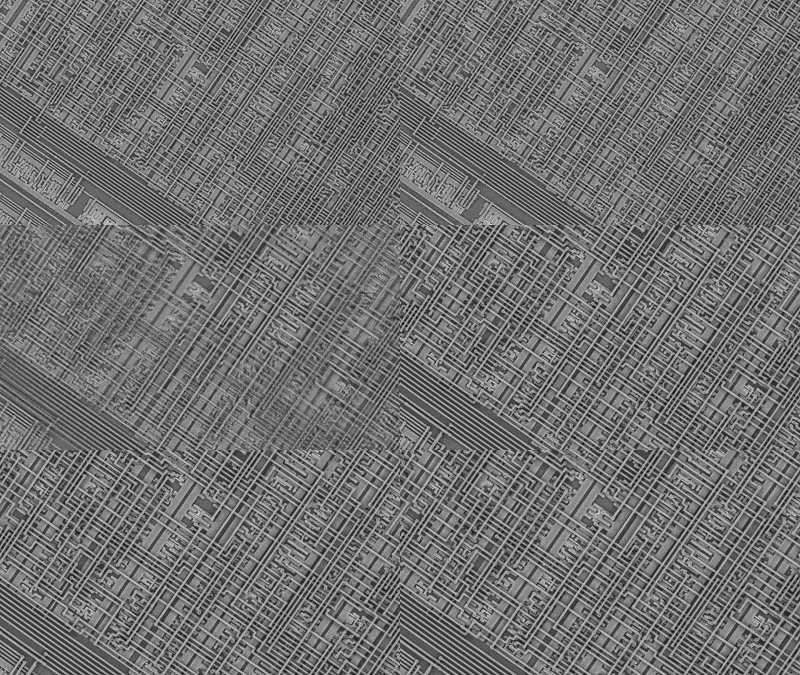 In 3D effect, it looks like this:
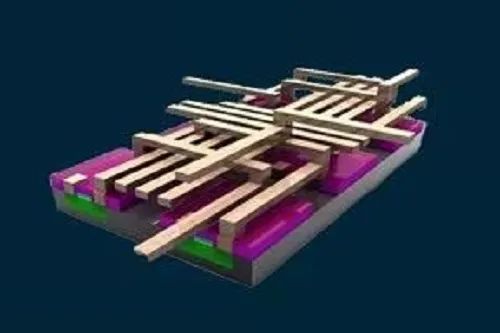 That’s right, there are many layers, densely packed, resembling a super maze or a futuristic city.In the image, each line represents a connection. The objects they connect to are transistors.The number of transistors in a chip usually represents the chip’s capability. The more transistors there are, the more circuits, and the stronger the functionality and computing power. Nowadays, many manufacturers emphasize how many transistors their chips contain, which is what this means.
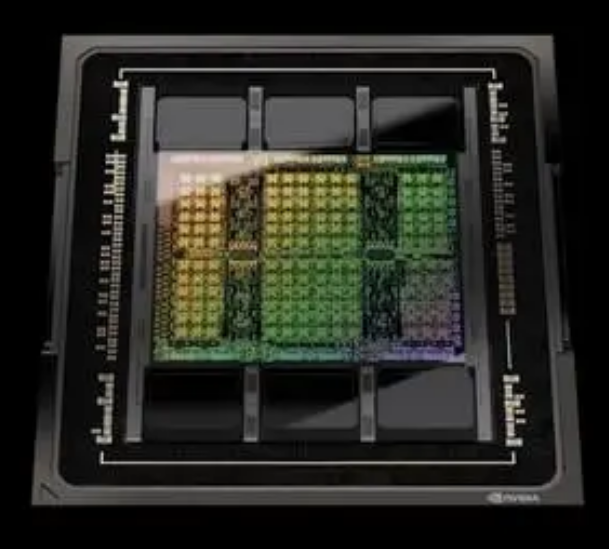 NVIDIA’s H100 GPU has 80 billion transistors.Chips can be simple (relatively speaking) or complex. Some complex chips are further divided into different functional modules. These modules together form a system, becoming a SoC (System on Chip).Our mobile phone’s main chips, such as Qualcomm Snapdragon, MediaTek Dimensity, and Huawei Kirin, are typical SoC chips. The chip includes CPU, GPU, APU, ISP, baseband, RF, etc.Now, the question arises, how can the transistors inside the chip perform various tasks like computing and storage?What do we mean by logic gates, MOSFETs, FinFETs, and PN junctions?To be continued…Thanks: The writing process of this article received guidance from Zhu Jing, a senior economist at Beijing International Engineering Consulting Co., Ltd. and deputy secretary-general of the Beijing Semiconductor Industry Association. Special thanks!Source: Fresh Date Class