Objective
Monitoring of the device after Left Atrial Appendage Closure (LAAC) is crucial for evaluating the positioning of the occluder, peri-device leak (PDL), and device-related thrombus (DRT). Currently, data on the role of Cardiac CT Angiography (CCTA) after LAAC is limited. We compared CCTA with Transesophageal Echocardiography (TEE) in patients who successfully underwent LAAC.
Methods and Results
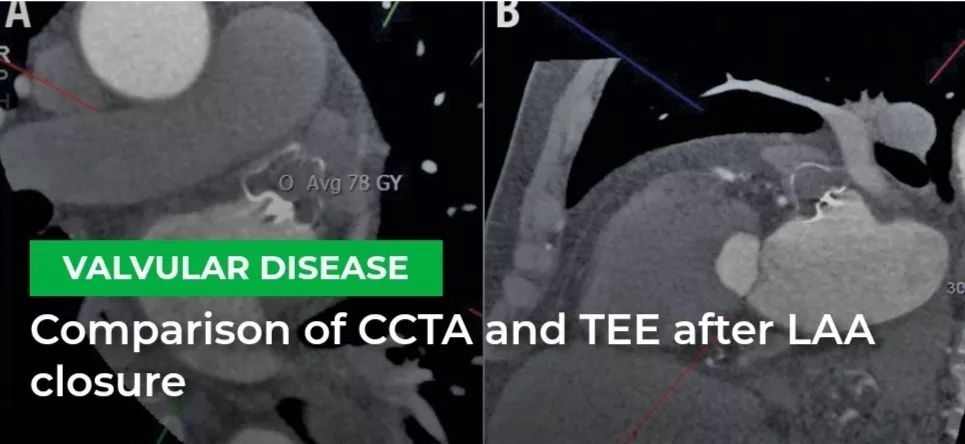
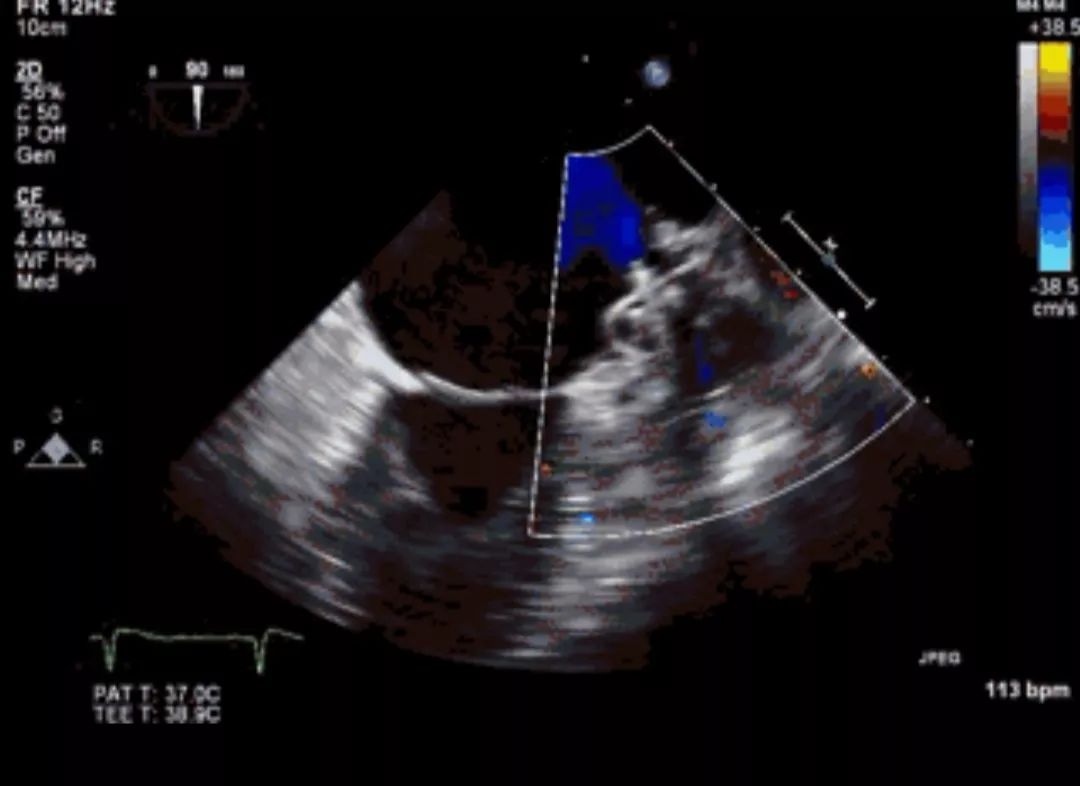
We consecutively included patients with non-valvular atrial fibrillation who underwent LAAC and conducted follow-up with CCTA and TEE postoperatively. Prospective cardiac-gated CCTA examinations were performed (Toshiba 320 or Siemens second-generation dual-source 128-slice CT), followed by Impax 3D post-processing. Patients with glomerular filtration rates <30 mL/min/1.73m² were excluded from CCTA. We analyzed the positioning of the occluder, PDL or fabric leaks, the ratio of left atrium (LA) to left atrial appendage (LAA), linear attenuation coefficients, and DRT. A total of 102 patients received LAAC treatment, including 79 WATCHMAN, 17 Amulet, and 6 ACP devices. The average age was 76.4±7.5 years, with a CHADS2 score of 3.0±1.3 and a CHADS-VASc score of 4.6±1.6. The average time for CCTA examination was 105.2±54.8 days postoperatively, while TEE averaged 124.9±100.3 days postoperatively. LAA patency was found in 52/100 (52%) cases, with PDL in 45 cases (86.5%) and fabric leaks in 7 cases (13.5%). The attenuation coefficient of occluded devices was <100 HU, with an LA:LAA ratio <0.25. TEE only detected PDL in 35 cases (34.3%). In patients with complete occluder closure, the average device compression ratio was greater (11.3±4.3% vs 8.2±4.0%, P<0.001). Only one case of DRT was found, observable on both TEE and CCTA.
Conclusion
CCTA is suitable for follow-up monitoring after LAAC and serves as an alternative to TEE, with CCTA being more sensitive in evaluating PDL than TEE.
【Morning Reflection】
Currently, transesophageal echocardiography is the most important examination for follow-up after LAAC. The results of this study indicate that cardiac CTA has a higher detection rate and sensitivity for peri-device leaks compared to transesophageal echocardiography, making this non-invasive examination a potential alternative to the invasive esophageal examination.
Original Article: DOI:10.4244/EIJ-D-18-01107