Can Smartwatches Function as an ECG? A Comparison of Accuracy Between Samsung and Apple
Can Smartwatches Function as an ECG? A Comparison of Accuracy Between Samsung and Apple

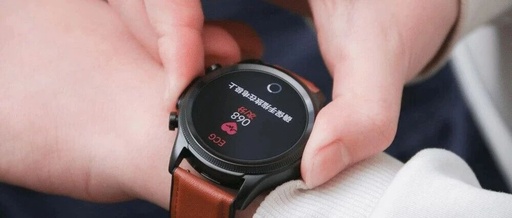
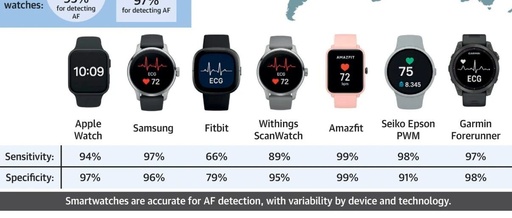
Have you ever imagined that the seemingly ordinary smartwatch on your wrist could one day become an “invisible guardian” of your heart health? Recently, a significant study published in the Journal of the American College of Cardiology: Advances (JACC: Advances) has provided new answers for everyone concerned about cardiovascular health. By analyzing data from 26 … Read more


GW-ICC/AHS.25 | Professor Liu Qiming: Comprehensive Management of High-Risk Atrial Fibrillation, From Screening to Individualized Intervention

GW-ICC/AHS.25 | Professor Liu Qiming: Comprehensive Management of High-Risk Atrial Fibrillation, From Screening to Individualized Intervention

At the 36th Great Wall Cardiology Conference and the Asian Heart Congress 2025 County Session, Professor Liu Qiming from Xiangya Second Hospital of Central South University delivered a systematic explanation on “Risk Assessment and Screening for Atrial Fibrillation in High-Risk Patients,” integrating key updates from the “2024 ESC Atrial Fibrillation Management Guidelines” and proposing a … Read more

Can Smartwatches Accurately Capture ‘Out-of-Control’ Heartbeats? Latest Meta-Analysis on Atrial Fibrillation Detection Provides Answers

Can Smartwatches Accurately Capture 'Out-of-Control' Heartbeats? Latest Meta-Analysis on Atrial Fibrillation Detection Provides Answers

【Research Background】 Atrial fibrillation is one of the most common arrhythmias worldwide and is a significant risk factor for stroke and heart disease, posing a serious challenge to public health. Therefore, early diagnosis and intervention are crucial. Traditional atrial fibrillation diagnosis relies on standard electrocardiograms, which, while accurate, have limitations such as a limited monitoring … Read more

Do Smartwatches Accurately Monitor Premature Beats and Atrial Fibrillation?

Do Smartwatches Accurately Monitor Premature Beats and Atrial Fibrillation?

Nowadays, many people wear smartwatches, which can measure heart rate and alert you to “arrhythmias.” How accurate are these watches in monitoring? Should you go to the hospital if they indicate premature beats or atrial fibrillation? Smartwatches are not classified as medical devices. Although some watches that can measure electrocardiograms have medical device certifications, there … Read more

Can Smartwatch ECG Features Truly Warn of Atrial Fibrillation? Doctors Say: A Helper, Not the Gold Standard for Diagnosis

Can Smartwatch ECG Features Truly Warn of Atrial Fibrillation? Doctors Say: A Helper, Not the Gold Standard for Diagnosis

With the popularity of smart wearable devices, smartwatches equipped with single-lead electrocardiogram (ECG) functions are quietly changing the way people manage their health. Among these, atrial fibrillation (AF) detection is one of the most关注的功能之一. Many people regard it as a “heart guardian” by their side, but some experts have raised cautious voices. What role does … Read more

Cardiac CTA as a Replacement for Esophageal Echocardiography After LAAC

Cardiac CTA as a Replacement for Esophageal Echocardiography After LAAC

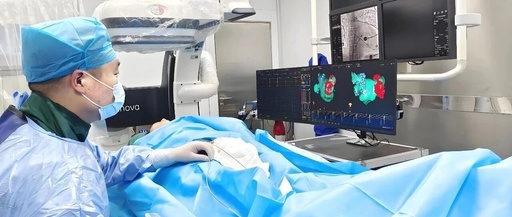
Objective Monitoring of the device after Left Atrial Appendage Closure (LAAC) is crucial for evaluating the positioning of the occluder, peri-device leak (PDL), and device-related thrombus (DRT). Currently, data on the role of Cardiac CT Angiography (CCTA) after LAAC is limited. We compared CCTA with Transesophageal Echocardiography (TEE) in patients who successfully underwent LAAC. Methods … Read more

Anticoagulant Drug Selection After Left Atrial Appendage Closure

Anticoagulant Drug Selection After Left Atrial Appendage Closure

Currently, for patients with non-valvular atrial fibrillation (NVAF) who cannot tolerate or do not wish to undergo long-term anticoagulation therapy to prevent stroke, percutaneous left atrial appendage closure (LAAC) is an effective and safe surgical method for stroke prevention in atrial fibrillation (AF) patients. Regarding the management after LAAC, guidelines recommend short-term anticoagulation post-surgery, followed … Read more

Discussion on Anticoagulation Optimization After Left Atrial Appendage Occlusion

Discussion on Anticoagulation Optimization After Left Atrial Appendage Occlusion

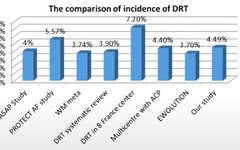
Left atrial appendage (LAA) occlusion has emerged as a non-valvular atrial fibrillation (AF) stroke prevention strategy in recent years. Similar to other congenital heart defect occlusion procedures, patients undergoing LAA occlusion require anticoagulation therapy to prevent device-related thrombus (DRT) events. However, the anticoagulation strategies post-LAA occlusion in China are not yet fully standardized, and clinicians … Read more

Can Smartwatches Save Lives? Experts Discuss 9 Key Points

Can Smartwatches Save Lives? Experts Discuss 9 Key Points

Keywords: Smartwatches; Fitness Trackers; Wearable Devices; Apple Watch; Atrial Fibrillation; Heart Rate; Blood Oxygen; This article has 2992 words and takes about 12 minutes to read. In the past decade, the technology behind wearable devices has rapidly advanced, and “wrist-worn” smart devices like smartwatches and fitness trackers are becoming increasingly intelligent. Their use in daily … Read more

Latest Research Progress on Anticoagulation Therapy After Left Atrial Appendage Closure

Latest Research Progress on Anticoagulation Therapy After Left Atrial Appendage Closure

With the continuous advancement of medical technology, left atrial appendage closure (LAAC) has become increasingly widespread in clinical applications, bringing hope to many patients with atrial fibrillation. Antithrombotic therapy runs through the entire process of LAAC and is one of the core issues of LAAC. However, there is currently no consensus on how to formulate … Read more