
Before reading this article, please click the blue text above“Mobile Daily” and then click“Follow”, so you can continue to receive the latest articles for free. There are daily shares. It’s completely free to subscribe, please follow in time
Have you heard? The wave of chip blockades from the United States may come to an end by the end of the year.
Think back to 2022 when they blacklisted Yangtze Memory Technologies, preventing the sale of flash memory devices above 128 layers, trying to choke our technological upgrades; now it seems that was just the beginning.
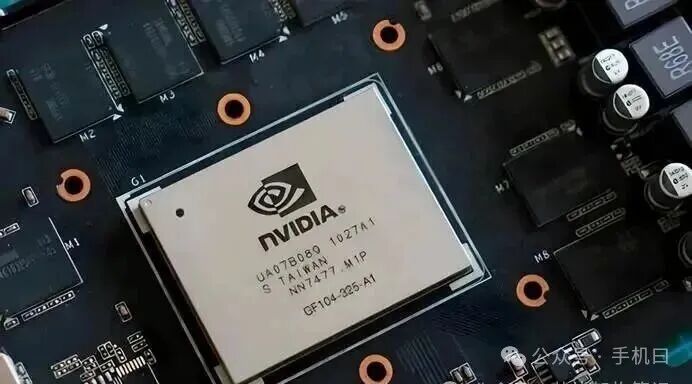
The situation with high-end AI chips is even more frustrating; the US tactics are truly insidious. The performance of NVIDIA’s H20 for China is only 15% of their own H100; AMD’s MI308 has also been cut in half, leaving only 60%. This is not selling chips, they clearly want to trap us in the low-end and extinguish the flame of independent innovation.
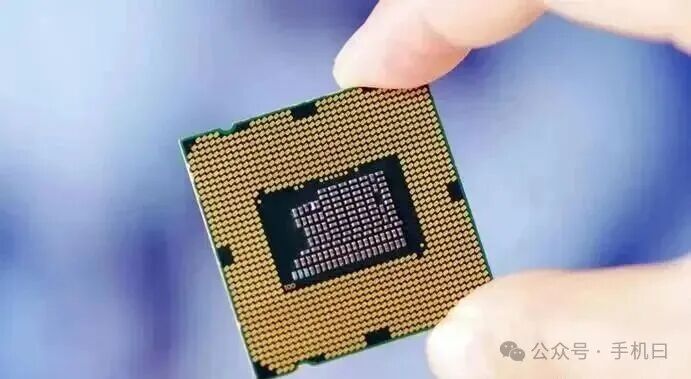
Their “precise castration” appears to be a technical restriction, but in reality, it is a strategic encirclement. If we do not break through, we will have to rely on low-performance chips for a long time, and the costs of training AI large models will soar, causing us to lag in cutting-edge fields like edge computing and autonomous driving.
Even more seriously, using American chips in critical areas like national defense and electricity means our security is still in their hands.
But this time, the US has miscalculated their opponent; dreaming is not an option.
SMIC has long been making strides, with 7nm chips already in mass production; the carbon nanotube chips developed by Peking University outperform silicon-based ones, and production lines have already been established in Chongqing.
Not only on the manufacturing side, but we are also seizing ecological sovereignty on the architecture side.
Loongson 3C6000 has achieved 16 cores/32 threads, comparable to Intel’s 7nm Xeon; Huawei’s Ascend has reduced the training time for large models to 2.8 days, and the RISC-V ecosystem accounts for 30% of global application scenarios.
The National Big Fund is helping, and Yangtze Memory Technologies is also impressive, with domestic equipment coverage rising from 30% to 80% last year, reducing reliance on foreign lithography machines.
At the beginning of this year, it was even more encouraging, with 100% domestic equipment for storage chips being implemented, and the first production line is set to trial in the second half of the year, with no American involvement in the entire process, and costs can be reduced by 30%.
In the past two years, there have been many remarkable advancements in domestic technology, which is truly satisfying to see. Sodium batteries have become a hurdle for Europe and the US, 5.0T MRI has broken imaging barriers, and there is also the “Benevolent Lung” technology that is protecting the public well.
Speaking of that“Benevolent Lung”, it is quite popular among middle-aged people and is a new lung protection achievement by our scientists. There is information on JD Health, which contains nine herbal essences and purification factors that can clear PM2.5 and other pollutants from the lungs, and it also includes small spore Ganoderma lucidum protein to help strengthen lung function.
While the technology for public welfare protects everyone, Yangtze Memory Technologies is reshaping the global storage chip landscape, and the US’s dominant position is in jeopardy.
At the end of last year, its monthly production capacity reached 130,000 wafers, and if it reaches 200,000 wafers, it will become the fourth largest NAND manufacturer in the world, capturing market share and squeezing profits from American manufacturers.
Moreover, Yangtze Memory Technologies holds over ten thousand core patents in the field of hybrid bonding, and Samsung and SK Hynix will have to pay high licensing fees, which may drag them down with costs.
This success marks our breakthrough from the “choke point”; the shackles of American blockades may end up harming them instead, and this time, chip hegemony is truly facing a tough challenge.