In a “tin shed” with a refrigeration system just 40 minutes from Ho Chi Minh City, Mirai Labs CEO Corey Wilton first realized the enormous scale of crypto airdrop abuse. “It’s really creepy,” Wilton said in an interview. He had just visited a “phone farm” in southern Vietnam, where he estimated that at least 30,000 smartphones were stacked in a space no larger than a single apartment.
For the past four years, Wilton has hoped to witness firsthand the behind-the-scenes operations that collapsed his NFT horse racing game Pegaxy in 2021. “At that time, Pegaxy was booming, and our daily active users peaked at around 500,000,” Wilton recalled. “We started receiving reports about ‘robot farms.'” These robots can control hundreds of accounts simultaneously, quickly purchasing high-probability racehorses and repeatedly participating in races to earn in-game currency, which can then be converted into real money. “You would see screenshots posted by people showing dozens of applications running on the screen, and similar scenes frequently appeared on social media,” he explained.
Pegaxy is an automated horse racing game featuring fifteen horses competing simultaneously. Wilton stated that the robot farms transformed the game from “who can win” to “who can extract value faster”—changing the game atmosphere and accelerating the project’s decline.
On-Site: Unveiling Vietnam’s ‘Professional’ Phone Farm
In May of this year, Wilton finally got his wish, with the help of a former Pegaxy player, to exclusively visit a “highly specialized phone farm” in Vietnam. This player had stumbled upon the farm’s existence on TikTok.
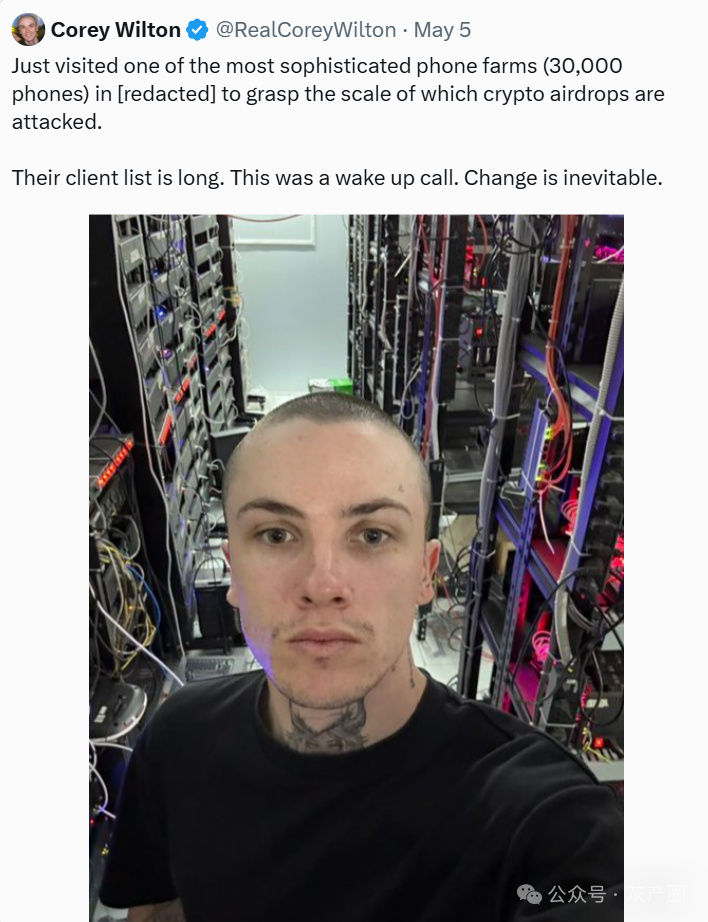
(Corey Wilton)
“I went to two places, both about 40 minutes from where I was, in relatively remote areas,” he recalled. “There would definitely be no foreigners going there, and they completely did not want to be discovered.” Wilton described one location as a tin shed right next to the street, with the air conditioning set to “as cold as it can get.”
The inside of the tin shed was filled with metal racks, each densely packed with thousands of smartphones, leaving only narrow aisles for employees to pass through. The entire layout resembled a “shoddy” crypto mining farm.
Wilton stated that the operators showed him the “rental segment” of the business, where clients could rent the phone farm for any purpose they needed. Unlike traditional robot servers, each device in the phone farm is equipped with its own SIM card and device fingerprint, and can disguise its IP geographical location, making it harder to detect, especially suitable for systems that require each account to be linked to a phone number. Additionally, smartphones offer a high cost-performance ratio between computing power and cost, and even if one device is damaged, it can be quickly replaced without significantly affecting overall operations.
Wilton noted that in the cases he witnessed, an operator would control a “master phone” via a computer, which was connected to over 500 “slave phones.” Whatever operation was performed on the master phone would be synchronized across all slave devices. “Most of their clients actually come from the Web2 industry. For example, K-pop agencies rent these devices to boost traffic; casinos use them to simulate real players, making the games appear more ‘real,’ but in reality, they are used to suppress you and lead you to lose money.”
“There are also some Web2 players who batch boost mobile games, leveling up accounts and then selling these upgraded accounts,” he added. However, Wilton stated that the core business of this farm is actually “manufacturing.”
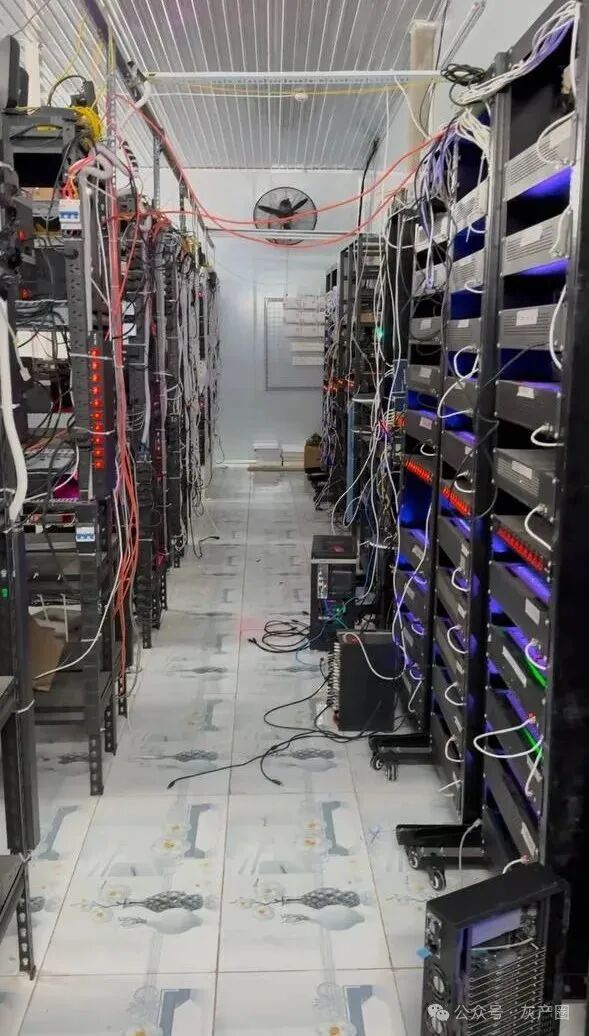
The operator would purchase damaged or obsolete smartphones at low prices, then modify them through software and other means, ultimately packaging them as “self-service phone farm” devices for sale in overseas markets. The project can produce over 1,000 deployable farm phones each week, with each “phone farm kit” containing about 20 devices. Wilton stated that these people do not personally operate the phones. They do not go out to exploit airdrops or perform related operations. Their main business is actually packaging and selling these devices, sending them to overseas users who want to operate from home. Next, you just need to keep these devices online and buy more phones to connect them.”
Wilton lamented that it is no wonder that “robot-assisted crypto airdrop exploitation” has become a significant problem in the crypto industry. The so-called crypto airdrop exploitation refers to obtaining free tokens that should be awarded to real early users by creating a large number of wallet addresses and faking user behavior. Although most crypto airdrops do not require phone number verification, unique device fingerprints and IP addresses can still bypass Sybil protection mechanisms.
This type of “exploitation” often leads to farm users immediately selling tokens after receiving them, impacting market prices, while making it more difficult for genuine users to obtain airdrops. Many projects experience a surge of fake active behavior before airdrops, and once the airdrop is distributed, the number of users and token prices often plummet rapidly.
Frequent Controversies Over Crypto Airdrops, Widespread Criticism of Robot Behavior
Whether through controlling a large number of phones or using a single computer, robot behavior has caused significant damage to crypto airdrop activities. Last June, the Ethereum zero-knowledge (ZK) Layer2 scaling project ZKsync faced heavy criticism due to airdrop attacks by numerous robots, with users accusing it of opening the door to “robot exploitation.”
On-chain data analysis platform Lookonchain reported that an “airdrop hunter” claimed over 3 million ZKsync (ZK) tokens through 85 wallet addresses, with a total value of up to $753,000 at the time. Another user publicly bragged on social media that he profited nearly $800,000 through an “extremely efficient $ZK Sybil attack strategy.”
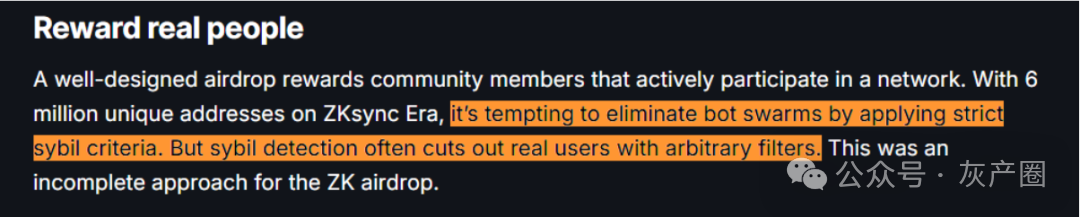
The so-called “Sybil attack” is a security threat behavior where an attacker creates multiple false identities to gain an unfair advantage in a network system. The term originates from a book titled “Sybil,” which describes a case of a woman with dissociative identity disorder. Mudit Gupta, the security chief of ZKsync’s competitor Polygon, referred to it as “possibly the easiest airdrop to exploit in history, and the most exploited,” attributing the problem to the lack of anti-robot mechanisms. Although ZKsync set seven qualification criteria this time to prevent Sybil attacks.
ZKsync responded in its official FAQ that current Sybil attack strategies are becoming increasingly complex, making it difficult to distinguish them from real users; and if overly strict screening criteria are adopted, while it may block some Sybil attackers, it could also mistakenly harm many genuine users.
However, just last month, Binance provided a different perspective while addressing robot behavior in its “Binance Alpha Points” program. “Traditional robots usually follow predictable, repetitive behavior patterns, making them relatively easy to identify,” a Binance spokesperson said in an interview. “But with the rise of AI-driven robots, we are now facing a system that closely mimics human behavior—from browsing habits to interaction times, making identification significantly more challenging.” Binance stated that the platform is continuously increasing its anti-robot efforts, developing new tools to identify abnormal operations from large-scale behavior patterns. For example, address entity association analysis can help identify clusters of wallets controlled by the same entity, even if these wallets appear independent on the surface.
These analyses are particularly crucial for revealing behaviors such as disguised holdings, multisend manipulation, and wash trading—common tactics used by AI-driven robots to fabricate real engagement and false liquidity. The impact is not limited to crypto airdrops; robots have also been accused of flooding the market with countless worthless meme coins. Coinbase’s product head Conor Grogan recently pointed out on the X platform: “Most tokens launched on the PumpFun and LetsBonk platforms are almost entirely controlled by robots.” He found that on the meme coin platform LetsBonk, top accounts release a new token on average every three minutes.
Daren Matsuoka, a data scientist and partner at a16z Crypto, believes that Sybil attacks are a problem that has only emerged in recent years. “Throughout most of the development of cryptocurrencies, we naturally had a certain level of Sybil resistance—because gas fees on these Layer1 blockchains have always been high,” he stated in an a16z Crypto podcast in April this year.
“In the past, to qualify for an airdrop, you indeed needed to pay transaction costs of several dollars or even tens of dollars. But as infrastructure continues to improve, the cost of operations has become very low. I believe this will fundamentally change the game of attack and defense mechanisms.” a16z Crypto’s CTO Eddy Lazzarin has been emphasizing the importance of building a “proof of human” mechanism.
“AI can now generate a large number of realistic behavior records. The most advanced robot farms are now almost impossible to reliably identify, and it won’t be long before those with moderate technology will also become equally undetectable,” Lazzarin wrote in an article in May this year. What Lazzarin is most interested in is building a “proof of personhood” mechanism: it should allow real humans to easily and freely verify their identity while making it costly and difficult for robots or fraudsters to commit large-scale forgery. He mentioned that the iris scanning project World, initiated by Sam Altman, is a typical example of such a mechanism. The core idea of this project is that each person can only register for one World ID, with its uniqueness verified through iris scanning (since everyone’s iris is unique).
Lazzarin added in the airdrop-themed podcast: “I really hope to see more people trying systems like World ID, which combine biometric technology with privacy protection mechanisms to limit each person to only one identity ID.”
However, Ethereum co-founder Vitalik Buterin believes that “one person, one ID” is not a perfect solution, as it means that all historical behaviors could be tied to a single attack point—namely, the key corresponding to that identity. If leaked, the risks are enormous. At the same time, he pointed out that biometric and government identity information can also be forged.
Why Not Just Eliminate Crypto Airdrops?
If crypto airdrops are so easily manipulated, the most straightforward choice seems to be to simply eliminate the airdrop mechanism. However, there are also viewpoints that airdrops still have their significance. Distributing tokens to real users participating in the protocol not only helps achieve decentralization of project governance but also disperses control through voting rights and other means. Additionally, airdrops often generate a lot of buzz. “A clear reason is: when you distribute a large number of potentially valuable tokens, it attracts a lot of attention, which itself has a marketing effect,” Lazzarin stated. “Airdrops are essentially a marketing tool.”
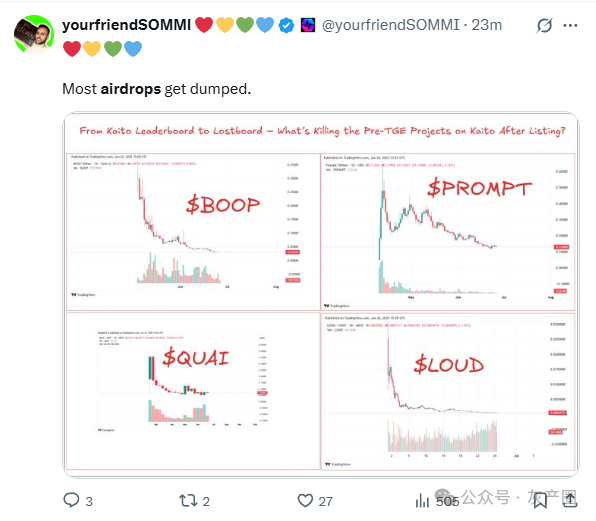
Wilton also agreed and pointed out that project parties should anticipate that some users will sell their tokens, which is actually the marketing cost of acquiring users, and the key is to ensure that these users are real people who are “willing to stay long-term.” Meanwhile, Binance believes that automated robots are not entirely harmful. In fact, in certain scenarios, if used properly and transparently, robots can play a positive role—such as providing liquidity, executing strategies on behalf of users, or conducting stress test simulations during audits.
Author|Translated by Felix Ng|Aki Chen from Wu Says Blockchain
Original link:
https://cointelegraph.com/magazine/inside-30000-phone-crypto-airdrop-bot-farm/