Cardiac CTA as a Replacement for Esophageal Echocardiography After LAAC

Cardiac CTA as a Replacement for Esophageal Echocardiography After LAAC

Objective Monitoring of the device after Left Atrial Appendage Closure (LAAC) is crucial for evaluating the positioning of the occluder, peri-device leak (PDL), and device-related thrombus (DRT). Currently, data on the role of Cardiac CT Angiography (CCTA) after LAAC is limited. We compared CCTA with Transesophageal Echocardiography (TEE) in patients who successfully underwent LAAC. Methods … Read more
Antithrombotic Treatment Strategies After Left Atrial Appendage Closure: Current Evidence and Future Perspectives

Antithrombotic Treatment Strategies After Left Atrial Appendage Closure: Current Evidence and Future Perspectives

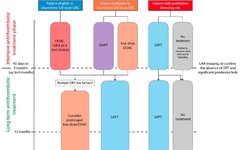
*For medical professionals only The left atrial appendage closure (LAAC) is an effective alternative treatment to long-term oral anticoagulants (OAC) for preventing thromboembolic events related to non-valvular atrial fibrillation (AF). However, antithrombotic therapy is required after LAAC to prevent device-related thrombus (DRT). The optimal antithrombotic strategy post-LAAC remains unclear. LAAC has been in use for … Read more

Using Other Stones to Polish Jade: Insights on LAAC Residual Leak Management

Using Other Stones to Polish Jade: Insights on LAAC Residual Leak Management

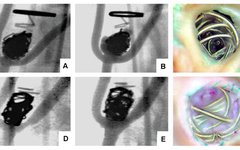
Transcatheter left atrial appendage closure (LAAC) is an effective measure to prevent thromboembolic events in patients with atrial fibrillation. The residual leaks at the edge of the occluder (PDL) and thrombus on the occluder surface (DRT) are key concerns and management points post-operation. Similar to LAAC, patients with cerebral aneurysms often undergo coil embolization (CE) … Read more

Latest Research Progress on Anticoagulation Therapy After Left Atrial Appendage Closure

Latest Research Progress on Anticoagulation Therapy After Left Atrial Appendage Closure

With the continuous advancement of medical technology, left atrial appendage closure (LAAC) has become increasingly widespread in clinical applications, bringing hope to many patients with atrial fibrillation. Antithrombotic therapy runs through the entire process of LAAC and is one of the core issues of LAAC. However, there is currently no consensus on how to formulate … Read more

Exploring Half-Dose DOAC Therapy to Prevent DRT and Reduce Bleeding Risk

Exploring Half-Dose DOAC Therapy to Prevent DRT and Reduce Bleeding Risk

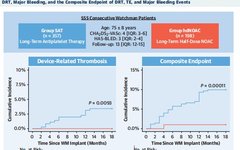
On October 13, 2021, a prospective, non-randomized study published in JACC Intervention indicated that after successful left atrial appendage closure (LAAC) using the WATCHMAN device (Boston Scientific), an anticoagulation strategy centered on half-dose direct oral anticoagulants (DOAC) might improve overall surgical outcomes and reduce the occurrence of device-related thrombosis (DRT) compared to standard anticoagulation therapy … Read more

Left Atrial Appendage Closure: DRT Detection and Management

Left Atrial Appendage Closure: DRT Detection and Management

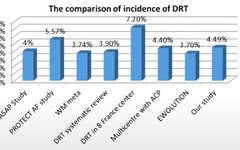
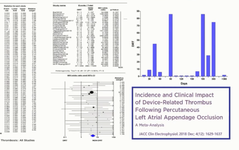
In the fields of cardiac pacing, electrophysiology, coronary intervention, traditional structural heart disease, or new structural heart disease interventions, there is a risk of device-related thrombosis (DRT), and the left atrial appendage closure (LAAC) is no exception. As one of the postoperative complications, DRT remains a key focus during postoperative follow-ups. Recently, Professor Zeng Jie … Read more

OpenWRT Tutorial: Enable IPv6

OpenWRT Tutorial: Enable IPv6

The benefits of IPv6 include: More IP Addresses: IPv6 provides nearly unlimited IP addresses to meet foreseeable future demands. Simplified Network Configuration: IPv6 supports Stateless Address Autoconfiguration (SLAAC), allowing devices to automatically obtain IP addresses without a DHCP server, simplifying network configuration. Higher Routing Efficiency: The header structure of IPv6 is simpler than that of … Read more