In our previous series of articles (the original link is at the bottom of this article), we analyzed from multiple perspectives including materials, processes, supply chains, and ESG why Apple is adopting titanium alloys on a large scale in consumer electronics, and explained that Apple would further utilize metal 3D printing technology to overcome the bottlenecks of traditional titanium processing.
With Apple’s official release on November 18 titled Mapping the Future with 3D-Printed Titanium Apple Watch Cases, Apple not only disclosed the complete manufacturing process in detail but also confirmed that all our previous judgments were completely correct.
Below, we will systematically analyze Apple’s 3D printing process based on the official content and further explain why this public material proves that our previous analysis direction was correct.
1. 3D Printing Process for Apple Watch Titanium Cases
Apple’s latest disclosed manufacturing plan for titanium cases represents a significant debut in metal additive manufacturing (3D printing). Based on official documents and an interview with Hodinkee, this process can be broken down into the following key steps:
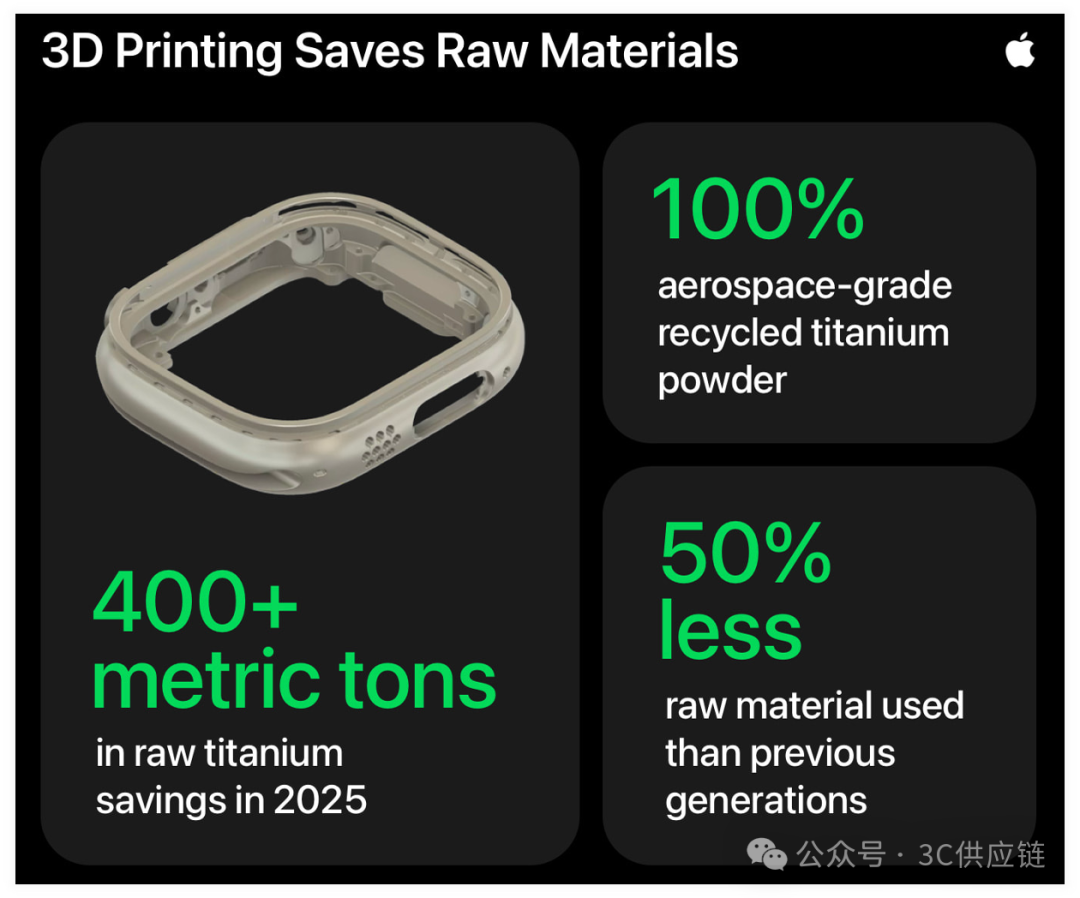
1. Titanium Powder Preparation Apple uses 100% recycled titanium alloy powder, specifically low-oxygen content “Grade 23” titanium alloy powder (which has a lower oxygen content compared to traditional Grade 5). The powder is atomized, with an average particle size of about 50 micrometers (µm). This is crucial for ensuring the stability of the laser melting pool and avoiding explosion risks.
2. Selective Laser Melting (SLM) Printing Apple employs a laser bed fusion process, with an average powder layer thickness of about 60 µm, using multiple beams (for example, six lasers) to complete the fusion through simultaneous scanning. The entire printing process exceeds 900 layers, with a printing time of about 20 hours (efficiency is quite low). The printed structure achieves near-net shape, with complex internal cavities and rib structures formed in one go.
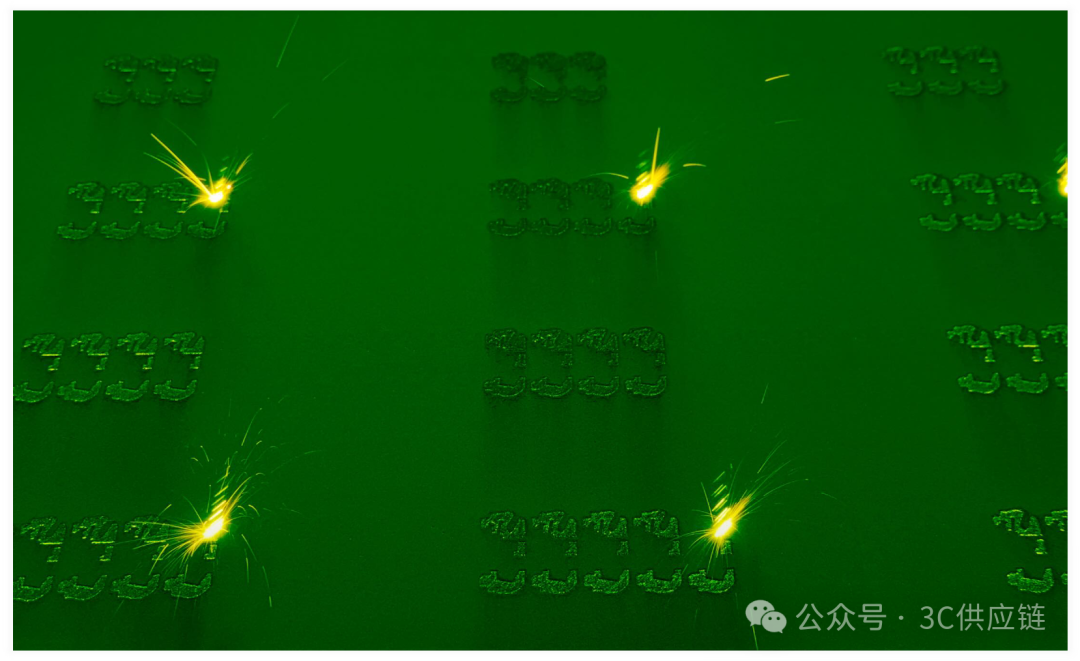
3. Powder Removal / Support Structure Removal After printing, the components remain in the powder bed and are cleaned of residual powder through vacuum suction and ultrasonic vibration, with un-melted powder being recycled for reuse. The support structures on the build plate are cut away, and the case is positioned at an angle during printing to optimize heat dissipation and forming.
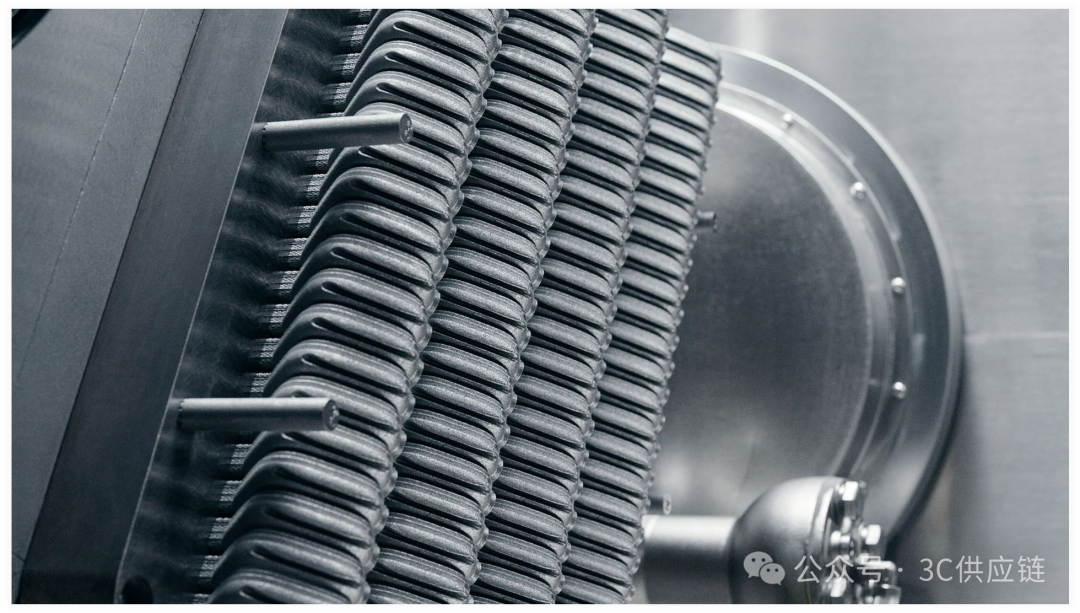
4. Hot Isostatic Pressing (HIP) and Post-Processing Certain styles undergo hot isostatic pressing after printing to eliminate micro-porosity and enhance density, ensuring performance comparable to traditional forged parts. Ultimately, these printed parts will be sent to traditional processing plants for CNC finishing and polishing to ensure critical hole positions, seam tolerances, and surface quality meet standards.
5. Surface Treatment and Inspection Finally, the case undergoes sandblasting, polishing, and oxidation treatment, and is marked with a barcode, then subjected to automatic optical inspection systems to verify appearance and dimensional compliance. Apple also noted that the entire process is expected to save over 400 tons of titanium raw material per year compared to traditional methods.
2. Why Must Apple Adopt 3D Printing? — Official Content Validates Our Three Major Judgments
In previous articles, we proposed three core reasons for Apple’s adoption of 3D printing: technological breakthroughs, cost optimization, and ESG strategy. Apple’s statements in the press release are completely consistent with our judgments.
1. Technical Perspective: Achieving Geometries Impossible with Traditional CNC
Apple officially emphasizes that internal cavities, complex structures, and lightweight designs are all achieved in one print.→ This fully validates our previous predictions.
2. Cost Perspective: Material Utilization Rate Increased from 10–15% to Over 90%
Apple publicly disclosed a 50% “material savings” figure for the first time, consistent with our analysis of material utilization rates, although specific data may vary 😄.
3. ESG Perspective: Titanium Powder Recycling + Localized Manufacturing
Apple emphasizes “100% recycled titanium powder” and a closed material loop, which is a key part of its 2030 carbon neutrality strategy.→ This again confirms our previous judgment regarding ESG drivers.
3. Significant Changes in Supply Chain — Official Process Aligns with Our Projections
We previously wrote:
3D printing will introduce a new node in the supply chain: metal additive manufacturing service providers.
The process flow demonstrated by Apple is as follows:
→ Titanium powder suppliers→ 3D printing service providers→ Case processing plants (CNC finishing + surface treatment, etc.)→ Assembly plants
This aligns with the supply chain route we projected in the article.

Companies like BLT and Farsoon have thus become the most promising new suppliers for Apple.
GoerTek’s acquisition of Lianfeng has been terminated.
This Apple official article is of great significance
— it officially acknowledges that the era of 3D printing in consumer electronics has officially begun.
3D printing is moving from small-scale trial production to large-scale mass production
This is a “watershed” moment for the consumer electronics industry.
Titanium Alloy Supply Chain Structure Completely Reshaped
The status of titanium bar stock is declining, while the status of titanium powder and equipment service providers is rising.
High-end Android Flagships Must Follow Suit in the Future
Every structural innovation by Apple inevitably sets a new industry standard (such as glass back covers, fingerprint unlocking, facial recognition, etc.), and this time is no exception.
At the same time, all our key judgments in previous articles on our public account: technical routes, cost logic, ESG motivations, and changes in supply chain structure have all been validated as correct.
Stay tuned for more professional supply chain analysis articles!
“Analysis of the Titanium Metal Supply Chain (Part II)” — Apple Uses 3D Printing Technology to Optimize Titanium Alloys
Why did the iPhone folding screen hinge skip 3D printing and bet on liquid metal?