On September 24, the Qualcomm Snapdragon Summit took place in Hawaii as scheduled. This year, Qualcomm brought not only numerical upgrades on the specification sheet but also a narrative shift. Unlike a decade ago, when the competition was solely about CPU frequency, core count, and GPU performance, Qualcomm has now placed AI at the very core of its product strategy. From PCs to smartphones, and from XR to automobiles, AI is no longer a supplementary capability but the primary capability of the entire computing platform.
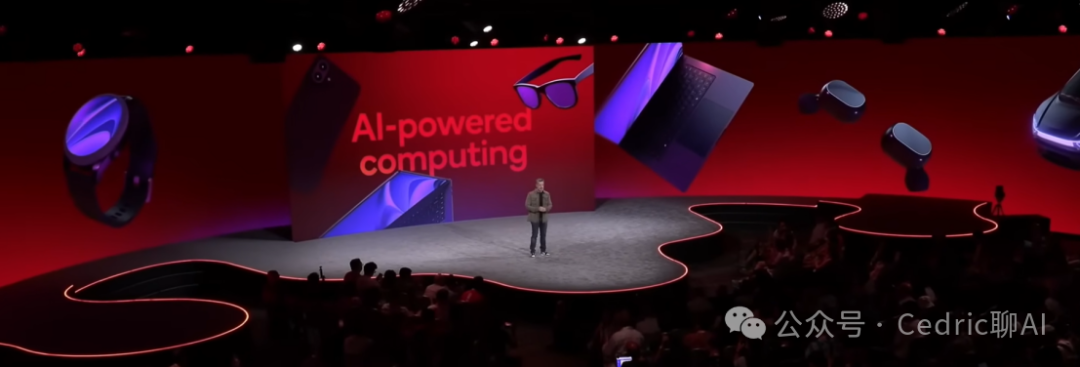
The highlights of this release can be summarized in three points:
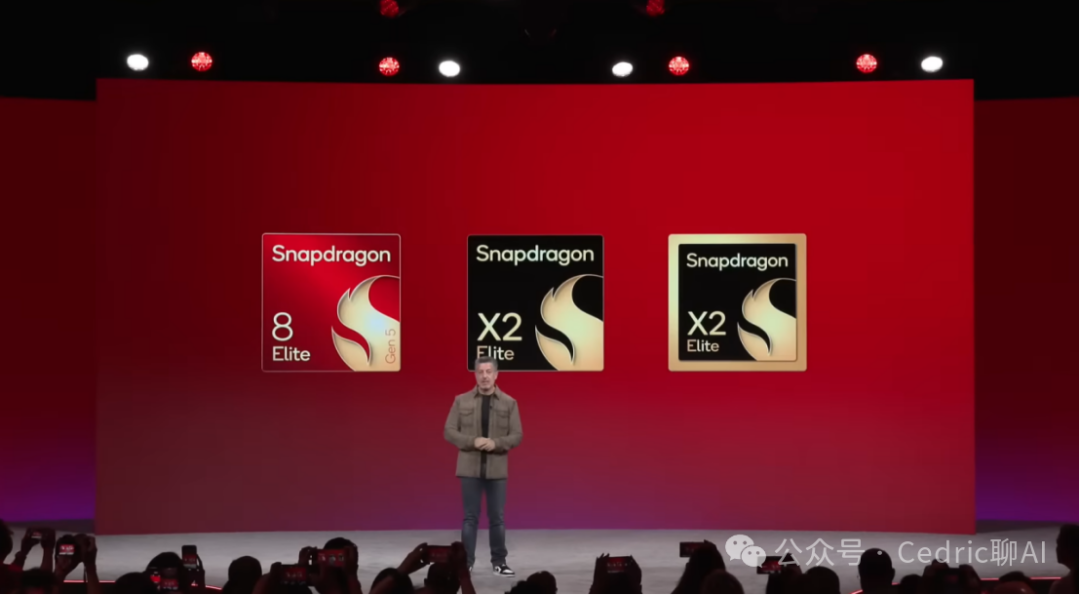
The world’s fastest PC chip, the Snapdragon X2 Elite series.
The world’s fastest mobile SoC, the fifth-generation Snapdragon 8 Supreme Edition.
A long-term Android-PC plan in collaboration with Google to open the door to a new generation of PC ecosystems.
Behind the surface-level performance competition is Qualcomm’s significant attempt to redefine personal computing with AI.
New PC, built on Android
The biggest surprise of this Snapdragon Summit was not the chips, but the concept of Android-PC. Google Senior Vice President Rick Osterloh made a rare appearance to announce that Google is developing a new platform that integrates Android and ChromeOS. It will not only run on smartphones and tablets but also cover laptops and traditional PCs, with built-in full-stack capabilities of Google Gemini AI.
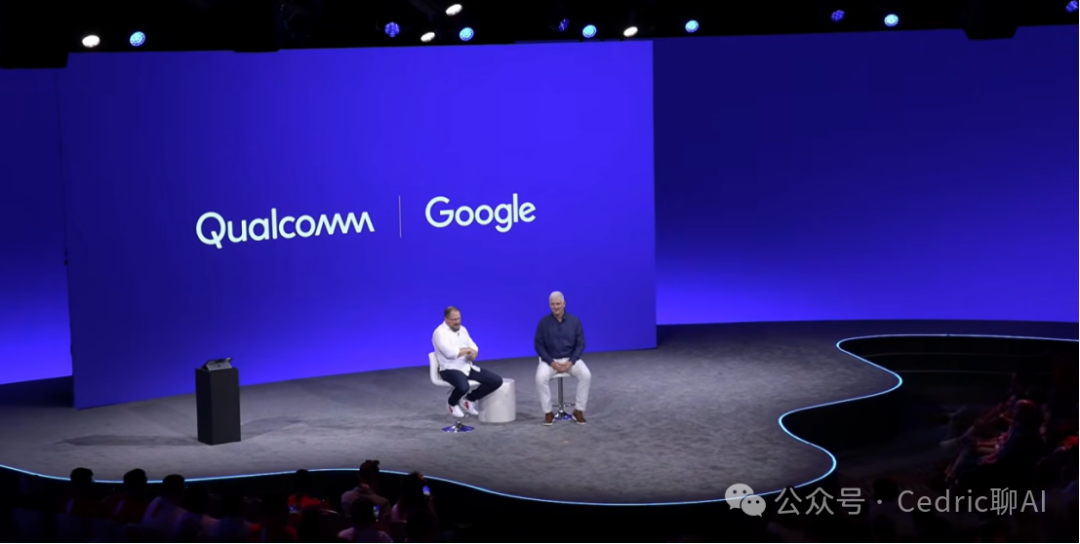
This means that Google will once again attempt to enter the PC market. Over the past 20 years, Google’s efforts in the PC field have repeatedly failed, whether it was the browser-based ChromeOS or the sporadic appearance of Android laptops, none of which could shake the duopoly of Windows and macOS. Now, as Apple bridges iOS and macOS with its M-series chips and Microsoft deeply integrates Copilot with Windows, Qualcomm and Google have chosen to join forces, aiming to carve out a differentiated path in the AI-native PC space.
For Qualcomm, this is a tailor-made opportunity. In the past, its efforts on the PC side mostly relied on Windows on ARM, but constrained by the x86 software ecosystem, it has always struggled to break through. If the Android-PC materializes, Qualcomm can avoid direct confrontation with Intel and AMD and directly open a new AI-PC track.
Of course, challenges still exist: Can Android applications truly adapt to large screens? Are developers willing to optimize for the new platform? Will users accept another new operating system beyond Windows and macOS? These remain unknowns.According to the roadmap, the first laptops equipped with the X2 Elite will be launched in 2026, and the Android-PC is likely to debut around the same time.
Snapdragon X2 Elite: The World’s Fastest on the PC Side
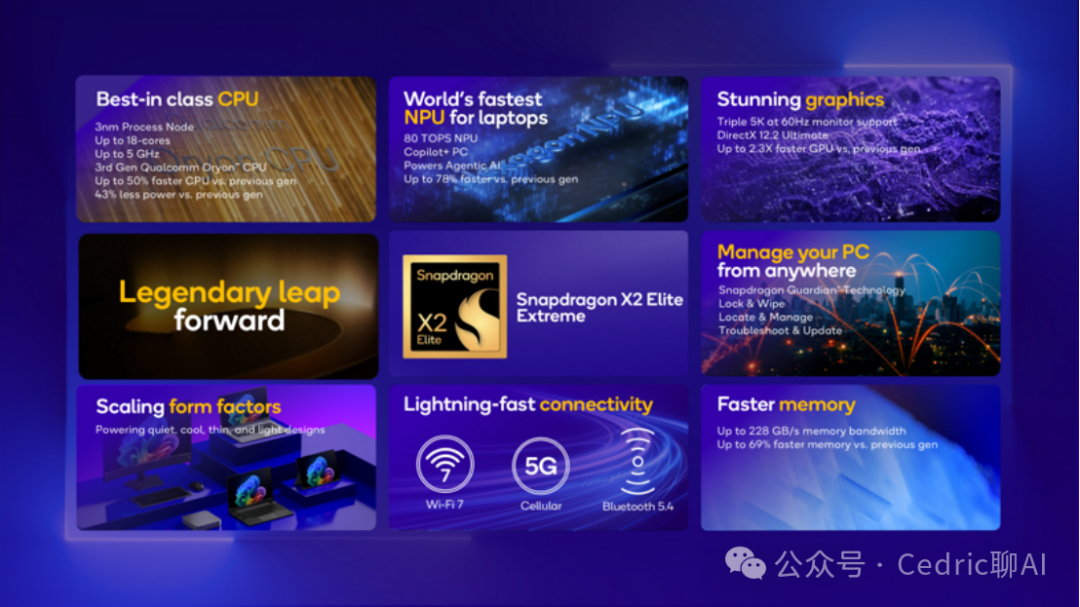
Returning to the chips themselves, Qualcomm has introduced the Snapdragon X2 Elite series, which includes the ultra-high-end X2 Elite Extreme.
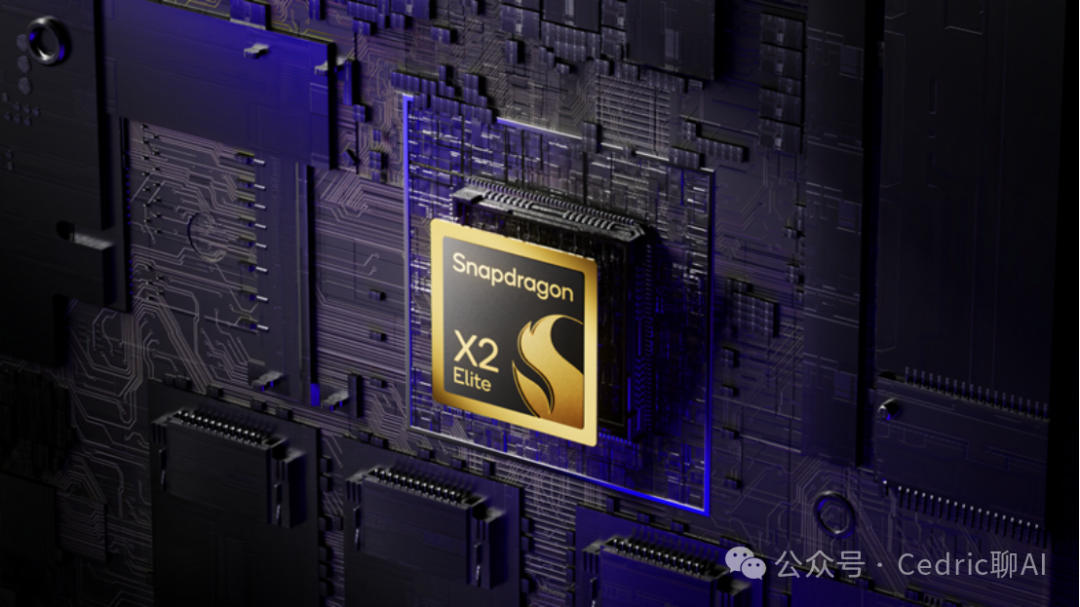
It uses a 3nm process and is equipped with the third-generation Oryon architecture, featuring a total of 18 cores: 12 Prime ultra-large cores and 6 Performance cores, with a maximum frequency of up to 5.0GHz. Compared to the previous generation, single-core performance has improved by 39%, and multi-core performance has improved by 50%, with GPU performance per watt improved by 2.3 times.
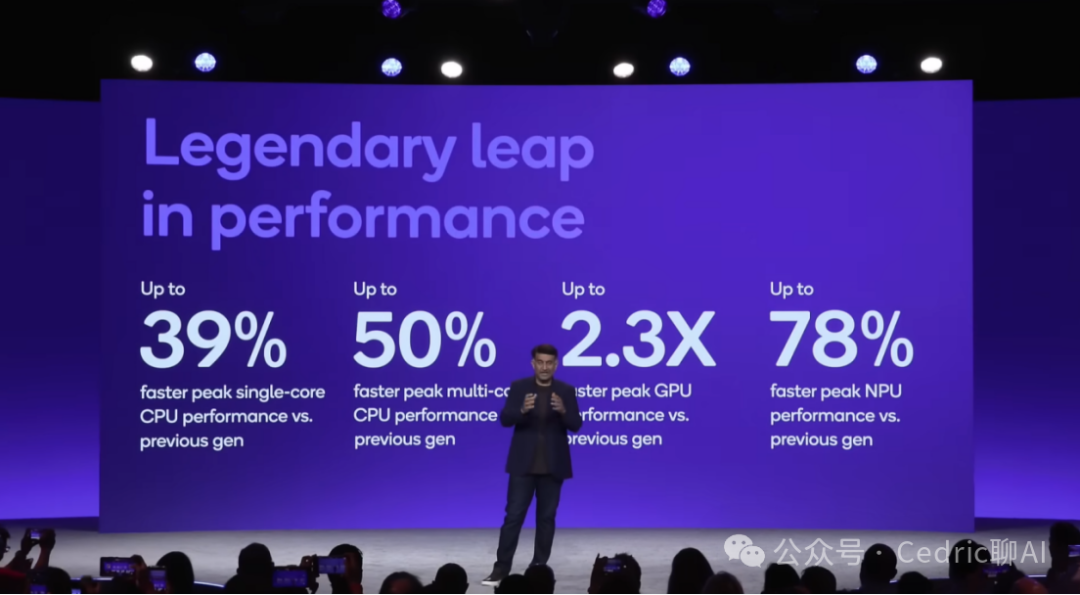
The core upgrade comes from the AI engine: the new generation Hexagon NPU provides up to 80 TOPS of computing power, which Qualcomm claims is the world’s fastest notebook AI engine. Compared to competitors like AMD Ryzen AI 9 HX-370 and Intel Core Ultra 9 series, the X2 Elite Extreme achieves a performance lead of up to 75% at the same power consumption, and even exceeds competitors in GPU efficiency by 2 times.
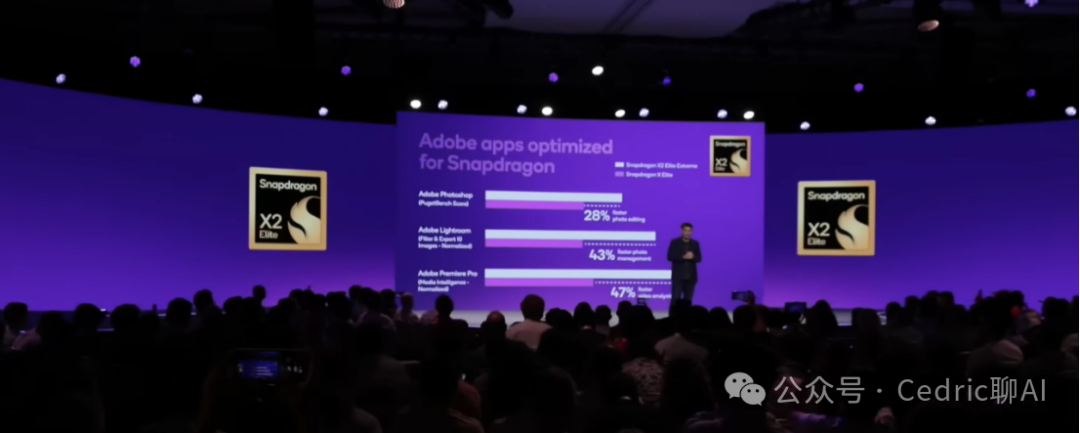
In live demonstrations, Adobe Creative Cloud applications running on the X2 Elite showed efficiency improvements of 28%-47%, which is highly attractive for professional users such as video editors and designers.Qualcomm expects that PCs equipped with this chip will be launched in the first quarter of 2026.
It can be said that the X2 Elite is not just a simple parameter refresh, but Qualcomm’s first real confidence to compete with Apple’s M series and the x86 camp on the PC side.
The fifth-generation Snapdragon 8 Supreme Edition: A Personalized Intelligent Agent for Mobile
On the mobile side, Qualcomm released the fifth-generation Snapdragon 8 Supreme Edition.This chip also uses a 3nm process, with a CPU architecture of 2 Prime ultra-large cores + 6 Performance cores, and a maximum frequency of up to 4.6GHz.
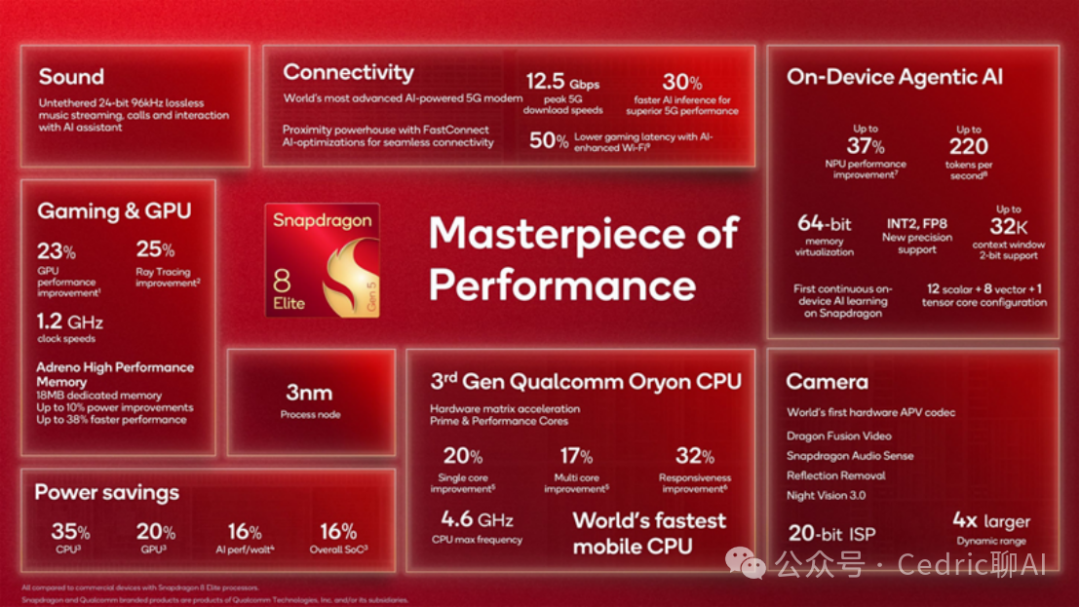
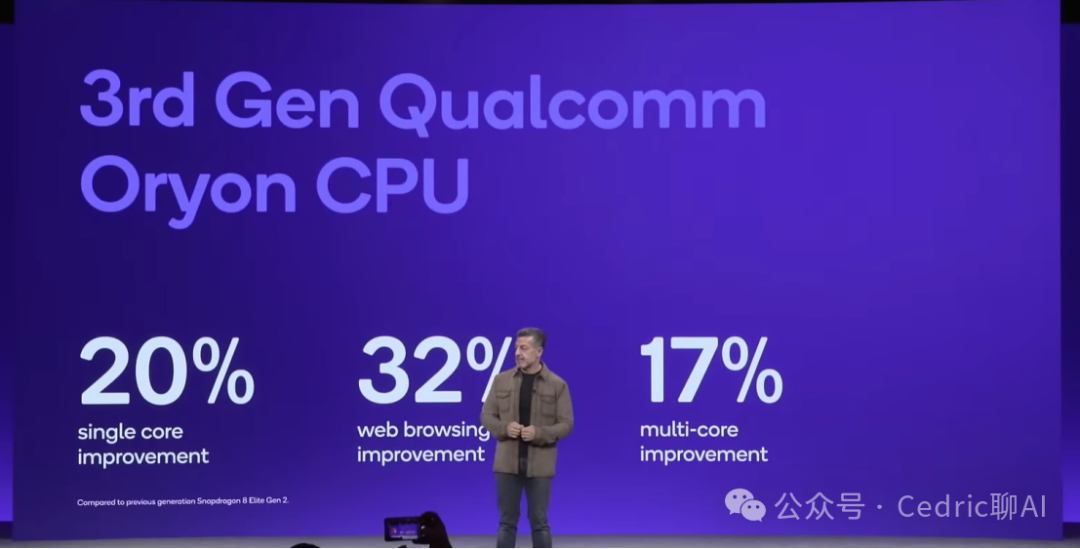
Single-core performance has improved by 20%, multi-core performance by 17%, and response speed by 32%, with benchmark scores approaching or even surpassing Apple’s latest A19 Pro chip.
In terms of GPU, the maximum frequency is 1.2GHz, with performance improved by 23% and ray tracing improved by 25%. It is also equipped with 18MB of dedicated high-speed memory, with energy efficiency improved by 10% and performance improved by 38%.
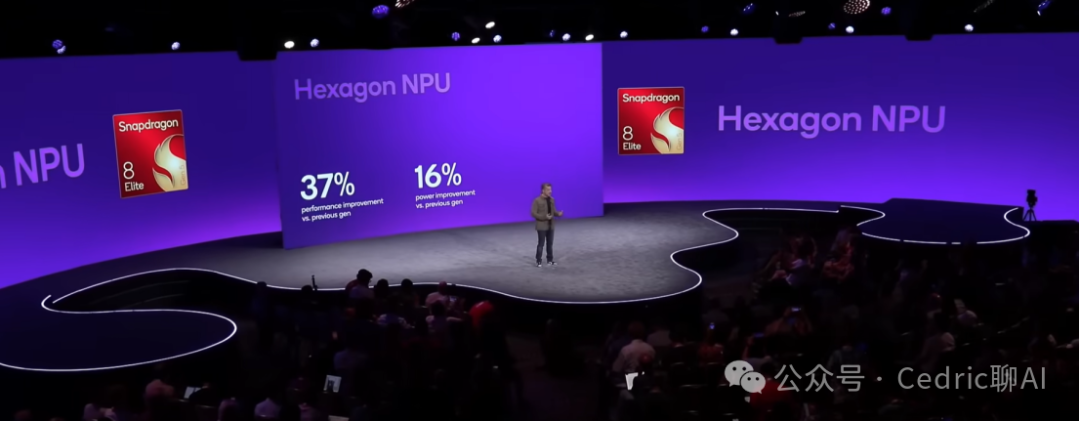
More importantly, AI:The new Hexagon NPU has improved performance by 37%, capable of processing 220 tokens per second, supporting INT2 and FP8 precision, and supporting a maximum context window of 32K. This allows it to truly support Agentic AI, which is a personalized intelligent assistant.
Unlike past passive voice assistants, it can perceive context across applications, perform customized operations, and through edge learning and real-time perception, deeply understand user habits to provide proactive recommendations. More importantly, all data remains on the device, ensuring privacy and security.
According to Qualcomm’s plan, smartphones equipped with the fifth-generation Snapdragon 8 Supreme Edition will be launched in the coming days, including the Xiaomi 17 series, Honor, iQOO, OPPO, vivo, Samsung, and other flagship brands.
XR and Automotive: A Larger Ecological Chessboard
In addition to PCs and smartphones, Qualcomm also showcased new advancements in the XR and automotive fields.
Samsung introduced the Project Moohan mixed reality headset, powered by the Snapdragon XR2+ Gen 2 chip, running Google’s Android XR system. This forms a triangular collaboration: Qualcomm provides hardware computing power, Google is responsible for the system, and Samsung drives terminal implementation. Through this approach, the Android XR software ecosystem is gradually taking shape, becoming a key counterweight against Apple’s Vision Pro.
In the automotive sector, Qualcomm partnered with HARMAN to integrate the Snapdragon Cockpit Elite platform into the Ready series cockpit, supporting 3D navigation, emotional perception, and voice assistants. Although there are no heavyweight new products in IoT and wearables, Qualcomm continues to emphasize NPU efficiency, clearly laying the groundwork for future products like smart glasses and robots.
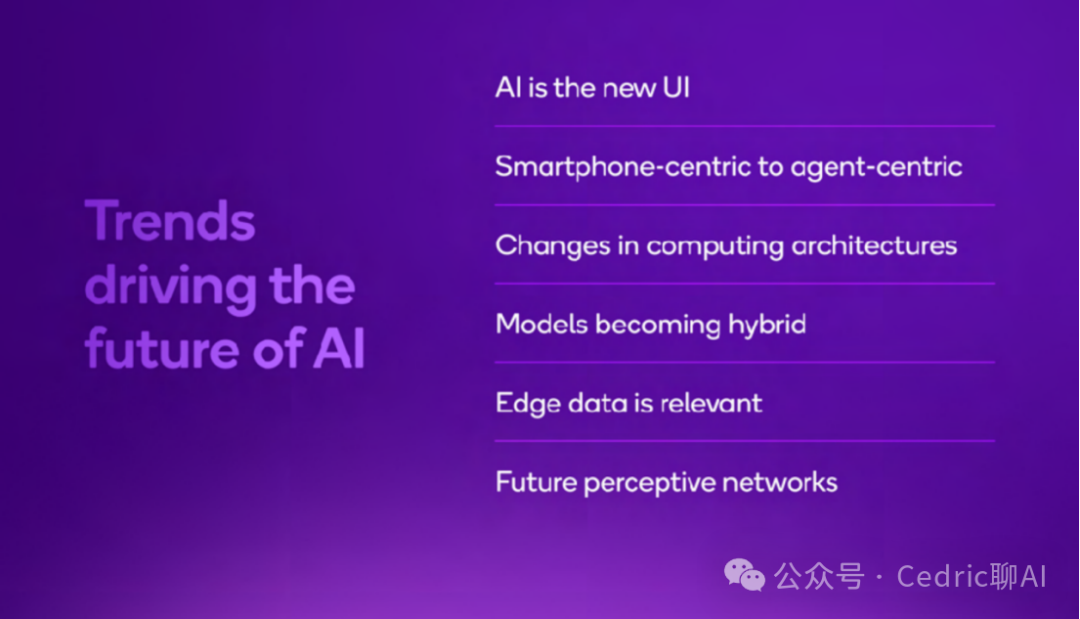
AI is the New UI
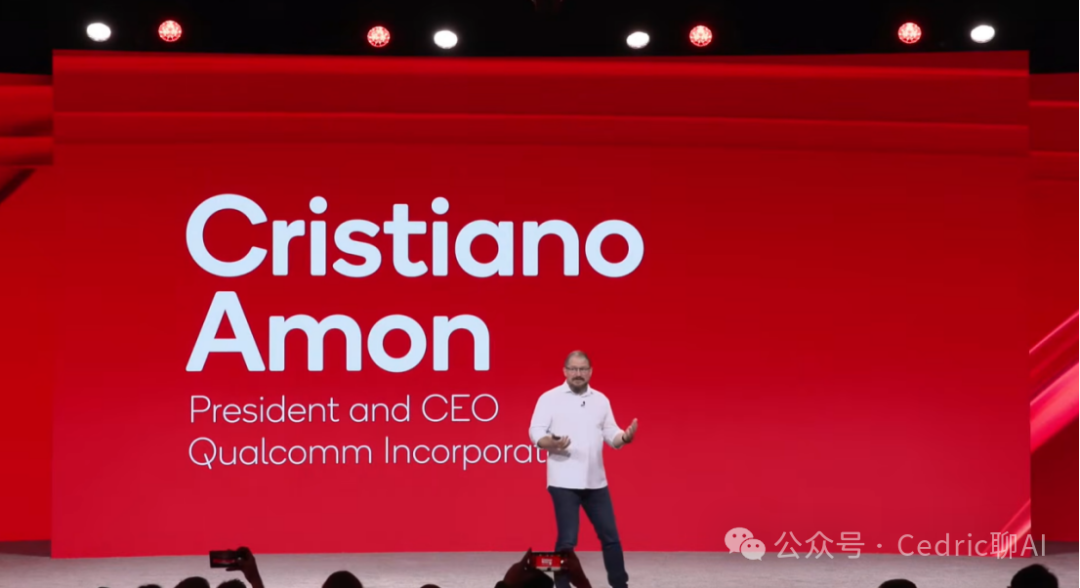
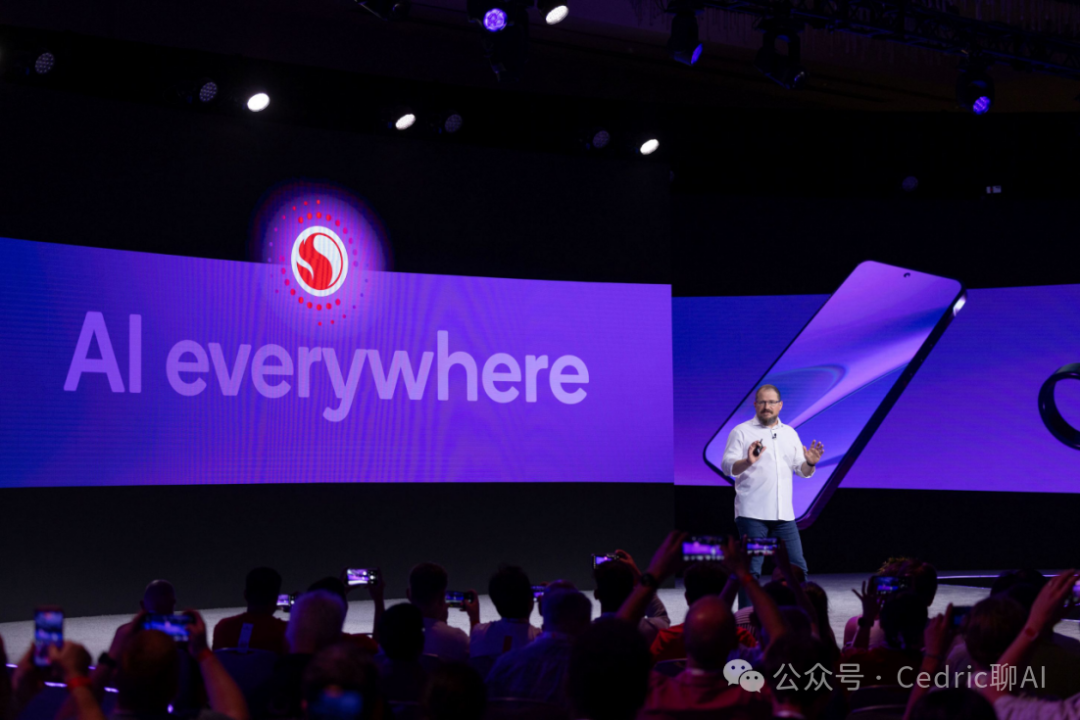
Qualcomm CEO Cristiano Amon summarized at the summit that AI is the new UI. What he means is that the core of future user experiences will no longer be a single terminal but a smart agent ecosystem centered around the individual.
Devices like watches, headphones, and glasses will no longer just be extensions of smartphones but will interact directly with smart agents, building a user-centered personal computing system.Edge-cloud collaboration, multi-modal understanding, and long-term memory will all become standard capabilities of smart agents.
At the same time, Amon also predicted that 6G will become the bridge between cloud and edge, helping to build intelligent networks with perception capabilities. Qualcomm expects the first batch of 6G pre-commercial terminals to emerge in 2028.
If the past decade was defined by smartphones as the computing platform, Qualcomm hopes the next decade will be defined by smart agents in personal computing. And chips are the foundational support for all of this.
Conclusion:
At this year’s Snapdragon Summit, Qualcomm provided its answers: the fifth-generation Snapdragon 8 Supreme Edition for mobile, the X2 Elite series for PCs, and a future Android-PC plan. The intertwining of these three lines is not merely about hardware specifications but a new ecological bet.
Whether it can break the monopoly of Windows and macOS, and whether AI can truly become the primary entry point for user interaction, still needs time to verify. But one thing is clear: the long-standing silence in the PC market is being broken, and a new variable is brewing.

If you found this article helpful, feel free to like, bookmark, and share it. Also, please follow me for more updates and insights on artificial intelligence!
References:
https://www.qualcomm.com/company/events/snapdragon-summit
#Qualcomm #AIHardware #AIFrontiers