 Click on “CCTV4” above to follow us!
In the past few decades, countless new technologies have emerged, changing our lives, and 3D printing is one of them. It can print parts for the J-11B fighter jet, components of the domestically produced C919 large passenger aircraft, and can produce personalized medical supplies with the most precise dimensions in the shortest time. It is being applied in the construction of the Yangqu Dam on the Tibetan Plateau, and the possibility of printing a lunar base has also been validated by China…
In the field of metal 3D printing, Academician Wang Huaming from the Chinese Academy of Engineering and his team have achieved a technological leap after more than thirty years of relentless efforts. At this stage, they are continuously innovating, developing a new generation of metal materials through 3D printing, creating very complex, high-performance, and large components.
He stated that he is engaged in the oldest craft of metal casting, which is also something that could change the structure of major future equipment.
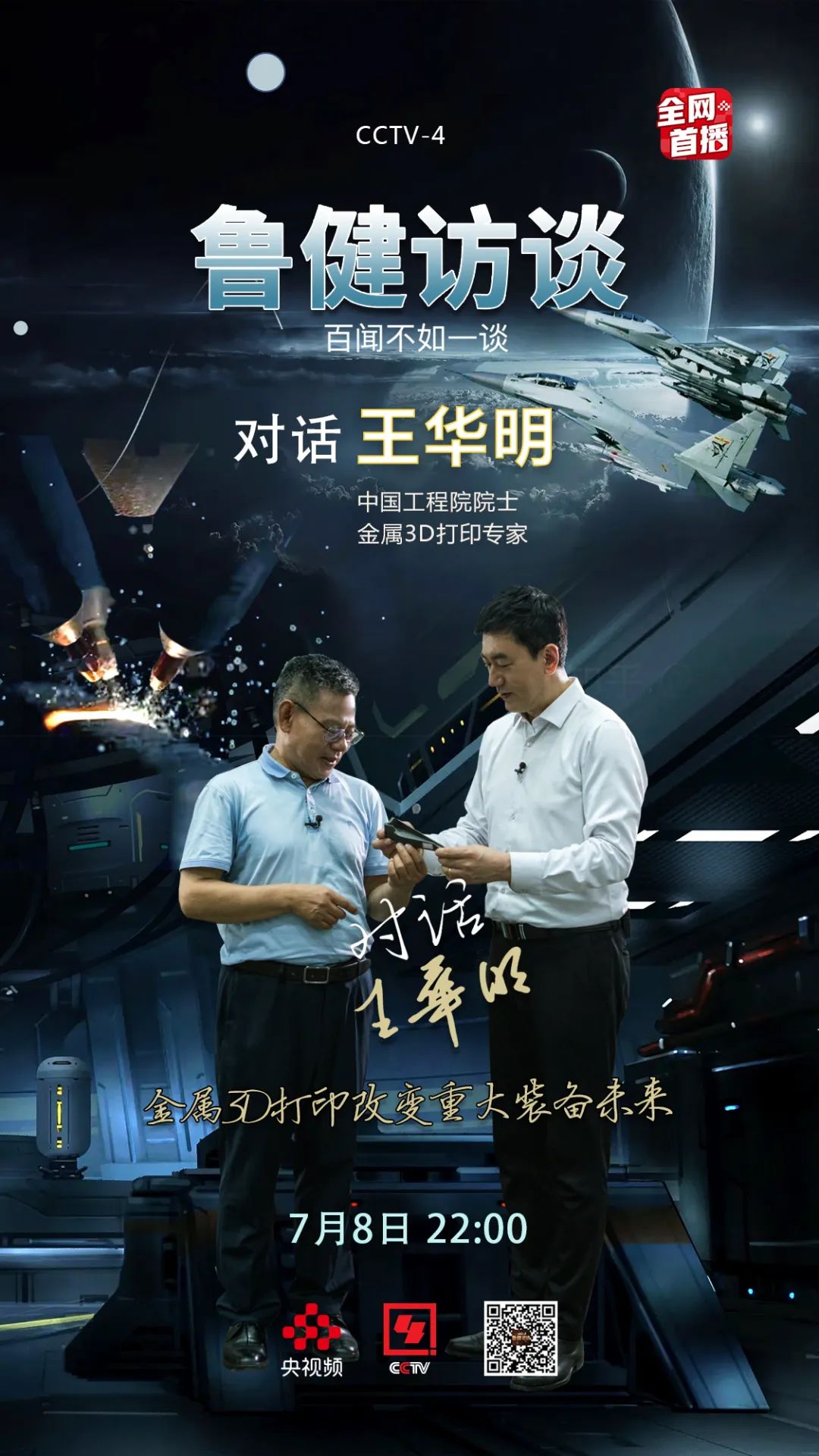
What the U.S. Stopped, China Accomplished
In June 2005, the first 3D-printed titanium alloy small part in China was installed on an aircraft, marking a significant step in metal 3D printing technology. “This is a particularly small part on the J-11B; despite its small size, it took about eight years to make it suitable for application on an aircraft.”
Thus, China became the first country to break through this technology. After the successful application, Wang Huaming noticed that the U.S. had declared that manufacturing large key components for aircraft using 3D printing was not feasible, “because the parts they produced at that time were not performing well, they announced the cessation of 3D printing metal parts.” However, Wang Huaming believes that rapid solidification is a recognized method to refine the crystals of metal materials and make their chemical composition uniform and dense, “so we have been moving forward along this path.”

In 2009, Wang Huaming and his team used 3D printing technology to create the main windshield frame of the C919 aircraft from titanium alloy, which weighed about 20 pounds and could be easily handled by an adult.
“At that time, the situation was that if we had to use thick plates, we did not have that capability. There was a European company that could do it, but forging and processing the parts would take two years and require a $200,000 mold fee upfront.” Finding someone else to do it was costly and time-consuming, so Wang Huaming and his team completed the window frame using 3D printing in just 55 days, at a cost only one-tenth of the mold fee.
With 3D printing technology, China has reached a world advanced level in the manufacturing of large complex key metal components for major equipment such as aircraft and rockets. Since 2017, the number of 3D printing patents in China has exceeded the total of all other countries combined, and the 3D printing industry is developing at the fastest pace in the world, having risen to the second position globally.
The Driving Force is to Make the Best Things
“From the Bronze Age to the Iron Age, from the Titanium Age to the Silicon Age, for thousands of years, we have been using metals to mark eras; in this sense, I am doing the oldest thing.”
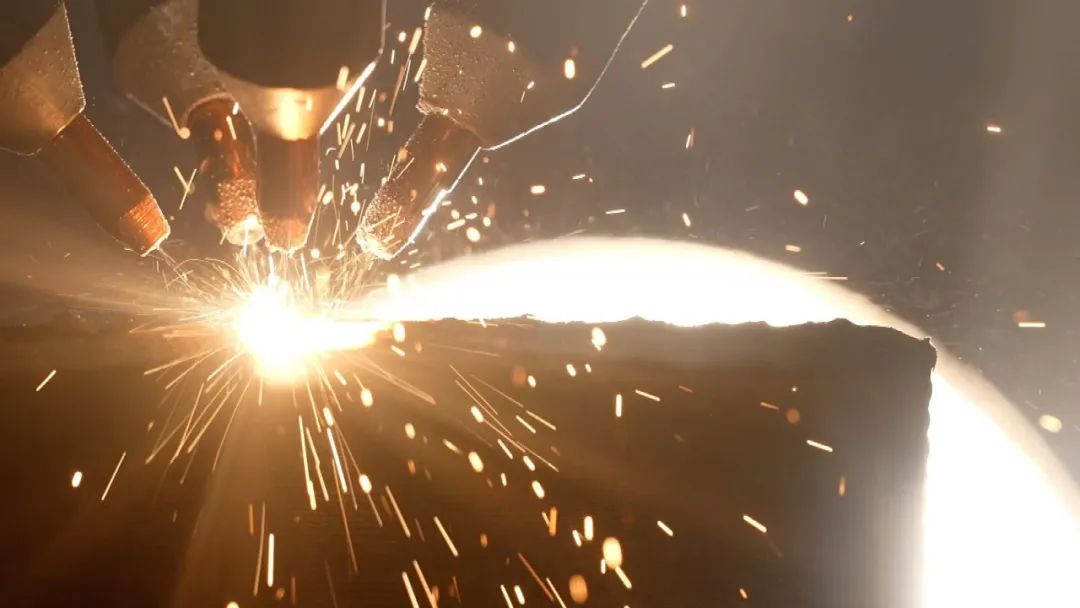
In the late 1980s, Wang Huaming, who studied casting, became acquainted with 3D printing. “What are the problems with casting? Too much material is poured in, it cools too slowly, the crystals shrink, and after shrinkage, there are holes, just like hollow radishes, which need to be compacted again. Only rapid solidification can solve these problems. So since 1989, we have been trying to solve material problems fundamentally through this method.”
Wang Huaming said that the entire team consists of two teachers guiding several students who keep working. The equipment cannot stop, and someone needs to monitor it 24 hours a day. Some team members have not seen the sun for seven or eight years, “which is hard for most people to imagine.” The driving force behind all this is not related to economic benefits or writing papers; it is purely the hope of achieving breakthroughs in 3D printing technology little by little.
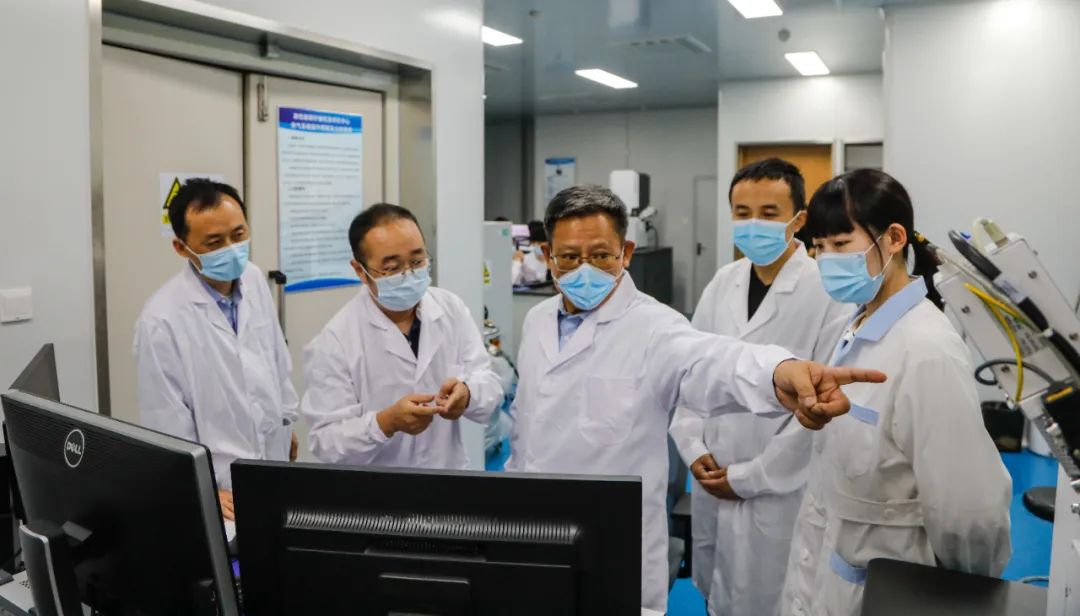
He admitted that he never thought he would be able to install the 3D-printed parts he made on an aircraft within his lifetime. “Generally, those involved in aviation work on a new aviation material from the time they graduate until they retire at sixty, but their work may never reach an aircraft. We were very proud to have taken eight years to accomplish a record-breaking, milestone achievement.”
Over the past thirty years, Wang Huaming has continuously innovated in the field of 3D printing, “The driving force is to make the best things, to improve the performance of materials, and to make parts cheaper, faster, and simpler.”
What Else Can We Print in the Future?
From daily necessities to aerospace, medical, industrial design, and construction, 3D printing is subtly changing people’s perceptions of manufacturing. “The most critical parts of major equipment that bear loads must be metal; how can we make the performance of metal materials better, stronger, and cheaper? I believe 3D printing is the solution.”
Regarding the future direction of metal 3D printing, Wang Huaming’s team aims to develop a new generation of materials by controlling the micro-area metallurgical processes, such as new titanium alloys and new ultra-high-strength steels. In Wang Huaming’s view, this may change the structure of future major equipment.
For example, an aircraft currently may require over 20,000 parts, but in the future, the fuselage may only need a few parts. “Previously, dozens of parts had to be made, connected by screws or welding, but in the future, through 3D printing, it may be possible to create a single piece, and the aircraft fuselage could truly be made of just a few parts.”
Moreover, the application of 3D printing in aerospace is not limited to this; China has also validated the possibility of printing a lunar base.
“The composition of lunar soil mainly consists of silicates, iron oxide, aluminum oxide, and calcium oxide. By collecting lunar soil on the moon, screening it, and then printing it. Simply put, it is equivalent to printing hollow, thermal-insulating bricks, which are then assembled into a lunar base by robots piece by piece.”
Wang Huaming firmly stated that if the advantages of 3D printing are fully realized within a certain period, it will have transformative significance for equipment performance and the foundational industries of equipment manufacturing. “Just like the equipment in the national engineering laboratory, it continues to develop and progress. I cannot say what impact it will have in the long history of humanity, but it will certainly be a change.”

Source: CCTV4 “Lu Jian Interview”
China Central Radio and Television Station, Chinese Global Program Center New Media
END
Please Follow Us!
▼Click “Read the Original” to follow CCTV4Account【CCTV4】