Desktop 3D printers are transitioning from being toys for enthusiasts to production tools that ordinary consumers can easily use.
Data shows that in the first quarter of 2025, global shipments of entry-level 3D printers will exceed 1 million units for the first time, with Chinese manufacturers contributing95% of the share. Meanwhile, the production of 3D printing equipment in China has increased by 40.5% year-on-year, significantly outpacing industrial robots and new energy vehicles.
 Image from the internet
The consumer 3D printing market has entered a singularity moment. Major players have also sensed this trend, with companies like DJI, Meituan, and Tencent recently entering the 3D printing sector.
01 Market Overview: Consumer 3D Printing Reaches a Critical Explosion Point
By 2024, the global 3D printing market size is expected to reach$24.61 billion (approximately 170 billion RMB), with a projected compound annual growth rate of 18.5% from 2024 to 2034.
The expansion of the market is driven by the large-scale penetration of 3D printing technology from industrial to consumer levels.
According to a research report from CITIC Securities, the consumer 3D printing market has entered a “singularity moment,” and the market is expected to experience rapid growth.
Price reduction is a key factor driving the explosion of the consumer market. Currently, the best-selling models of mainstream consumer 3D printer brands have seen their terminal prices drop to the level ofmid-to-high-end smartphones.
At the same time, the unit price of related consumer-grade consumables has also fallen to a low level.
Technological advancements have made consumer-grade 3D printing devices easier to use. The new generation of devices is equipped with features such as laser radar first-layer detection and automatic leveling, significantly improving print quality and success rates, with the current success rate of consumer-grade 3D printing reaching about70%.
Improvements in printing speed have also made consumer-grade 3D printing more practical, with stable printing speeds exceeding 600mm/s, and some products achieving peak speeds of up to 1000mm/s.
02 Primary Market: Major Players Enter and Capital Layout
Recently, the primary market has seen a noticeable acceleration in the layout of 3D printing.
DJI Innovations has invested hundreds of millions in Smart Pie, targeting its accumulation in light curing and fused deposition technologies. DJI stated that this investment is based on optimism about the development potential of consumer-grade 3D printing technology and industry growth potential.
Meituan is supporting desktop 3D printer company Snapmaker through capital injection. A subsidiary of Meituan has recently become a shareholder of Shenzhen Kuai Zao Technology, associated with Snapmaker.
Tencent has continued to increase its stake in the IPO process of Creality 3D. Creality 3D has submitted a prospectus to the Hong Kong Stock Exchange, and if successful, the company is expected to become the “first stock in consumer-grade 3D printing“.
According to Pencil Data, at least 15 3D printing companies have received new financing in the past six months. Capital is particularly favoring metal 3D printing, biomedical applications, AI, and digitalization.
These fields have high technical barriers, clear application value, and significant growth potential.
03 Secondary Market: High-Performing Concept Stocks Attract Institutional Attention
In the secondary market, 3D printing concept stocks are also performing actively. The Dongfang Caifu concept sector shows that there are currently67 3D printing concept stocks in the A-share market, with a total market capitalization of approximately 780 billion RMB.
Over 90% of 3D printing concept stocks have seen their prices rise this year, with Tiangong Co. experiencing a price surge of about 374%, and stocks such as Sikan Technology, Zhongzhou Special Materials, Jepter, Huashu High-Tech, and Jikai Co. all seeing price increases of over 100%.
In terms of performance, 33 3D printing concept stocks have achieved positive net profit growth in the first three quarters of this year. Inno Laser and Chujian New Materials have seen the highest growth, with eight stocks including Yiyuan New Materials and Juguang Technology experiencing net profit growth of over 100%.
Institutional research data shows that among the high-growth 3D printing concept stocks, 15 stocks have received institutional research in the past month. Among them,Juguang Technology and Aobi Zhongguang-UW received intensive research from 159 and 122 institutions respectively.
Institutional focus is concentrated on the combination of AI and 3D printing, the expansion of downstream application scenarios, and the technical barriers of companies.
Aobi Zhongguang-UW stated that the company has reached a strategic cooperation with Creality 3D to provide core underlying technology support for multiple industry benchmark products.
04 Future Growth: Three Driving Factors and Potential Space
The future growth of the 3D printing market will be driven by multiple factors.
AI technology is significantly lowering the barriers to entry for 3D printing. The in-depth application of generative AI technology in 3D design allows users to automatically generate and optimize 3D models through simple inputs such as text descriptions or images.
Application scenarios are continuously expanding, releasing the potential of consumer-grade 3D printing. The production characteristics of small-batch, quick-return 3D printing align with the new consumer wave’s demand for personalization, differentiation, and limited editions.
Driven by the IP economy and the craze for trendy toys, 3D printing is becoming a personalized solution to meet the demand for popular IP merchandise.
Collaborative development in the industrial chain is reducing production costs. The upstream consumables sector has formed a domestic advantage, with PLA being one of the mainstream consumables for current consumer-grade 3D printers, primarily made from corn starch or sugar plants, featuring environmentally friendly and non-toxic characteristics.
As equipment production increases, the demand for consumables is also expected to surge.
According to Precision Business Insights, the global consumer-grade 3D printing market size is expected to reach approximately$19.8 billion in 2024, with a projected compound annual growth rate of 18.6% from 2024 to 2031, reaching a market size of $65.4 billion by 2031.
05 Investment Logic and Risk Warning
From an investment perspective, the equipment segment is the technological source and value center of the industrial chain–7. Guojin Securities points out that 3D printing equipment is entering a critical moment of popularization as consumer products.
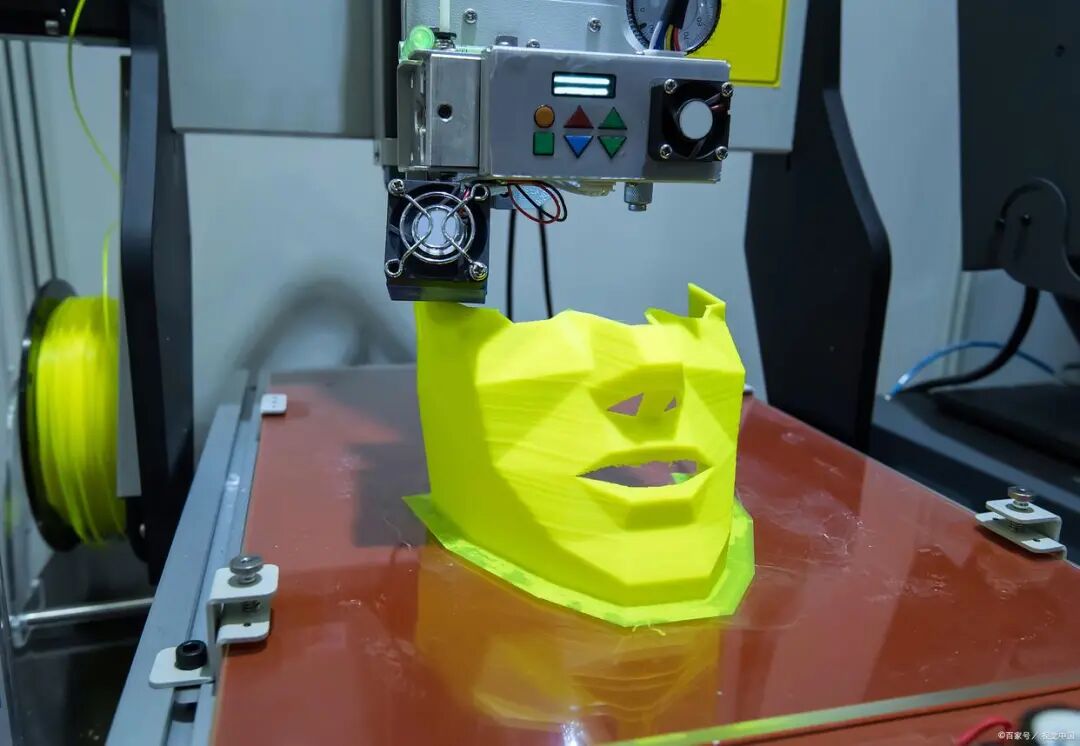 Image from the internet
Leading equipment manufacturers, especially those with a complete printing ecosystem, are worth paying attention to.
The consumables segment will benefit from the surge in demand brought about by increased equipment production–1. Materials like PLA are expected to fully benefit from the increase in downstream demand, and it is recommended to pay attention to companies with PLA production capacity or processing capabilities that are already involved in the 3D printing field.
Investors should also be aware of risks. The 3D printing industry still faceslimited material types, differences in printing precision and strength, and profitability challenges and other pain points.
Although the consumer market is booming, the completeness of the industry standard system is only 62%, and the lag in regulations in fields such as construction has resulted in commercial projects accounting for only 7%.
The wave of popularization of 3D printing equipment is already here. In the next decade, as AI modeling further lowers design barriers, material costs continue to decline, and personalized demand grows, 3D printing equipment is expected to become a standard in every creative factory and home, just like personal computers and smartphones.
Chinese manufacturers, holding96% of the global entry-level equipment market share, have already secured a favorable position in the first wave of the consumer-grade trend.