






Follow AI Innovations
Stay Updated on Industry Trends

AI Innovations Continues to Focus on Robotics
In recent years, humanoid robots have become a hot topic in the capital and technology sectors. Whether for factory automation, logistics delivery, or future household assistants, the vision for these robots is widely depicted. However, in-depth media analysis and user research indicate that this path is much more challenging than anticipated.
The “Scaling” Dilemma
Although the industry has high expectations for the future of humanoid robots, transitioning from “vision” to “mass production and deployment” faces numerous challenges.
Production Capacity vs. Real Demand
Some companies, such as Agility Robotics, are indeed actively expanding production. Agility’s Digit robot is expected to see a significant increase in shipments, and its factory has the capacity to produce tens of thousands of units annually.
However, according to industry insiders, such as former Agility executive Melonee Wise, “The biggest issue is not manufacturing capacity, but real market demand”. Many potential customers have yet to find suitable application scenarios for humanoid robots.
If only a few hundred robots are deployed, each robot must perform multiple tasks to be cost-effective, which is the direction many companies are currently betting on.
Technical Bottlenecks: Battery, Reliability, Safety
-
Battery life remains a core issue. For example, Agility’s Digit requires a large battery pack for longer endurance. Its charging strategy is “90 minutes of operation, then charge when close to reserve capacity,” which adds complexity in industrial environments.
-
Reliability is crucial for industrial deployment. Production line customers are very sensitive to downtime; even “99%” reliability can lead to significant losses each month.
-
Safety is another core consideration. If a humanoid robot loses balance or falls, simply shutting off the power may not be a safe strategy. The industry is pushing for international standards (ISO) to establish safety regulations for dynamically balanced robots.
Is the Form Itself Worth It?
While a bipedal structure theoretically allows robots to walk like humans and enter human environments, many robots in real demonstrations still only “move short distances repeatedly on flat ground”.
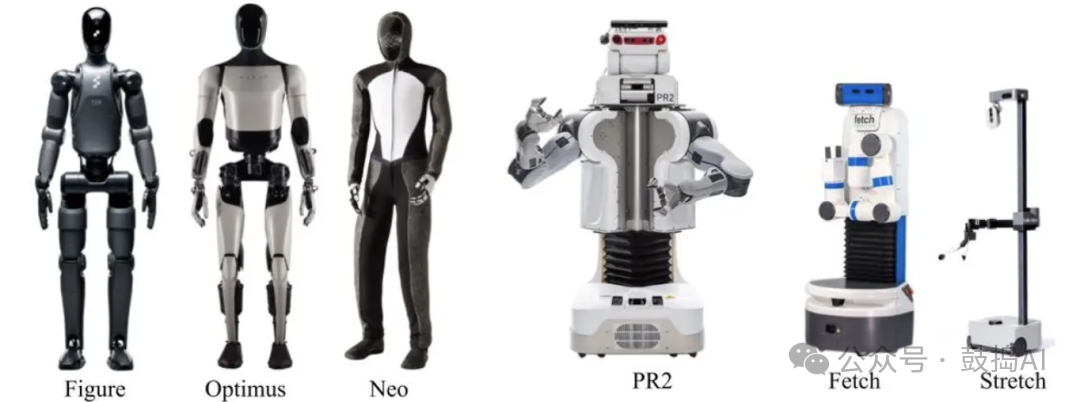
Some researchers point out that in the short to medium term, more reliable, efficient, and cost-effective platforms may be wheeled robots or robots with arms but no legs.
In other words, humanoid robots have “great potential,” but the current business model does not seem to have translated into strong demand.
Industry and Capital Misalignment
Many companies and investors hope that AI can drive the deployment of multipurpose humanoid robots, but the current robustness of AI is still difficult to meet the requirements for generality in industrial or real deployments.
There is a significant gap between the optimistic expectations of investors (such as Morgan Stanley, Bank of America, etc.) and the realities of technology and market.
The humanoid robot industry is at a critical turning point from “vision to reality.” While manufacturing capacity is increasing, the ability to scale and create value for industry or service customers still relies on technological breakthroughs (battery, reliability), standard systems (safety standards), and clear business pathways. For industry observers and investors, it is essential to be wary of “overly optimistic” market expectations while focusing on companies that have clearly found viable application scenarios.
The “Acceptance” Dilemma
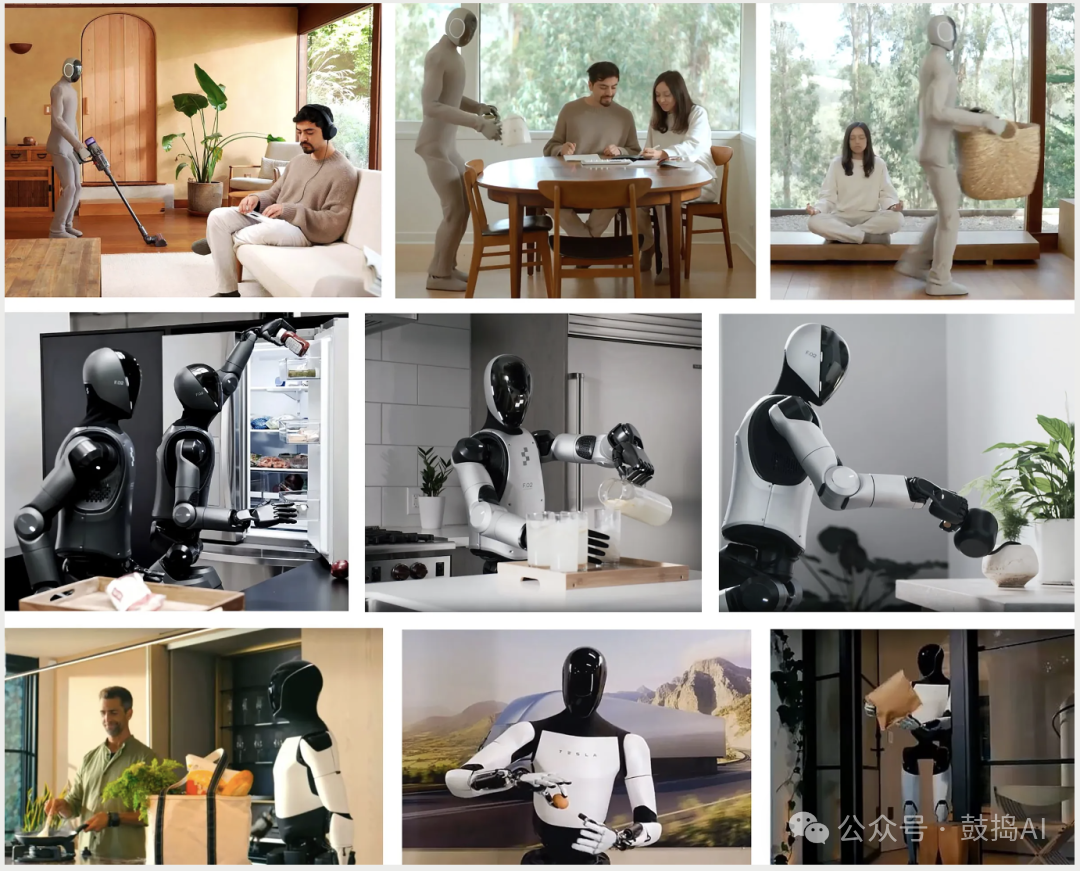
In recent years, humanoid robots seem to be the “next vision” in the tech world: brands like Neo (1X), Optimus (Tesla), and Figure 02 (Figure AI) are showcasing their capabilities to help with household chores and care for the elderly. But the question arises — Are people really willing to let such robots into their homes?
Robotics scholar Maya Cakmak and her lab team conducted a survey of 76 ordinary households in the US and UK to analyze public acceptance of household humanoid robots.
01
Public Preference: Special-Purpose Robots vs. Humanoid Robots
The majority of respondents preferred “special-purpose robots” (such as cleaning robots, handling robots, medical care robots), believing that such robots are safer, more private, and more practical.
While humanoid robots (like Neo, Optimus, Figure 02) are considered “good-looking” or “promising,” many people find them too complex and unnecessary in household scenarios.
02
Safety and Privacy Concerns
-
Respondents expressed concerns about potential risks of humanoid robots falling, malfunctioning, or leaking electricity, especially when performing household tasks (like lifting heavy objects, operating a kettle).
-
Privacy issues also emerged as a significant barrier: robots are often equipped with cameras and connected to the internet, raising concerns about “data being remotely controlled” and “cloud monitoring”.
-
The “uncanny valley” is a psychological barrier mentioned by many: the facial designs of some humanoid robots (like black masks) evoke discomfort and fear.
03
Scenario Dependence
For certain scenarios (like helping the elderly dress or organizing items), humanoid robots do have symbolic potential, and some respondents expressed willingness to accept such concepts.
However, participants with mobility limitations (such as those who have experienced assistive robots) showed lower acceptance of humanoid robots. They emphasized the need for “100% safety”; otherwise, they cannot tolerate it.
Under simulated conditions (assuming the robot is completely safe, regulated, and reasonably priced), many said they could “accept it,” but there is significant uncertainty in actual purchasing or cohabitation.
04
Space and Economic Considerations
Humanoid robots are perceived as “bulky” and “space-consuming”; some respondents pointed out that they do not even have “extra space” in their homes for a robot.
Cost (purchase + maintenance) and safety (potential repair/collision risks) are very real concerns for potential users.
The public’s enthusiasm for humanoid robots partly stems from their portrayal as “universal assistants” in video demonstrations, but actual acceptance appears cautious and rational. Most still believe that special-purpose robots are more practical and pose lower risks. For humanoid robots to enter the household market, technology companies must not only overcome hardware and cost challenges but also conduct in-depth user research to understand real user concerns about safety, privacy, and living space.
Future Development Recommendations
Investment Logic May Need Reconstruction
-
Currently, much of the capital investment in humanoid robots is vision-driven (“general-purpose, multi-tasking, household assistants”), but many expectations have yet to correspond to clear implementations.
-
Investors and startups should focus more on “viable scenarios (vertical)”; rather than betting on general-purpose humanoids, they should explore specific industries (like care, warehousing, logistics) where there is genuine demand for humanoids.
Standards and Ecosystem Development Are Key
-
Safety standards (such as ISO standards for dynamically balanced legged robots) are still being developed. The rapid development of the industry largely depends on the collaborative efforts of regulatory bodies, companies, and standardization communities.
-
The battery and energy supply system is an important infrastructure issue. In the future, if high-density energy modules (lightweight, high endurance) are developed, it will greatly enhance deployment feasibility.
User Research Cannot Be Ignored
-
Surveys from academia (such as Professor Cakmak’s team) suggest that engineers and marketing teams should not only focus on what robots “can do” but also consider whether users genuinely want them to “live in their homes”.
-
In the future, if companies want to promote household humanoid robots, they must conduct large-scale real user pilots (real households, not sandbox demonstrations) to collect genuine feedback from users on key factors like space, safety, and price.
Technological and Business Model Co-evolution
-
Advancements in technology (AI, large models, control, perception) must synchronize with business models (leasing, services, sharing). Simply selling robots to consumers (one-time high-price purchases) may be difficult to popularize.
-
Mixed deployment (partly for industrial/warehousing, partly for service/homes) may become a strategic choice for future humanoid robot companies. Capital can initially bet on the industrial side and gradually expand.
References1.https://spectrum.ieee.org/humanoid-robot-scaling 2.https://spectrum.ieee.org/home-humanoid-robots-surveyFeel free to click the card belowto follow“AI Innovations”public account
Thank you for reading. If there are any inaccuracies, please follow the WeChat public account “AI Innovations” to provide feedback, and everyone is welcome to criticize and correct.
Previous Selected Recommendations
From “Eyes” to “Hunters”: In-Depth Analysis of the Global Competition Landscape for Military Drones
The Wind is Right! The Robotics Industry Added 400,000 Jobs in a Single Year; What Opportunities Are Hidden Behind the Trillion Market?
2025 Hardcore Release Weekly Report: From Skies, Roads, Factories to Operating Rooms, Cutting-Edge Robotics Technology is Reshaping Boundaries!
Early Warning Aircraft Upgrade! Arrive Raises $40 Million, Walmart Soars in 5 Cities! The 2025 Drone Competition is Heating Up
Review of the ICRA 2025 Challenge: Track Analysis, Results Summary, and Technical Highlights
Challenges in Deploying Ground and Aerial Robots Based on Foundational Models: What Challenges Will Be Encountered? (ICRA 2025 Workshop)
Robots Learn to “Imagine”! How ForesightNav Enables Machines to Anticipate Unknown Spaces Like Humans?
Paper Dispatch | The First Nature Paper in the Low Altitude Economy Field
Open in WeChat Client