On August 15, 2025, the journal Nature Communications published an article titled “A humanized anaplastic lymphoma kinase (ALK)-directed antibody-drug conjugate with pyrrolobenzodiazepine payload demonstrates efficacy in ALK-expressing cancers” (靶向间变性淋巴瘤激酶(ALK)的人源化抗体药物偶联物搭载吡咯并苯二氮䓬有效载荷在ALK表达癌症中的疗效验证).This study developed a novel ALK-targeted antibody-drug conjugate CDX0239-PBD, which demonstrates significant anti-tumor activity and survival benefits in various ALK-expressing pediatric and adult tumor models (including neuroblastoma, colorectal cancer, and rhabdomyosarcoma) by utilizing the humanized antibody CDX0239 conjugated with the pyrrolobenzodiazepine (PBD) dimer payload, overcoming the resistance issues associated with ALK inhibitors such as lorlatinib.
1. Research Background
Neuroblastoma (NB) is an embryonic tumor originating from neural crest cells, with over 50% of patients classified as high-risk. Even with intensive chemotherapy, surgery, radiotherapy, and immunotherapy, the survival rate remains below 50%. Survivors often face long-term life-threatening complications, including secondary malignancies. Recent studies have found that 25% of high-risk neuroblastomas harbor oncogenic ALK mutations (such as F1174L, R1275Q), which drive tumor progression through constitutive activation of the ALK kinase domain.
Key Conclusions from Previous Studies:
- Biological Role of ALK: ALK is expressed in a limited manner in normal tissues (only in the pituitary and testis) but is abnormally overexpressed in various tumors (neuroblastoma, colorectal cancer, breast cancer, ovarian cancer, rhabdomyosarcoma). In breast cancer, ALK overexpression is associated with poor prognosis.
- Limitations of ALK Inhibitors: ALK-targeted inhibitors such as lorlatinib are effective against some ALK-mutated neuroblastomas, but mechanisms such as TP53 mutations lead to primary or acquired resistance.
- Potential of ADC Therapy: Antibody-drug conjugates (ADCs) can overcome the off-target toxicity of traditional chemotherapy by delivering cytotoxic drugs directly to target cells. PBD-based payloads were selected as ideal due to their potent DNA cross-linking ability and low resistance rates.
Unmet Clinical Needs: There is an urgent need to develop effective and low-toxicity novel therapies for ALK-overexpressing solid tumors (especially refractory neuroblastoma, metastatic colorectal cancer, and fusion-positive rhabdomyosarcoma). This study is the first to combine a humanized ALK antibody (CDX0239) with a PBD dimer to validate its targeted therapeutic potential.
2. Research Methods
1. ALK Expression Analysis
- RNA Expression Profiling: Analysis of ALK transcripts (TPM values) from over 12,000 samples in the UCSC Treehouse pediatric cancer database v11 and GTEx v8, covering 54 tumor types and 31 normal tissues.
- Protein Expression Detection:
- Construction of a neuroblastoma tissue microarray (TMA) containing tumors from 55 patients and 43 normal pediatric tissues.
- Immunohistochemistry (IHC) was performed using the FDA/CLIA-approved D5F3 antibody (targeting the ALK kinase domain) to calculate the H-score (staining intensity × percentage of positive cells, range 0-300).
2. ADC Synthesis and Characterization
- Antibody Humanization: The murine antibody was modified to human IgG1 (CDX0239) through homology modeling, and its high-affinity binding to the ALK extracellular domain was validated using biolayer interferometry.
- ADC Construction:
- Enzymatic deglycosylation (PNGase F) exposed the Q295 site, and microbial transglutaminase (mTG) was used to link the tri-branched L6 linker (Amino-PEG4-Tris-PEG3-Azide).
- Click chemistry was used to conjugate the PBD dimer (DBCO-PEG4-VA-PBD), forming CDX0239-PBD (Figure 5A).
3. In Vitro Experiments
- Surface Expression Detection: Flow cytometry was used to analyze ALK expression in 17 tumor models (CDX0239-PE labeled), calculating the geometric mean of fluorescence intensity (vs IgG control).
- Internalization Kinetics: Fabfluor-pH dye labeled CDX0239, and the Incucyte live-cell imaging system was used to quantify internalization efficiency over 48 hours; lattice light-sheet microscopy was used to observe lysosomal co-localization (LysoSensor Green).
- Cell Cytotoxicity: The CellTiter-Glo method was used to detect the IC50 of CDX0239-PBD against neuroblastoma cell lines; the Caspase-Glo 3/7 method was used to assess apoptosis induction.
4. In Vivo Efficacy and Safety
- Model Construction: Subcutaneous transplantation of ALK-expressing models (neuroblastoma NB-1/COG-N-424x/NB-SD/SK-N-AS/NGP, colorectal cancer HCT-116/SW-48, rhabdomyosarcoma RH-41).
- Dosing Regimen: Weekly intravenous injection of CDX0239-PBD (1 mg/kg × 3 times), with controls including IgG, saline, and lorlatinib (10 mg/kg/day × 21 days).
- Endpoints:
- Efficacy: Tumor volume changes (measured with calipers), survival rates.
- Mechanism: Western Blot detection of DNA damage (γH2AX) and apoptosis markers (cCaspase-3, cPARP).
- Safety: Weight changes, organ toxicity pathology assessment.
5. Statistical Analysis
- Tumor volume was analyzed using a linear mixed-effects model after square root transformation to assess inter-group differences.
- Survival curves were generated using the Kaplan-Meier method, with Log-rank tests to compare inter-group differences.
- *p < 0.05 was considered significant (GraphPad Prism v8).
3. Research Results
1. ALK is Widely Expressed in Tumors but Limited in Normal Tissues
- RNA Level: The median TPM value of ALK in neuroblastoma is significantly higher than in most normal tissues (except pituitary TPM=353, testis TPM=3.08) (Figure 1A-B, Appendix 2).
- Protein Level:
“
Figure 2 | ALK is expressed in neuroblastoma subgroups and limited in normal tissues
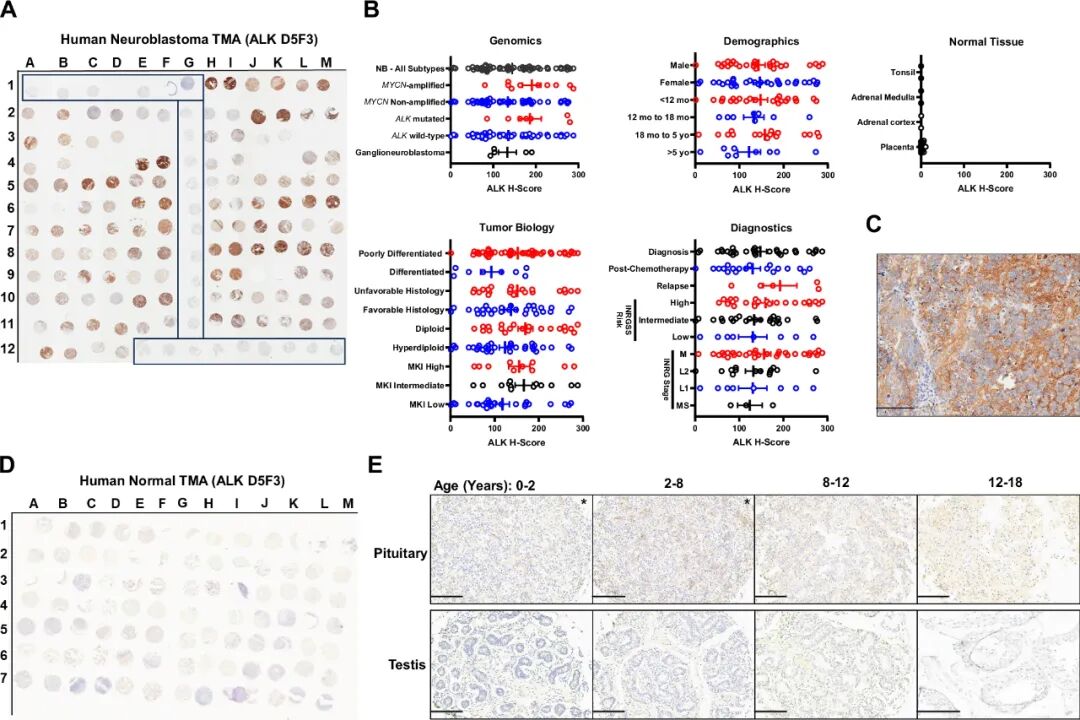
- The average H-score of neuroblastoma is 144.71 (55 cases), and expression is not related to MYCN amplification, ALK mutation status, age, etc. (Figure 2B, Appendix 3).
- The H-score in normal tissues is extremely low (placenta 1.69, adrenal gland 0.23), with only a few cells in the pituitary showing weak positivity (Figure 2D-E, Appendix 4).
2. CDX0239 Targets and Delivers PBD to Lysosomes
-
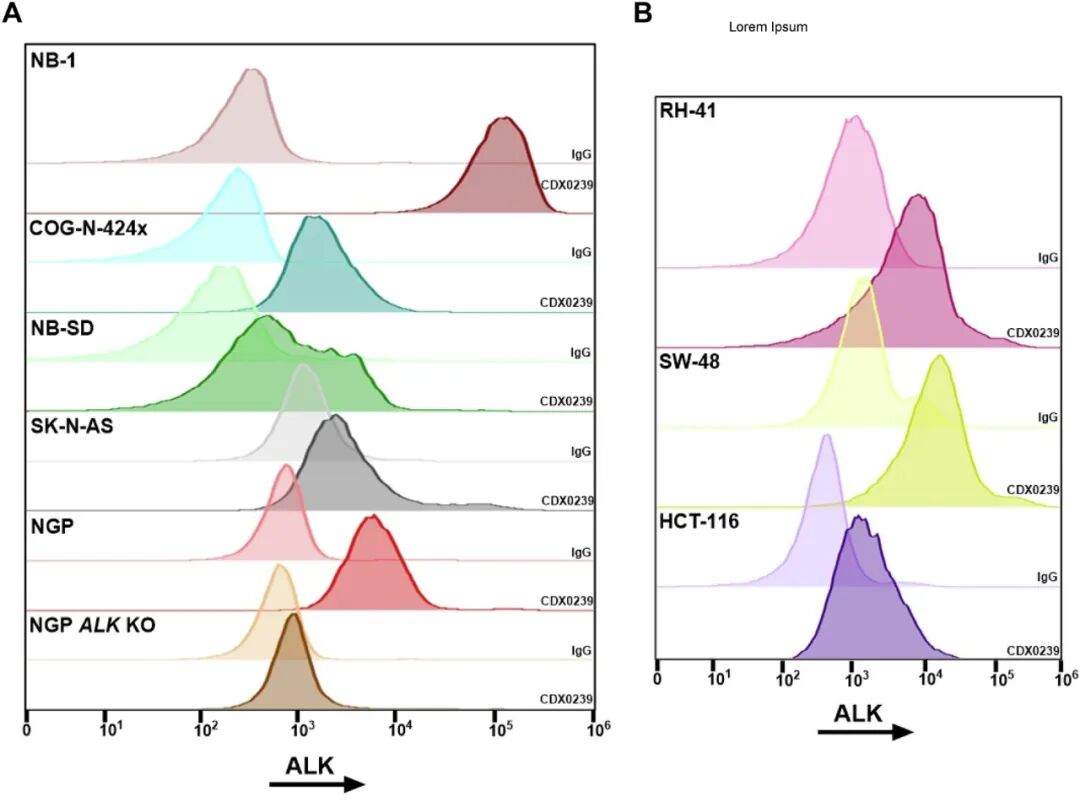
Surface Expression: Flow cytometry confirmed ALK surface expression in neuroblastoma (NB-1 geometric mean 668.7×IgG), colorectal cancer (SW-48: 9.76×), and rhabdomyosarcoma (RH-41: 7.02×) (Figure 3A-B, Appendix 5).
-
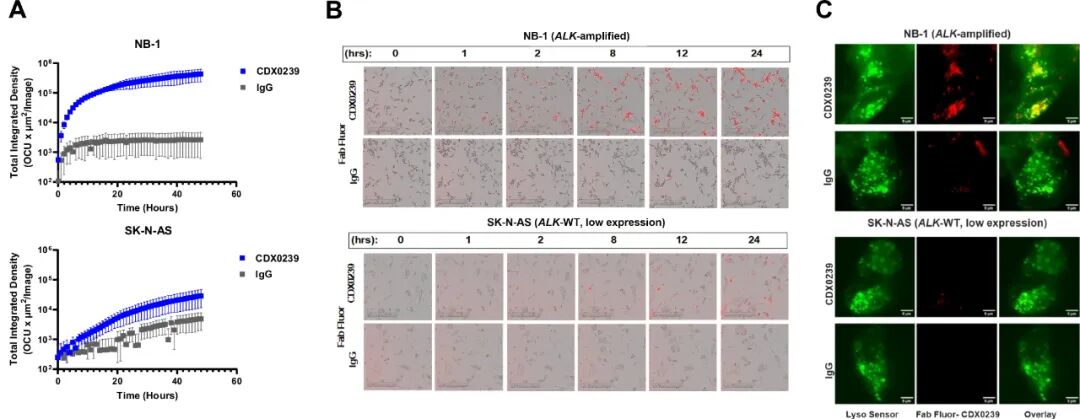
Internalization and Localization: The internalization efficiency of CDX0239 is positively correlated with ALK expression levels (NB-1 peaked at 24 hours) and co-localizes with lysosomes (Figure 4A-C).
“
Figure 3 | ALK surface expression in neuroblastoma, fusion-positive rhabdomyosarcoma, and colorectal cancer models
“
Figure 4 | CDX0239 is internalized and localized to lysosomes in ALK-expressing neuroblastoma lines
3. CDX0239-PBD Cytotoxicity Depends on ALK Expression Levels
- Cell Cytotoxicity: CDX0239-PBD exhibited significantly higher activity against high ALK-expressing models NB-1 (IC50=16.1 pM) and NB-SD (IC50=22.5 pM) compared to free PBD (342 pM and 619 pM), while low-expressing SK-N-AS showed weak activity (IC50=5070 pM) (Figure 5B, Appendix 6).
- Mechanism Validation:
“
Figure 5 | CDX0239-PBD exhibits potent in vitro cytotoxicity in neuroblastoma lines in an ALK surface expression-dependent manner
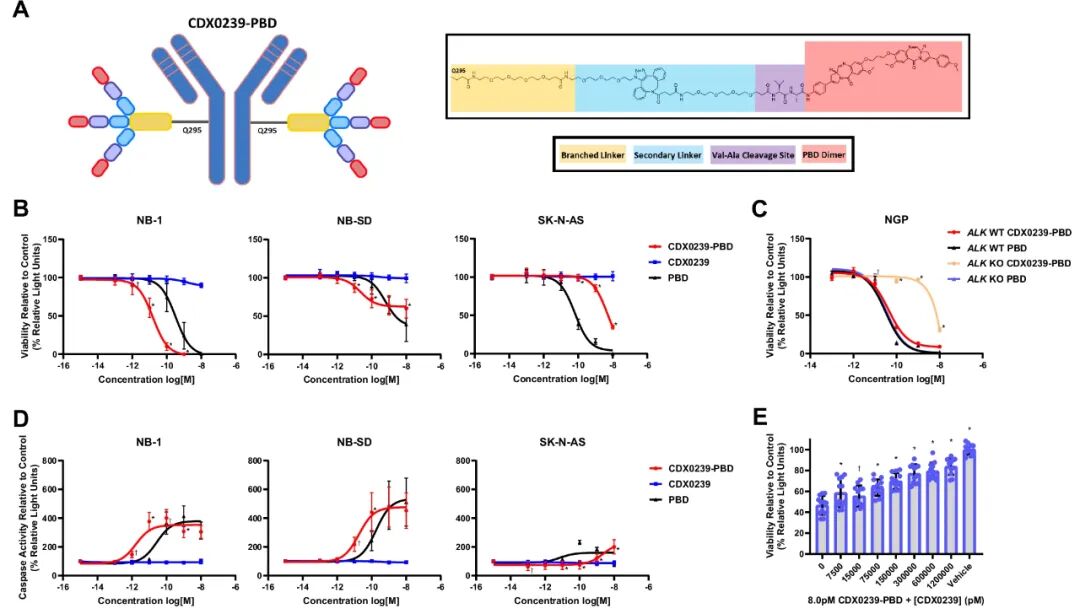
- CDX0239-PBD activity disappeared after ALK knockout (NGP KO) (Figure 5C).
- Competitive binding experiments demonstrated that CDX0239 blocked ADC internalization (*p<0.0001) (Figure 5E).
4. Significant and Durable Antitumor Activity In Vivo
-
Neuroblastoma:
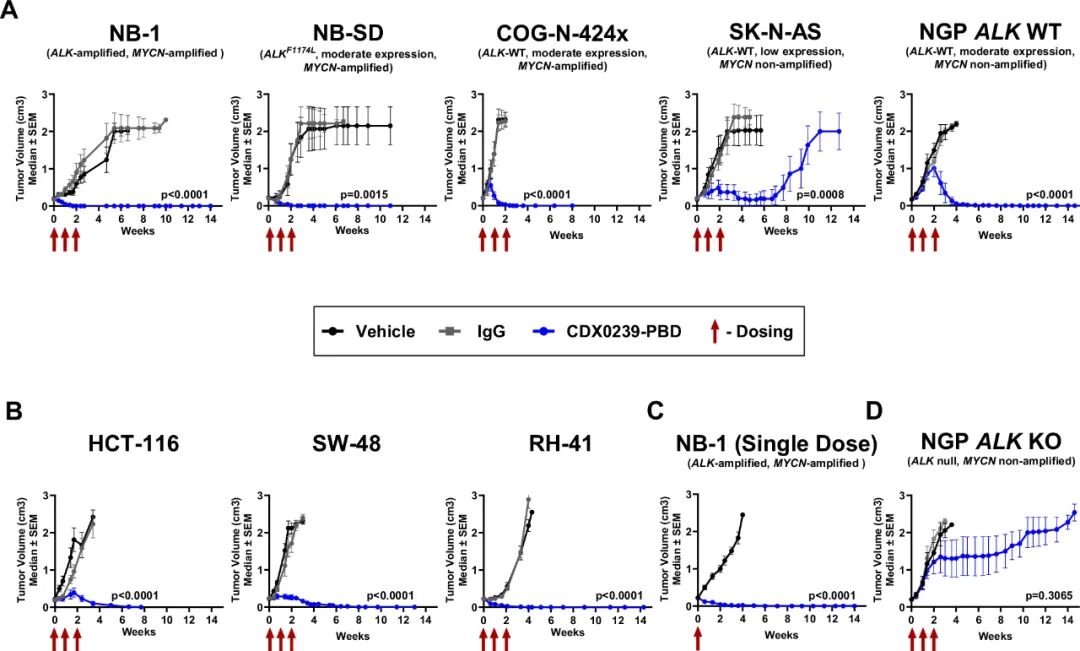
- CDX0239-PBD (1 mg/kg × 3) induced complete remission (CR) in NB-1, NB-SD, COG-N-424x, and NGP WT, with partial remission (PR) in SK-N-AS (Figure 6A).
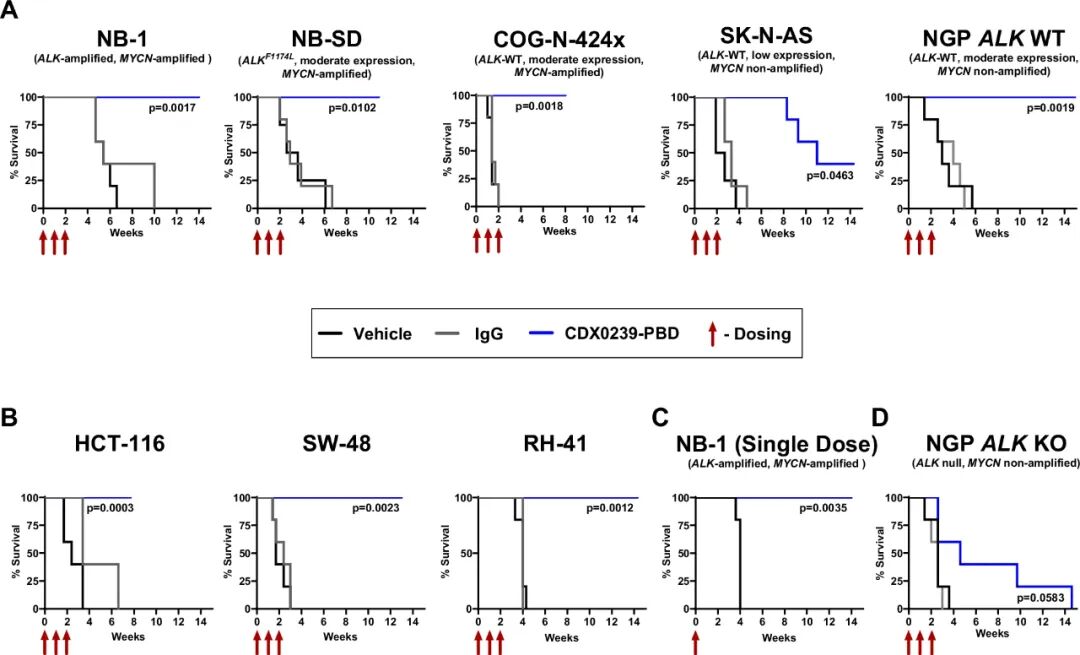
- Survival rate: 100% (high/medium expressing models) vs 40% (SK-N-AS) (Figure 7A).
-
Solid Tumor Expansion:
- Colorectal cancer (HCT-116/SW-48) and rhabdomyosarcoma (RH-41) both achieved CR (Figure 6B), with a survival rate of 100% (Figure 7B).
-
Dosing Optimization: A single dose of CDX0239-PBD (1 mg/kg) induced CR in NB-1 (Figure 7C).
-
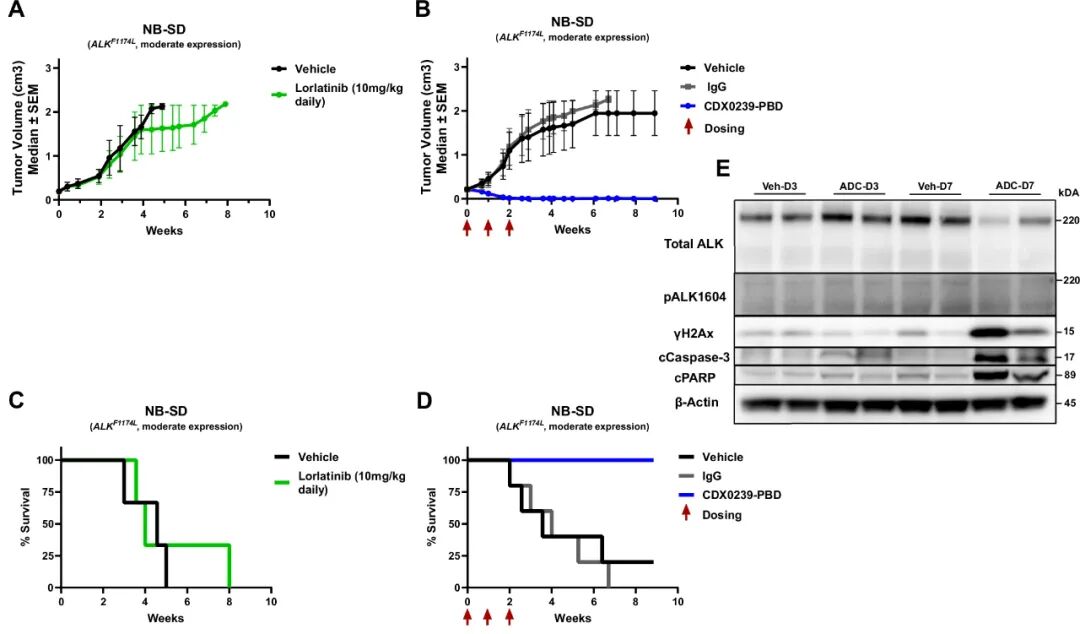
Overcoming Resistance Models: CDX0239-PBD still achieved CR in lorlatinib-resistant NB-SD (TP53 mutation) (Figure 8A-D).
“
Figure 6 | CDX0239-PBD demonstrates potent in vivo antitumor activity in ALK-expressing models
“
Figure 7 | CDX0239-PBD treatment significantly prolongs survival
5. Mechanism and Safety Validation
- Mechanism of Action: CDX0239-PBD induces DNA damage (γH2AX↑) and apoptosis (cCaspase-3↑, cPARP↑) through PBD, without inhibiting ALK phosphorylation (Figure 8E).
- Safety: No weight loss or organ toxicity (Appendix 6).
“
Figure 8 | CDX0239-PBD overcomes lorlatinib resistance through DNA damage and apoptosis
4. Discussion and Outlook
This study is the first to confirm the broad-spectrum antitumor activity of the humanized ALK-ADC (CDX0239-PBD) in ALK-expressing tumors, with the following main discussion points:
1. Potential of ALK as an Ideal ADC Target
- Selective Tumor Expression: Public databases (>12,000 samples) show that ALK is overexpressed in various solid tumors (neuroblastoma, colorectal cancer, breast cancer, ovarian cancer) while being limited in normal tissues (except pituitary/testis). In breast cancer, ALK overexpression is associated with poor prognosis (Literature 12), and similar to HER2, it may become a new target for ADC therapy.
- Overcoming CNS Metastasis Barriers: The blood-brain barrier (BBB) is disrupted during tumor metastasis (Literature 57), and HER2-ADCs have shown efficacy in brain metastases of breast cancer (Literature 58), suggesting that CDX0239-PBD may penetrate the BBB to treat CNS metastases of neuroblastoma.
2. Differentiated Advantages of CDX0239-PBD
- Efficient Delivery System: The L6 linker releases PBD in the acidic environment of lysosomes, achieving targeted cell killing.
- Overcoming Resistance: CDX0239-PBD still induced CR in the NB-SD model with TP53 mutation leading to lorlatinib resistance, providing a new option for ALK-mutated tumors.
- Wide Therapeutic Window: Clinically feasible doses (1 mg/kg) achieved CR without significant toxicity (Literature 68).
3. Insights for Solid Tumor Treatment
- Potential Application in Breast Cancer:
- Mechanistic Support: ALK is overexpressed in breast cancer (Literature 10-12) and is associated with aggressiveness.
- Preclinical Evidence: Colorectal cancer models (HCT-116/SW-48) share oncogenic pathways (KRAS/PIK3CA mutations), and complete remission of CDX0239-PBD in such models suggests cross-tumor potential.
- Breakthrough in Rhabdomyosarcoma: Complete remission in RH-41 (PAX3::FOXO1 fusion) provides new hope for this refractory sarcoma.
4. Future Optimization Directions
- Enhancing TME Penetration: Development of ALK-ADCs based on single-domain antibodies (e.g., nanobodies) to improve solid tumor permeability.
- Diversification of Payloads: Exploration of alternative payloads such as topoisomerase inhibitors to match different tumor sensitivities.
- Combination Strategies: Combining with immune checkpoint inhibitors to enhance efficacy through PBD-induced immunogenic cell death.
5. Clinical Translation Prospects
CDX0239-PBD is expected to become the first “precision chemotherapy” drug targeting ALK, providing new options for patients with neuroblastoma and ALK-positive solid tumors (including breast cancer and colorectal cancer). Researchers plan to advance non-human primate pharmacokinetic studies and IND application.
“
Key Conclusion: “ALK-directed ADCs represent a promising class of ‘precision chemotherapy’ that may eventually replace some conventional chemotherapies.” (ALK靶向ADC有望成为替代传统化疗的“精准化疗”新类别.)
Content Source:https://www.nature.com/articles/s41467-025-62979-1