Recently, the WeChat update has disrupted the release schedule, causing many readers to miss article updates. Please set “Fengkou Research” as a star ⭐ so we can move forward together and see each other every day!
ADC, a potential new star in the field of innovative drugs
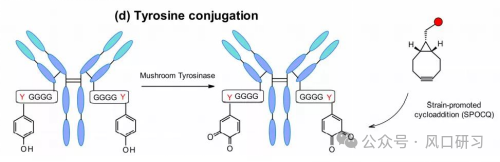
In the vast starry sky of innovative drugs, ADC drugs are like a rising star, attracting the attention of the global pharmaceutical community.ADC, or Antibody-Drug Conjugate, is a new type of targeted biopharmaceutical that cleverly links monoclonal antibodies with small molecule cytotoxic drugs through linkers.
ADC drugs have a structurally exquisite design, akin to a super tank equipped with a precise navigation system. It mainly consists of three parts: monoclonal antibodies that accurately identify cancer cell surface antigens, which act like the tank’s “navigation system”, specifically binding to certain targets on the surface of tumor cells, such as HER2, TROP2 , etc., achieving precise localization of tumor cells; the linker that connects the antibody and the effective payload, which is like the tank’s “transmission system”, maintaining stability in the bloodstream to ensure that the cytotoxic drug is not released prematurely before reaching the tumor cells, and when ADC is internalized by the tumor cells, the linker can timely break, releasing the drug; the cytotoxic drug payload responsible for killing cancer cells is the tank’s “deadly weapon”, which, once released, can launch a fatal attack on tumor cells, inducing apoptosis.
This unique structure endows ADC drugs with unparalleled advantages, combining the powerful killing effect of traditional small molecule chemotherapy with the tumor-targeting ability of antibody drugs. Unlike the traditional chemotherapy approach of “carpet bombing”, ADC drugs can deliver cytotoxic drugs precisely into tumor cells like “precision-guided missiles”, achieving precise strikes on tumor cells while minimizing damage to normal cells, significantly reducing drug toxicity and side effects, and improving patients’ treatment tolerance and quality of life.
With the significant advantages of precision therapy, ADC drugs have sparked a revolutionary storm in the field of tumor treatment, becoming one of the hottest research and development directions in the biopharmaceutical field in recent years, with numerous pharmaceutical companies actively investing, and a continuous emergence of research pipelines, bringing new hope to cancer patients.
Recent Significant Signs of ADC Track Explosion
Entering 2025 , the heat of the ADC track continues to rise, with a series of remarkable events marking its impending new round of explosive growth, which we can glimpse from trading data and stock market performance.
(1) Bright Trading Data
In the first quarter of 2025, the global pharmaceutical trading market developed steadily, with a total of 231 transactions occurring, totaling approximately 67.5 billion USD, which is basically on par with the same period in 2024. Notably, China’s performance in this quarter was particularly outstanding, with the number of pharmaceutical transactions reaching 75 transactions, a year-on-year increase of 34%; the total transaction amount soared to 36.9 billion USD, an increase of over 200% compared to the same period in 2024, highlighting China’s increasingly crucial role in the global pharmaceutical industry landscape. Among them, the ADC field is undoubtedly the focal point.
From the overseas transaction data, in the first quarter of 2025, overseas transactions reached 33 transactions, with disclosed amounts exceeding 36.2 billion USD, while in the ADC field, both transaction amounts (16.527 billion USD) and transaction numbers (8 items) exhibited strong market vitality.Qide Pharmaceutical reached a strategic cooperation worth over 13 billion USD with the US Biohaven and South Korea’s AimedBio, based on Qide Pharmaceutical’s FGFR3 target first-in-class ADC and its independently developed iLDC® and iGDC®ADC technology platforms, setting a record for transaction volume.
Additionally, Innovent Biologics reached a global development agreement with Roche for IBI3009, with a transaction amount of approximately 1.08 billion USD; Yiming Biologics transferred the overseas market rights of its EGFR/HER3 bispecific ADC drug DB-1418 to Avenzo Therapeutics, receiving an upfront payment of 50 million USD and up to 1.15 billion USD in milestone payments; Lepu Biopharma reached a global licensing agreement worth 1.2 billion USD for its gastrointestinal cancer ADC drug MRG007 with ArriVent Biopharma; and the Shiyao Group’s subsidiary Jushi Biopharma reached an agreement with Radiance Biopharma for the ROR1 antibody-drug conjugate SYS6005, with potential earnings of up to 1.24 billion USD.
These high transaction figures fully demonstrate the attention and immense commercial value of the ADC track in the global pharmaceutical market, attracting numerous pharmaceutical companies to invest heavily in research and development.
(2) Stock Prices and Market Performance
In the secondary market, ADC innovative drug-related companies have also shown impressive stock performance, becoming the focus of market attention. For example, Yiming Biologics officially listed on the Hong Kong Stock Exchange on April 15, 2025, with its stock price soaring by 116.70% at closing. The total amount raised in this IPO was 210 million USD, approximately 1.54 billion RMB, setting a record for financing among biotech companies listed on the Hong Kong Stock Exchange since 2022. The significant rise in Yiming Biologics’ stock price reflects the market’s high recognition and expectations for its ADC research pipeline, even though the company currently has no products commercialized, its rich product pipeline, especially for cancer-targeted ADC drugs, holds enormous market potential.
Baillie Gifford is also actively laying out in the ADC field, establishing an innovative differentiated ADC technology platform HRMAP, which includes various linkers and site-specific conjugation technologies, various targeted antibodies, and various mechanisms of toxins, significantly improving the plasma stability, uniformity, and antitumor activity of ADC drugs. Several ADC drugs based on this platform have entered clinical I-III phase development, covering multiple targets and disease areas. Among them, SHR-A1811 is the first molecule from the Baillie Gifford ADC platform to enter clinical development, having been recognized six times as a breakthrough therapy by the National Medical Products Administration (NMPA) Drug Evaluation Center (CDE). As a novel human epidermal growth factor receptor 2 (HER2) targeted ADC drug, SHR-A1811 maintains excellent efficacy while reducing side effects due to its unique drug design. In 2024, Baillie Gifford had four self-developed ADC innovative drugs recognized by the US FDA for fast track designation, showcasing its deep technical accumulation and international influence in the ADC research field.
When investors focus on a company’s research pipeline, they should not only consider the quantity of products but also the quality and innovation of the products. A company with multiple products at different stages of research and targeting different indications can reduce research risks and increase the probability of successful market entry. Additionally, whether a company’s technology platform is innovative and differentiated directly affects the performance and competitiveness of its ADC drugs.
(2) Pay Attention to Cooperation Dynamics
In the research and commercialization of ADC drugs, through cooperation, companies can achieve resource sharing and complementary advantages, accelerating the research and development process of ADC drugs and improving the success rate of product commercialization. Investors should closely monitor companies’ strategic partnerships, licensing transactions, and other dynamics to identify investment opportunities.
Dongyao Pharmaceutical and Shijian Biotech reached a long-term strategic cooperation in 2023, focusing on deep collaboration in the research and production of antibody-drug conjugates (ADC) from late clinical stages to commercialization. Dongyao Pharmaceutical leverages its rich practical experience across the entire drug development value chain, the commercialization advantages of producing ADC antibodies, bulk drugs, and formulations in the same facility, and a quality system validated by regulatory bodies to comprehensively support Shijian Biotech’s ADC projects in key clinical batch production, process characterization and validation (PC/PV), market application, and commercial production supply in China, the US, and Europe. Shijian Biotech utilizes its technical advantages in ADC new drug development, focusing on innovative ADC new drug research. This cooperation fully leverages both parties’ advantageous resources and is expected to accelerate the research and commercialization process of ADC drugs, achieving a win-win situation.
In the first quarter of 2025, there were frequent overseas transactions and licensing collaborations in the ADC field, with many companies achieving integration of technology, capital, and market resources through cooperation.Qide Pharmaceutical reached a strategic cooperation worth over 13 billion USD with the US Biohaven and South Korea’s AimedBio, based on Qide Pharmaceutical’s FGFR3 target first-in-class ADC and its independently developed iLDC® and iGDC®ADC technology platforms, which not only brought substantial financial support to Qide Pharmaceutical but also helped its products enter the international market; Innovent Biologics reached a global development agreement with Roche for IBI3009, leveraging Roche’s strong sales network and rich clinical development experience to accelerate the research and commercialization process of IBI3009, enhancing the product’s market competitiveness.
These cooperation cases indicate that collaboration between companies can bring new opportunities and momentum for the research and commercialization of ADC drugs. When investors pay attention to corporate cooperation dynamics, they should analyze the advantages and complementarity of both parties, as well as the prospects and potential value of the cooperation projects. For example, a company with advanced research technology collaborating with a company with strong market promotion capabilities often achieves a 1+1>2 effect, bringing greater returns to investors. Additionally, terms in cooperation agreements, such as upfront payments, milestone payments, and royalties, can also reflect the commercial value of the cooperation projects and both parties’ confidence in the projects.
(3) Rationally View Risks
Although the ADC track has broad prospects, investors must also be aware of the risks involved. The research and development of ADC drugs is characterized by long cycles, high costs, and low success rates. From drug discovery to final market entry, it often requires years of research and clinical trials, facing numerous uncertainties such as technical challenges, clinical trial failures, and market competition.
According to data from the Beacon ADC database, the conversion rate of ADC drugs in early clinical development is far below the industry average. From Phase I to Phase II, the success rate is only 46%, while the overall success rate for oncology drugs is 58%, and for all drugs, it is 66%; from Phase II to Phase III, the success rate of ADC drugs further declines to 24%, significantly lower than that of oncology drugs (33%) and all drugs (49%). Although once entering Phase III, the approval rate for ADC drugs is as high as 82%, the high risk of failure in the earlier stages cannot be ignored. Additionally, during the research and development of ADC drugs, there may also be technical challenges such as off-target toxicity, pharmacokinetic properties, payload release stability, and biomarker heterogeneity, which could lead to project termination or delays.
Market competition is also a risk factor that investors need to pay attention to. As more and more companies enter the ADC track, market competition becomes increasingly fierce, and the risk of product homogeneity intensifies. Especially in popular target areas, such as HER2, TROP2 , etc., many companies are investing in research and development, making future market competition exceptionally brutal. If a company’s product lacks a differentiated advantage, it may face risks such as lower-than-expected sales and squeezed market share.
When investing in ADC related companies, investors should fully understand these risks, combine their risk tolerance and investment goals, and develop reasonable investment strategies. Diversifying investments can reduce risks associated with a single company or project. At the same time, it is essential to closely monitor industry dynamics and corporate research progress, adjusting investment portfolios in response to market changes.
Conclusion: The Future of the ADC Track is Promising
In June 2025, the explosive trend exhibited by the ADC innovative drug track is remarkable, with both impressive trading data and strong stock and market performance highlighting the enormous potential of this track. Strong policy support provides a favorable environment for its development, breakthroughs in research inject powerful momentum, and urgent market demand lays a solid foundation.
For investors, the ADC track is filled with opportunities but also accompanied by risks. During the investment process, focusing on companies with strong research capabilities can grasp the pulse of technological innovation; paying attention to cooperation dynamics can provide insights into market resource integration trends; and rationally viewing risks can help maintain a clear mind in investment decisions, making wise choices.
Looking ahead, the ADC innovative drug track is expected to continue its rapid development, bringing more breakthroughs and hope for cancer treatment, while also creating more value for investors. Let us look forward to the exciting performance of ADC innovative drugs in the future and continue to pay attention to this vibrant and promising track.
Disclaimer: The above content is for reference only and does not constitute investment advice.
Recent Hot Articles:
Will Huadian Co., Ltd. rise more than Shenghong Technology?What makes Moutai’s dividends reach a new high compared to its peers?Is there hope for photovoltaics again?