3D Bioprinting of Complex Biological Structures with Tunable Properties
3D Bioprinting of Complex Biological Structures with Tunable Properties

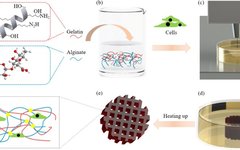
Abstract This research paper focuses on the use of the Freeform Reversible Embedding of Suspended Hydrogels (FRESH) printing method to fabricate complex structures with tunable elastic modulus and porosity. Currently, three-dimensional (3D) bioprinting has been widely used to construct hard tissues such as bone and cartilage. However, constructing soft tissues with complex structures remains a … Read more

Bioinspired Hydrogel Actuator for Soft Robotics: Opportunities and Challenges

Bioinspired Hydrogel Actuator for Soft Robotics: Opportunities and Challenges

Click the blue text above to subscribe (Image from Nano Today official website) Robotic technology is transforming industry and daily life. As an interdisciplinary field, robotics has garnered significant attention from mechanical engineering, computer science, materials science, chemistry, and other disciplines, facilitating the practical application of robots from micro/nano scales to macro scales. Traditional rigid … Read more

AFM: A Novel High-Sensitivity, Wide-Detection Range Flexible Stretchable Hydrogel Sensor Based on High-Density Cracks

AFM: A Novel High-Sensitivity, Wide-Detection Range Flexible Stretchable Hydrogel Sensor Based on High-Density Cracks

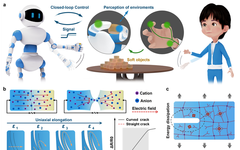
Click the blue text above to subscribe Due to the soft and lightweight characteristics, soft machines are inherently safe and friendly to humans, and intelligent interactive soft machines are expected to integrate into human society. The intelligence of soft machines relies on the perception of the environment and their own state, making flexible sensors with … Read more

Applications of Projection Photopolymerization in 3D Bioprinting: Microneedles, Microspheres, and Microfluidic Chips

Applications of Projection Photopolymerization in 3D Bioprinting: Microneedles, Microspheres, and Microfluidic Chips

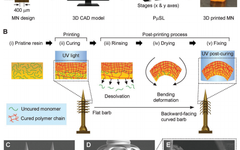
The projection photopolymerization 3D printing technology features high manufacturing precision, fast forming speed, and the ability for mass production, making it particularly advantageous in manufacturing high-precision structures. The microneedles, microspheres, and microfluidic chips manufactured using projection photopolymerization technology have significant application prospects in wound healing, drug delivery, and tissue engineering. To help everyone understand the … Read more

Bioprinting of Vascularized Tissues: A Comprehensive Review

Bioprinting of Vascularized Tissues: A Comprehensive Review

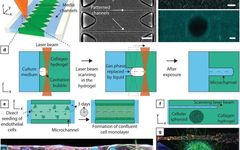
1. 3D Microvascularized Tissue Models Based on Collagen Hydrogel – Laser-Induced Cavitation Molding for Creating Channels and CavitiesIntroduction:The team of Professor Frank Niklaus, Anna Herland, and Göran Stemme from the Micro and Nanosystems Division of KTH Royal Institute of Technology published an article titled “3D Microvascularized Tissue Models by Laser-Based Cavitation Molding of Collagen” in … Read more

Glasgow University Dave J. Adams Group: Self-Stabilizing Hydrogel Biomimetic Systems

Glasgow University Dave J. Adams Group: Self-Stabilizing Hydrogel Biomimetic Systems

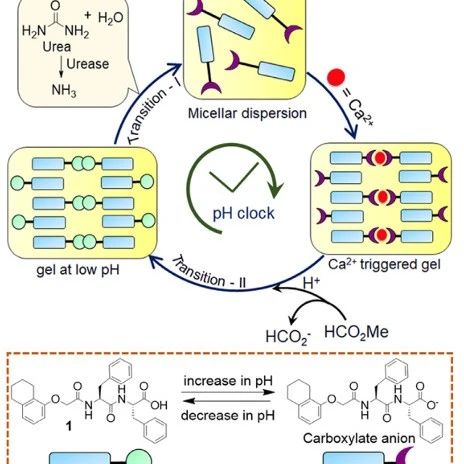
Click the blue text above to subscribe with one click. In this work, the Dave J. Adams group at Glasgow University constructed a self-stabilizing hydrogel biomimetic system. This system is based on a pH-responsive peptide self-assembled hydrogel system, which can drive the dynamic changes of the hydrogel system by introducing a chemical reaction cycle that … Read more

Kirigami Structure Hydrogel Strain Sensors Empower Human-Machine Interaction Applications and Morse Code Recognition

Kirigami Structure Hydrogel Strain Sensors Empower Human-Machine Interaction Applications and Morse Code Recognition

Conductive hydrogels are ideal materials for developing flexible and stretchable sensor devices. However, achieving key characteristics such as high sensitivity, excellent stretchability, and environmental stability simultaneously has been challenging, limiting their widespread application. Recently, Professor Duan Huigao’s team from Hunan University proposed an engineering strategy inspired by Kirigami paper-cutting structures, significantly enhancing the strain sensitivity … Read more

Muscle-Driven Miniature Robots Using Battery-Free Wireless Optoelectronics

Muscle-Driven Miniature Robots Using Battery-Free Wireless Optoelectronics

Combining living cell components with a three-dimensional scaffold can be used to develop robots carrying biological tissues. Existing research indicates that this type of robot can possess certain perception and environmental adaptation capabilities. Recently, a joint research team from University of Illinois at Urbana-Champaign led by Professors Mattia Gazzola and Rashid Bashir and John A. … Read more

Soft Magnetic Microrobots for Targeted Drug Delivery

Soft Magnetic Microrobots for Targeted Drug Delivery

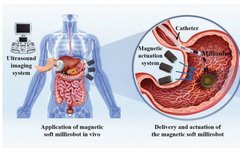
Due to their adaptability to the surrounding environment, soft microrobots have developed various therapeutic applications in the medical field, including vascular clearance, cell transport, and drug delivery. However, most soft microrobots cannot quickly enter, retrieve, and maintain their original position once the external driving field is removed. To address this, Guannan He from China Medical … Read more

Multicomponent Herbal Small Molecule Hydrogels for TBI Treatment

Multicomponent Herbal Small Molecule Hydrogels for TBI Treatment

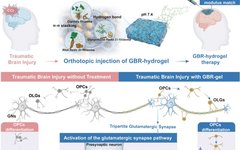
iNature Self-assembling hydrogels for mechanical support and drug delivery have been widely studied in the context of traumatic brain injury (TBI). However, most self-assembling hydrogels rely on polymer carriers or the introduction of exogenous inactive substances, often raising biosafety concerns and making clinical translation difficult. On October 9, 2024, a research paper titled “Small Molecule … Read more