Graphene Biosensor Tattoos: A Glimpse into the Future of Health Monitoring

Graphene Biosensor Tattoos: A Glimpse into the Future of Health Monitoring

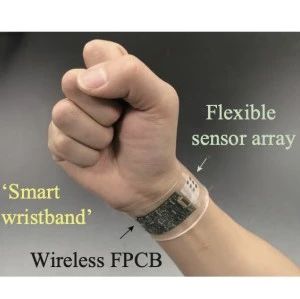
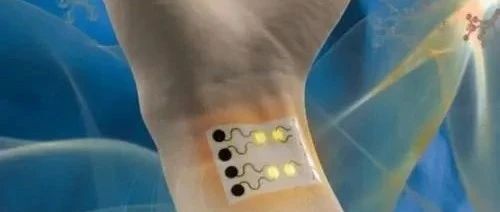
Imagine this: It is the year 2040, a 12-year-old child with diabetes throws a piece of gum into his mouth. The temporary tattoo on his forearm detects a rise in blood sugar and sends this information to his phone. The data from this health monitoring tattoo is also uploaded to the cloud, allowing his mother … Read more

Emerging ELISA-Derived Technologies for In Vitro Diagnostics

Emerging ELISA-Derived Technologies for In Vitro Diagnostics

【Quote】 In Vitro Diagnostics (IVD) has become an indispensable tool for clinical diagnosis and monitoring of disease progression. Current IVD technologies mainly include molecular biology diagnostics, immunoassays, and physiological signal monitoring. Among these, immunoassays have been routinely used to detect various biomarkers such as small molecules, proteins, and nucleic acids. The Enzyme-Linked Immunosorbent Assay (ELISA) … Read more

The Role of Sheet Resistance in Bio-Sensor Electrode Chips: The Significance Behind a Small Parameter

The Role of Sheet Resistance in Bio-Sensor Electrode Chips: The Significance Behind a Small Parameter

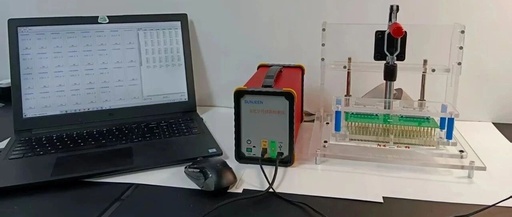
In flexible electronics, biosensors, and new energy devices, screen printing technology is widely used due to its low cost and scalability. One of the key parameters determining the performance of these printed electrodes is a seemingly unfamiliar term: sheet resistance (方阻). 1.What is Sheet Resistance? Sheet resistance, measured in Ω/□ (ohms per square), describes the … Read more

Common Types of Sensors and Their Applications

Common Types of Sensors and Their Applications

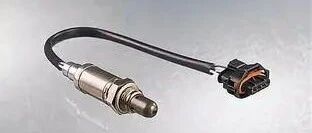
The following are common types of sensors and their application areas, integrating various classification methods and typical application scenarios: …………….………………………. …………….………………………. 1. Classification by Physical Quantity Detected 1. Temperature Sensor – Principle: Detects temperature changes through thermistors, thermocouples, or infrared radiation. – Applications: Industrial equipment monitoring, smart home temperature control, medical temperature measurement. 2. Pressure … Read more

Industry Research on Biosensors

Industry Research on Biosensors

Biosensors are analytical tools that combine the specific recognition capabilities of biological recognition elements (such as enzymes, antibodies, nucleic acids, cells, etc.) with physical or chemical signal conversion technologies to detect target substances (such as molecules, cells, pathogens, etc.). The core principle is to convert biochemical signals into quantifiable electrical signals, optical signals, thermal signals, … Read more

Principles of POCT Technology | Chemiluminescence, Biosensors, Microfluidics, Immunochromatography…

Principles of POCT Technology | Chemiluminescence, Biosensors, Microfluidics, Immunochromatography...

01 Dry Chemical Analysis Technology Dry chemical technology is compared to traditional wet chemical technology, where the liquid present in the sample serves as the reaction medium. The components to be measured react directly with dry reagents fixed on a carrier, allowing for qualitative observation or instrument detection (semi-quantitative) for chemical analysis. Single-layer Test Paper … Read more

Understanding the Global Sensor Market at a Glance

Understanding the Global Sensor Market at a Glance

Related Articles: ▶ Understanding Biomaterials for Biosensors ▶ Graphene’s Role in Medicine and Biosensors ▶ [At a Glance] Sensors Perceiving the World ▶ Understanding the Sensor Market and Applications Author: Xiao Hui Editor of New Materials Online: chungoo This article is sourced from the New Materials Online service account. For reprints, please add the editor’s … Read more

Detection of FTO Using a DNAzyme-Mediated CRISPR/Cas12a Signal Amplification Electrochemiluminescence Biosensor with C-CN/PCNV Heterojunction as Emitter

Detection of FTO Using a DNAzyme-Mediated CRISPR/Cas12a Signal Amplification Electrochemiluminescence Biosensor with C-CN/PCNV Heterojunction as Emitter

Click the blue text Follow us Introduction /Introduction Fat mass and obesity-associated protein (FTO) is the first identified m6A demethylase, and its abnormal expression is associated with various cancers such as acute myeloid leukemia, melanoma, cervical cancer, and breast cancer. Developing highly sensitive and selective methods for FTO detection is crucial for early cancer diagnosis … Read more

Progress in High-Throughput Screening Research Based on Small Molecule Sensors for Actinomycetes

Progress in High-Throughput Screening Research Based on Small Molecule Sensors for Actinomycetes

Actinomycetes can produce a wide variety of secondary metabolites, and microbial fermentation is an important means for obtaining these natural products. For a specific target product, the yield from wild strains is generally insufficient to meet industrial production requirements, necessitating long-term strain domestication to enhance yield. The combination of small molecule biosensors and droplet microfluidics … Read more

Artificial Intelligence Biosensors: Challenges and Prospects

Artificial Intelligence Biosensors: Challenges and Prospects

Artificial Intelligence (AI) and wearable sensors are two important fields for achieving optimal precision medicine tailored to individual patients. Combining these two fields can better capture patient data, improve the design of wearable sensors, and monitor the health of the wearer and their surrounding environment. Currently, with the Internet of Things, big data, and health … Read more