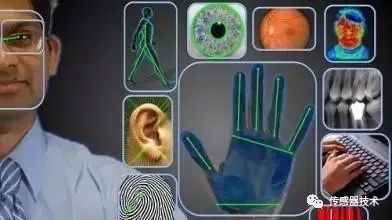
AI (Artificial Intelligence) was undoubtedly the hottest technology topic of 2016. From the beginning of the year with AlphaGo battling Lee Sedol to today’s chess master Nie Weiping losing to the mysterious Master with 54 consecutive wins, people have had to question whether it is a newly born AI dog. Artificial intelligence has truly entered our world, and the application research of wearable devices and smart sensing has pushed biosensors to the forefront.
Biosensor
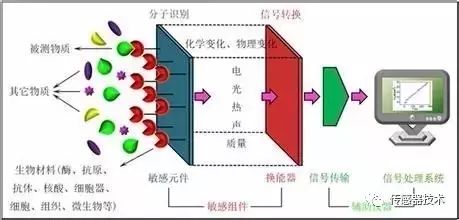
A biosensor is an instrument sensitive to biological substances that converts their concentration into an electrical signal for detection. It consists of immobilized biological sensitive materials as recognition elements (including enzymes, antibodies, antigens, microorganisms, cells, tissues, nucleic acids, and other bioactive substances), appropriate physicochemical transducers (such as oxygen electrodes, photodetectors, field effect transistors, piezoelectric crystals, etc.), and signal amplification devices, forming an analytical tool or system. Biosensors have the functions of receptor and transducer.
Biosensors consist of two parts: the molecular recognition part (sensitive element) and the transduction part (transducer):
The molecular recognition part identifies the target to be measured and is the main functional component that can cause certain physical or chemical changes. The molecular recognition part is the basis for the selective measurement of biosensors. The main components include enzymes, antibodies, nucleic acids, DNA, cell receptors, and intact cells.
The physical or chemical transducer (sensor) that converts the signal expressed by bioactivity into an electrical signal mainly includes electrochemical devices, optical devices, thermosensitive devices, acoustic devices, and pressure-sensitive devices.
Biosensor Schematic Diagram
Various biosensors share the following common structure: they include one or more related bioactive materials (biofilm) and a physical or chemical transducer (sensor) that can convert the signal expressed by bioactivity into an electrical signal. These two components are combined, using modern microelectronics and automation technology to reprocess biological signals, forming various usable biosensor analytical devices, instruments, and systems.
Biosensors achieve the following three functions:
Sensing: Extract biological materials from animals and plants that perform sensing functions, including: biological tissues, microorganisms, organelles, enzymes, antibodies, antigens, nucleic acids, DNA, etc. Achieve mass production and repeated use of biological materials or bio-like materials, reducing the difficulty and cost of detection.
Observation: Converts the continuous and regular information sensed by biological materials into information that can be understood by people.
Response: Displays the information through optical, piezoelectric, electrochemical, temperature, electromagnetic, and other methods, providing a basis for people’s decision-making.
Classification of Biosensors
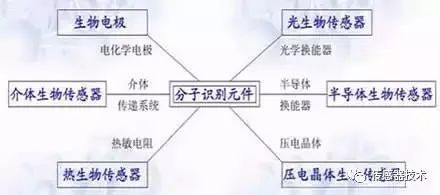
Biosensors can be classified based on the differences in molecular recognition elements and transducers (signal converters):
By Molecular Recognition Element:
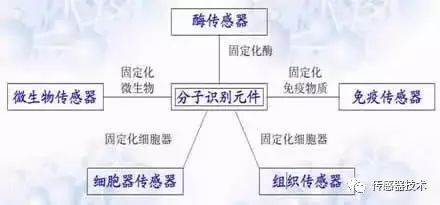
Enzyme sensors, microbial sensors, organelle sensors, tissue sensors, immunosensors.
Enzyme Sensor
It is composed of enzyme catalysts and electrochemical devices. Since enzymes are biological catalysts made of proteins, they can catalyze many biochemical reactions, and the complex metabolism of biological cells is controlled by thousands of enzymes. Enzymes have extremely high catalytic efficiency and possess high specificity, meaning they can selectively catalyze the target biological quantity (substrate) and have a chemical amplification effect. Therefore, utilizing the characteristics of enzymes can create sensors with high sensitivity and good selectivity.
Microbial Sensor
Uses microorganisms as molecular recognition elements. Compared to enzymes, microorganisms are more economical and durable.
The basic principle of immunosensors is the immune response. Biosensors that utilize antibodies to recognize the binding function of antigens are called immunosensors.
Biosensor with Biological Tissue
It uses living animal and plant tissue cell slices as recognition elements and is combined with corresponding transducer components to form a sensor.
Biosensor with Biological Tissue has the following characteristics:
1) Biological tissues contain rich enzymes, which can maintain relatively stable enzyme activity in a suitable natural environment. Many tissue sensors have a much longer lifespan than corresponding enzyme sensors;
2) When the required enzymes are difficult to purify, directly using biological tissues can achieve sufficiently high enzyme activity;
3) The production of tissue recognition elements is simple and generally does not require immobilization technology.
Organelle Electrode Sensor
It utilizes organelles from animal and plant cells as sensitive elements in the sensor. Organelles refer to small “organs” surrounded by membranes existing within cells, such as mitochondria, microsomes, lysosomes, peroxisomes, chloroplasts, hydrogenase granules, magnetosomes, etc.
By Transducer Classification:
Bioelectrodes, piezoelectric crystal biosensors, semiconductor biosensors, optical biosensors, thermal biosensors, intermediary biosensors.
Semiconductor Biosensor
It is a sensor formed by combining biological molecular recognition devices (biological sensitive membranes) with semiconductor devices. Currently, commonly used semiconductor sensors include semiconductor photodiodes, field effect transistors (FET), etc.
Characteristics of Semiconductor Biosensors:
1) Simple structure, easy to mass-produce, low cost;
2) It is a solid-state sensor with good mechanical properties, good shock resistance, and long lifespan;
3) Low output impedance, easy to match with subsequent circuits;
4) Multiple types of sensors can be integrated on the same chip, allowing for multifunctionality, multi-parameter measurement, and basic computer integration.
Piezoelectric Crystal Biosensor
Utilizes the sensitivity of piezoelectric quartz crystals to mass attached to the surface electrode area, combined with the selective specificity between biological functional molecules (such as antigens and antibodies), causing slight pressure changes on the surface of the piezoelectric crystal, altering its vibration frequency, thus forming a piezoelectric biosensor. It mainly consists of piezoelectric crystals, oscillation circuits, differential frequency circuits, frequency counters, and computers.
Biosensor Applications
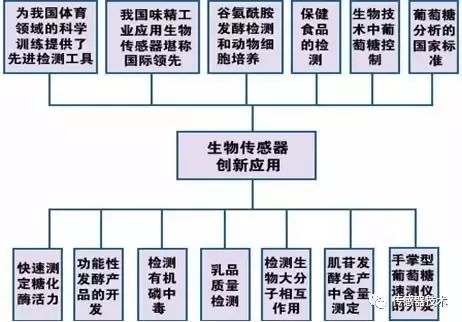
Applications of Biosensors in Medicine
Traditional Chinese Medicine Acupuncture Sensor Needle
The sensor needle based on traditional Chinese acupuncture needles is a special sensing needle that senses temperature, pH value, partial pressure of oxygen, dopamine, Ca2+, K+, Na+, and other information in the micro-region of the human body.
It can real-time sense various physiological and biochemical parameters in the micro-region of the human body and conduct dynamic monitoring of the micro-region, while also implementing treatment methods according to traditional Chinese acupuncture.
The sensor needle is processed using ordinary acupuncture needles (or hollow stainless steel tubes with an outer diameter of 0.3~0.4mm according to specific requirements) as the base material.
The general preparation process includes: cleaning the surface of the acupuncture needle or soaking it in a treatment solution; plating the corresponding alloy and sensitive membrane with relevant parameters on the needle tip, then covering it with organic polymer protective material; coating the needle body with an insulating film to allow for mechanical actions such as resistance, insertion, twisting, and turning, determined by its dual sensing and therapeutic functions; sterilizing with glutaraldehyde disinfectant;
According to different parameter characteristics, it is equipped with corresponding measuring instruments for direct reading; through repeated soaking, rinsing experiments, and animal testing in the laboratory, the main performance indicators (such as linear range, response time, resolution, zero drift, lifespan, etc.) meet the required standards.
Currently, temperature sensor needles, partial pressure of oxygen sensor needles, pH sensor needles, Ca2+ sensor needles, and dopamine sensor needles have been produced.
Additionally, biosensor needles can be developed for K+ sensor needles, Na+ sensor needles, central nervous system neurotransmitter sensor needles, enzyme sensor needles, antibody sensor needles, receptor sensor needles, hormone sensor needles, DNA sensor needles, RNA sensor needles, and further develop multi-parameter, miniaturized, and intelligent sensor needles.
Biochip
Abroad, semiconductor biosensors are being developed, which include a reference electrode and a pH quantum field effect transistor sensing membrane, with enzymes and microorganisms fixed on the membrane. When fixed enzymes and microorganisms react with the substances to be measured, the pH value changes, and the output current or voltage can be measured, completing the quantitative analysis of the chemical substances participating in the reaction. If these signals are connected to a computer input terminal and follow a certain software program, a biological simulation computer can be developed.
Medical Biosensors
With the development of biosensing technology, more specialized fields have been opened up within the scope of medical devices. From virus and disease detection to rehabilitation and drug dosage, some of the following biosensor devices may have a significant impact in the medical field.
Glucose Monitoring
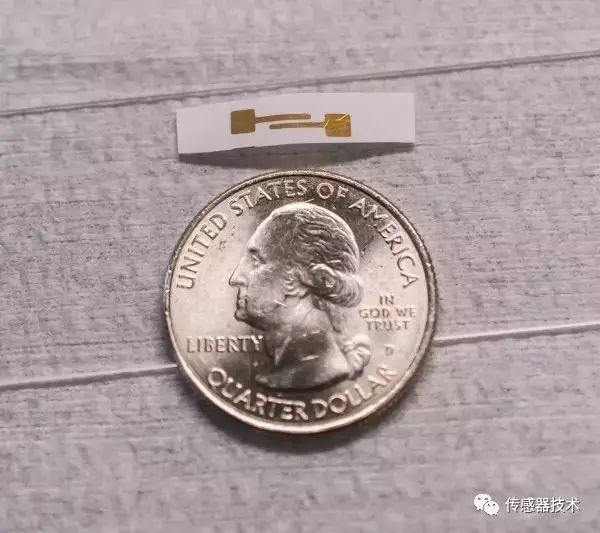
Because researchers are seeking to develop wearable biosensors that can monitor patients’ glucose levels through sweat on the skin, biosensing technology is likely to become a game-changer for diabetes patients.
The University of Texas at Dallas has developed a sensor about the size of a quarter that can detect cortisol in sweat and provide real-time data from surrounding sweat (as shown).
A fiber optic glucose sensor that can be integrated into a microfluidic chip is a low-cost portable device that can measure blood glucose levels. Recently, we have seen various different technologies aimed at providing a less invasive method for glucose monitoring, even tattoo-like sensing technologies—all that needs to be done is a quick prick of the finger. With these new technologies, the physical presence of these sensors may be closer to us than ever before.
Detecting DNA Mutations
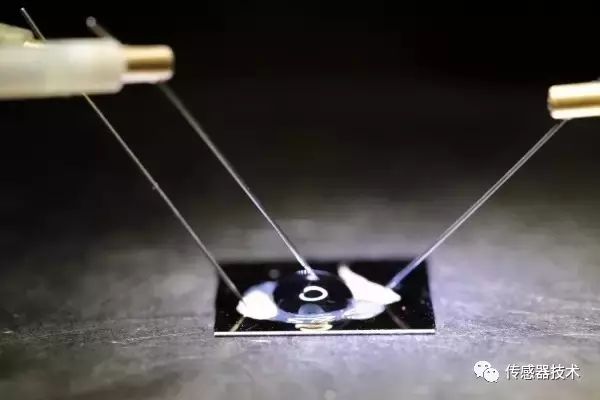
A new electrochemical graphene biosensor chip may be the first to be used as a biomedical implant that can read and detect DNA mutations in real-time. This low-cost biosensor technology can detect human gene mutations at high resolution and can wirelessly transmit data to mobile devices.
This technology could lead to a new generation of diagnostic methods and personalized treatments, as biosensor chips can be used for biopsies and detailed DNA sequencing. Since the chip is connected to graphene transistors, it allows the chip to operate electronically—making it the first product to combine dynamic DNA nanotechnology with high-resolution electronic sensing.
Disease Diagnosis
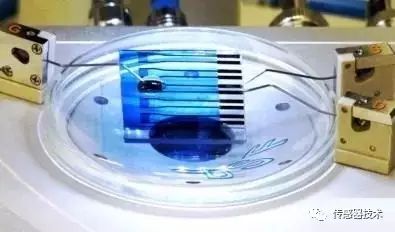
A new biosensor can detect specific molecules associated with neurodegenerative diseases and several different types of cancer. This device is designed to react upon contact with glutathione S-transferase, an enzyme associated with Parkinson’s disease, Alzheimer’s disease, breast cancer, and other diseases.
The device is an organic nanoscale transistor on a glass slide, using nanoscale systems to recognize specific molecules, which can be used for rapid and safe diagnosis of complex diseases.
The portability and low cost of the device make it suitable for any practical living environment, and it can be adjusted and improved to detect other substances or molecules associated with different diseases. The team ultimately plans to create a paper-based biosensor to further improve portability and cost.
Virus Detection
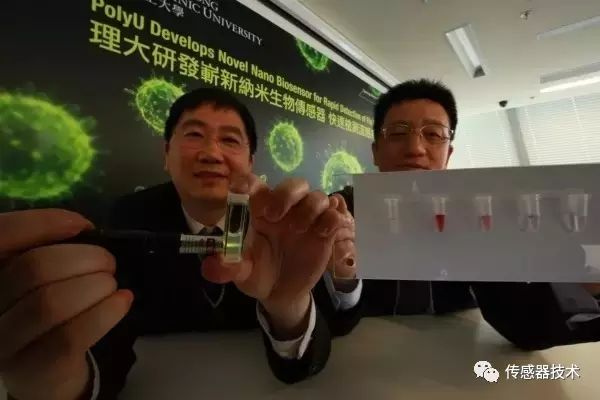
Biosensing technology can play an important role in virus detection. A new nano biosensor can detect various viruses within just 2 to 3 hours.
Traditional testing methods may take one to three days to complete; however, this new biosensor uses luminescent resonance energy transfer (LRET) for ultra-sensitive virus detection in liquid phase systems.
The design and operation of this technology are simple and do not require any expensive equipment or specialized skills. The technology is also designed to identify almost any known target virus’s genetic sequence. Sooner or later, this technology could even be adjusted and improved to identify multiple strains of influenza viruses on a single testing platform.
Drug Dosage
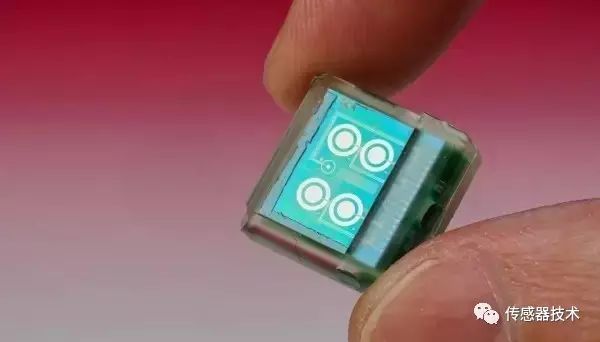
By enabling precise drug administration, a new type of biosensor chip, a square device the size of one centimeter, contains a circuit, a control unit, and a radio transmission module. Once implanted in the body, the chip allows for information reading and reacts to a large number of compounds.
This chip will allow doctors to monitor the real-time effects of drugs on the metabolic system, and this achievement could lead to a new generation of personalized treatment and precise therapy. This biosensor chip can measure pH, temperature, and metabolism-related molecules such as glucose and cholesterol.
Brain Injury Detection
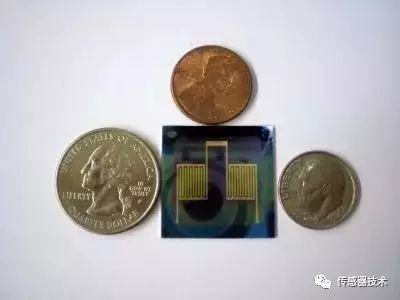
Brain injury has become an important issue in the medical world, especially in the field of sports medicine. Cardiologists and engineers from Johns Hopkins University have been trying to utilize biosensing technology to alert doctors in the event of severe brain injuries, especially during heart surgeries. Two groups collaborated to develop a biosensor the size of a fingernail that can detect specific proteins associated with brain injuries.
As a result of heart surgeries, children often experience many neurodevelopmental issues; recent studies have shown that up to 40% of infants undergoing heart surgery exhibit brain abnormalities on MRI scans.
This new sensor platform is designed to identify specific proteins as biomarkers for brain injuries and can ultimately be used outside of the operating room for rapid detection and diagnosis of brain injuries in athletes and accident victims.
Monitoring Rehabilitation Patients
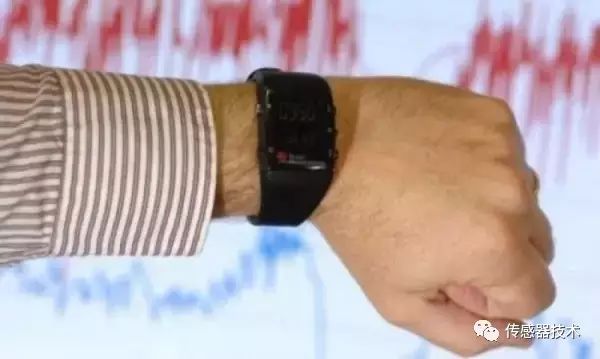
Biosensing technology is used for rehabilitation patients using wheelchairs or prosthetics. Researchers plan to conduct various studies utilizing biosensing technology in the form of temporary tattoos and smartwatches to collect data and monitor the effects of specific rehabilitation devices and exercises.
The study will observe how patients respond at home and how they cope with rehabilitation devices and exercises, in order to develop software that can utilize biosensor information to support patients who choose to rehabilitate at home. The goal of this research is to use the information provided by these technologies to improve patient treatment and enhance the design and functionality of home rehabilitation devices.
Applications of Biosensors in Non-Traditional Medicine
Applications in Environmental Monitoring
Traditional environmental monitoring often employs offline analysis methods that are complex to operate, require expensive instruments, and are not suitable for rapid on-site monitoring and continuous online analysis. With the increasingly severe problem of environmental pollution, biosensors play an important role in establishing and developing continuous, online, rapid on-site monitoring systems.
1) Water Quality Monitoring
BOD (Biochemical Oxygen Demand) is an important indicator for measuring the degree of organic pollution in water bodies. The research on BOD is crucial for water quality monitoring and treatment, and this research has also become a direction for the development of water quality detection technology.
The traditional standard dilution method for BOD takes a long time, is cumbersome to operate, and has poor accuracy. BOD sensors not only meet the requirements for practical monitoring but also possess rapid and sensitive characteristics. With the continuous in-depth research on rapid BOD measurement, it has been found that BODst (rapid BOD measurement value) can also serve as an important parameter for online monitoring of biological treatment processes.
2) Atmospheric Quality Monitoring
Biosensors can monitor CO2, NO, NH3, and CH in the atmosphere. Antonelli M et al. developed a sensor using lichen tissue, which is expected to monitor the concentration of benzene in substances such as air, water, and oil. A microbial sensor composed of a porous permeable membrane, immobilized nitrifying bacteria, and an oxygen electrode can measure the nitrite content in samples, thereby inferring the concentration of NO in the air, with a detection limit of 1 x 10 mol/L.
Applications in Food Engineering
Edible beef is easily infected by E. coli O157:H7, so rapid and sensitive methods are needed to detect and defend against bacteria like E. coli O157:H7. Biosensors can directly measure E. coli O157:H7 at 10^2 CFU (colony-forming units).
After detecting pathogens, they can be isolated to grow on a culture medium. The total time from pathogen detection to regaining the pathogen from the sample and allowing it to grow independently on the culture medium is only one day, while traditional methods require four days.
There is also a rapid and sensitive immunobiosensor that can be used to measure the residues of dichlorvos in milk. It is based on the response of cytoplasmic genomes and transmits signals through an optical system, achieving a detection limit of 16.2nd/mL.
Applications in the Military Field
Biosensors have unique advantages in the detection of chemical and biological warfare agents. Biosensors have been applied to monitor various bacteria, viruses, and their toxins (such as anthrax spores, plague Yersinia, Ebola hemorrhagic fever virus, botulinum toxins, etc.). The most studied and used sensor in chemical warfare agent detection is the acetylcholinesterase sensor.
In the 1950s, an enzyme detection method for sarin was designed, capable of detecting 0.1-0.5×10 of sarin, and this method is still widely used internationally in nerve agent detection kits and alarms.
Conclusion:
Biosensors can replace conventional chemical analysis methods, thus, their emergence can be regarded as a technological revolution. The implementation of the Human Genome Project has greatly accelerated the development of various new biosensors closely related to biology, medicine, informatics, and other disciplines, providing unprecedented opportunities for current biosensor research.
As a high-tech field of multidisciplinary intersection, how to organize various scientific and technological forces and financial, material resources to promote the development of this high-tech field in our country is not only a challenge for scientific and technological personnel in related fields such as biology, information, physics, chemistry, medicine, microelectronics, and materials, but also a topic faced by relevant administrative management departments.
Source: Sensor Technology
Editor: Song Bingjia