Three Common LED Driver Circuit Boards
Three Common LED Driver Circuit Boards

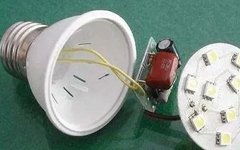
Today, LED lights have become the mainstream for lighting, with very few households using incandescent bulbs. The main advantage is that LED lights are more energy-efficient, consuming over 70% less power than incandescent bulbs for the same light output.LED lights have a longer lifespan compared to incandescent bulbs. Anyone who has used incandescent bulbs knows … Read more

Wide Bandgap Semiconductor Chips

Wide Bandgap Semiconductor Chips

Gallium Nitride (GaN), Gallium Oxide (Ga₂O₃), and Diamond are recognized as strategic advanced electronic materials internationally. Among them, GaN, as a representative of wide bandgap semiconductors, possesses excellent material characteristics such as a large bandgap, high breakdown field strength, and high electron saturation drift velocity. It is the core of short-wavelength optoelectronic devices, microwave RF … Read more

Three Main Characteristics of LED Displays

Three Main Characteristics of LED Displays

Qian Yuan Technology Click the blue text Follow us LED displays are composed of arranged light-emitting diodes. They use low-voltage scanning drive, featuring low power consumption, long lifespan, low cost, high brightness, few failures, wide viewing angles, and long visibility distance. Compared to LCD displays, LEDs have advantages in brightness, power consumption, viewing angle, and … Read more

Incredible! Create a Smart Watch with 200 LEDs (Source Code and Circuit Diagram Included)

Incredible! Create a Smart Watch with 200 LEDs (Source Code and Circuit Diagram Included)

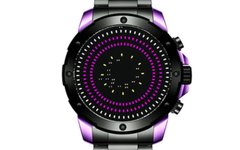
Recently, while browsing Hackaday, I came across a very cool watch project that is still in development, and I wanted to share it with everyone. Background The author is working on the ESP32 Pico Watch, which has WIFI, BT, Mesh, a vibration motor, an RTC, 4 buttons, a USB-C connector, and most importantly: 192 LEDs … Read more

Smart Lighting | Microchip’s New DALI 2.0 Lighting Control Solution for Smart Building Systems

Smart Lighting | Microchip's New DALI 2.0 Lighting Control Solution for Smart Building Systems

Introduction With the DiiA alliance’s revision of the DALI standard, many features have been added while optimizing the original version, making it compatible with major manufacturers’ DALI products on the market, as well as the existing DALI 1.0 standard. DALI 2.0 introduces the Control device (Master) standard, and more test commands (up to 200). The … Read more

Renesas MCU: Fun to Learn! Free Application + Hands-On

Renesas MCU: Fun to Learn! Free Application + Hands-On

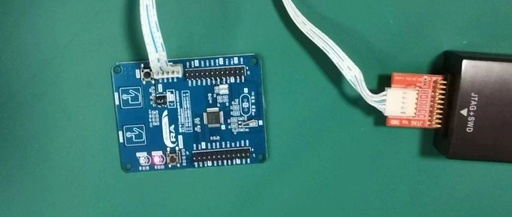
A few days ago, I received the Renesas RA2E1 development board sent by the Breadboard Community. I saw someone asking: Is the Renesas microcontroller hard to learn? First, you need to have such a board. Now, let me explain slowly.Scan the QR code to join the Breadboard Community and apply for a free Renesas development … Read more

Implementing LED Control with 51 Microcontroller

Implementing LED Control with 51 Microcontroller

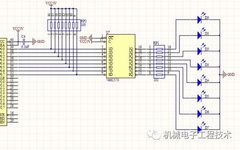
Click the above“Mechanical and Electronic Engineering Technology”to follow us This article introduces three experiments: lighting a single LED, flashing a single LED, and running lights using the 51 microcontroller, along with programming in C language and assembly language. 1. Circuit Diagram Used As shown in the figure, the 51 microcontroller connects 8 light-emitting diodes to … Read more

Ingenious! 1 GPIO Controls 2 LEDs to Display 4 States

Ingenious! 1 GPIO Controls 2 LEDs to Display 4 States

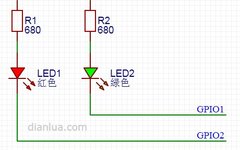
Many electronic products have status indicator lights, such as TVs: Standby state lights upred light Power on state lights upgreen light It is very simple to implement, just control two GPIOs of the microcontroller (MCU): However, resources are always tight, and sometimes you may encounter situations where there are not enough GPIOs.If only using 1 … Read more

Understanding STM32 IIC Challenges and Common Mistakes

First, a little aside~ It is said online that the IIC of STM32F103 has flaws! Let’s just consider it as some shortcomings; personally, I think it can definitely be used, but it is not easy to use. Because ST Company considered patent issues, they did not follow Philips’s standards. This leads to the IIC of … Read more

Differences in Onboard LED Drive Levels Between ESP8266 and ESP32

Differences in Onboard LED Drive Levels Between ESP8266 and ESP32

STM32 vs Arduino: Why Does Your LED Always Fail to Light Up? In recent IoT projects, I have used various mainstream development boards and found differences in the drive levels of their onboard LEDs. This is documented for reference. For example, the onboard LEDs of Arduino Nano (D13), Arduino Uno (D13), and ESP32 (D2) are … Read more