
 Interview | Pencil Road Editor Wu Xinxiao
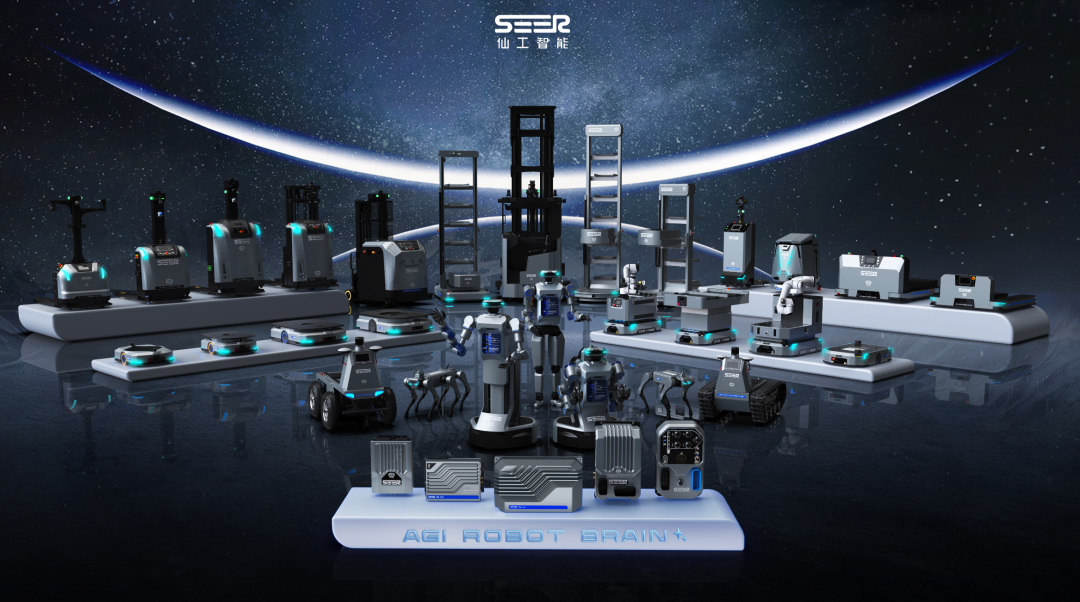
Recently, the world’s largest intelligent robot company focused on control systems, XianGong Intelligent, submitted its prospectus to the Hong Kong Stock Exchange, aiming to list on the main board in Hong Kong.
The experience of XianGong Intelligent’s founder, Zhao Yue, is quite remarkable: he was admitted to the medical program at Zhejiang University with excellent scores in the college entrance examination, originally intending to become a doctor after an “eight-year direct doctoral” education. However, he was not very interested in medicine and instead preferred the elective second major in electronics and control systems. In his fifth year at school, he dropped out and re-applied to the university’s Intelligent Control Research Institute, during which he led a team to participate in the RoboCup small robot soccer competition, winning the world championship three times, which ignited his passion for robotics and ultimately led him to enter the robotics industry.
In 2020, Zhao Yue founded XianGong Intelligent in Shanghai, focusing on the niche of robot control systems. In just five years, the company has become a leader in the robot controller industry, maintaining the top position in global robot controller sales for two consecutive years in 2023-2024.
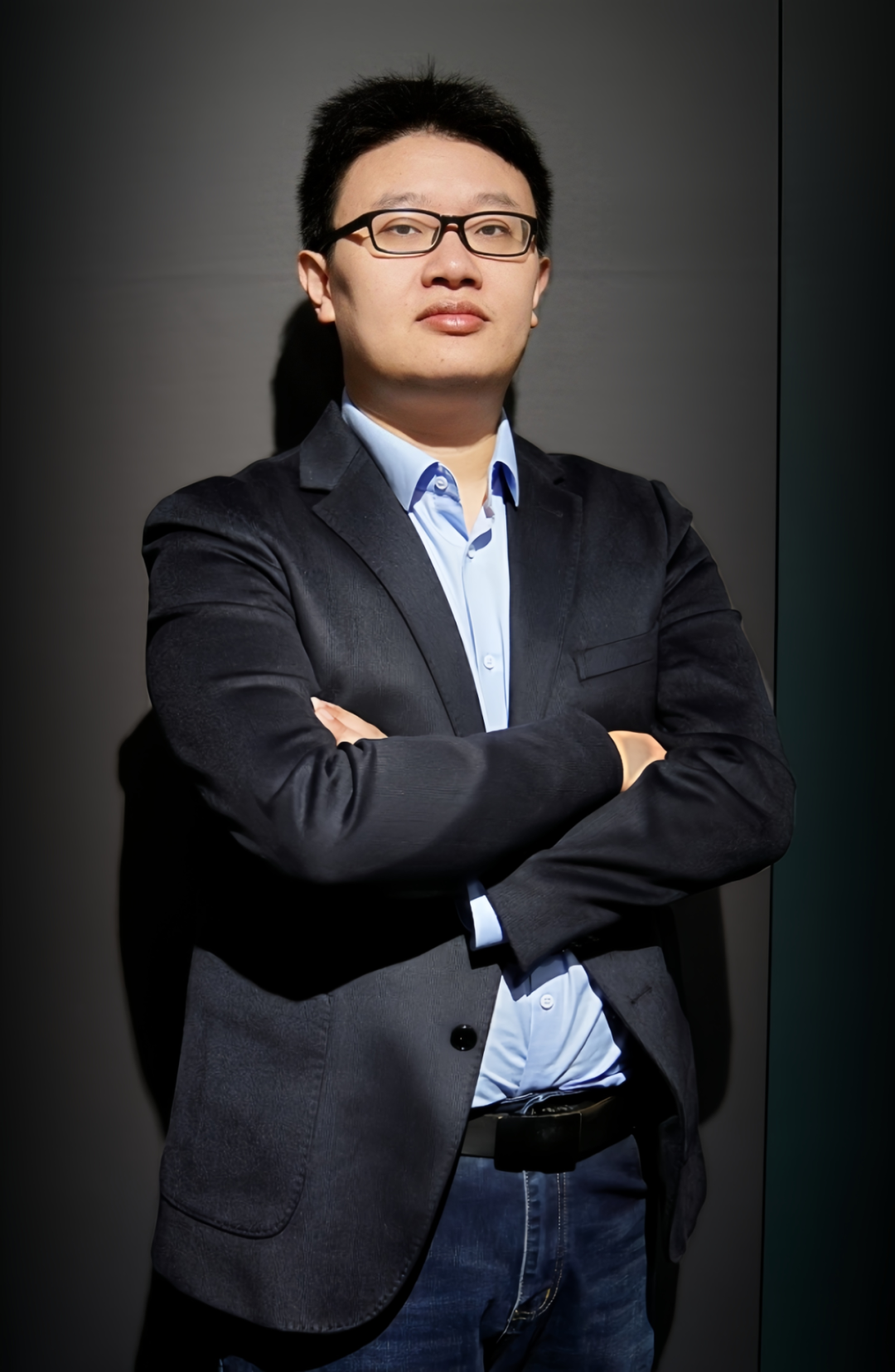
Founder of XianGong Intelligent, Zhao Yue
Recently, Zhao Yue accepted an interview with Pencil Road, answering the “three questions about the industry’s endgame” that investors asked back then:
With the development of AGI, the future intelligent civilization will present an open and diverse state, and robots will evolve into various forms, not limited to humanoid types. It is impossible for one company to monopolize all types of robots; there will inevitably be many companies focusing on different fields of robotics.
Statement: The interviewee has confirmed that the information in the article is true and accurate, and Pencil Road is willing to endorse its content.
– 01 – Turning Passion into Career
Pencil Road: I heard that you transitioned from Zhejiang University’s medical program to the intelligent control field?Zhao Yue: I studied in the “4+4” program jointly offered by Zhejiang University’s Zhuke Zhen College and the Medical School, aiming to cultivate medical scientists who are proficient in both clinical practice and research. Under this system, I spent the first four years studying medical courses while also completing a minor in electronic information engineering as required.
Later, I successfully obtained a degree in electronic information, but after three months in the medical doctoral program, I dropped out. Because I had participated in robotics competitions during my undergraduate studies, I increasingly realized my passion for the robotics field during my medical doctoral phase, and later transferred to pursue a graduate degree in control systems, studying knowledge related to intelligent control.
Pencil Road: What was the biggest challenge you faced when starting your business in 2020?
Zhao Yue:The biggest challenge at that time was supply chain disruptions and logistics stagnation. Although the entire industry was advancing rapidly, everyone was unable to deliver goods.
Another significant impact was the chip shortage. At that time, overseas chips not only had insufficient production capacity but also faced transportation disruptions, leading to skyrocketing chip prices. At this juncture, domestic chip manufacturers were still operational, so we focused on the research and adaptation of domestic chips. From 2020 to 2021, we accelerated the localization of chips in our controllers.
Pencil Road: Does this mark a critical turning point for chip localization?
Zhao Yue:On one hand, it is due to the country’s high emphasis on the chip industry; on the other hand, it is also a result of market pressure. At that time, with tight chip supplies, many companies began to develop alternative solutions. Adversity led to rapid growth for many domestic chip manufacturers.
Previously, everyone thought that foreign chips were cheap and easy to use, so there was no need to switch; now everyone realizes that it is essential to have domestic backups.
Pencil Road: What is the current localization rate of chips in the entire industry?
Zhao Yue: The replacement ratio is already quite high. Currently, low- to mid-range chips have achieved complete autonomy, including passive components, power devices, and basic main control chips, but high-end, high-performance chips still rely partially on imports.
– 02 – Not Thinking About Difficulties, Just Doing It
Pencil Road: What was the most difficult moment during your entrepreneurial journey?
Zhao Yue:In terms of major strategic decisions for the company, we have indeed “paid tuition” but ultimately resolved everything. As Ren Zhengfei said, don’t think about difficulties, just do it, and move forward step by step. I strongly agree with this statement.
Pencil Road: What aspects do investors pay the most attention to during the financing process? Were there any particularly memorable questions?You: There was indeed a very profound experience. A senior investor once asked me three questions:1) What is the endgame of the robotics industry? 2) How long will it take to reach the endgame? 3) How much funding is needed to accelerate the realization of the endgame and ensure we become a key player?
Pencil Road: How did you respond?
Zhao Yue: These three questions made me think for a long time. Until last year, when the company’s mission was redefined, I gradually formed a clear understanding:
1. Endgame Judgment: With the development of AGI, the future intelligent civilization will present an open and diverse state.
Just as nature has various organisms, robots will also evolve into various forms, not limited to humanoid types. For example, there are specialized robots in factories and cleaning robots in swimming pools.
2. Industry Landscape: It is impossible for one company to monopolize all types of robots; there will inevitably be many companies focusing on different fields of robotics.
3. Demand Characteristics: Future demand will be highly personalized, whether in B-end or C-end, presenting characteristics of “thousands of faces” and “thousands of scenes”.
Pencil Road: Will the future robotics market lean more towards B-end or C-end?
Zhao Yue: The boundaries will become increasingly blurred. Companies can layout both B-end and C-end simultaneously, but different companies will have different focuses. However, both markets will thrive, and there will be no either-or situation.
– 03 – The Next Generation of Robots Will First Emerge in the Industrial Sector
Pencil Road: What is the current challenge that the robotics industry needs to overcome? What development stage are we in now?
Zhao Yue: We internally divide the development of robots into four stages:
First Stage: Highly Customized (10-15 years ago)
In this stage, the software and hardware were purely customized, with each project requiring separate programming and implementation, such as industrial robotic arms and magnetic strip AGVs. Therefore, the C-end only had collision-type sweeping robots, with no path planning capabilities.
Second Stage: Emergence of Flexibility and Intelligence (Current)
Characterized by the emergence of collaborative robots, automatic forklifts, etc., which can adjust their behavior based on the environment (driven by autonomous driving technology). On the software side, low-code engines are beginning to become popular, supporting drag-and-drop operations; on the hardware side, modular hardware design accelerates robot construction.
However, in this stage, it still relies on “scenario-based software + scenario-based hardware”; for example, industrial customers need to adjust code based on maps and MES/ERP systems, and hardware also needs to adapt to different scenarios.
Third Stage: Software Generalization + Hardware Scenarioization (Next 5 years)
The key breakthrough to reach this stage is the large model technology breaking through software boundaries, allowing robotic arms, mobile robots, etc., to potentially share a common underlying framework. However, due to requirements for safety, efficiency, and precision, hardware still needs to be customized; for example, the Spring Festival Gala robot throwing handkerchiefs requires fishing line assistance (scenario-based hardware), rather than a general-purpose dexterous hand.
Fourth Stage: Generalization of Software and Hardware (Long-term)
The main feature of this stage is that both software and hardware achieve generalization, and humanoid robots become practical, solving many social problems. However, I predict that it will be difficult to see explosive growth within at least five years.
Currently, we are in the early transition from the second stage to the third stage, and devices from each stage will coexist for a long time (e.g., industrial robots and general humanoid robots operating in parallel).
The most pressing challenges to overcome are balancing software generalization with hardware scenarioization, and how to enable general-purpose hardware (like humanoid robots) to maintain efficiency and cost advantages in complex scenarios.
Pencil Road: In which scenarios will the fourth-generation robots first see explosive applications?
Zhao Yue: From a commercialization perspective, the industrial manufacturing scenario will be the first to explode.
The main reasons are threefold:
First, factory environments have clear process divisions, and robots do not need to possess complete generality;
Second, the demand for specific process segments is relatively controllable, such as tasks like transporting standardized material boxes;
Third, it can be achieved through gradual iteration, first solving basic problems and then gradually enhancing the level of intelligence.
For example, in the case of transporting material boxes: the types and weights of material boxes are relatively fixed (ergonomically adapted); specialized fixtures (like suction cups) can be used to reduce hardware complexity; and after accumulating data in limited scenarios, more complex applications can be expanded. This “limited generalization + gradual iteration” model is more likely to form a commercial closed loop.
– 04 – Two Key Insights for Strategic Choices
Pencil Road: What pain points did you see that needed urgent solutions when starting your business?Zhao Yue: Based on our judgment of the industry’s endgame, we chose to play the role of “industry catalyst”.
The core insights are:1) The future will require a vast array of differentiated robotic solutions;2) Traditional development models cannot meet this fragmented demand.
Therefore, we focus on building a modular hardware platform, low-code development system, and standardized operational control system, enabling small and medium teams and end-users to quickly develop customized robotic solutions, significantly lowering the innovation threshold in the industry. This is more effective than directly engaging in robot manufacturing to accelerate industry evolution.
Pencil Road: Is the company’s revenue primarily from domestic or overseas markets? Which industries have the strongest demand?
Zhao Yue: Currently, domestic business accounts for a larger share. Due to our unique product positioning—as a supplier of core control systems for robots, we indirectly serve end industries through integrators and equipment manufacturers, which gives us strong adaptability to the industry.
Specifically, this is reflected in:1) Wide industry coverage, having penetrated almost all industrial fields;2) Strong resistance to fluctuations, as different industries have complementary cycles. For example, during the expansion of the photovoltaic industry in the past two years, and this year during the 3C industry’s inventory replenishment, our customer orders have seen significant growth.
This “industry layering” model makes us less susceptible to the impact of fluctuations in a single industry.
Pencil Road: What considerations led to the initial choice of controllers as the entry point?
Zhao Yue: This strategic choice is based on two key insights. One is based on the current distribution of manufacturing capabilities; leading manufacturers (like Foxconn and BYD) have strong machining capabilities, but the development of control systems is not their core strength (analogous to Apple’s supply chain: the OEM can handle all aspects except chips). The other is based on the judgment of the industry’s endgame; future robot manufacturing will inevitably move towards technological equality, empowering more companies to participate in innovation rather than monopolizing manufacturing.
Therefore, we chose to focus on controllers, the “brain of robots”, enabling cooperation and win-win situations with both industry giants and other small and medium-sized players in the supply chain.
Pencil Road: How does the company’s technology compare to international top levels?
Zhao Yue: Our technology route is quite unique and difficult to directly compare. The mainstream international manufacturers are focused on complete robots, while we specialize in providing integrated software and hardware general control systems, positioning ourselves as the “behind-the-scenes enabler” of the industry. In terms of differentiation, we have technical architecture differences; we are not simply making controller hardware but building a complete robot development ecosystem. By standardizing systems, we lower the industry entry threshold, forming a dual-flywheel model of “technology flywheel + platform flywheel” innovation.
Pencil Road: What was the industry landscape like when you first entered the controller market?
Zhao Yue: In the mid-2010s robotics market, numerous startups were emerging (delivery, hotel services, collaborative robotic arms, etc.), with players in every niche (complete machines, integration, components, etc.), while the traditional four major families still dominated the industrial robotic arm market. We chose to enter the controller niche during this promising window period.
– 05 – The Future Will Still Focus on Control Technology
Pencil Road: How do you resist the temptation to make complete machines and stick to the controller route?
Zhao Yue: This choice is based on three dimensions of consideration.
1) Team DNA: Core members are strong in software algorithms rather than mechanical design;
2) Industry Judgment: Firm belief that the future requires an open technological ecosystem rather than monopolization;
3) Long-termism: Robotics is a long-term track, and we do not compete for immediate gains.
Just as Musk said, “In the future, each person will be equipped with multiple robots,” we prefer to be the builders of this future rather than short-term harvesters, continuously creating value for the industry.
Pencil Road: What was the biggest challenge encountered during the process of going overseas?
Zhao Yue: There are significant differences between overseas markets and domestic ones.
1) Customer Value Orientation: Overseas customers place more emphasis on “ease of use premium,” while domestic customers focus more on “price-performance ratio.”
2) Safety Standards: Overseas requires robots to be equipped with multiple safety protections (such as five laser radars) and to pass strict certifications (such as functional safety certification). If an accident occurs due to product defects, companies may face criminal liability. In contrast, domestic safety is viewed more as a “certification requirement,” with relatively lower compliance thresholds.
3) Supply Chain Trust Logic: European companies prefer to purchase local sensors because if they choose Chinese products and an accident occurs, the buyer must bear the responsibility alone (EU laws cannot bind Chinese suppliers); whereas when purchasing local products, the responsibility can be traced back to the seller, forming a legal closed loop.
This forces us to make our products smarter, achieving “plug-and-play” functionality.
Pencil Road: What are the core barriers to building an open platform for robots?
Zhao Yue: There are three major moats for platform-type businesses:1) Time Barrier (most critical): The customer ecosystem accumulated through first-mover advantage, forming industry factual standards (analogous to the ecological barrier of the Android system);2) Technical Complexity: Requires compatibility with over 300 brands of core components, algorithms must adapt to different hardware combinations, maintaining a plug-and-play user experience;3) Scale Effect: The more customers there are, the more hardware can be adapted, and data feedback makes the system smarter. This “ecological flywheel” becomes difficult to surpass once it starts turning.
Pencil Road: From a technical and market perspective, what role will XianGong Intelligent play in the future humanoid robot field? What are the plans?
Zhao Yue: XianGong Intelligent will focus on the core control technology of humanoid robots, with the following core strategies:
1) On the technical path, we will achieve the integration of large models and traditional algorithms. On one hand, we will integrate embodied intelligent models into controllers to enhance the robot’s generalization ability in complex scenarios (such as adaptive grasping of objects of different shapes); on the other hand, we will retain physics-based algorithms (such as motion planning and safety logic) to ensure precision, efficiency, and safety in industrial scenarios (similar to the underlying rules of autonomous driving ensuring safety).
2) In terms of market positioning, we will act as a provider of generalized control solutions, continuing the “ecological empowerment” strategy, providing standardized controllers and software frameworks to complete machine manufacturers, lowering the development threshold for humanoid robots; by being compatible with multiple brands of hardware (such as motors and sensors) and open interfaces, we will accelerate the formation of the industry ecosystem, making the controller the “Android system of humanoid robots.”
3) Short-term plans include achieving the landing of 3.0 stage technology. Starting this year, we will leverage large model technology to break through the software boundaries of different categories of robots and robotic arms, achieving generalization of control algorithms; at the same time, we will prioritize validating technology in industrial scenarios (such as factory handling and assembly), optimizing models through data iteration, and gradually expanding to service scenarios.
– 06 – How to Maintain Passion and Curiosity
Pencil Road: What advice do you have for new entrepreneurs entering the robotics industry?
Zhao Yue: I would like to give entrepreneurs three key pieces of advice. First, do not be intimidated by the superficial “involution”; although the window period in some mature fields (like general controllers) is shrinking, new technologies (AI, new materials, etc.) are creating a large number of new scenarios, and 95% of the innovation space is still waiting to be developed; second, start from “customer co-creation,” validate on a small scale, and then gradually expand, rather than building behind closed doors; third, maintain a rapid learning ability, believing that execution is always more important than creativity.
Pencil Road: What advice do you have for young entrepreneurs in the robotics field?
Zhao Yue: Two points are most important. One is to maintain passion and curiosity (as Liang Wenfeng suggests), which is the underlying motivation for long-term investment; the other is to focus on solutions rather than difficulties (as Ren Zhengfei thinks), as entrepreneurship is essentially about continuous problem-solving, and being overly entangled in difficulties is meaningless.
Pencil Road: How to maintain entrepreneurial passion?
Zhao Yue: If you truly love the industry, there is no need to deliberately maintain passion. Just like I have never thought about “how to maintain my liking,” because being immersed in it is a natural state.
Pencil Road: When feeling confused about career choices, how should one decide?
Zhao Yue: My choice logic is to decisively turn to the field I love. I once dropped out of the medical doctoral program to retake the graduate entrance exam, even facing risks like “not being a fresh graduate for job hunting,” but I did not give up due to concerns.
I believe one should prioritize finding a field that can provide “positive feedback” and a “sense of problem-solving satisfaction,” which are the two characteristics of true passion. However, one must also understand that transitions come with costs, and one cannot keep transitioning.
This article represents the independent views of the speaker and does not reflect the position of Pencil Road, nor does it constitute investment advice.
Pencil Road has recently launched a hot product—media VIP membership, with the core highlight being: for the price of a lunch, hire Pencil Road as your annual media consultant, with 6 exclusive consulting sessions a year, becoming your close friend in the media circle. For details, please check the link


 Welcome to Contact UsIf you want to obtain research, please contact:pencil-newsIf you want business cooperation, please contact:renguozhou2019If you want to join the entrepreneurial community, please contact:Pencil-newsIf you want to conduct market cooperation, please contact:Pencil-newsIf you want to reprint the article, please contact:Pencil-newsRecommended Reading

Follow Us
 If you like it, remember to share, like, and watch