“Taking a step forward makes one a casualty, while being half a step ahead makes one a pioneer.” This saying is a well-known truth in the field of technological innovation, with historical examples like Motorola’s Iridium satellite communication project and Meta’s grand vision for the metaverse. Now, it seems that Rabbit, a leading player in the AI hardware sector, is following in the footsteps of its predecessors, becoming a new “casualty.”
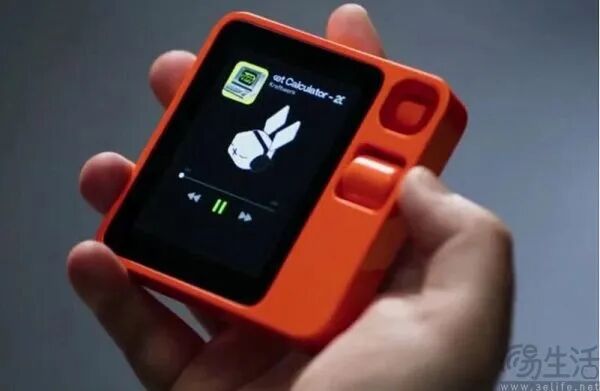
Recently, Rabbit’s founder Jesse Lyu admitted in an interview that the company is facing financial pressure due to regulatory issues that have hindered its plans to enter the Indian market, resulting in a “significant deviation” in financial forecasts. However, this does not affect the launch of the next generation of AI hardware in 2026. Yet, a recent report from overseas media indicates that Rabbit’s financial troubles may be far worse than expected.
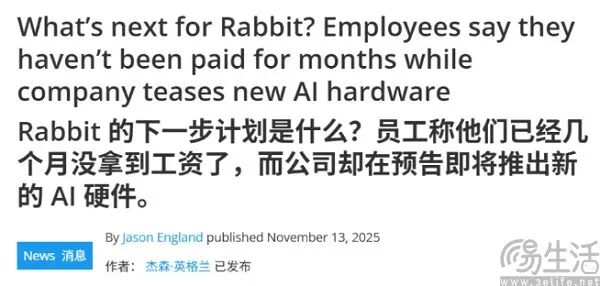
The report reveals that Rabbit’s employees have been in a state of unpaid wages since July of this year, leading some employees and outsourced teams to resort to strikes in protest. This seems to explain why, when their first product, the Rabbit R1, began to sell and faced negative public sentiment, Rabbit appeared indifferent. It may not have been that Rabbit did not want to quell negative opinions, but rather that internal turmoil left them with no time to address it.
Looking back at last year’s CES, the Rabbit R1, as one of the first AI-native hardware products, was the most eye-catching presence at the event. Priced at only $199, this orange cube claimed to “replace all apps,” thereby changing the way users interact with applications. On the first day of open reservations, it sold 10,000 units, and by the time it officially launched, it had sold 50,000 units within two weeks.
So, the question arises: how did Rabbit, which seemed to have a perfect start, end up in a situation of unpaid wages? In fact, the overly advanced concept of the Rabbit R1 may be key. According to Jesse Lyu, the Rabbit R1 is something “completely different from a smartphone.” Currently, developers are trying to keep users within their apps based on traffic logic, rather than helping users achieve their task intentions more efficiently. The Rabbit R1 offers a healthier interaction paradigm.
Tasks such as ordering takeout, booking hotels, planning trips, translating documents, and interpreting images can all be accomplished with a single command through the Rabbit R1. To win over overseas consumers, Rabbit collaborated with the Swedish hardware design company Teenage Engineering, known for its minimalist style, to create the eye-catching orange cube design of the Rabbit R1.
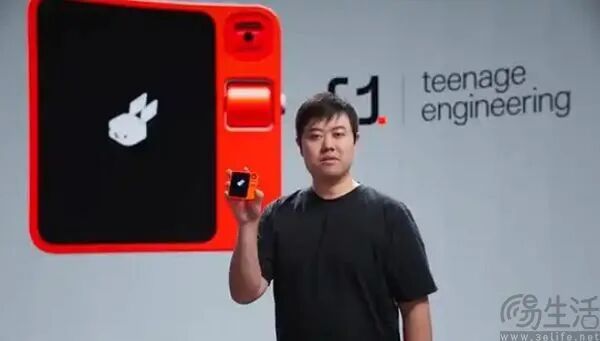
However, unfortunately, Rabbit overestimated its supply chain integration capabilities and the tuning level of its AI large models, leading to an inability to realize the vision described at CES. It could even be described as a “PPT scam.” In many user tests, the Large Action Mode, which Rabbit touted so highly, turned out to be a mere shell. Although the Rabbit R1 can indeed order takeout and book restaurants, it cannot do so with a single command; instead, it requires repeated interactions and confirmations with the AI.
Even setting aside the extremely low-capacity battery and weak main control performance, the Rabbit R1’s performance does not meet external expectations for AI-native hardware, which is the root of its high initial expectations followed by a decline. Rabbit’s initial success stemmed from the company’s keen insight that an increasing number of users recognize that “smartphone dependency” is an unhealthy lifestyle, prompting them to introduce the Rabbit R1.
However, while Rabbit identified that many people are beginning to reflect on the alienation caused by smartphones, it failed to notice that these consumers actually want both: they want to break free from smartphone dependency while also needing a mobile computing device that is high-performing and feature-rich. Consumers willing to spend money to explore new things want a “phone” that does not look like a smartphone, but Rabbit clearly lacks the capability to create such a product.

The rapid decline of Rabbit reflects that the difficulty of opening up the consumer market for AI-native hardware far exceeds entrepreneurs’ expectations. The entire industry has yet to determine what the next universal computing device to succeed smartphones will look like. Otherwise, OpenAI CEO Sam Altman would not have used vague phrases like “users will want it” and “like sitting in a beautiful cabin by the lake” to describe their first AI hardware product in a recent interview.
Sam Altman also described the AI hardware that OpenAI is developing in such terms: “Users will not feel any pressure while using it, and can use it almost instinctively, existing somewhere between complexity and simplicity.”
At this point, many friends may realize that even the current leaders in the AI industry may not know what AI-native hardware should look like.
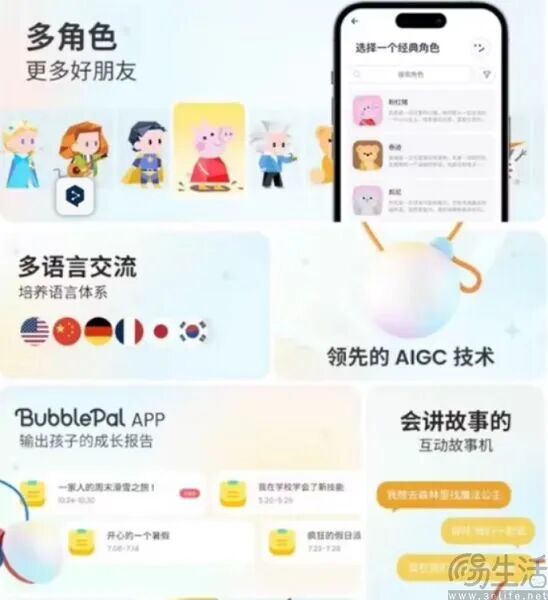
Indeed, it has been three years since the emergence of ChatGPT, yet the only products that have truly opened up the market are AI toys. This is because the companionship value provided by toys is difficult to quantify, and the target audience, children, simply need a playmate. In contrast, the selling points of the Rabbit R1, such as “ordering takeout with one command,” have clear evaluative standards: it either works or it doesn’t, while the emotional value of AI toys is clearly difficult to quantify.
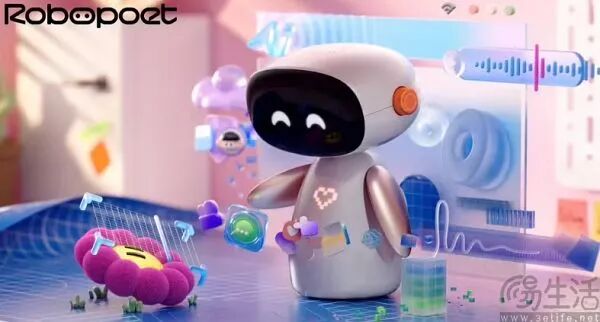
Moreover, the consumers and users of AI toys are separate; the children who use them lack a voice, and the parents’ opinions on whether AI toys can accompany their children are crucial. This is why most AI toy brands currently emphasize the educational attributes of their products, using advertising phrases like “AI’s vast knowledge, entertaining and educational” and “learning through play”.
In contrast to Rabbit’s extravagance, AI toy companies are actually more pragmatic. They not only understand how to communicate core selling points to consumers more clearly but also choose selling points that cannot be easily disproven. In modern society, as work rhythms accelerate, parents often lack the time to accompany their children. In this context, an interactive AI toy that provides personalized services becomes a “lifesaver” for parents, and can, to some extent, replace them in completing some parent-child activities.
Ultimately, “usefulness” is the true touchstone for evaluating the quality of an AI hardware product. After all, AI hardware requires consumers to spend real money, which is fundamentally different from free downloads of ChatGPT, DeepSeek, Doubao, and Qianwen.
[Images in this article are from the internet]
Recommended Reading:
The fifth-generation Snapdragon 8 without the “Supreme” suffix is meaningful to everyone
In addition to satisfying performance for gamers, flagship devices have found new paths.
No need to download apps, Google has “forcefully compatible” with Apple this time
Google bypasses Apple’s mechanism to isolate other devices through Wi-Fi Aware.