Huawei announced its development roadmap for Ascend chips over the next three years, with the 950, 960, and 970 series set to launch, and for the first time, it disclosed its self-developed high-performance HBM memory technology, accelerating the process of AI computing power independence in China.
“Huawei’s accumulation in connectivity technology, continuous investment to achieve breakthroughs, has created ultra-nodes at the level of ten thousand cards, representing the strongest computing power ultra-node,” said Xu Zhijun, Huawei’s Vice Chairman and Rotating Chairman, confidently announcing to the public at the Huawei Connect Conference on September 18.
Although he admitted that “Huawei’s single-chip computing power is indeed not as good as NVIDIA’s,” Huawei compensates for the performance gap of single chips through large-scale ultra-node interconnection technology.
1. Future Three-Year Roadmap
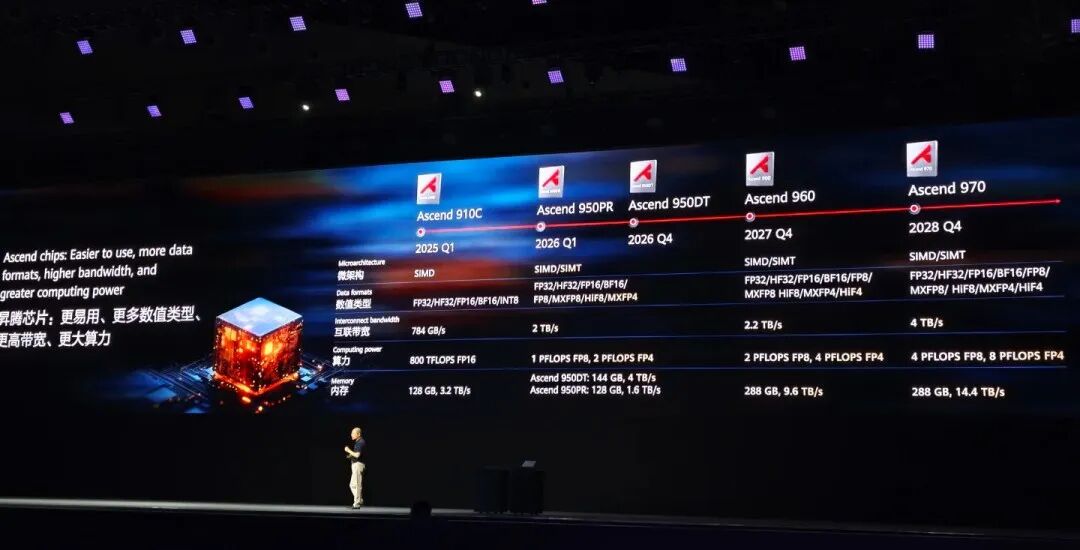
Huawei has released a detailed development roadmap for the Ascend chips over the next three years. According to the plan, the Ascend 950PR will be launched in the first quarter of 2026, followed by the Ascend 950DT in the fourth quarter of the same year.
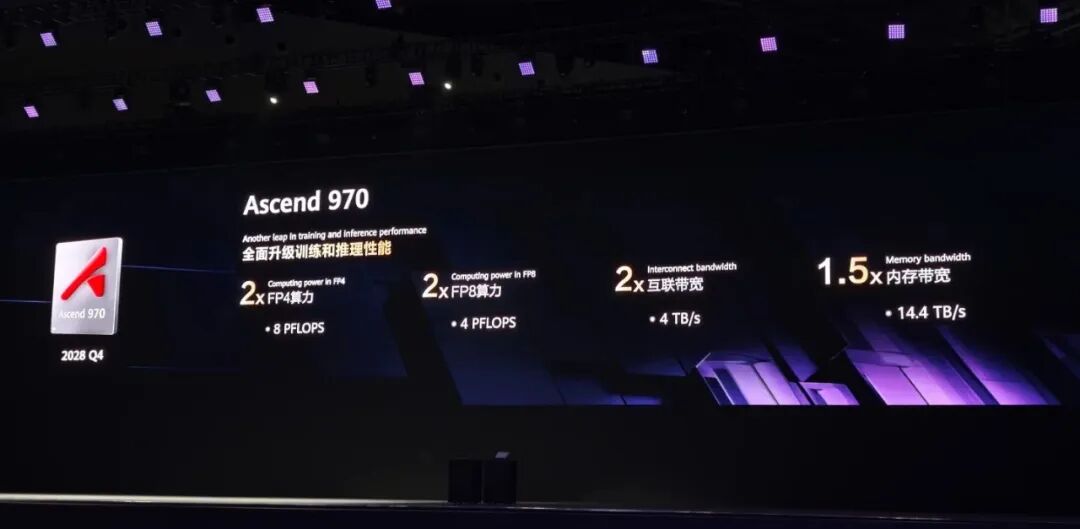
In the fourth quarter of 2027, Huawei will launch the Ascend 960 series, followed by the Ascend 970 series in the fourth quarter of 2028.
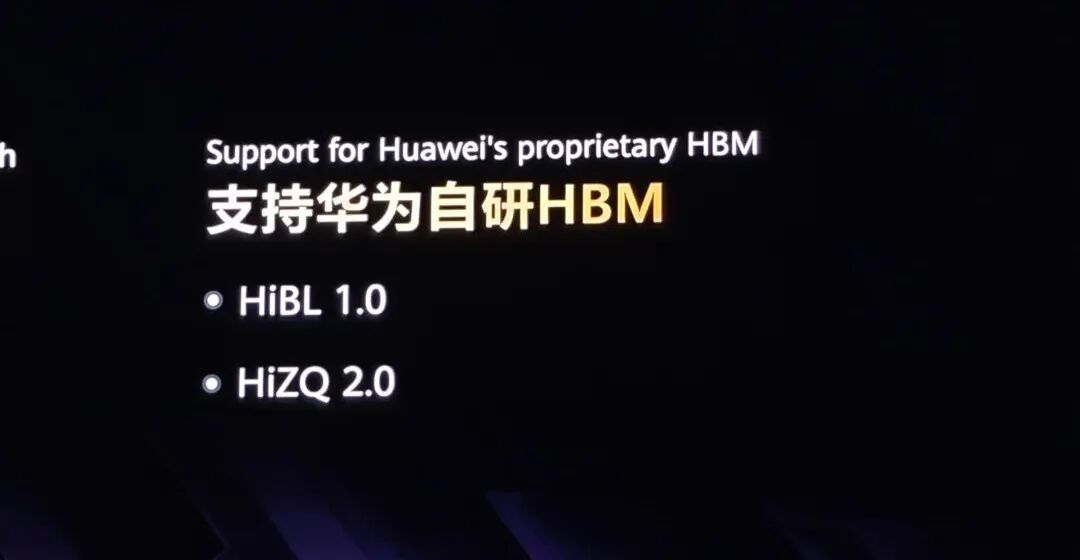
This intensive product iteration rhythm demonstrates Huawei’s accelerated layout in the AI chip field. Xu Zhijun particularly emphasized that the 950PR will enhance inference Prefill performance and will be equipped with self-developed HBM—HiBL 1.0 (Huawei’s self-developed high-bandwidth memory technology).
2. Breakthrough in Ultra-Node Technology
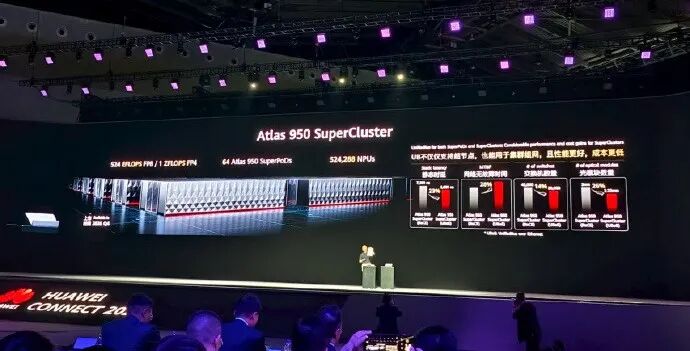
To compensate for the performance gap of single chips, Huawei has focused on developing ultra-node interconnection technology. The newly launched Atlas 950 SuperPoD ultra-node can support 8192 Ascend cards, while the Atlas 960 SuperPoD can accommodate up to 15488 graphics cards.
The SuperPod technology launched by Huawei can support the connection of up to 15,488 graphics cards containing Huawei Ascend AI chips. This scale even exceeds NVIDIA’s expected NVL576 system to be launched in 2027.
Ultra-nodes are physically composed of multiple machines but logically function as a single machine for learning, thinking, and reasoning. The Atlas 950 and 960 SuperPoD ultra-nodes released by Huawei lead in key indicators such as card scale, total computing power, memory capacity, and interconnection bandwidth.
3. Breakthrough in Self-Developed HBM
HBM chips are a key component of AI chips, utilizing 3D stacking technology, characterized by faster read and write speeds, higher storage density, and lower energy consumption. The global HBM market is almost monopolized by three companies: SK Hynix, Samsung, and Micron.
The United States has imposed strict restrictions on the flow of advanced HBM technology into China to limit the development of AI in China. Huawei’s response is twofold: on one hand, developing its self-developed HBM technology HiBL 1.0; on the other hand, launching UCM technology to reduce AI’s dependence on HBM.
UCM technology categorizes the data for AI inference: real-time memory data is stored in HBM, short-term memory is placed in ordinary DRAM, and long-term memory and external knowledge are stored directly in SSDs. This not only reduces the usage of HBM but also improves the overall system efficiency.
4. Strategy to Replace NVIDIA
China has ordered its largest tech companies, including Alibaba and ByteDance, to stop purchasing NVIDIA’s RTX Pro 6000D chips. This policy provides significant opportunities for domestic chip companies like Huawei to replace imports.
Huawei is building a CUDA-compatible ecosystem. By 2027, China plans to increase the market share of domestic AI chips to 40%.
Huawei Ascend Cloud has already adapted over 160 third-party large models.
NVIDIA CEO Jensen Huang recently stated: “The AI market in China will progress whether or not NVIDIA is present; it is a competitor, not an enemy to Huawei.” This statement reflects Huawei’s growing competitiveness in the AI chip field.
5. Strategic Significance of Computing Power Independence
“Computing power has been, and will continue to be, the key to artificial intelligence, and it is crucial for China’s artificial intelligence,” emphasized Xu Zhijun in his keynote speech.
Based on the chip manufacturing processes available in China, Huawei is striving to create a ‘super-node + cluster’ computing power solution to meet the continuously growing demand for computing power.
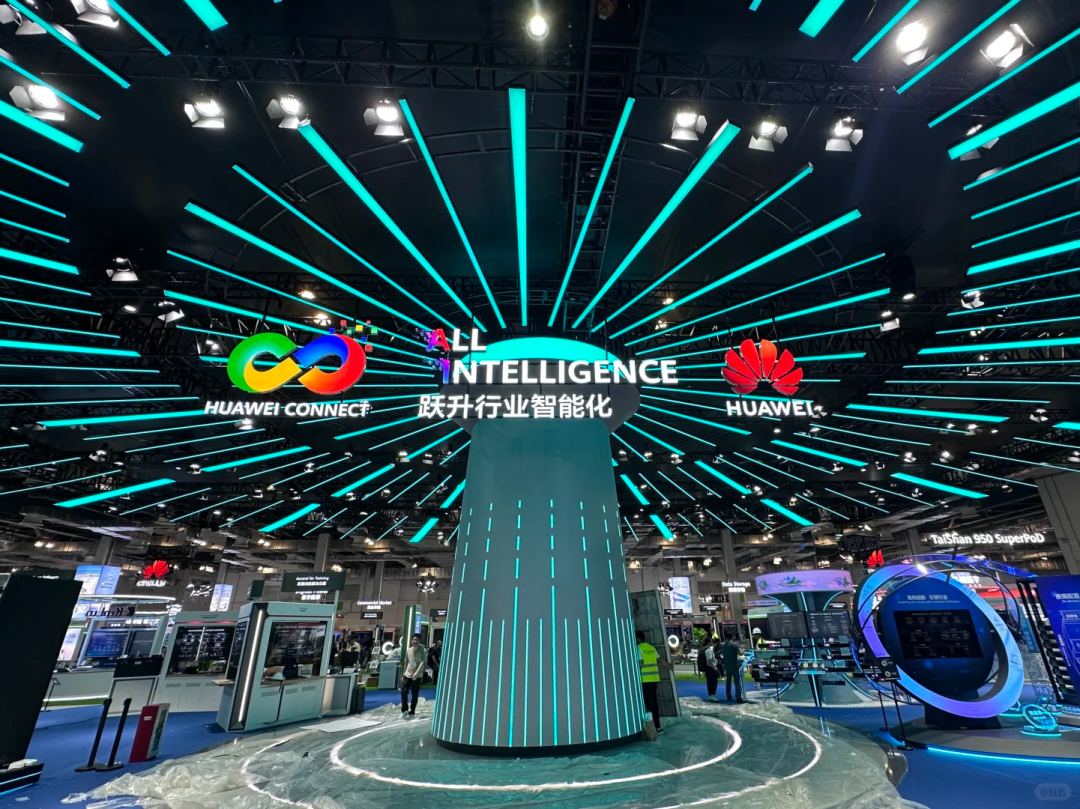
Huawei aims not only to achieve breakthroughs in AI training chips but also to be the first to introduce ultra-node technology into the general computing field, launching the world’s first general computing ultra-node TaiShan 950 SuperPoD.
Combined with the GaussDB distributed database, it can completely replace various application scenarios of large and small machines as well as Exadata database integrated machines.
Huawei has built a super cluster based on approximately one million graphics cards. By 2027, when the Ascend 960-based ultra-node is launched, the Chinese AI industry may no longer be constrained by external chip supply.
Huawei’s breakthroughs are not only in the chips themselves but also in breaking the blockade of peripheral technologies through system-level innovation, paving a path for the independent development of China’s AI industry.