In today’s rapidly evolving electronic technology, printed circuit boards (PCBs) have become core components in various fields such as smart devices, automated production lines, and medical equipment. These fields have extremely high requirements for PCB quality control and production efficiency, and the precise identification of small barcodes on the boards is a key factor in ensuring smooth production processes. Fixed barcode scanners, with their unique technological advantages, have become effective tools to meet this challenge. Next, we will analyze in detail how fixed barcode scanners efficiently solve the identification challenges of small barcodes on PCBs and the outstanding value they demonstrate in practical applications.
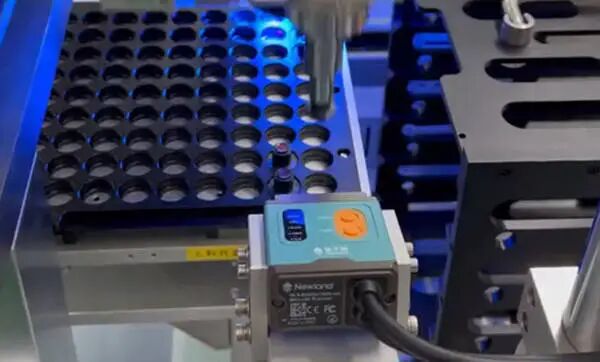
1. Core Positioning of Fixed Barcode Scanners
As professional scanning devices tailored for industrial scenarios, fixed barcode scanners integrate cutting-edge image recognition technology, capable of easily handling the rapid reading requirements of various barcodes and QR codes. The high-resolution imaging module and intelligent decoding algorithms work in tandem, ensuring that even the most minute markings on PCBs can be accurately captured and decoded, fundamentally guaranteeing the speed and accuracy of the scanning process.
2. Challenges in Recognizing Small Barcodes on PCBs
Small barcodes on PCBs are important carriers for tracking production information throughout the entire process, but their inherent characteristics pose several obstacles to recognition:
Size Limit Challenges: These barcodes are often only a few millimeters or even smaller, making them nearly impossible to discern with the naked eye, which imposes strict requirements on the imaging accuracy of scanning devices.
Dense Distribution Interference: To store more information within the limited space of a PCB, multiple small barcodes are often densely arranged, which can easily cause signal interference during recognition, increasing the risk of misreading.
Environmental Impact: Common factors in PCB production workshops, such as dust, moisture, and electromagnetic radiation, can directly interfere with barcode imaging quality, further increasing recognition difficulty.
3. Working Principle of Fixed Barcode Scanners
Fixed barcode scanners work by coordinating a high-precision optical system with intelligent software to recognize small barcodes, with the specific process as follows:
1. Precise Image Acquisition: Using high frame rate HD cameras, the device quickly captures image information from the surface of the PCB, focusing on the areas where small barcodes are located to ensure no omissions in imaging.
2. Intelligent Image Optimization: The built-in image processing algorithms automatically optimize the captured images by enhancing contrast, eliminating noise, and sharpening edges, making the blurred small barcodes clear and distinguishable.
3. Efficient Decoding Operations: Relying on a deeply optimized decoding engine, the device can effectively solve decoding challenges caused by small, damaged, or contaminated barcodes while ensuring high-speed processing, significantly improving the success rate of recognition.
4. Real-time Data Interaction: After recognition is complete, the device immediately transmits the results to the production control system, achieving seamless integration with upstream and downstream processes, ensuring that the production rhythm is not interrupted.
4. Significant Advantages of Fixed Barcode Scanners
1. Ultra-high Recognition Accuracy: Capable of reliably recognizing barcodes as small as 0.3mm, providing reliable data support for the automated tracking of PCBs, significantly reducing manual verification costs.
2. Rapid Response Capability: A single device can complete hundreds or thousands of scanning tasks in a short time, perfectly matching the pace requirements of high-speed production lines and avoiding efficiency losses due to scanning delays.
3. Strong Environmental Resistance: After rigorous environmental testing, the device maintains stable performance under complex conditions such as high temperature, high humidity, and strong electromagnetic interference, reducing downtime caused by environmental factors.
4. Flexible System Integration: Supporting mainstream industrial communication protocols, the device can quickly integrate with existing MES, ERP, and other management systems in enterprises, reducing deployment difficulty and additional costs.
5. Practical Application Case
A large electronic manufacturing company’s PCB production line had long been troubled by low efficiency in recognizing small barcodes. Manual assistance not only consumed time and effort but also frequently resulted in misjudgments. After introducing fixed barcode scanners, the parallel recognition function enabled synchronized and accurate reading of densely distributed small barcodes, increasing the recognition accuracy to over 99.9% and reducing the information collection time for a single PCB by 60%, significantly decreasing manual intervention on the production line and greatly enhancing overall production efficiency.