According to MEMS Consulting, researchers at The University of Manchester have proposed a simple and cost-effective method for monitoring respiratory function and metabolic rate using a wearable piezoelectric airflow transducer (WPAT). The researchers designed a self-protecting bending sensor by bonding two uniaxially stretched piezoelectric poly-L-lactic acid films cut at different angles, and then installed the bending sensor at one end of a plastic tube to create the WPAT. The researchers expect that WPAT technology can provide accurate, convenient, and cost-effective solutions for respiratory and metabolic monitoring in next-generation home healthcare applications and wearable medical systems.
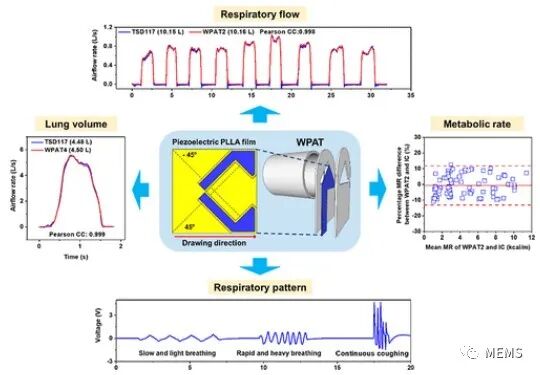
Performance of WPAT in Respiratory and Metabolic Monitoring
Respiratory function assessment is indispensable in clinical and physiological applications, as respiratory signals are among the most informative vital signs. For instance, respiratory rate is an easily measurable biomarker for various pulmonary diseases. Abnormal respiratory rates can indicate acute respiratory syndrome, chronic obstructive pulmonary disease, and pulmonary edema. It can also identify early stages of SARS-CoV-2 infection. However, respiratory rate alone is considered a poor parameter for assessing respiratory status clinically, as it does not provide any information about airflow and tidal volume. For example, forced expiratory volume and forced vital capacity are two key parameters for diagnosing obstructive and restrictive lung diseases. Therefore, a new economic and wearable concept for a respiratory flow meter is ideal and crucial for accurately detecting various respiratory functions in home telemedicine devices and wearable medical systems. Additionally, metabolic monitoring is vital for understanding clinical and physiological conditions, alerting metabolic disorders, and providing nutritional advice. Consequently, many types of devices (ranging from simple and economical to complex and expensive) have been developed for metabolic measurement or total energy expenditure assessment. For example, pedometers, accelerometers, heart rate sensors, global positioning systems, and their combinations have been used as wearable and low-cost devices for measuring physical activity. However, a decisive drawback of these technologies is their relatively low accuracy. Specifically, the aforementioned motion sensor-based devices struggle to directly measure energy expenditure under static conditions, known as metabolic rate (MR). To compensate for this, resting MR is predicted using appropriate empirical equations based on anthropometric variables such as weight, height, and age, which can lead to significant estimation errors. In contrast, the most commonly used and accurate devices for metabolic measurement are indirect calorimeters (IC). These ICs primarily consist of airflow sensors, oxygen sensors, and carbon dioxide gas sensors to measure consumed oxygen and produced carbon dioxide to calculate energy expenditure. Moreover, ICs typically require frequent calibration of sensors before each use and need specialized technicians for maintenance and operation, leading to their complexity and high cost. The lack of accurate, convenient, and low-cost wearable metabolic trackers has limited their use to clinical settings, hindering widespread medical applications in ordinary households. To fundamentally address this issue, researchers at The University of Manchester have proposed a precise, direct, and cost-effective method for monitoring metabolic and respiratory functions using WPAT, which mainly consists of a self-protecting piezoelectric poly-L-lactic acid (PLLA) bending sensor (BS). The researchers introduced a unique double-layered PLLA BS (PLLA2BS) design concept, achieved by face-to-face stacking of two piezoelectric PLLA films cut at angles of 45° and -45°. Since the two PLLA films of PLLA2BS experience opposing forces when bent, PLLA2BS exhibits a higher piezoelectric bending response than traditional single-layer PLLA BS. However, single-layer PLLA BS is much more flexible than double-layer PLLA2BS. The piezoelectric bending response to airflow was further compared using a breathing simulator, showing that PLLA2BS exhibited stronger piezoelectric signals at different airflow velocities compared to single-layer PLLA BS, with the differences becoming more pronounced at higher airflow speeds, demonstrating the design advantages of PLLA2BS in airflow sensing. Based on the design strategy of PLLA2BS, the researchers designed a WPAT, as shown in the figure below.
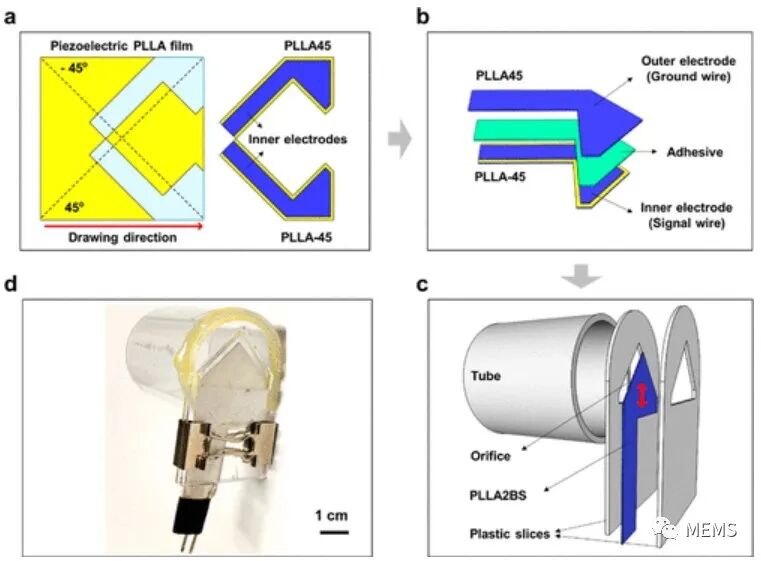
Overview of WPAT Design
The researchers theoretically clarified the airflow sensing principle of WPAT through finite element simulations and calibrated the WPAT using a pulse calibration method. The results demonstrated that WPAT has an accuracy comparable to that of respiratory flow meters in assessing respiratory flow and lung capacity (correlation coefficient > 0.99). Successful metabolic measurements were conducted using WPAT in human wear trials, evaluating the relationship between ventilation per minute (under standard temperature and pressure) and metabolic rate. The average difference in metabolic rate measured by WPAT and the Biopac indirect calorimeter was 0.015 kcal/min, indicating comparable performance between the two. Notably, unlike the Biopac indirect calorimeter, which includes airflow sensors, oxygen sensors, and carbon dioxide gas sensors, the researchers only used the low-cost, structurally simple WPAT, primarily composed of two PLLA films, to achieve metabolic monitoring under outpatient conditions. Therefore, the researchers expect the proposed WPAT technology to make respiratory function and metabolic measurements more accurate, affordable, and universal, benefiting human life.
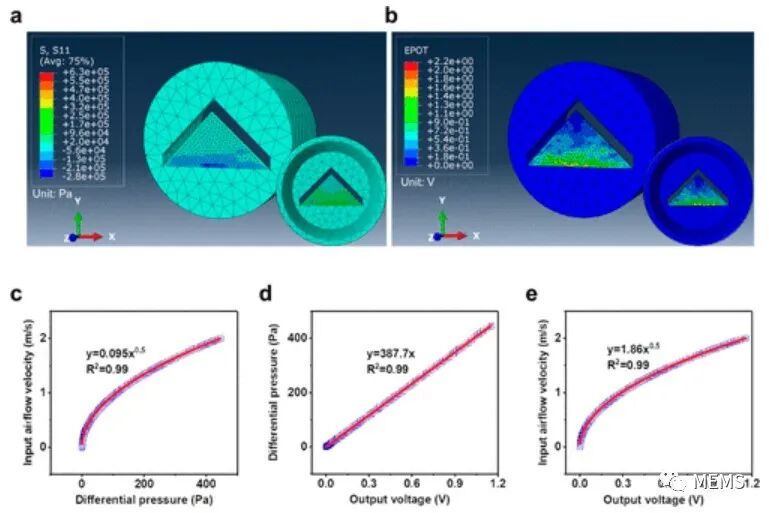
Simulation of Airflow Sensing with WPAT
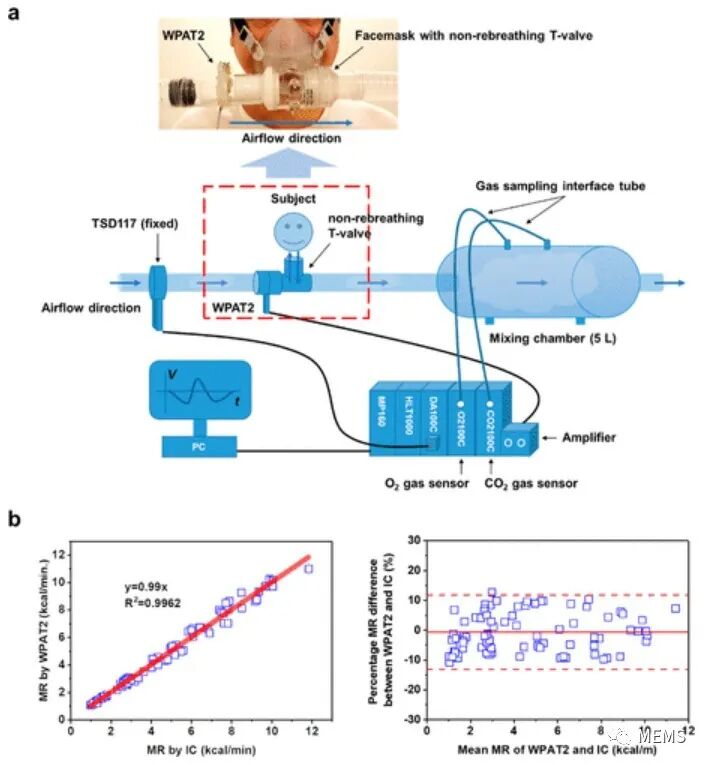
Metabolic Monitoring with WPAT
Paper Information: DOI: 10.1021/acssensors.2c00824Further Reading: “Gas Sensor Technology and Market – 2022 Edition” “Sensirion Gas Sensor SGP40 Product Analysis” “Sensirion Gas Sensor SGP30 Product Analysis” “Wearable Technology and Market – 2021 Edition” “Wearable Sensor Technology and Market – 2020 Edition”