
In the workshop, the new employee Xiao Wang, in an effort to save time, sprayed carburetor cleaner directly onto the servo drive circuit board.

As a result, there was a loud “crackling” sound, and smoke began to rise from the control board.

The imported CNC system from Germany was immediately rendered useless! The experienced technician lamented, “This cleaning agent is more potent than aqua regia!”
The “Invisible Killers” in Cleaning Agents
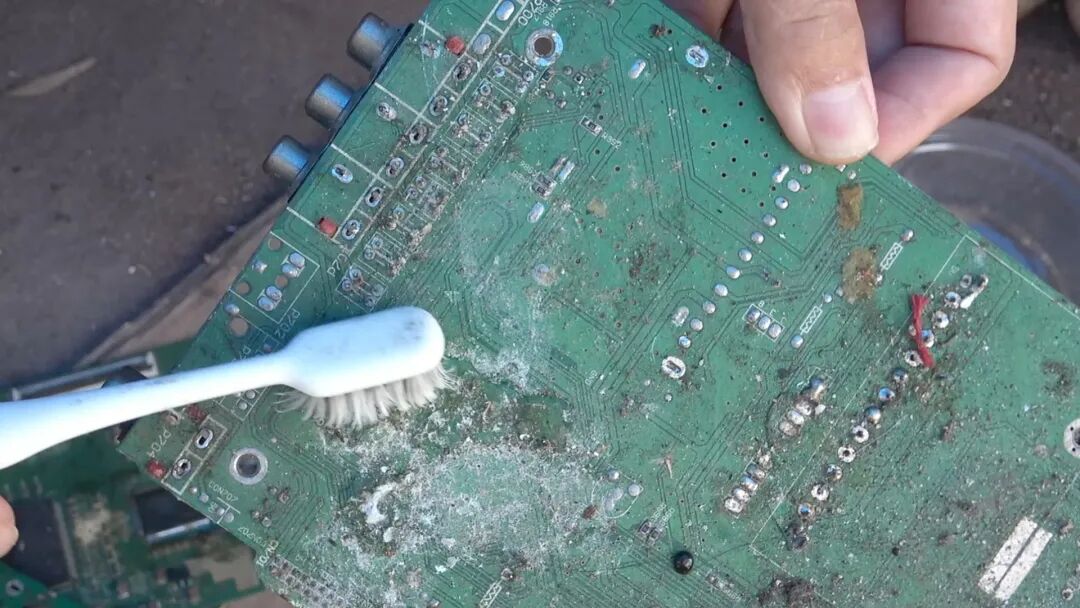
▪ Excessive Solubility — Just like pouring boiling water over ice cubes, certain cleaning agents can directly dissolve the markings, plastic connectors, and sealants on components. Especially those cleaning agents containing ketones and esters, which can even corrode epoxy resin encapsulations.
▪ Conductive Residue — Inferior cleaning agents, after evaporation, leave an invisible salt film on precision circuits. This film can turn into resistance in humid weather, causing signal disruption, akin to creating a “leaky bridge” for the circuit.
▪ Breakdown Risk — The operating voltage of precision chips is only 1-5V, and impurities in the cleaning agent can cause instantaneous short circuits. Any corrosion of the hundreds of solder points beneath a BGA package can lead to total board failure.
Three Essentials for Choosing Cleaning Agents
▪ Choose Specialized Types: Precision electronic cleaning agents must be labeled with characteristics such as “zero residue” and “fast evaporation”.
▪ Check the Ingredient List: Avoid hazardous components like “xylene” and “methanol”. A certain repair station once used a cleaning agent containing methanol, resulting in the PLC’s LCD screen being wiped to a “frosted glass” finish.
▪ Conduct Preliminary Testing: Spray in a corner of a scrap board, observing whether plastic parts turn white or markings become blurred. A repair point for variable frequency drives lost all component markings on a customer’s control board by skipping this step.
Life-Saving Tips: Five-Step Cleaning Method
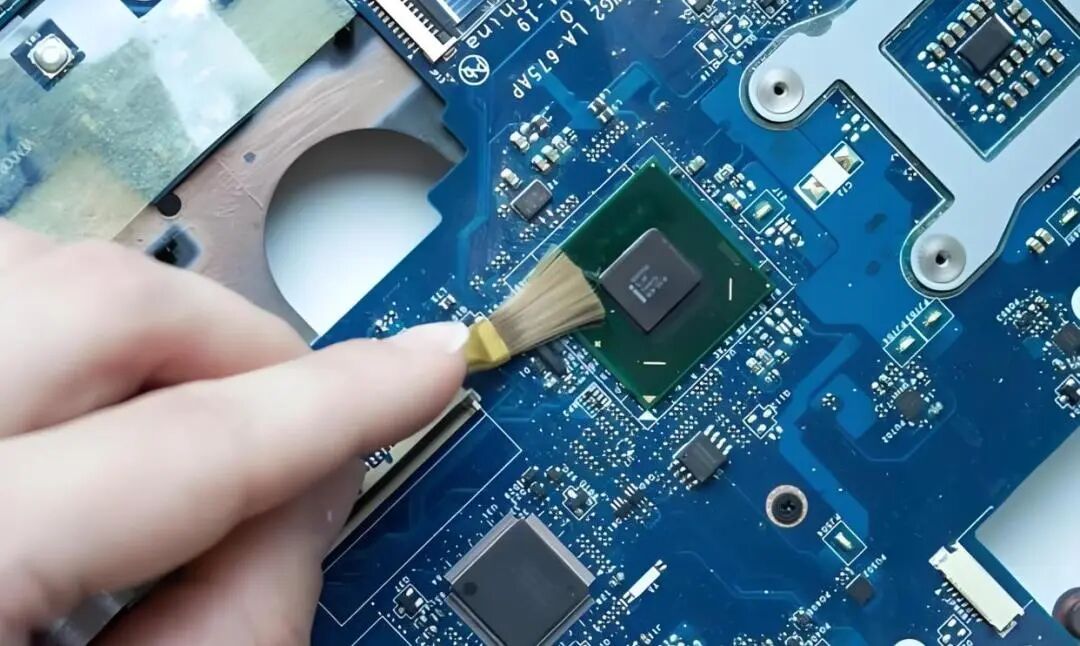
1.Power Off and Disassemble: Not only should you turn off the power, but also unplug all connectors.
2.Select Professional Spray: Maintain a distance of 15-20 cm from the board while spraying evenly.
3.Gently Brush with a Soft Brush: Use a natural bristle brush to gently comb along the direction of the circuit.
4.Dry with Compressed Air: Keep a distance of 10 cm, blowing out gaps from different angles.
5.Dry and Dehumidify: Use low-temperature drying at 60°C for half an hour to ensure complete dryness.
Guidelines for Special Scenarios
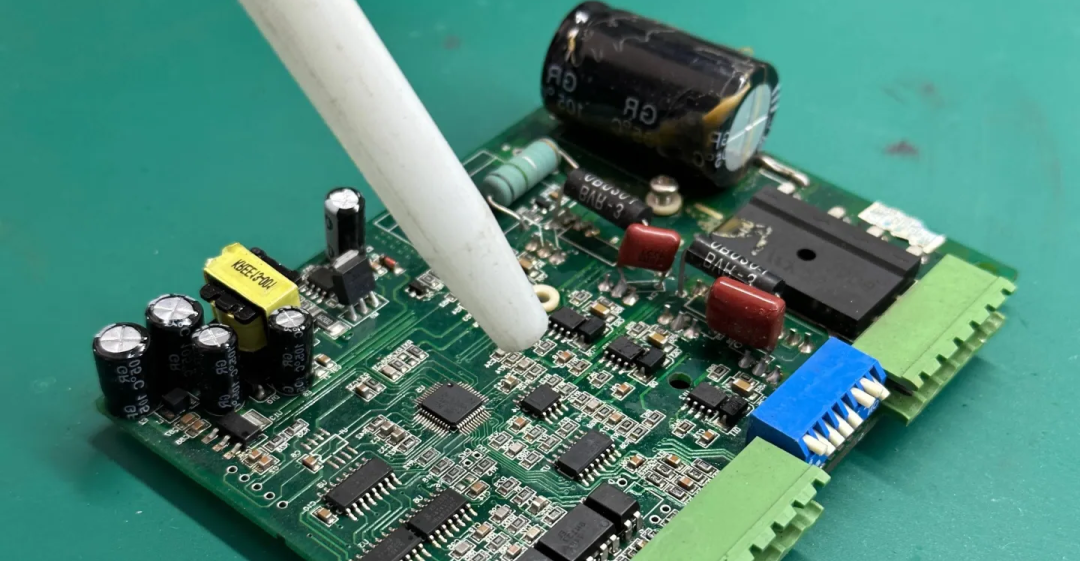
▪Oil Contamination Scenario: First, use a cotton swab dipped in a specialized oil cleaning agent for localized treatment, then perform overall cleaning. A CNC machine was saved from short-circuiting due to oil contamination using this method.
▪ Water Ingress Scenario: First, use anhydrous alcohol to displace moisture, then treat with precision cleaning agents. Remember not to use a hairdryer for high-temperature drying!
▪ Antique Equipment: For old equipment with aged plastic parts, it is recommended to use non-corrosive fluorinated liquids for cleaning. A certain museum successfully restored a 1980 industrial computer using this method.
Previous Recommendations
Engineers’ Daily Essentials: You Can’t Do Without These Treasures!
Don’t Say You Don’t Understand Bolts! Learn to See Through Threads to Strength!
How to Choose a Digital Lux Meter
Analysis of Flux Content: How 1.8%-3.0% Affects Soldering Performance


More Exciting Offers
All at Lichuang Industrial Products
mro.szlcsc.com
Follow us for more exciting activities and continuous surprises
Some images and texts are sourced from the internet; please contact us for removal if there is any infringement.