Next to the Big Wild Goose Pagoda in Xi’an, there is a little-known niche museum – the Gaogong Ancient Gold and Silver Copperware Museum.
Unlike the renowned Shaanxi History Museum, this privately-owned museum is so low-key that it is almost “invisible,” yet it has drawn visitors’ attention due to a Warring States artifact that resembles a “circuit board.”
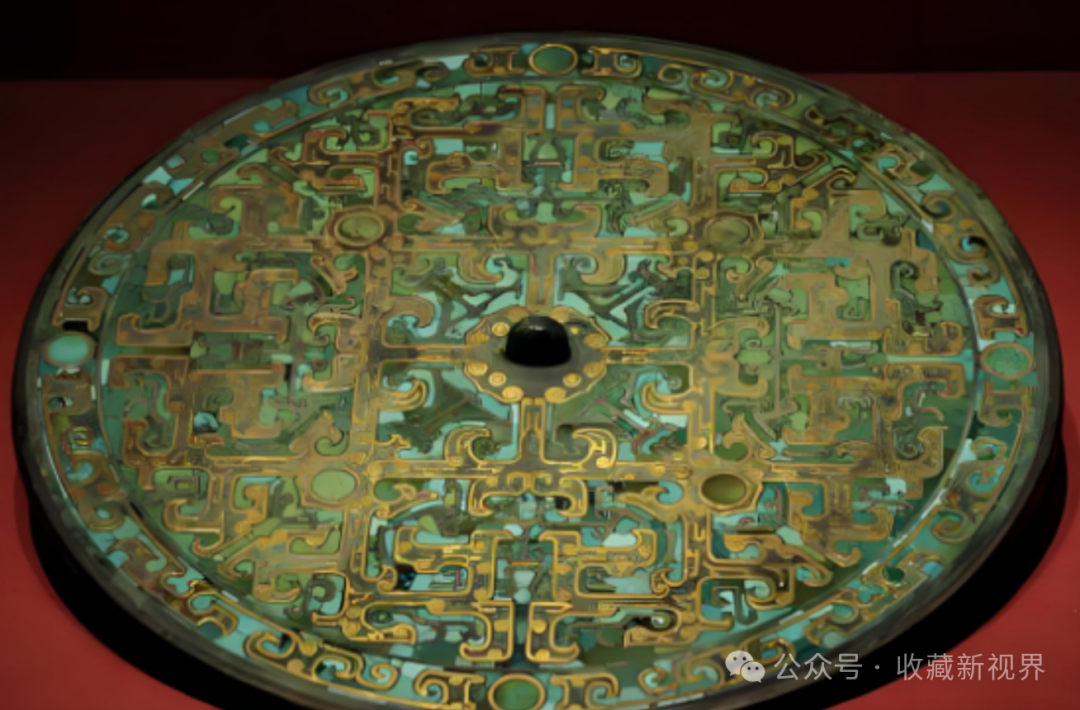
Among the hundreds of returned artifacts in the museum, a copper mirror with a gold and turquoise inlaid dragon pattern is particularly special: the coiling dragon pattern on the bronze body forms a grid layout, with gold lines winding like circuit traces, and turquoise embedded like chip contacts, leaving first-time viewers astonished: could this be an “ancient circuit board” from over two thousand years ago?
The establishment of this museum stems from the founder Hu Nan’s heartfelt dedication.
He has spent years traveling to major auction houses overseas, spending huge sums to acquire lost Chinese artifacts, but unlike collectors who hoard them, he built a museum open to the public.
In the artifact collection circle, such a choice is particularly precious – while many view artifacts as private treasures, Hu Nan has allowed these millennia-old gems to become cultural heritage belonging to the public once again.
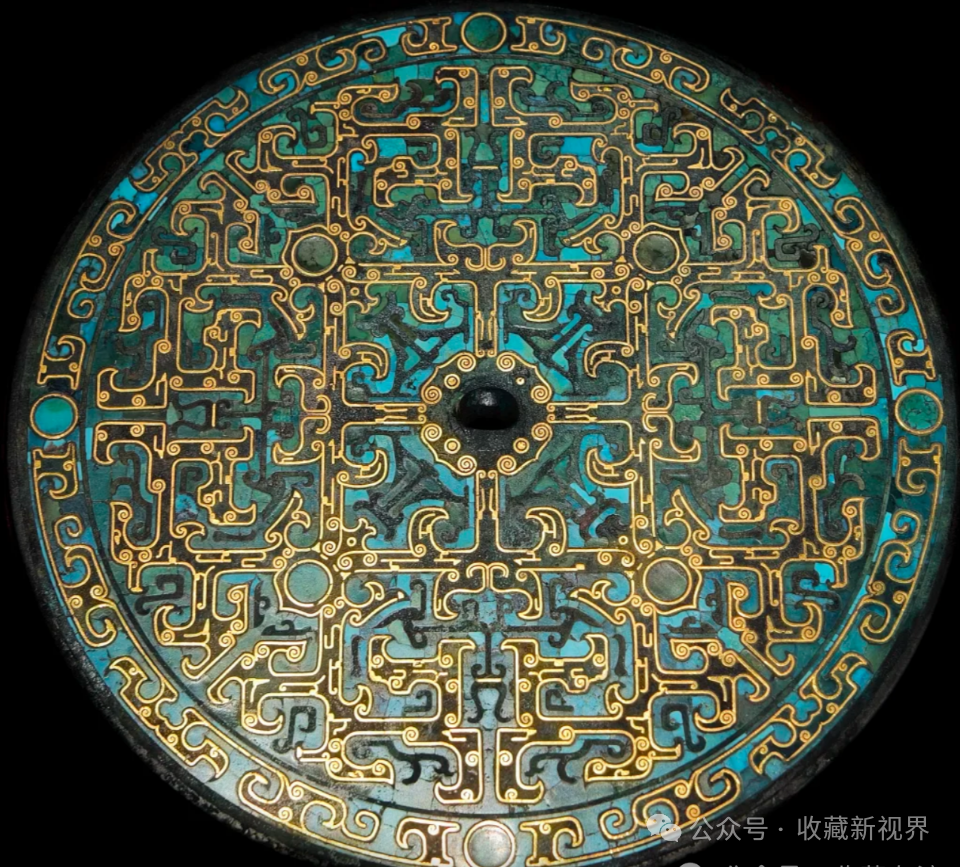
This Warring States copper mirror is a precious item he retrieved from Switzerland and Austria, now finally revealing its true form in its homeland.
The mirror is made of bronze, with the main pattern on the back being a coiling dragon.
The dragon’s body twists and turns, connecting head to tail, with lines so precise they appear to be drawn with a ruler, forming a geometric grid that astonishingly resembles the layout of modern circuit boards.
Even more remarkable is its decorative craftsmanship: artisans used the flourishing gold-inlaid technique of the Warring States period, first engraving 0.3 mm deep grooves on the bronze body, then heating and embedding gold wires hammered to 0.05 mm thick, and after pressing with agate and polishing the inlaid stones, the gold lines fit seamlessly with the mirror body.
Turquoise was hand-ground into small particles, each carefully embedded in the gaps between the gold lines, with the green and gold shimmering together, adding a touch of liveliness to this “circuit board.”
Over 2500 years ago, Warring States artisans completed this “millimeter-level operation” without modern precision instruments, relying solely on their skill and eyesight.
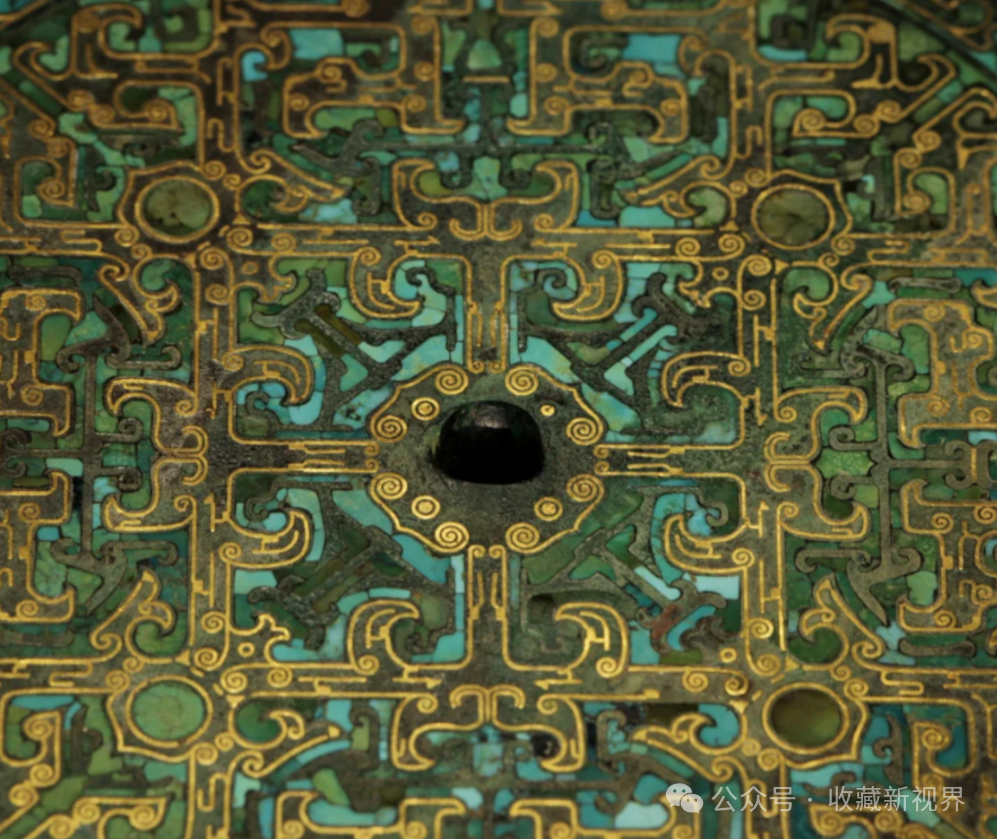
Every step of the gold-inlay process tests the artisan’s skill: if the grooves are too deep, the gold wire may fall off; if too shallow, the fit will be loose; even a slight deviation in the hammering force of the gold wire can lead to wrinkles and waste; the inlaying of turquoise is akin to “carving flowers on rice grains,” where a small mistake can cause edges to chip.
It is this almost harsh craftsmanship that makes this copper mirror the “ceiling” of Warring States bronze casting techniques, allowing modern people to glimpse the ancient pursuit of ultimate aesthetics.
The coiling dragon pattern on the copper mirror is not merely a decorative motif.
During the Warring States period, dragon patterns were an important motif for copper mirrors, and the coiling dragon’s shape embodies the ancient people’s wishes for auspiciousness, reflecting the cultural atmosphere of the time when “a hundred schools of thought contended” – the mirror’s pattern incorporates both the dynamic curves of Chu region designs and the symmetrical order of Central Plains styles, serving as a testament to the blending of different regional cultures.
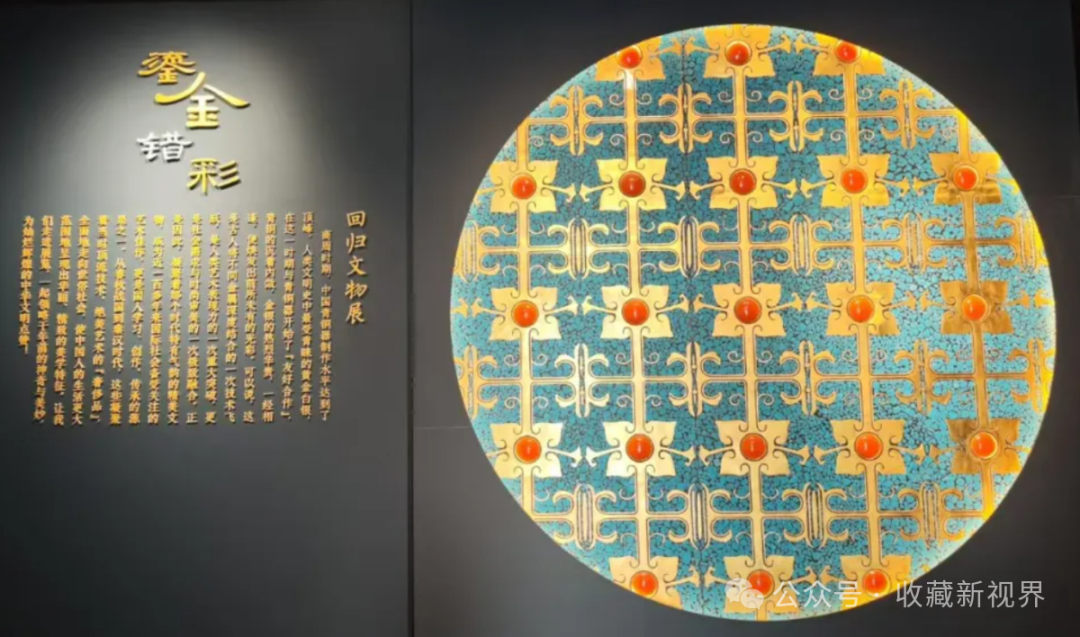
Its layout, resembling a circuit board, inadvertently aligns with modern design aesthetics, prompting admiration for the ancient wisdom that transcends time and resonates with modern technology.
Today, this copper mirror quietly displays in the Gaogong Museum’s showcase, with gold threads shimmering under the light and turquoise exuding a thousand years of warmth.
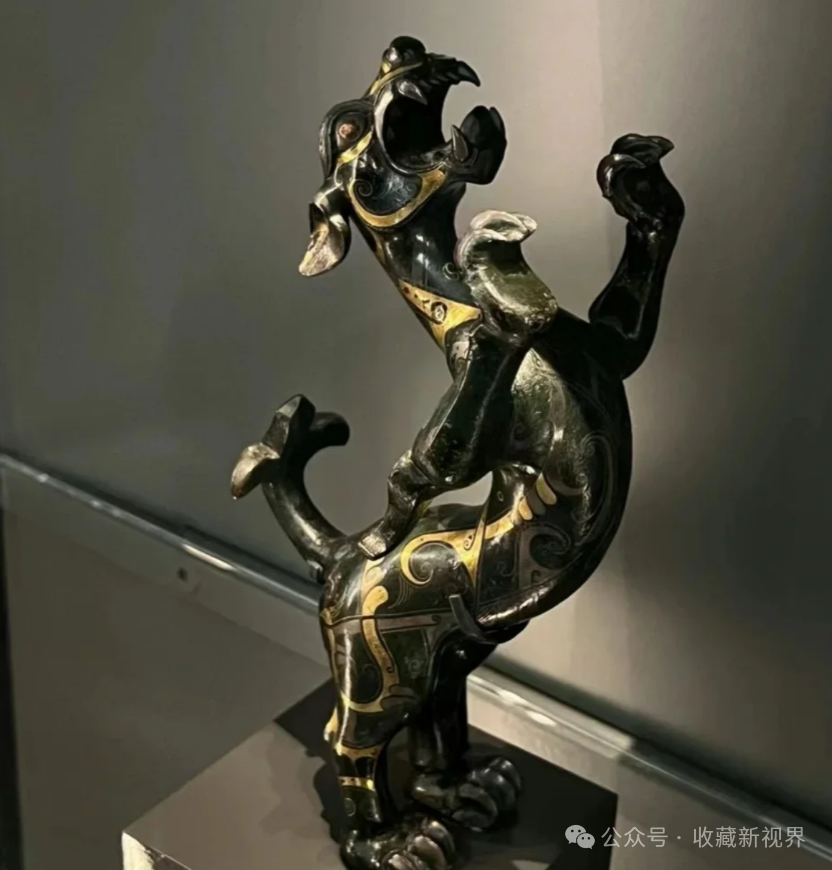
It is not just an artifact, but a testament to cultural return: from being lost overseas to returning to its homeland, from private collection to public sharing, its fate reflects the journey of Chinese artifact preservation.
The exquisite craftsmanship left by artisans over 2500 years ago, like the everlasting gold lines on the copper mirror, continues to shine with the wisdom of Chinese civilization.
New Perspectives on Collecting