The success of ADCs (Antibody-Drug Conjugates) relies on the continuous evolution of three generations of coupling technologies. From the “coarse” non-specific coupling to the “precise” gene-engineered modifications, and then to the “efficient” natural antibody modifications. Today, this iterative logic is providing key insights for breakthroughs in targeted delivery of antibody-conjugated LNPs (Ab-LNP).Ab-LNP requires precise coupling of antibodies to LNPs without damaging the LNP structure and nucleic acid encapsulation rate, which can find suitable solutions from the iterative ADC technology. Today, we will break down the core strategies that Ab-LNP can learn from the three generations of ADC coupling technologies!0Basic Coupling: “Low-Cost Validation”The first generation of ADCs focuses on “non-specific coupling”, utilizing the natural lysine (amino) of antibodies or reducing disulfide bonds (thiol) through NHS esters or maleimide-mediated coupling. The advantage is that it does not require antibody modification and is easy to operate, while the disadvantage is high heterogeneity and non-uniform products.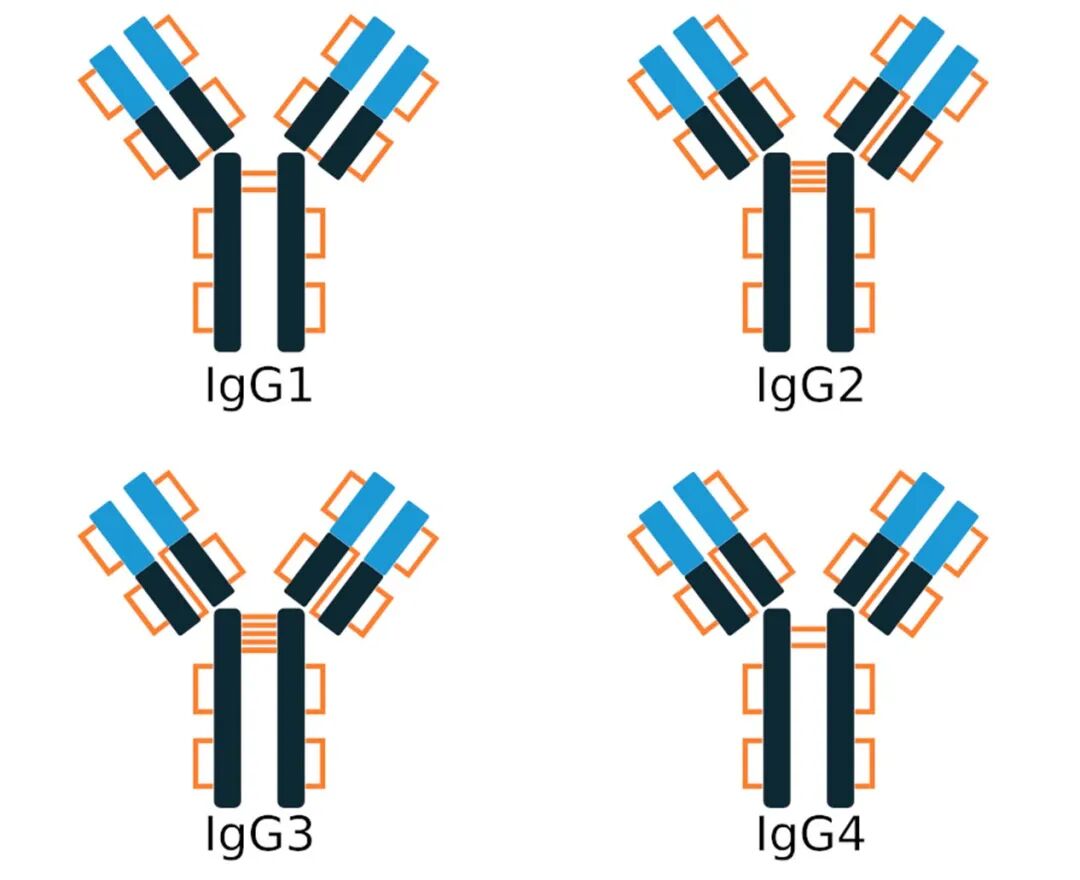 Structure of Antibody Disulfide BondsThis “low-cost rapid validation” approach perfectly adapts to the early development of Ab-LNP:Applicable scenario: During the initial screening of targeted antibodies for Ab-LNP, complex modifications are not required, and the first-generation ADC method can be used directly for coupling.
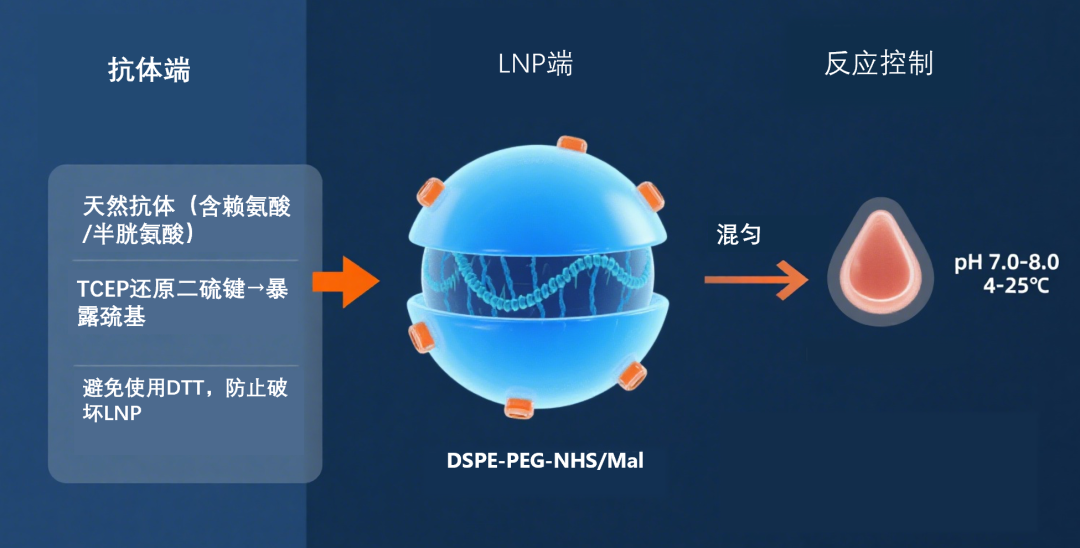 ✦ Antibody end: Use TCEP (more compatible with LNP than DTT, does not damage the lipid layer) to reduce the disulfide bonds in the hinge region, exposing free thiols, or directly use the amino group of natural lysine;✦ LNP end: Pre-mix lipids containing NHS esters or maleimides (e.g., DSPE-PEG-NHS/Mal);✦ Reaction control: Mild reaction at pH 7.0-8.0 to avoid high temperatures (4-25°C) that can cause LNP aggregation.✦ Key adaptation point: Although the coupling sites are random (similar to the heterogeneity of the first-generation ADC), it can quickly validate the matching degree of “antibody targets and LNP delivery”, laying the foundation for subsequent optimization, while being low-cost and easy to operate.02Site-Specific Coupling: “Precision and Stability”The core of the second generation of ADCs is “gene-engineered modified antibodies”, which introduce additional cysteines (THIOMAB), non-natural amino acids (pAcF), or specific tags (SMARTag) to achieve uniform drug-antibody ratios (DAR values), solving the heterogeneity problem of the first generation and improving drug stability.This logic of precisely controlling coupling sites is key to Ab-LNP’s breakthrough in “low targeting efficiency and large batch differences”.
Strategy 1: Introduce Amino Acids at Specific Sites
In ADCs, additional cysteines are introduced into the Fc region of the antibody through genetic engineering to achieve uniform coupling with DAR=2. Ab-LNP can adopt this approach: introducing additional cysteines into the Fc region of the antibody, which then specifically reacts with the maleimide groups on the LNP surface, ensuring that the number of antibodies coupled to each LNP is relatively uniform, without affecting the antibody-target binding, while avoiding damage to the LNP.It is also possible to introduce non-natural amino acids, such as acetylphenylalanine (1), azido-methyl-L-phenylalanine (2), and azido-lysine (3), during ribosomal synthesis, through tRNA anticodon recognition with mRNA codons for coupling.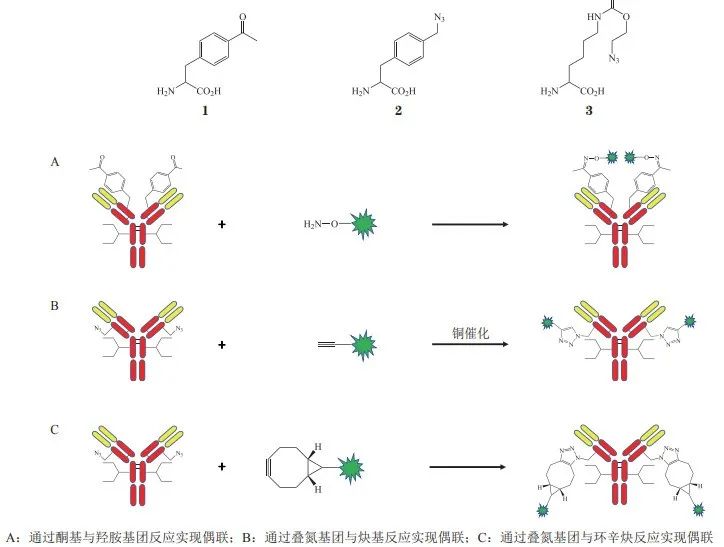 Site-specific coupling of non-natural amino acids in ADCs
Strategy 2: Enzyme-Promoted Tag Coupling
The SMARTag technology in ADCs introduces a short peptide tag (CXPXR) into the antibody, which is oxidized by FGE enzyme to generate aldehyde groups, followed by bioorthogonal coupling. Ab-LNP can introduce enzyme-recognizable tags into the Fc region of the antibody, with corresponding reactive groups (e.g., hydroxyls) modified at the LNP end.Additionally, the LPXTG tag is recognized by Sortase A, which cleaves the peptide bond between threonine and glycine, inserting a repeated glycine sequence while introducing azido groups, which can react with dibenzocyclooctyne (DBCO) through copper-free click chemistry (SPAAC).Enzymatic reactions are highly specific, allowing precise control of coupling sites, and the reaction conditions are mild (room temperature, neutral pH), preventing leakage of nucleic acids encapsulated in LNPs.Core advantage: Like the second generation of ADCs, achieving “uniformity” in Ab-LNP reduces batch-to-batch differences while ensuring both antibody activity and LNP delivery capability remain stable.03Natural Antibody Modifications: “Efficiency and Compatibility”The core breakthrough of the third generation of ADCs is to modify “natural sites” without altering the antibody, including interchain disulfide bond bridging, glycosylation modifications, and chemically selective modifications, which retain the natural structure of the antibody while achieving site-specific coupling, solving the low yield problem of the second generation of antibody modifications.
Strategy 1: Interchain Disulfide Bond Bridging
In ADCs, reagents such as mono-/bis-sulfides and divinylpyrimidine are used to reduce interchain disulfide bonds in antibodies and then bridge for coupling. Ab-LNP can use TCEP to reduce interchain disulfide bonds in antibodies, and the LNP end can be modified with the same bridging reagents as ADCs (e.g., mono-sulfides) to react with the reduced cysteines to form stable disulfide bonds. No antibody modification is required, and the bridging reagent has high reaction efficiency.
Strategy 2: Glycosylation Modifications
In ADCs, the N297 glycosylation site in the Fc region of the antibody (distant from the antigen-binding region) is utilized to introduce reactive groups (e.g., aldehydes, azides) through oxidation or enzymatic modifications. Ab-LNP can use sodium periodate (low concentration, 1mM) to oxidize the N297 glycosylation of antibodies to generate aldehyde groups, or use GalT enzyme to introduce azide-modified sugars, with the LNP end modified with amino oxides, DBCO, etc., for oxime linkage or click chemistry coupling.
Strategy 3: Chemically Selective Modifications
In ADCs, targeting the N-terminal amino group through pH control (lowest pKa) achieves chemically selective coupling. Ab-LNP can refer to this: under conditions of pH 7.7±0.5, using acrylamide sulfonate reagents to target the N-terminal amino group of antibodies, and then reacting with amine groups at the LNP end, avoiding modifications of other lysine residues, reducing the impact on antibody activity, while the reaction conditions are mild, not damaging the LNP structure.Final ThoughtsPrioritize using mature technologies: Early on, use the first generation of “non-specific coupling” for rapid validation, and in the mid to late stages, use the second generation of “site-specific coupling” to enhance uniformity, or use the third generation of “natural modifications” to advance industrialization;Consider LNP characteristics: ADC coupling reagents need to be compatible with LNPs, such as choosing TCEP instead of DTT to avoid damaging the lipid bilayer; control reaction temperatures at 4-25°C to prevent LNP aggregation;Focus on “targeting-delivery dual efficacy”: Just as ADCs pursue “uniform DAR”, Ab-LNP needs to control the “A/L ratio uniformity”, while ensuring both antibody targeting and LNP nucleic acid encapsulation rates.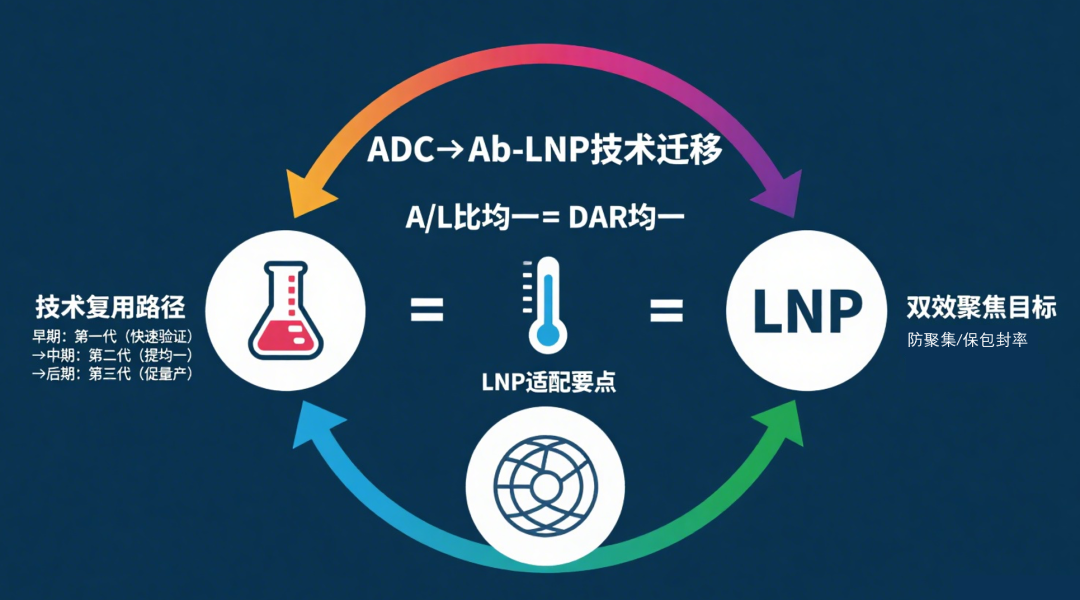 The iteration of the three generations of ADC coupling technologies is essentially an evolution from “coarse to precise, from modification to compatibility”. Transferring this logic to Ab-LNP can solve the core pain points of targeted delivery while reducing R&D and industrialization costs. In the future, with the emergence of new ADC coupling reagents (such as more stable bridging reagents), the precision delivery capability of Ab-LNP will reach a new level!Which modification technology do you think is most suitable for Ab-LNP? Feel free to discuss in the comments!