The research team at Linköping University in Sweden has successfully developed an innovative “syringe skin” material. This material consists of a gel containing live cells and can be used to 3D print skin grafts, providing a new solution for the treatment of large area burns and severe wound repair. This research is led by the Center for Disaster Medicine and Traumatology and Linköping University.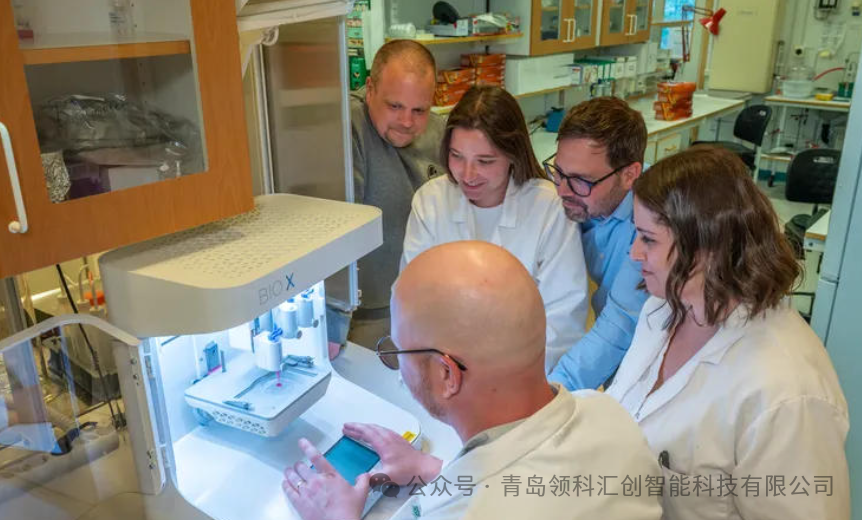
△ Researchers collaborated to develop a gel containing live cells that can be 3D printed into grafts.
In clinical practice, large area burns are typically treated with epidermal layer grafts. However, since the epidermal layer is primarily composed of a single cell type, it often leads to severe scarring in patients. The dermal layer of the skin is much more complex, containing various structures such as blood vessels, nerves, and hair follicles, which are crucial for skin function. Traditional dermal layer grafts are difficult to implement due to the extensive trauma involved, making the reconstruction of functional dermal layers a long-standing challenge in the medical field.Project leader and plastic surgery lecturer Johan Junker stated, “The dermal layer is extremely complex, and existing technologies struggle to fully cultivate it in the laboratory. We do not yet fully understand all of its components. Therefore, our research approach is to transplant the basic cellular components and allow the patient’s own tissue to complete the reconstruction of the dermal layer.”Related results have been validated in mouse models.In the current study, the research team used 3D printing technology to create small ice hockey-like structures and implanted them subcutaneously in mice. The results showed that this technology has the potential to cultivate the patient’s own cells, which can be obtained from minimal skin biopsy samples, then 3D printed into tissue for grafting and applied to wound treatment.Johan Junker explained, “We observed that the cells not only survived but also appeared to produce various components necessary for forming new dermis. Additionally, blood vessels formed within the grafts, which is crucial for tissue survival in the body. We believe this material holds great promise.”3D Printed Biomimetic Vascular NetworksBlood vessels are essential for various applications of engineered tissue-like materials. Scientists have been able to culture cells within three-dimensional materials to construct miniature versions of organs, known as organoids. However, these tissue models face a bottleneck: they lack a vascular network to deliver oxygen and nutrients to the cells. This limits the growth potential of these structures, as central cells may die from hypoxia and nutrient deficiency.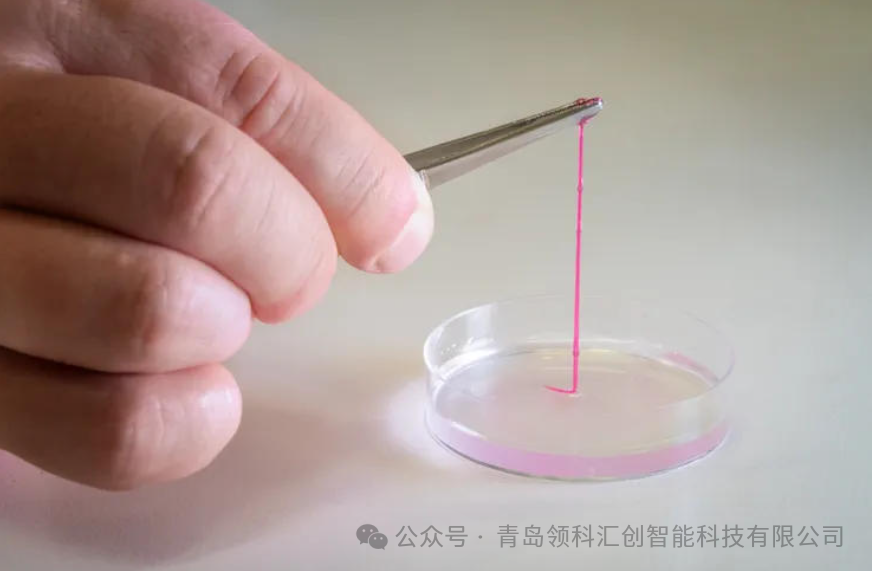
△ Fibers made from hydrogels can form microtubes, opening new possibilities for vascular development in laboratory-cultured “mini-organs” or organoids.
Researchers at Linden University in Malaysia may be closer to solving the vascular supply issue. In another independent study, researchers developed a flexible hydrogel fiber, composed of 98% water, capable of forming microtubes for vascular cell growth. These microtubes, or what the researchers call perfusable channels, open new possibilities for vascular development in organoids and similar structures.This research involved participation from Lars Kölby at Sahlgrenska University Hospital and was funded by the Erling-Persson Foundation, the European Research Council (ERC), the Swedish Research Council, and the Knut and Alice Wallenberg Foundation.
This article is reproduced from “Antarctic Bear 3D Printing Network”. If you find any content on this website that infringes your intellectual property rights, please contact us, and we will promptly modify or delete it..