Title: The Concept of Bus Communication Control: Upgrading from RS485 to Two-Wire Bus
First Paragraph: In modern industrial sites, the old model of the 485 bus often gives engineers headaches: polarity pairing, endpoint management, and long-distance transmission are easily interfered with, leading to high on-site maintenance costs and inflexible expansion. Faced with various industry scenarios such as fire protection, intelligent buildings, industrial control, mining, and smart homes, how can we enhance communication robustness and wiring efficiency without significantly modifying existing equipment? The answer may lie in a brand new two-wire bus approach. XM2BUS offers a two-wire bus solution with non-polar power supply and communication, focusing on achieving any topology, simplifying construction, and improving data reporting efficiency. Through the XM620 host, XF2485/XF2485A carrier and driver chip combinations, and the active reporting capability of the XM332 slave chip, the site can transition from “the longer the cable, the harder it is to maintain” to “simple wiring, fewer failure points, and more timely data.” Whether it’s power monitoring for fire protection, lighting and security for buildings, or long-distance monitoring in mining areas, XM2BUS is helping you make complex sites easier to manage.🔌🏗️

Body Paragraph 1 (Beginning of the main text, about 300 words, insert H2 Pain Point Scenario + Solution 1) Scenario 1: In the fire power monitoring system of a large factory, there are numerous endpoints and complex cabling. The old RS485 requires strict polarity wiring, and during power outages or load fluctuations, the bus can easily become unresponsive. The XM2BUS two-wire bus solution combines power supply and communication on the same pair of wires, allowing for any topology wiring, significantly reducing on-site wiring costs. Centered around the XM620 host, it supports bus voltages of 24V/48V, a maximum current of 20A, and communication distances of up to 2000 meters. During peak loads, it can maintain system stability through soft starting on the bus. The XM332 slave chip provides active reporting capability, completing polling of 180 node-level devices within 1 second, significantly improving monitoring timeliness. The carrier-type XF2485A chip can operate under zero peripheral circuit conditions, enhancing design simplicity. For scenarios such as fire end water testing and circuit monitoring, XM2BUS brings simpler wiring and more robust operational states. The WM2485’s long-distance solution can also cover the transmission needs in mining areas or outdoors, ensuring the availability of on-site signals.💡🚒
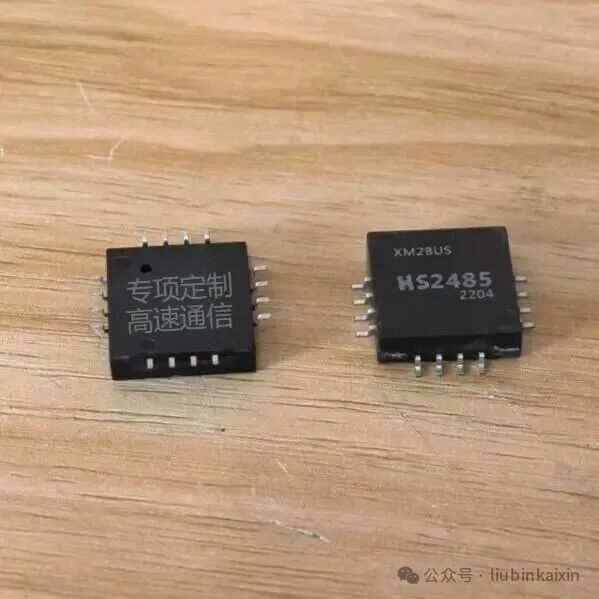
Paragraph 2 (About 300 words, insert H2 Pain Point Scenario + Solution 2) Scenario 2: The lighting, security, and air conditioning systems of intelligent buildings often require distributed sensors, drivers, and gateways. The traditional RS485’s polarity and cable length limitations lead to high wiring costs and more complicated maintenance. The XM2BUS two-wire bus solution provides non-polar power supply and communication, allowing for any topology wiring, even achieving simple zoned access in multi-story buildings. The design of the XM620 master station is highly integrated and modular, with a communication and power supply capability of 20A/2km, making comprehensive wiring in buildings more user-friendly. The XM332 slave chip provides active reporting functionality, allowing device status to be quickly aggregated, enabling more efficient data updates for security probes, sensors, and smart lighting nodes. The low peripheral cost characteristics of the XF2485A allow devices such as lighting, access control, and air conditioning gateways to be quickly implemented, while the HS2485 provides high-speed transmission capabilities of up to 230400bps, meeting the parallel needs of video and sensor data. If longer distance data transmission is required on-site, the WM2485 development board can also provide long-distance coverage, offering a higher cost-performance ratio in urban edge layouts. XM2BUS reduces wiring costs, shortens construction time, and facilitates smoother system upgrades.📡🏙️
Question: What is the core difference between the two-wire bus and traditional RS485 in the concept of bus communication control? Answer: The core of the two-wire bus lies in non-polar power supply and communication, allowing for any topology wiring. Master-slave communication is achieved through XM620+XMS200, requiring only one pair of wires on-site to simultaneously transmit power and data, greatly reducing polarity errors and the number of cables. The active reporting of the XM332 improves data acquisition efficiency, while the XF2485A provides extremely simple peripheral circuit design, adapting to a wider working voltage range. In mining and outdoor scenarios, the WM2485 offers reliable transmission over long distances. Overall, the two-wire bus has significant advantages in construction costs, wiring flexibility, and on-site maintenance, but it is not a one-size-fits-all “best” solution; it needs to be combined with on-site power environment, distance, and bandwidth requirements for selection.
Paragraph 3 (About 300 words, insert H2 Pain Point Scenario + Solution 3) Scenario 3: Industrial control and warehouse shelving systems often involve a large number of sensors, drivers, and actuators, being cost-sensitive and requiring high reliability. The XM2BUS non-polar two-wire bus solution can reduce wiring and maintenance costs without sacrificing performance. The XM620 module provides an integrated solution for master and relay, paired with the XM332 slave chip, where active reporting and rapid polling make device status clearer, easily covering scenarios with 180 node scales. The XF2485 series chips offer both passive and active solutions, allowing existing RS485 systems to be quickly upgraded to a two-wire non-polar bus, with strong compatibility and ease of use. Depending on different application scenarios, slave chips like XMS110 and XMS200 provide different modulation/reporting capabilities, paired with the XM620 development board, WM2485 development board, and HS2485 high-speed board, enabling a range of solutions from simple monitoring to high-throughput control based on demand. For scenarios such as lighting, industrial control shelving, and sensor gateways, XM2BUS provides solutions for slave communication, multi-master systems, and integrated master station solutions, reducing on-site renovation costs and risks. 🏗️🔧
Question 2: In mining and other long-distance scenarios, what is the difference between choosing WM2485 and HS2485? Answer 2: WM2485 focuses on long-distance transmission, with a coverage of up to 10,000 meters suitable for mining areas and outdoors without relays, emphasizing distance and robustness; HS2485 focuses on high-speed transmission, with rates reaching 230400bps, suitable for applications with high bandwidth demands (such as front-end video surveillance, rapid sensor data collection). Both can be integrated through the XM2BUS two-wire bus platform, and the actual choice depends on a comprehensive consideration of distance, bandwidth, and on-site power conditions.
Conclusion: If you are evaluating upgrading your existing RS485 system to a two-wire bus solution and want simpler on-site wiring and more stable data transmission, feel free to leave a message below to share your on-site scenarios and pain points. Let’s work together to implement the XM2BUS solution into your project. Do you value construction costs more, or the need for bandwidth and long-distance transmission? Is your on-site environment in fire protection, power, buildings, mining, or industrial control? Let’s discuss, and we will help you turn the solution into an actual engineering route.😊👍
Interaction Tips (Optional to add social media emojis)
- If you like this “scenario + solution” explanation, please give a thumbs up and share it with colleagues who need it!🚀
- If you want to obtain XM620 development materials or test boards, please leave a message in the comments saying “Need Materials,” and we will provide engineering source files and sample code.📚
- Do you want to make a customized comparison for a specific scenario on-site? Tell me your distance, cable budget, and load, and we will show you the comparison of the two-wire bus solution.💬
Notes
- Key product points are mentioned multiple times in the text: XM620 host (24V/48V, 20A, 2000 meters), XM2BUS two-wire bus solution (non-polar power supply + communication, any topology), XM332 slave chip (active reporting), XF2485/XF2485A, HS2485, WM2485 and other carriers and development boards, as well as the integration and applicable scenarios of the XM620 module (fire protection, buildings, industrial control, mining, smart homes, home appliances, etc.).
- The article is structured in three sections according to “pain point scenario + solution,” with Q&A groups interspersed at key points to meet the requirement for Q&A insertion.
- Brand and product highlights are integrated into the text, emphasizing that XM2BUS can solve the comprehensive challenges of on-site wiring, power supply, and data transmission while maintaining the feasibility of technical descriptions.
Two-wire bus selection summary: For less than 2km with multiple nodes, choose modulation type XM620+XM332/XMS200; for direct slave communication without a master chip, choose carrier type XF2485; for 2~10km, choose long-distance WM2485, and for high-speed communication, choose HS2485.