Advanced sensing devices based on metasurfaces have become a revolutionary platform for innovative label-free biosensors, promising applications in early diagnosis and detection of low-concentration analytes. Here, we reproduce a metasurface sensor based on bound states in the continuum (BIC) to address challenges associated with complex operations in trace biochemical detection【Wang R, Song L, Ruan H, et al. Research, 2024, 7: 0483】.
The simulation structure is shown in Figure 1. To demonstrate the spectral response and resonance characteristics of the metasurface, numerical calculations were performed using the frequency domain solver of CST simulation software. Floquet periodic conditions were set in the x and y directions, while open boundary conditions were applied in the z direction. The TE electric field that excites terahertz waves simulates a plane wave propagating in the direction of the excitation field along the y-axis. The grid size in each direction is smaller than the minimum structural size to ensure the accuracy of the converged results. Specific settings are shown in Figures 2-4.
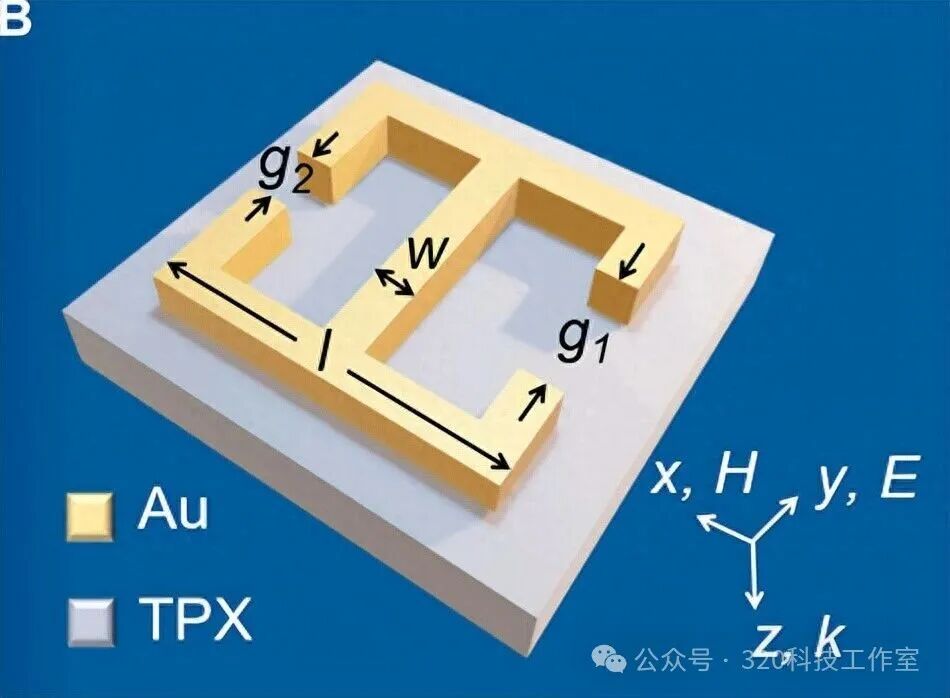
Figure 1: Schematic of the simulation structure
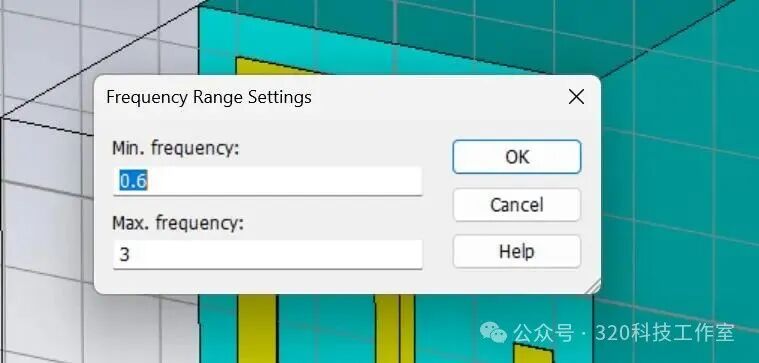
Figure 2: Simulation frequency range settings
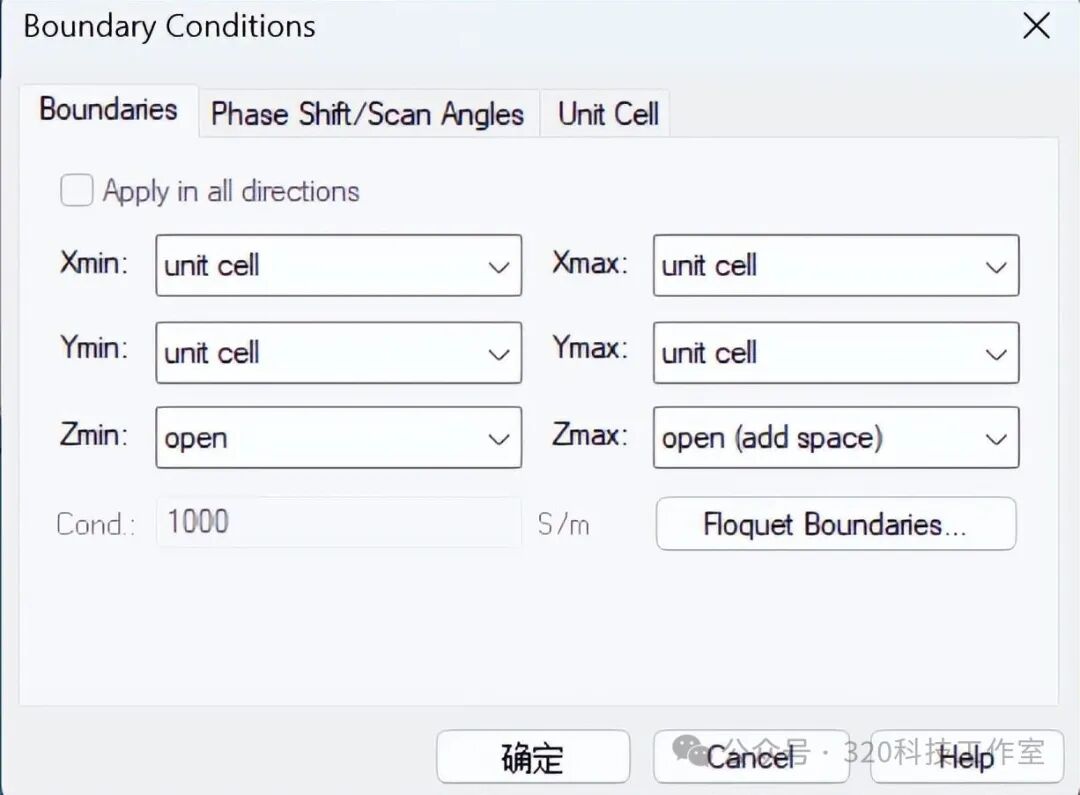
Figure 3: Simulation boundary condition settings
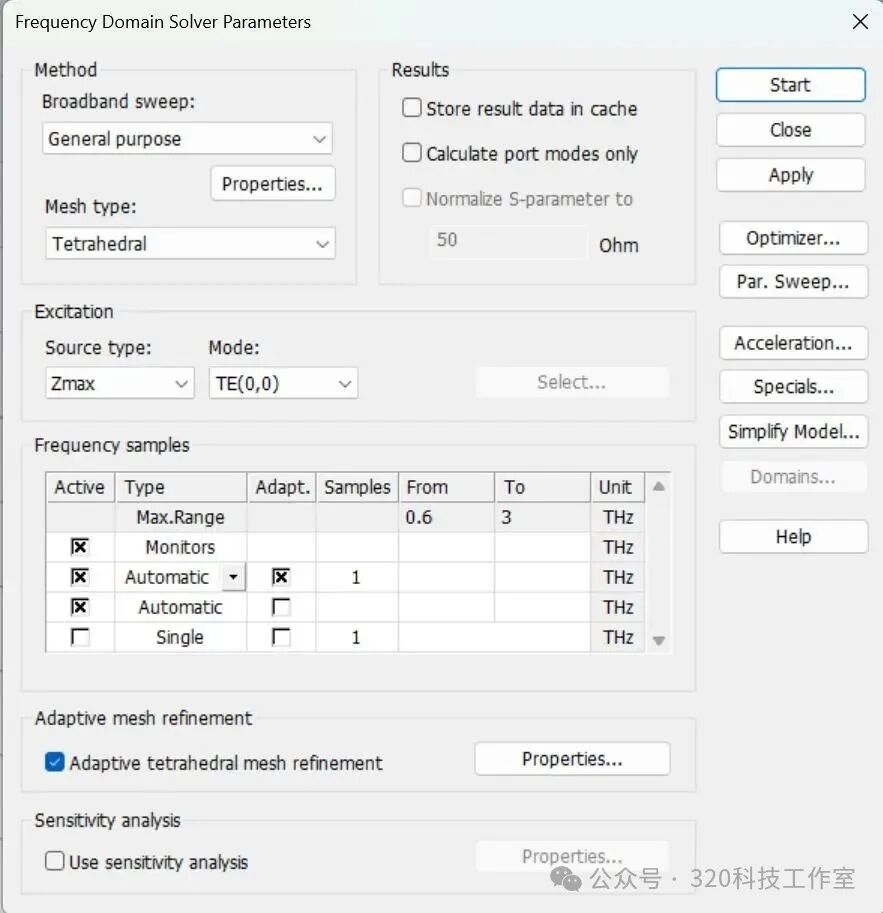
Figure 4: Solver parameter settings
By continuously breaking the symmetry of the structure, the symmetry-protected BIC line shape gradually transforms into a Fano line shape, while the frequency and linewidth of the lower frequency eigenmodes remain essentially unchanged. Therefore, by varying the parameter g2, a transition from quasi-BIC to BIC to quasi-BIC can be achieved, as shown in Figure 5.
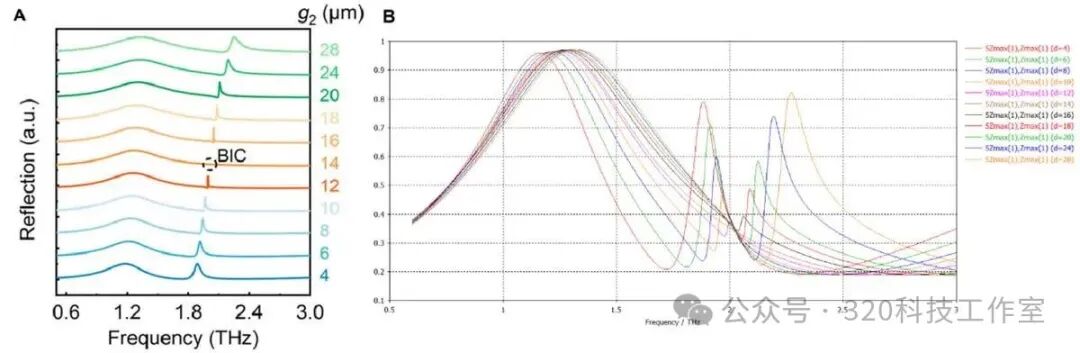
Figure 5: Simulation structure with varying parameter g2. A, original figure from the paper; B, reproduced figure.
Furthermore, the surface current distribution of the metasurface was simulated, with specific results shown in Figure 6. The surface charges associated with the quasi-BIC resonance primarily accumulate at the edges of the resonators and in the wider gap regions, forming a coupling effect between an electric dipole and a magnetic dipole. Therefore, in the case of quasi-BIC, a new resonance peak with a Fano line shape is generated. This also indicates that electromagnetic energy is concentrated at the edges of the resonators, suggesting a higher likelihood of interaction with trace analytes.
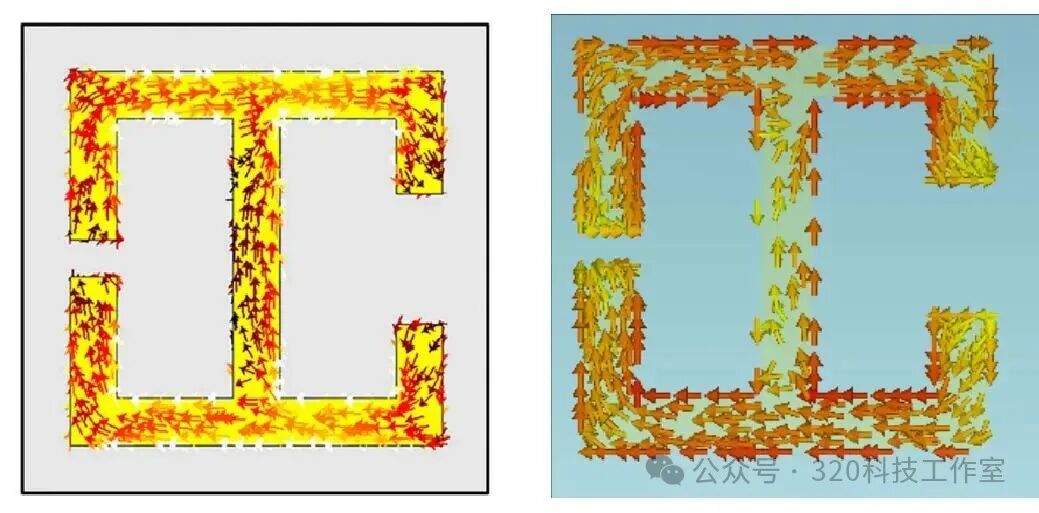
Figure 6: Surface current distribution during quasi-BIC simulation. The left image is the result from the paper, and the right image is the reproduced result.
Finally, to investigate the optical sensing performance of the proposed metasurface, analytes with a certain thickness were simulated. To cover biomedical materials used in terahertz sensing research, we adjusted the dielectric constant of the analytes for spectral analysis, as shown in Figure 7, to compare the sensing performance of the quasi-BIC mode and the eigenmode. The sensitivity S of the refractive index biosensor is defined as Δf/Δn, where Δf is the resonance frequency shift when the analyte is placed on the metasurface, and Δn represents the refractive index of the simulated analyte. The electromagnetic energy of the quasi-BIC mode is concentrated at the edges of the resonators, while the electromagnetic energy of the eigenmode is located at the junction in the middle of the resonators (Figure 6). From the figure, it can be calculated that the sensitivity of the eigenpeak is 317 GHz/RIU, while the sensitivity of the quasi-BIC peak is 523 GHz/RIU, further demonstrating that quasi-BIC resonance has superior sensing capabilities compared to eigen resonance.
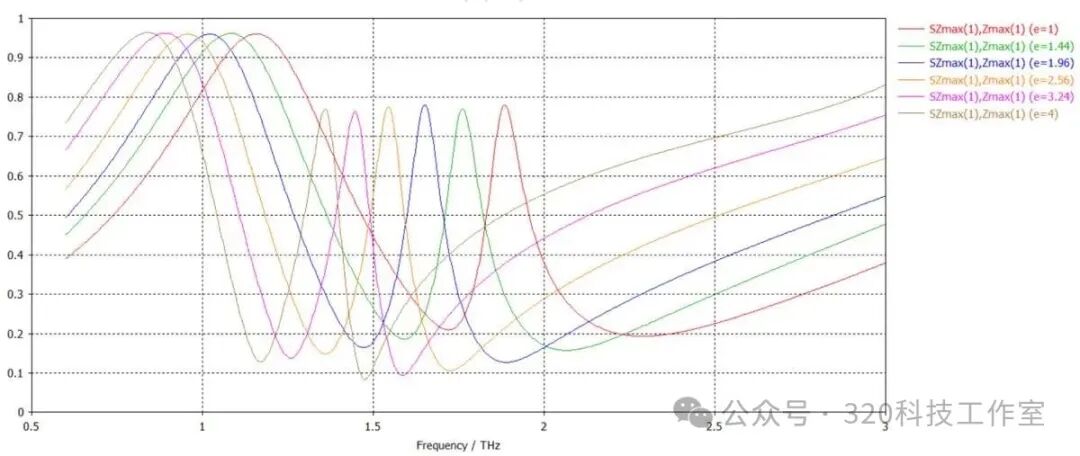
Figure 7: Simulation results of eigenpeak and quasi-BIC peak
Terahertz metasurface biosensing technology, due to its unique advantages, occupies a core position in the next generation of highly sensitive, rapid, and non-destructive biomolecular detection technologies, and is currently in a vibrant and rapidly developing phase. In the future, with the deepening of interdisciplinary collaboration and the continuous breaking of technological barriers, this technology will not only profoundly transform the landscape of biomedical detection but will also play an irreplaceable key role in fields such as precision medicine, life science research, and public health safety, ushering in a new era of biomolecular detection.
Finally, for any related inquiries, please feel free to contact us.