

@
Follow the public account below
to get more cutting-edge journal updates and exciting academic report replays

Research Background
With the acceleration of industrialization, the demand for energy sources such as oil, natural gas, and coal is increasing in modern society. At the same time, more and more harmful gases are being emitted into the atmosphere, leading to increasingly serious environmental pollution issues. In particular, air pollution, which has received close attention, poses increasingly severe threats to human life and industrial and agricultural production. Therefore, developing a gas sensor with high sensitivity and resolution for detecting harmful gas concentrations is not only of theoretical significance but also has practical implications for serving the national economy and improving people’s lives. In recent years, a new type of two-dimensional material called MXenes has attracted widespread attention in various application fields. Due to their rich surface functional groups and sites, excellent electrical conductivity, tunable surface chemical properties, and outstanding stability, MXenes also have broad application prospects in the field of gas sensors. Since the birth of MXenes, researchers have utilized their high flexibility and the ease of functionalization with other materials to prepare composite materials for gas sensing, opening a new chapter in high-performance gas sensing materials and providing a new avenue for advanced sensor research.
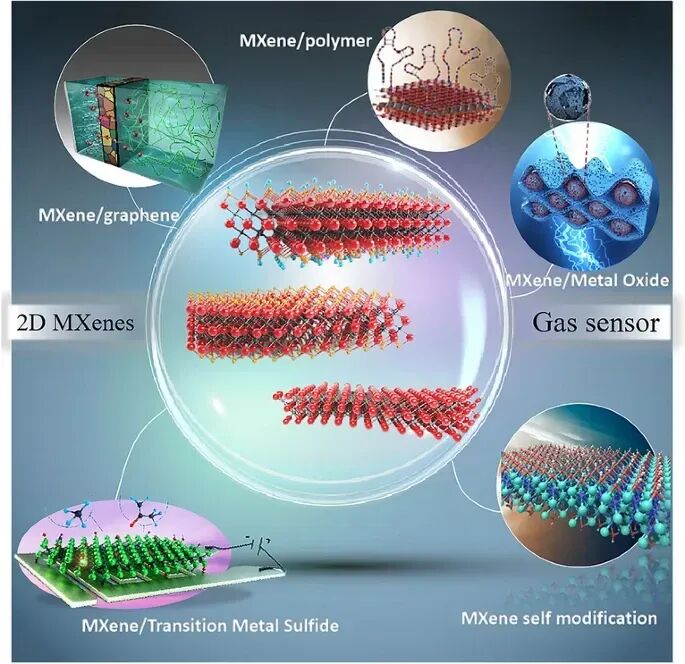 MXene Key Composites: A New Arena for Gas SensorsYitong Wang, Yuhua Wang*, Min Jian, Qinting Jiang, Xifei Li*Nano-Micro Letters (2024)16: 209
https://doi.org/10.1007/s40820-024-01430-4
Highlights of this Article
1. MXenes possesslayered structures,rich functional groups and excellent conductivity, which are of significant research importance in the field of gas sensing.
2. The preparation techniques for gas sensors are continuously being optimized, paving the way for the development of gas sensing.
3. Composite materials based on MXenes (MXene/Graphene, MXene/Metal Oxides, MXene/MOF, and MXene/Polymers) are applied in various gas sensors.
Content Summary
Researchers led by Yuhua Wang from Wuhan University of Science and Technology systematically reviewed the latest progress in the application of MXene-based composites in the field of gas sensing. First, common methods for preparing gas sensing devices are briefly introduced, followed by a discussion of the key properties of MXenes related to gas sensing performance. This article focuses on MXene-based composites for high-performance gas sensing, such as MXene/Graphene, MXene/Metal Oxides, MXene/Transition Metal Dichalcogenides (TMDs), MXene/Metal-Organic Frameworks (MOFs), and MXene/Polymers. Subsequently, the advantages and disadvantages of MXenes with different composites are summarized, and the possible gas sensing mechanisms of MXene-based composites for different gases are discussed. Finally, the future development directions and progress of MXene-based composites in gas sensing are introduced and discussed.
Illustrated Guide
I Introduction to MXene-based Composites in Gas Sensing
In the past century, MXenes and their composites have received extensive attention in fields such as energy storage and conversion, electromagnetic shielding, and sensitive electronics. In 2017, Lee et al. first experimentally discovered that Ti₃C₂ MXene exhibits good gas-sensing performance. Furthermore, it was found that conventional semiconductor gas-sensing materials require operating temperatures as high as 200-400 °C, while MXenes exhibit gas-sensing characteristics at room temperature. As gas-sensing materials, MXenes also have the following advantages: (1) energy savings, simplifying the structure of gas sensors; (2) when coated on suitable substrate materials, portable and flexible gas sensors can be developed. Therefore, MXenes are rapidly applied in the field of gas sensing (Figure 1).
MXene-based gas sensors are expected to achieve efficient and rapid detection of gases such as ammonia (NH₃), nitrogen dioxide (NO₂), and volatile organic compounds (VOCs) at room temperature. However, due to the excellent electronic transfer properties, two-dimensional layered structure, and rich terminal groups of MXenes, they are sensitive not only to inorganic gases that easily lose or capture electrons but also to volatile organic compounds (such as alcohols, ketones, and aldehydes). This leads to poor selectivity and specificity of MXenes in gas detection. Therefore, researchers often employ methods such as surface modification, doping, and compounding to enhance the specific gas sensing characteristics of MXenes, among which compounding is an important strategy. The gas-sensitive composite phases of MXenes mainly include Graphene and its derivatives, Metal Oxides, TMDs, MOFs, and Polymers.
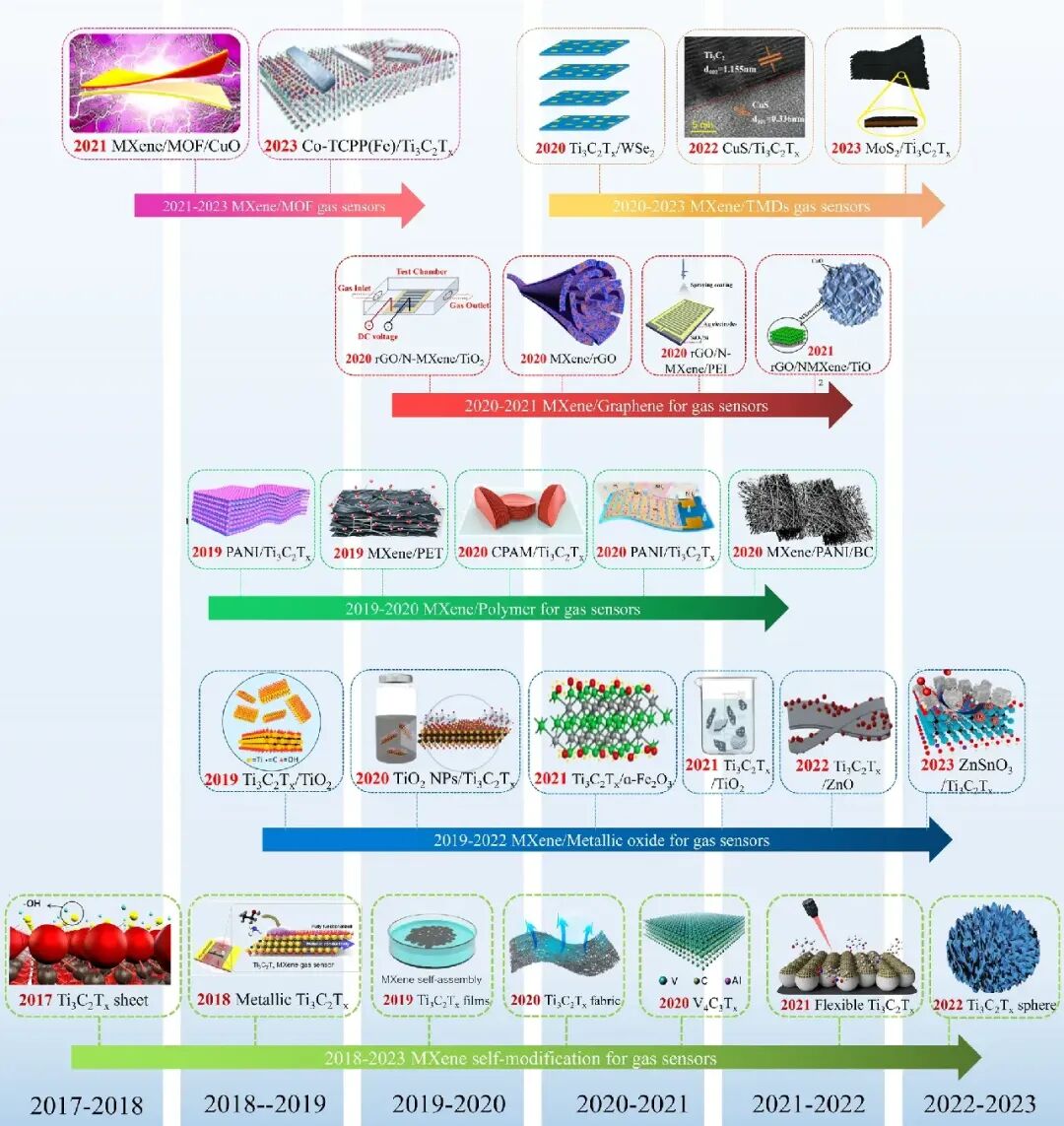 Figure 1. Important research plans for gas sensors using MXenes in combination with other materials include self-modification of MXenes, MXene/Graphene, MXene/Metal Oxides, MXene/Transition Metal Dichalcogenides, MXene/MOF, MXene/Polymers, etc.
II Gas Sensor Preparation Processes
Gas sensors are devices that convert gas components and concentrations into electrical signals. In today’s highly digitalized and intelligent world, the deteriorating environment and personal health issues have attracted widespread attention. In this regard, the development and design of gas sensors have garnered the interest and favor of researchers. Gas sensors can be applied in various aspects of industry and life, such as gas composition detection in chemical production, methane concentration detection and alarms in coal mines, environmental pollution monitoring, gas leak detection, fire alarms, and combustion detection. With the continuous development of social technology, the types of substrates are also increasing. However, traditional gas sensor preparation methods are not suitable for many substrates and also face issues such as high preparation condition requirements, low production efficiency, and extremely high preparation costs. Therefore, innovative improvements in gas sensor manufacturing technology are urgently needed.A suitable gas sensor manufacturing method can not only improve the performance of the sensor but also effectively simplify the process steps, reduce production costs, and provide strong support for the widespread application of gas sensors. Currently, improved techniques for sensor preparation include coating technology, printing technology, spinning technology, and transfer technology (Figure 2). These technologies have made significant efforts in production optimization, leading to remarkable progress in gas sensors.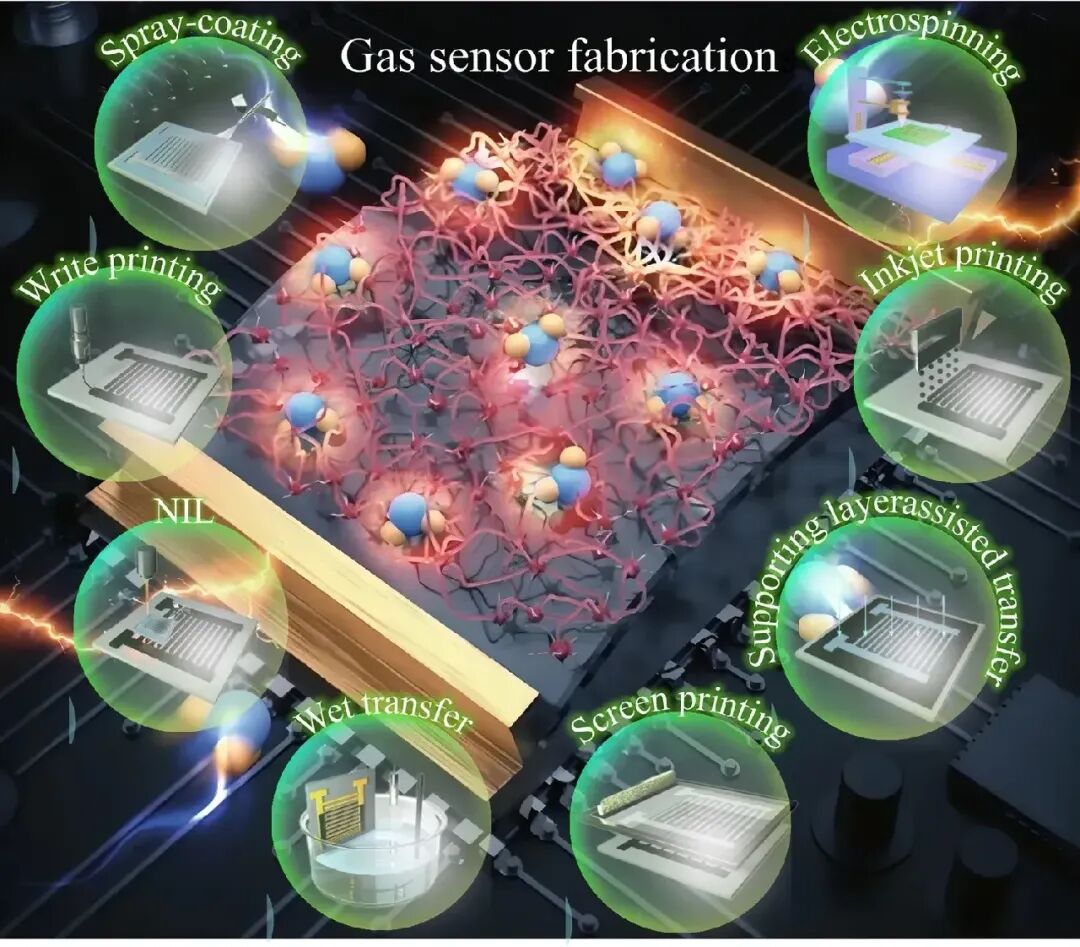 Figure 2. Preparation methods for gas sensors: applying coating technology (drip coating, spin coating, spray coating, soap coating); imprinting technology (inkjet printing, screen printing, writing printing, nanoimprinting); transfer technology (electrospinning, other spinning); distribution technology (dry transfer, wet transfer, support layer-assisted transfer).III Structure and Properties of MXenes3.1 Structure of MXenesMXenes are materials that consist of two-dimensional layered structures of metal carbides or nitrides. They are obtained by selectively etching the A atomic layers in the MAX phase. The phase structure of MXenes is shown in Figure 3a, and the general formula for MXenes is Mn+1XnTx, where M represents transition metals (such as Ti, V, Mo, etc.), X represents C or N, n=1, 2, or 3, and Tx represents surface terminal groups (-OH, =O, or -F). Due to the staggered arrangement of the M and X layers with the A layer in the MAX phase, MXenes also exhibit a similar symmetric hexagonal lattice (Figure 3b). The M atoms in MXenes are closely packed, while the X atoms fill the octahedral voids. As shown in Figure 3c, two-dimensional MXenes consist of sheets with hexagonal units, with an X layer sandwiched between two M transition metal layers.
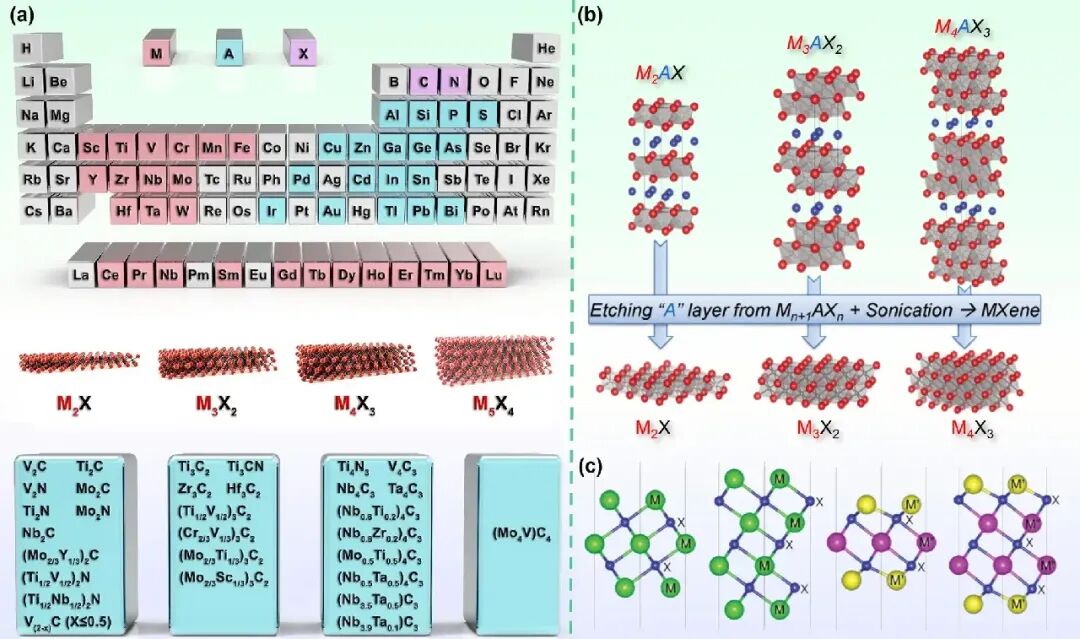 Figure 3. (a) The “M”, “A”, and “X” elements of the MAX phase are explained through the periodic table, along with a schematic diagram of the MXenes structure and currently reported MXenes. (b-c) Side views of original M3X2, M4X3, M’2M”X2, and M’2M”2X MXenes, where M, M’, and M” represent transition metals, and X represents C or N.
3.2 Properties of MXenes for Gas Sensing
Lane et al. utilized density functional theory to calculate ideal monolayer defect-free MXenes nanosheets, revealing that MXenes exhibit metallic conductivity, with the Fermi level higher than that of their precursor MAX phase. However, when their surfaces are functionalized, some MXenes exhibit semiconductor properties. Additionally, different surface groups (-F, -OH, or =O) receive different numbers of electrons in equilibrium, and the orientation of terminal groups also affects the electronic properties of MXenes. Furthermore, MXenes with different bandgap widths can be used to fabricate gas sensing arrays for specific identification of industrial raw gases, exhaust gases, and human exhaled gases. In summary, using MXenes as gas sensing materials has inherent advantages.
IV MXene Composites in Gas Sensing Applications
4.1 MXenes/Graphene Composites
Graphene has excellent thermal conductivity, high specific surface area, and a structure that is easy to modify, making it widely used in various fields. MXenes have a very narrow bandgap and are excellent sensing materials, but using pure MXenes in gas sensing devices can create critical barriers during gas reactions, hindering their further sensitive response. Subsequently, researchers found that combining the two can effectively overcome this issue. For example, Liu et al. prepared a three-dimensional (3D) mixed aerogel using MXene (Ti₃C₂Tx), reduced graphene oxide (rGO) nanosheets, and ultrafine CuO nanoparticles (Figure 4a). The resulting 3D MXene/rGO/CuO aerogel exhibited high acetone sensing performance at room temperature (Figure 4b). The sensor’s response rate to 100 ppm acetone was 52.09% (RT) (Figure 4b), with a response time of approximately 6.5 seconds and a recovery time of about 7.5 seconds (Figure 4c), demonstrating excellent reproducibility and selectivity. In 2020, Lee et al. developed a wearable gas sensor made of Ti₃C₂Tx MXene/Graphene mixed fibers without metal binders through a wet spinning process (Figure 4d). The bandwidth capacity of the composite increased from 1.05 eV to 1.57 eV, while the fiber characteristics of the composite enhanced flexibility and response to NH₃. The composite exhibited excellent response (6.8% under 50 ppm NH₃ conditions) (Figure 4e), which was 7.9 times and 4.7 times higher than the responses of pure MXene and pure graphene, respectively.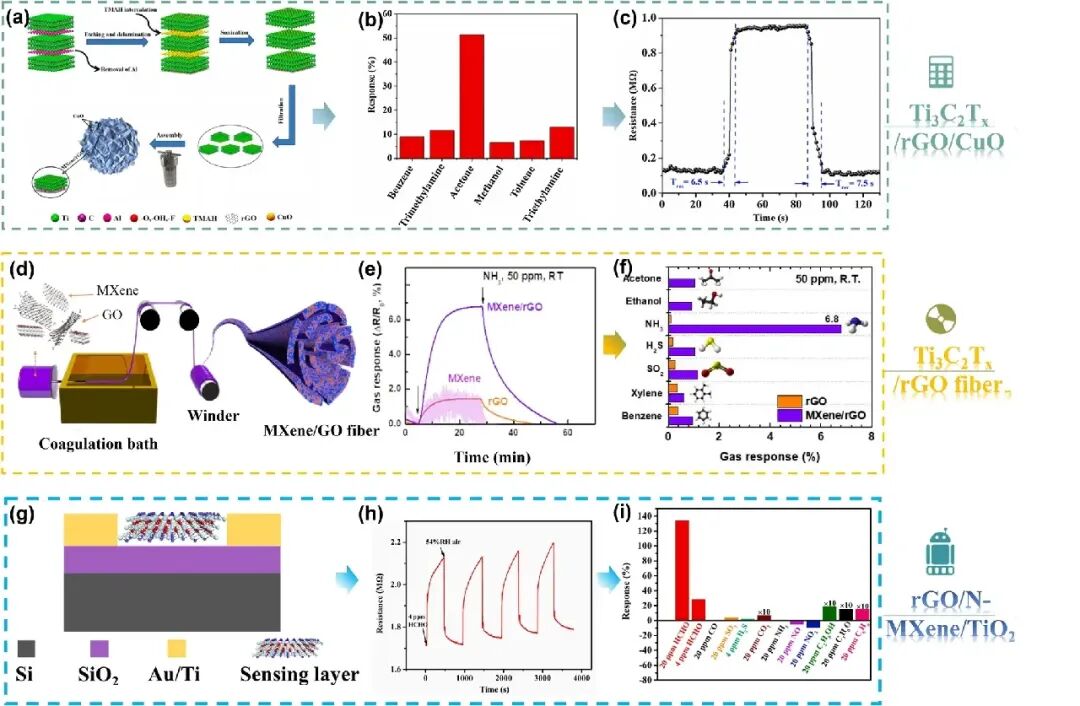 Figure 4. (a) Schematic diagram of the manufacturing process of the 3D MXene/rGO/CuO aerogel. (b,c) The sensor based on the 3D MXene/rGO/CuO aerogel’s selectivity to different gases at RT conditions for 100 ppm. (d) Schematic diagram of the spinning process of MXene/GO mixed fibers. (e) Comparison of gas responses of MXene films, rGO fibers, and MXene/rGO mixed fibers (40 wt% MXene). (f) Comparison of gas selectivity of rGO fibers and MXene/rGO mixed fibers (40 wt% MXene) to various test gases at a concentration of 50 ppm. (g) Schematic diagram of IDEs sensors. (h) Sensing performance of ternary sensors to HCHO vapor at 20°C, 54% RH. (i) Selectivity study of a series of interfering gases at 20°C, 54% RH.
4.2 MXenes/Metal Oxides
Metal oxides have a large specific surface area, are easy to manufacture, easy to functionalize, and exhibit extremely high sensitivity to various gases/volatile organic compounds, making them one of the oldest and most widely used sensing materials. The sensing mechanism of metal oxides mainly involves changes in resistance caused by surface reactions between pre-adsorbed oxygen species (O²⁻, O⁻, O²⁻) and gas molecules. Metal oxide gas sensors typically need to operate at relatively high temperatures due to the high temperature dependence of oxygen ions, which is a major drawback of metal oxide gas sensors. However, research data indicate that mixtures of metal oxides with two-dimensional MXenes not only overcome the high operating temperature limitation but also exhibit stronger gas/volatile organic compound sensing responses (Figure 5).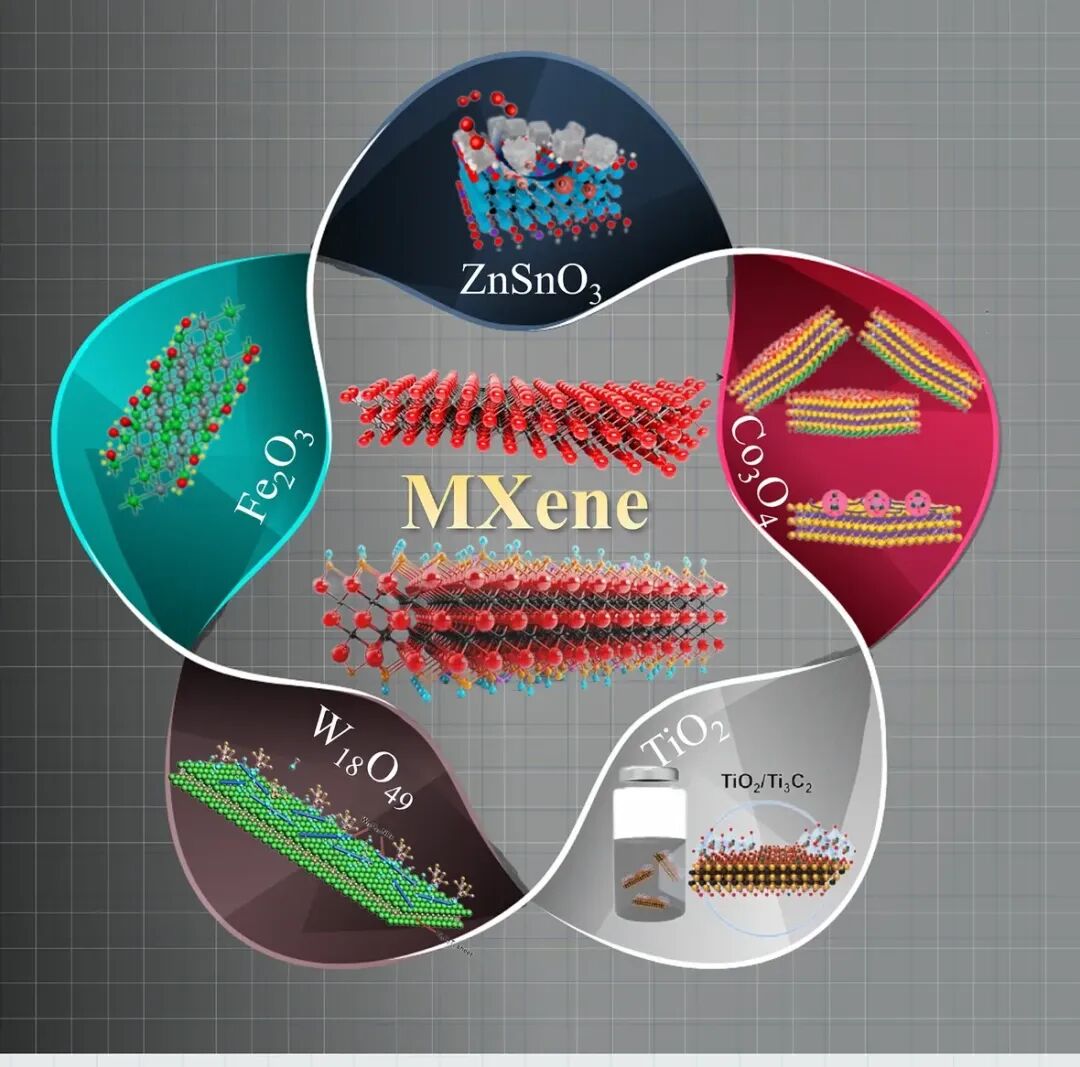 Figure 5. MXenes/Metal Oxides for gas sensors.
4.3 MXenes/Transition Metal Dichalcogenides (TMDs) Composites
TMDs are two-dimensional materials with unique structures, excellent mechanical, electrical, and optical properties, and low energy consumption. However, research on TMDs and MXenes composites in gas/volatile organic compound sensing is still a relatively unexplored field. First, Qui et al. prepared a MoS₂/Ti₃C₂Tx heterostructure with interconnected network nanostructures through a simple hydrothermal method (Figure 6a). The synthesized MoS₂/Ti₃C₂Tx heterostructure exhibits significant lattice matching (Figure 6b), with vertically aligned MoS₂ nanosheets growing on Ti₃C₂Tx MXene, resulting in a large specific surface area. The obtained gas sensor shows high sensitivity and selectivity to nitrogen dioxide gas, reaching up to 25% at 10 ppm, with rapid recovery and long-term stability (Figure 6c, 6d). Due to the large number of active sites from Mo and the conductivity of Ti₃C₂Tx MXene accelerating electron movement, as well as good heterojunction interface contact, this structure exhibits stronger NO₂ sensing activity. Secondly, Chen et al. reported Ti₃C₂Tx/WSe₂ nanohybrid materials, which were prepared through a simple surface treatment and exfoliation process (Figure 6e) and incorporated into inkjet-printed and wirelessly operated sensors (Figure 6f). The sensing measurements exhibited good repeatability and reproducibility. In the presence of ethanol, the energy band diagram of the Ti₃C₂Tx/WSe₂ sensor showed n-type sensing behavior and Schottky barrier modulation (Figure 6g). Compared to sensors made from unprocessed Ti₃C₂Tx and unprocessed WSe₂, the Ti₃C₂Tx/WSe₂ hybrid sensor improved sensitivity to ethanol, low electrical noise, gas selectivity, and ultra-fast response/recovery characteristics by 12 times (Figure 6h).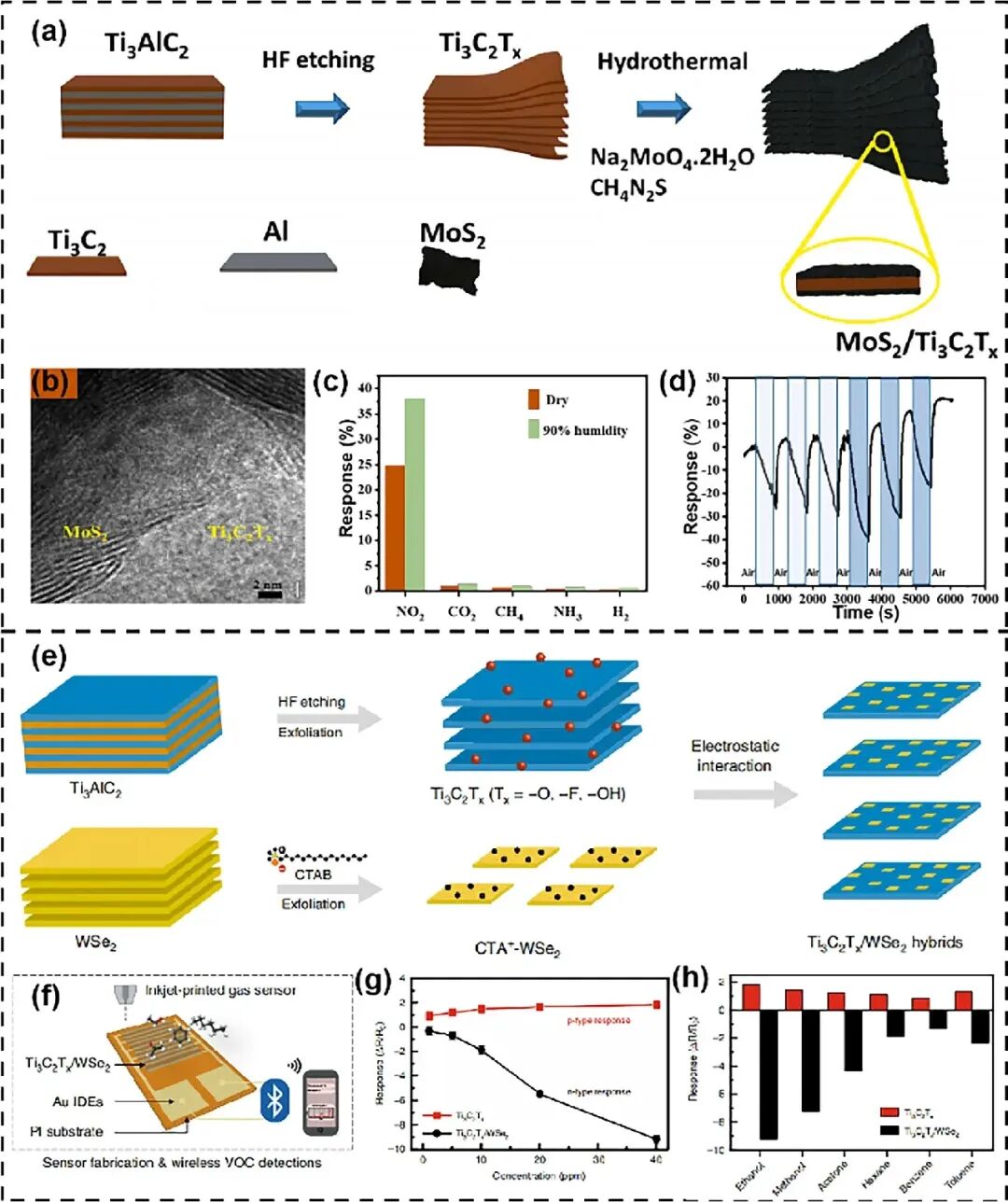 Figure 6. (a) Schematic diagram of the process for synthesizing MoS₂/Ti₃C₂Tx heterostructures from Ti₃AlC₂ MAX phase. (b) HR-TEM image of MoS₂/Ti₃C₂Tx heterostructures. (c, d) Comparison of responses of MT2 samples to various gases at a concentration of 10 ppm. (e) Schematic diagram of the preparation process of Ti₃C₂Tx/WSe₂ nanohybrid materials. (f) Application schematic of inkjet-printed gas sensors with wireless monitoring systems for detecting volatile organic compounds. (g) Comparison of gas responses of Ti₃C₂Tx and Ti₃C₂Tx/WSe₂ sensors as a function of ethanol gas concentration. (h) Selectivity tests of Ti₃C₂Tx and Ti₃C₂Tx/WSe₂ sensors exposed to various volatile organic compounds at 40 ppm.
4.4 MXenes/Metal-Organic Frameworks (MOFs) Composites
In recent decades, Metal-Organic Frameworks (MOFs) have rapidly developed and remain a hot topic in the field of materials. However, the combination of MOFs with MXenes to create conductive MOFs breaks the almost non-conductive barrier of MOF materials, perfectly combining the structural controllability of organic materials with the long-term order of inorganic materials. Coupled with unique high electron mobility, conductive MOFs have become a new material dark horse and one of the most promising materials in gas sensing applications. For example, Chang et al. designed and prepared a chemical corrosion-resistant NO sensing hybrid (CoTCPP (Fe)/Ti₃C₂Tx) formed through hydrogen bonding interactions between rod-shaped porphyrin-based metal oxides (Co TCP (Fe)) and MXene (Ti₃C₂Tx) (Figure 7a). The sensor based on Co TCPP (Fe)/Ti₃C₂Tx exhibited excellent nitrogen oxide sensing performance at room temperature (Figure 7b), including high response (2.0%, 10 ppm) (Figure 7c), reliable repeatability, high selectivity, low actual detection limit, and rapid room temperature nitrogen oxide sensing response/recovery speed (95 s/15 s, 10 ppm).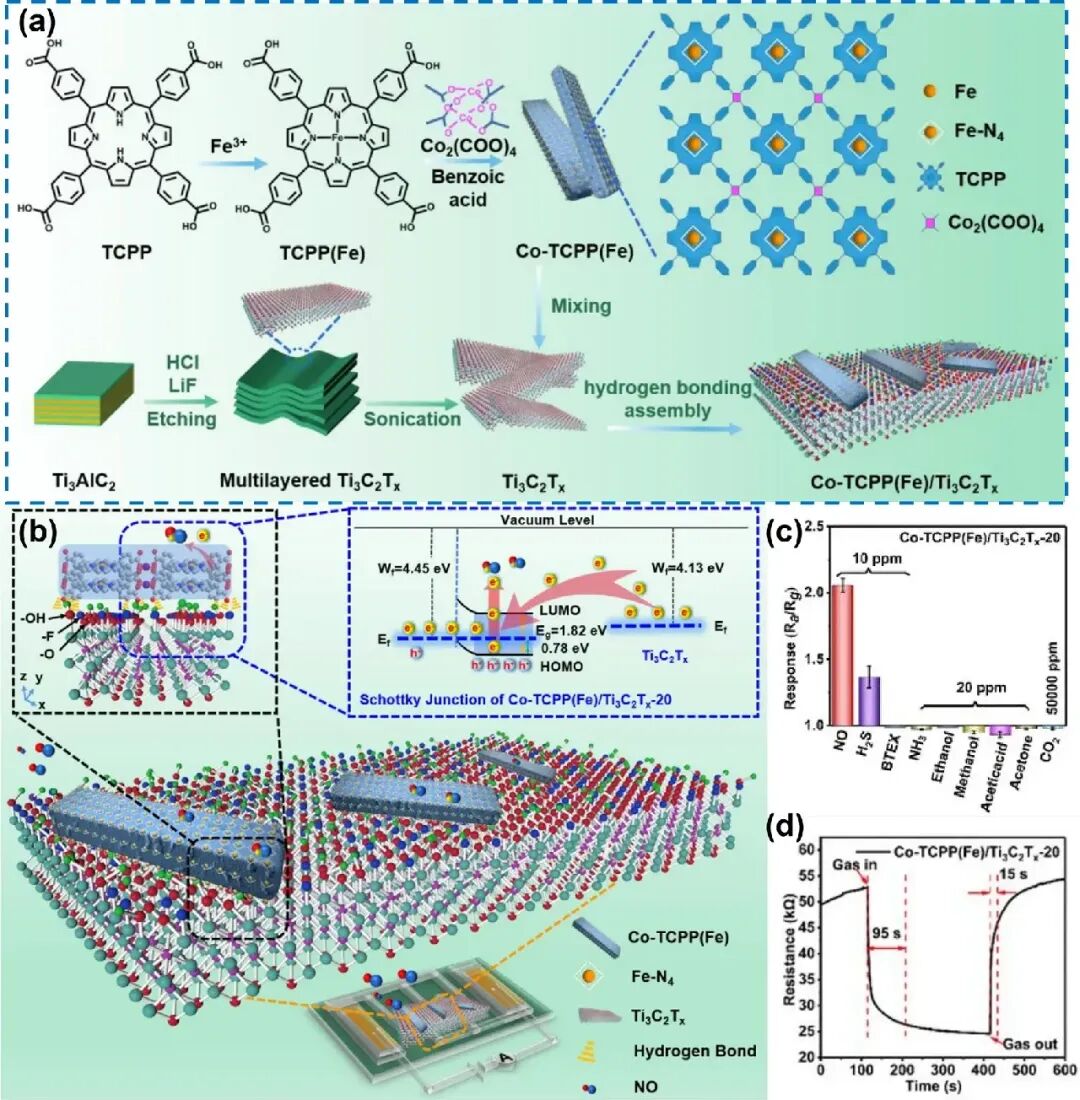 Figure 7. (a) Synthesis process of Co⁻TCPP(Fe), Ti₃C₂Tx, and Co⁻TCPP(Fe)/Ti₃C₂Tx. (b) Schematic diagram of the sensing mechanism of Co⁻TCPP(Fe)/Ti₃C₂Tx-20 for NO. (c) Selectivity of the sensor to various gases at concentrations of 10 ppm and 20 ppm.
4.5 MXenes/Polymers
Polymers possess excellent flexibility, good sensitivity, appropriate conductivity, low cost, a large number of organic groups on the surface that interact with gases, lightweight, and low reaction temperatures, making them suitable for gas/volatile organic compound sensing applications when mixed with MXenes. MXene/polymer composite sensors can be used to identify ammonia, ethanol, methanol, acetone, and humidity. In ammonia recognition, the original sensor based on MXenes exhibited excellent NH₃ sensing characteristics, but ammonia has a high adsorption energy, making it difficult to separate NH₃ from the MXene screen during recovery, resulting in prolonged recognition time and baseline resistance fluctuations. Zhao et al. also used over PANI through a low-temperature in-situ polymerization method to reasonably modify PANI particles coated with Ti₃C₂Tx nanosheets (Figure 8a, 8b), achieving significant detection sensitivity, rapid response/recovery rates, and mechanical stability at room temperature. Zhao et al. developed room-temperature nanocomposites based on two-dimensional MXenes and cationic polyacrylamide (CPAM) (Figure 8c), which exhibit high gas responsiveness and flexibility, aimed at constructing high-performance ammonia sensors.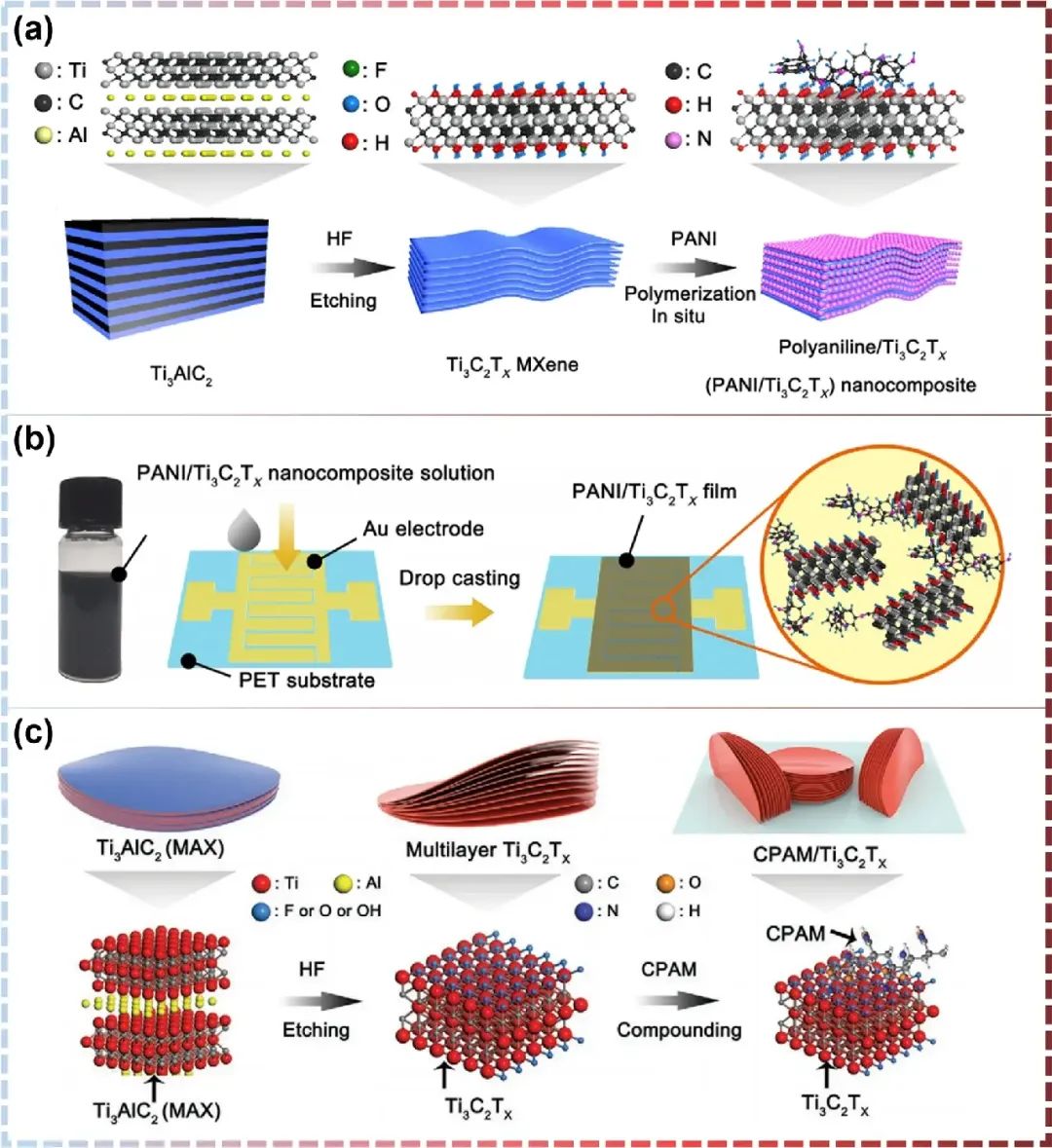 Figure 8. (a) Schematic diagram of the composite synthesis of PANI/Ti₃C₂Tx nanocomposites, including the exfoliation process of Ti₃AlC₂ and the consolidation process of ANI. (b) Schematic diagram of the polarization between electrodes before and after electroplating of PANI/Ti₃C₂Tx nanocomposites. (c) Synthesis scheme of CPAM/Ti₃C₂Tx nanocomposites, including the etching process of Ti₃AlC₂ and the composite process of CPAM with Ti₃C₂Tx.
4.6 Other Materials
In other studies, researchers attempted to improve sampling performance by doping iron molybdate (Fe2(MoO4)3), Ni(OH)2, and Ti₃C₂Tx MXene for H₂ (room temperature), n-butanol (120 °C), and NH₃ (room temperature) sensing, respectively. Another study performed surface modification of transition metal fluorides (TiOF₂) on Ti₃C₂Tx and subsequently used it as a humidity sensor (Figure 9a-f). By stabilizing the surface terminal groups, MXene films exhibited better reactive area, flexibility, and catalytic oxidation properties (Figure 9j). Additionally, the manufactured sensors demonstrated good sensitivity and selectivity when exposed to humid environments (Figure 9h, i). This article provides a detailed overview of sensors based on MXene nanocomposites. In summary, inserting metal ions and noble metals is also an effective method to enhance the gas sensing performance of original MXenes.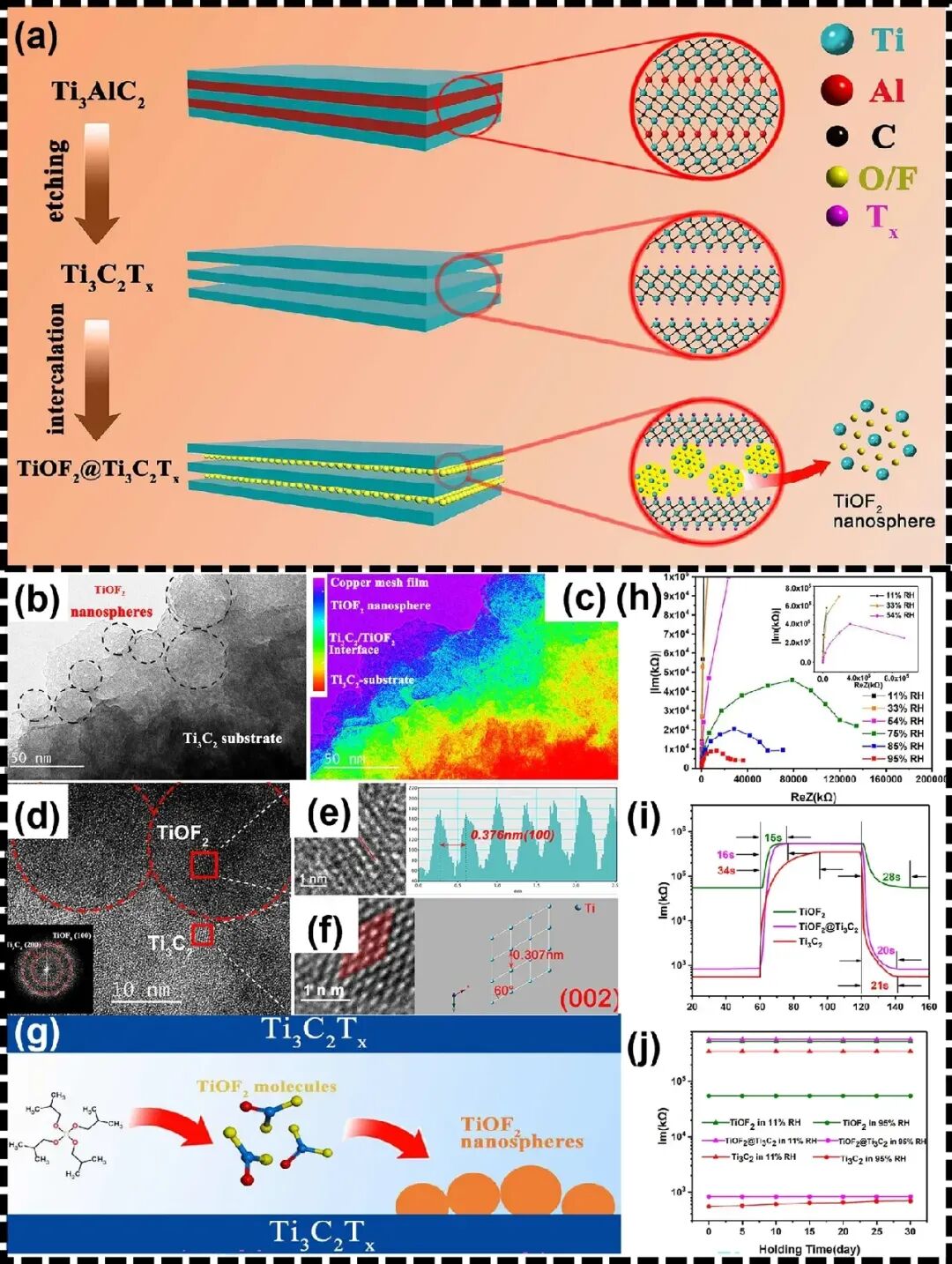 Figure 9. (a) Preparation scheme of TiOF₂@Ti₃C₂Tx. (b and c) Cross-section of TiOF₂@Ti₃C₂Tx monolayers and rainbow diagram showing in-situ composition distribution. (d) TEM image of TiOF₂ nanospheres grown on Ti₃C₂Tx substrate. (e) HRTEM image of TiOF₂ nanospheres. (f) HRTEM image of Ti₃C₂ substrate. (g) Scheme for synthesizing TiOF₂@Ti₃C₂Tx through hydrolysis and adsorption. (h) Response and recovery characteristics of TiOF₂@Ti₃C₂Tx under different relative humidity conditions.
V Gas Sensing Mechanisms of MXenes
Theoretically, MXenes with semiconductor properties (M₂CO₂, M=Sc, Ti, Zr, Hf) are highly sensitive to NH₃, as shown in Figure 10a. Xiao et al. discovered through calculations that when NH₃, as an electron donor, adsorbs on M₂CO₂, charge transfer mainly occurs between the M atoms of M₂CO₂ and the N atoms of NH₃. When MXene adsorbs NH₃, the charge of the NH₃ molecule transfers to the transition metal atoms on the MXene surface, significantly enhancing the conductivity of Ti₂CO₂. It was also found that by adjusting the electrons injected into M₂CO₂, NH₃ desorption can be easily achieved, making the NH₃ sensor reversible. For example, the lowest unoccupied electronic state (LUES) of Zr₂CO₂ mainly comes from Zr atoms, indicating that when an additional electron is injected into Zr₂CO₂, the electron will fill the unoccupied electronic orbitals of Zr atoms. Therefore, the injected electrons are mainly distributed on the transition metals, leading to an increase in the metal bond length and the adsorption energy of NH₃-M, thus reducing the adsorption energy of NH₃ on the MXene surface. The research group also found that monolayer Sc₂CO₂ exhibits good adsorption strength and significant charge transfer for SO₂. The charge transfer from SO₂ to Sc₂CO₂ increases the DOS of Sc₂CO₂ and its conductivity.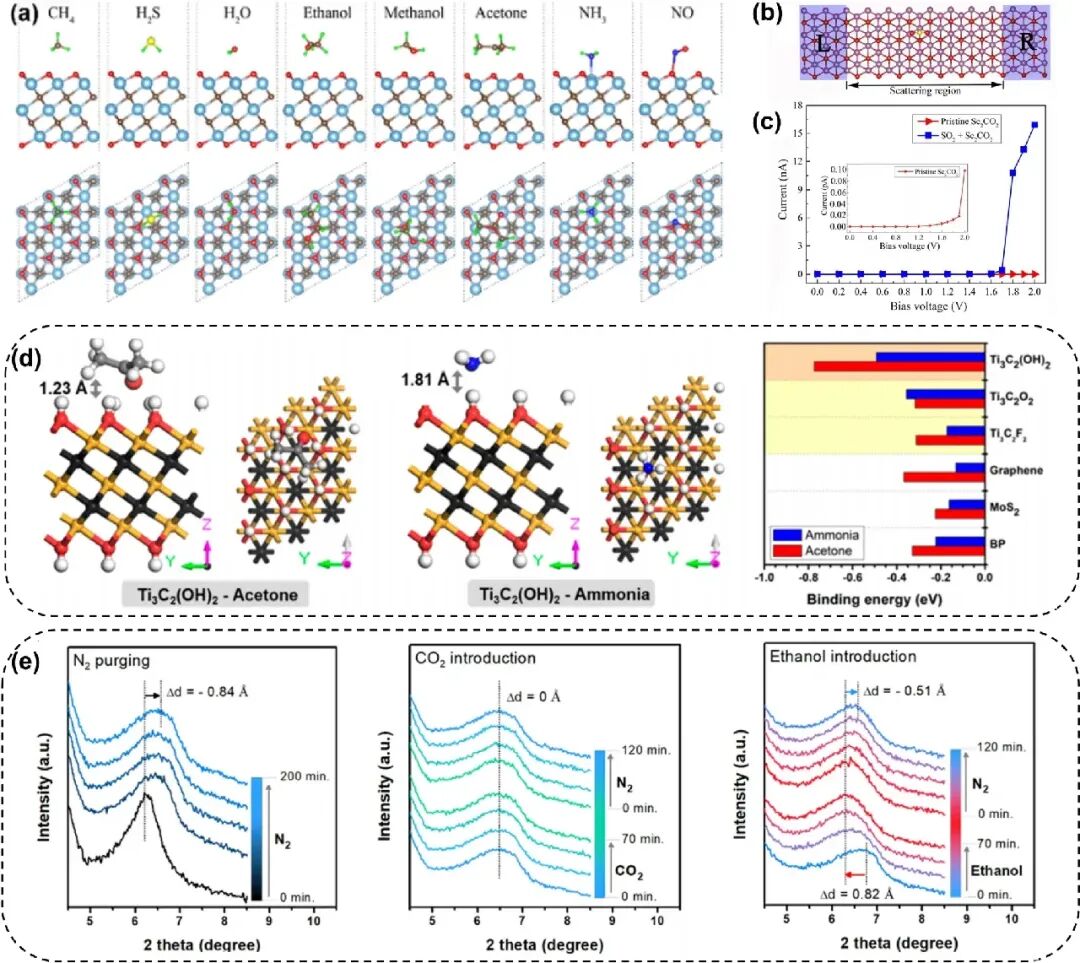 Figure 10. (a) The most stable configurations of different gas molecules adsorbed on Ti₃C₂O₂ surface, side view and top view. (b) Dual-probe model for detecting sulfur dioxide molecules using monolayer Sc₂CO₂. (c) Predicted I-V characteristics of Sc₂CO₂ containing sulfur dioxide molecules. (d) Density functional theory (DFT) simulation results of gas molecules adsorbed on various two-dimensional materials. The minimum energy configurations of acetone and ammonia on Ti₃C₂(OH)₂, Ti₃C₂O₂, Ti₃C₂F₂, Graphene, MoS₂, and BP.
VI Summary and Outlook
This article begins with the application of novel MXene-based composites in the field of gas sensing, briefly introducing the preparation methods of gas sensors, the structure of MXenes, and the properties related to gas sensing. It highlights the research progress of MXenes with Graphene, Metal Oxides, TMDs, MOFs, and Polymers in the field of gas sensing and summarizes the gas sensing mechanisms of MXenes. However, the development of practical gas sensors based on MXenes still faces many challenges: (1) It is necessary to develop green and safe macroscopic preparation methods for MXenes and surface functional group-oriented adjustment technologies. (2) The variety of MXenes material systems still needs to be significantly increased. (3) The interaction mechanisms between MXenes and gas molecules require further investigation.
Author Information

Yuhua Wang
Corresponding Author
Professor, Wuhan University of Science and Technology▍Main Research Areas (1) New energy and environmental materials; (2) Nonlinear optics.
▍Personal Profile
Professor at the School of Science, Wuhan University of Science and Technology, doctoral supervisor, vice dean of the School of Science, and director of the Institute of Nanofilm Materials. Early research focused on nonlinear optics. In recent years, mainly engaged in the structure-activity relationship of carbon materials, high-entropy alloys, and MXenes. Recently published several high-level research results in energy journals such as “Carbon Energy”, “Nano Energy”, “Smartmat”, “Chemical Engineer Journal”, and “Carbon”. In the future, he will focus on developing new energy materials with high energy efficiency and low cost, contributing to the industrialization of new energy materials, alleviating environmental crises, and promoting low-carbon green transformation.▍Email:[email protected]

Xifei Li
Corresponding Author
Professor, Xi’an University of Technology▍Main Research Areas Research on the design, optimization of micro/nano functional material interfaces, and applications in secondary batteries.
▍Personal Profile
Professor and doctoral supervisor at Xi’an University of Technology, national-level talent, 2018-2022 Clarivate Analytics “Highly Cited Scientist”, Elsevier “China Highly Cited Scholar”, Fellow of the Royal Society of Chemistry, awarded the title of “Outstanding Young and Middle-aged Experts with Outstanding Contributions” by the state, and “Outstanding Scientific and Technological Worker in the Petroleum and Chemical Industry” nationwide. He serves as the vice chairman of the International Academy of Electrochemical Energy Science (IAOEES), deputy director of the Fuel Cell Engine Branch of the Chinese Internal Combustion Engine Society, director of the Key Laboratory of Key Electrode Materials for Electric Vehicle Power Batteries in the National Petroleum and Chemical Industry, member of the Electrochemical Committee of the Chinese Chemical Society, executive editor of “Electrochemical Energy Reviews” (IF: 32.804), and editorial board member of “Electrochemistry”. He has served as an expert reviewer for national key R&D programs, provincial and municipal fund/technology award review experts, etc. He has published 360 SCI papers in journals such as Sci. Adv., Nat. Commun., Adv. Mater., Angew. Chem. Int. Ed., with over 20,000 SCI citations, an H-index of 73, and has received the 2021 Shaanxi Provincial Natural Science Second Prize (1/6), and the Second Prize of the Science and Technology of the China Petroleum and Chemical Industry Federation (1/10). His research achievements have been reported by media such as Shaanxi TV, Tianjin TV, and Shaanxi Daily.▍Email:[email protected]Written by: Original authorsEditor: “Nano-Micro Letters (English)” editorial department
About Us
 Nano-Micro Letters is an academic journal sponsored by Shanghai Jiao Tong University and published open-access by Springer Nature, mainly reporting high-level articles related to nano/micro scale (research articles, reviews, communications, perspectives, highlights, etc.), including the synthesis, characterization, and performance of micro/nano materials and structures, as well as their application research in energy, catalysis, environment, sensing, electromagnetic wave absorption and shielding, and biomedicine. It has been indexed by SCI, EI, PubMed, SCOPUS, etc., with a 2023 JCR IF of 31.6, ranking in the top 3% of Q1 in the discipline, and is classified as a Zone 1 journal by the Chinese Academy of Sciences. It has won multiple honors such as “China’s Most Internationally Influential Academic Journal”, “Outstanding Science and Technology Journal of Chinese Universities”, and “Shanghai’s Excellent Science and Technology Journal”, and was nominated for the “China Publishing Government Award Journal Award” in 2021. We welcome your attention and submissions.
Research Cloud

Online Live Broadcast / Quality Courses




Information Tracking / Journal Updates / Research Tools