Click the blue text to follow us
 Follow our official account, click the top right corner of the homepage ” · · · “, set a star mark to stay updated on the latest industry trends and knowledge in humanoid robotics!Source: Electric Drive Technology Notes
In today’s era of embodied intelligence and accelerated iteration of robotic hardware,joint modules have become a key component determining the motion capabilities of robots, accounting for as much as60% of the total cost. The evolution speed of this core component directly determines the evolution speed of humanoid robots.(The image below is sourced from the internet)
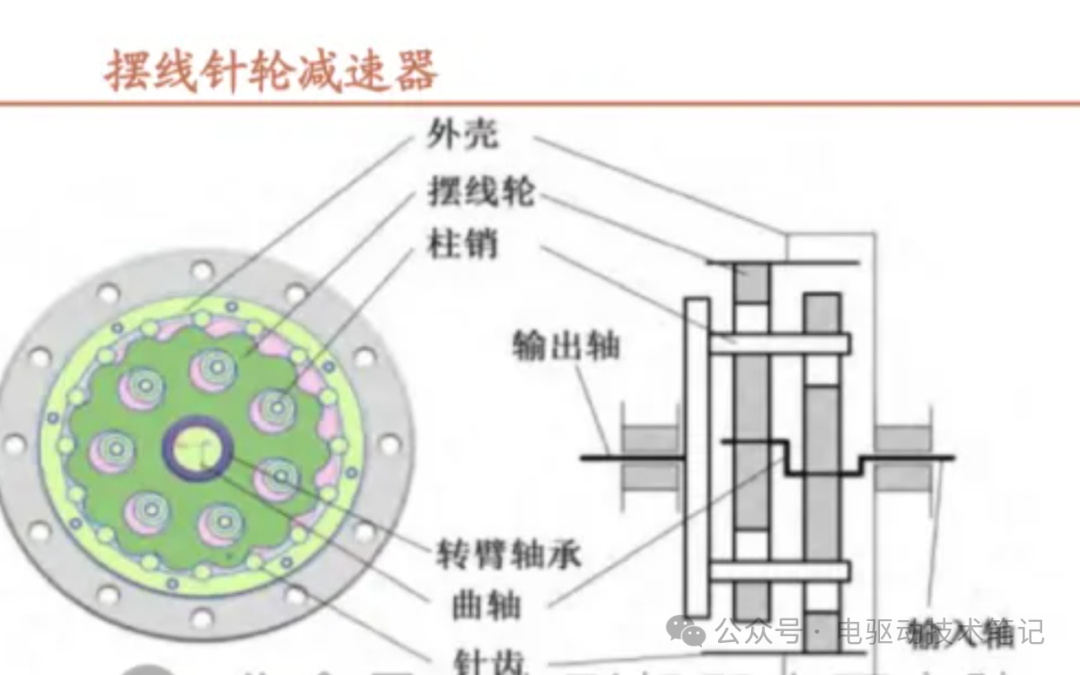
Analysis of Direct Drive Joint Modules
1. Structural FeaturesDirect drive joint modules eliminate traditional reduction mechanisms, adoptinghighly integrated designs, integrating frameless torque motors, drivers, encoders, brakes, and force sensors into one unit.One brand’sRJS series showcases a typical structure where the motor is directly connected to the load, with a diameter controlled within90mm, and a weight of only1.75kg, significantly reducing joint weight.Another brand’sRGM module adopts ahollow design, supporting tool wiring, and the L-shaped shell design facilitates installation, significantly improving the space utilization of collaborative robots.(The image below is sourced from Dongyi Technology official website)
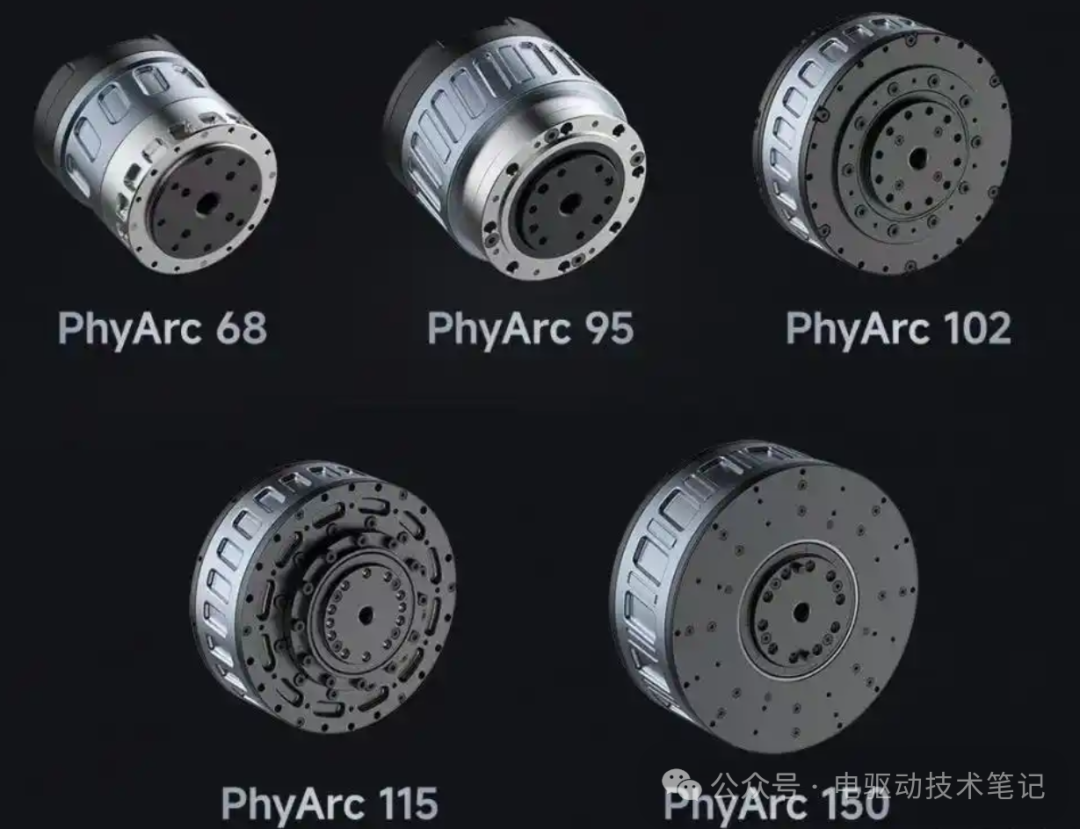
2. Performance ParametersDirect drive joints are characterized byhigh dynamic response and ultra-low noise as their hallmark advantages.One brand’s direct drive motor has cogging torque as low as1.2mNm (peak-to-peak), with a torque constant reaching0.227Nm/A, achieving millisecond-level response.Another brand’sRGM14 module has a peak torque of13.5Nm, with a rated speed of35RPM, demonstrating high precision positioning capabilities in collaborative robots under10kg. However, the direct drive solution still faces physical limitations in torque density, such as the maximum instantaneous torque ofRJS14 being54Nm, which is lower than the hundreds of Nm performance of reduction gear solutions.(The image below is sourced from the internet)
Joint Modules with Gear Reduction
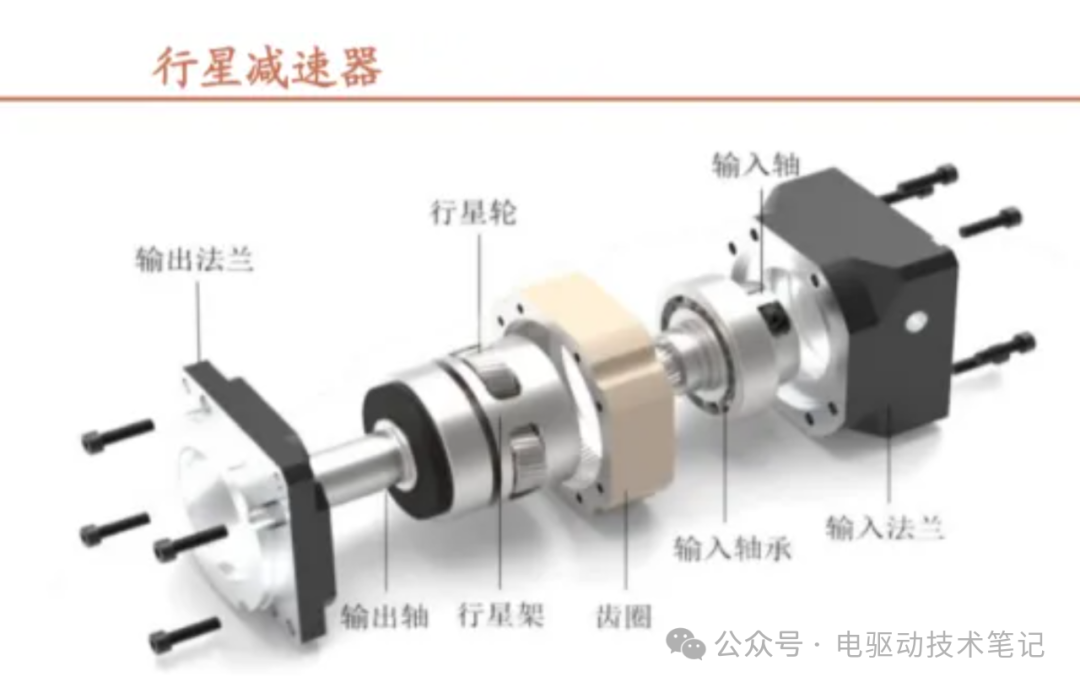
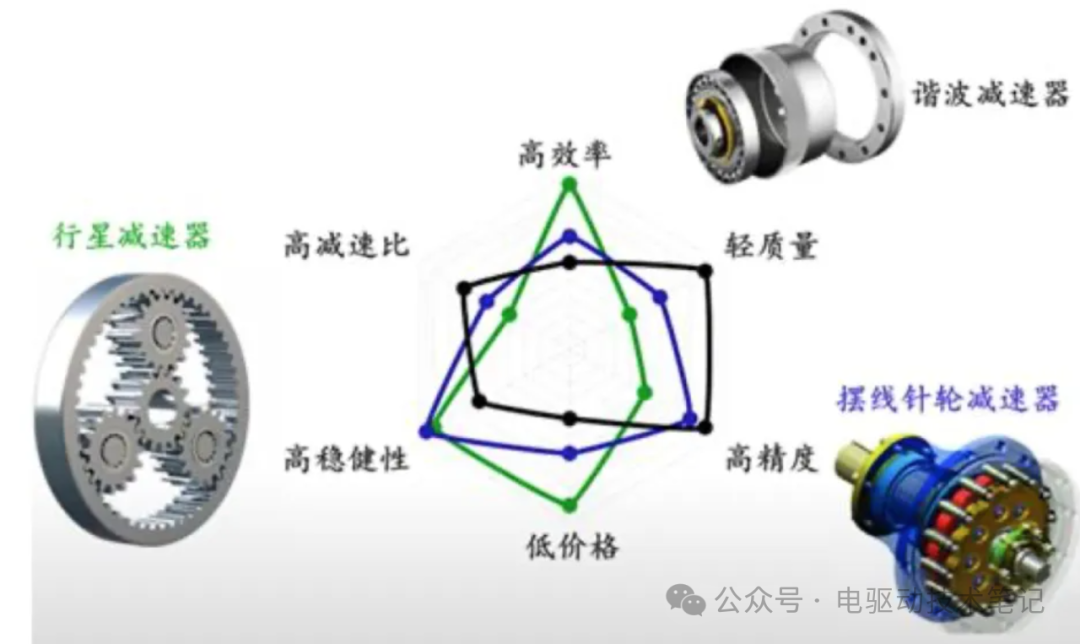
1. Differences in Gear Reduction Types and PerformanceGear reduction joint modules are differentiated into three major technical routes based on the type of reduction mechanism:
Harmonic Reducers: Significant lightweight advantages, high precision (backlash<1 arc minutes), but the flexible wheel is prone to breakage under high impact
Planetary Reducers: Low cost, strong impact resistance (e.g.,0.65 large modulus gears), but larger backlash (>10 arc minutes)
Cycloidal/Quasi-Hyperbolic Reducers: Breakthrough integration of high precision (backlash1 arc minutes) and high torque (PhyArc150 peak torque530N·m), with impact resistance improved5 times(The image below is sourced from the internet)
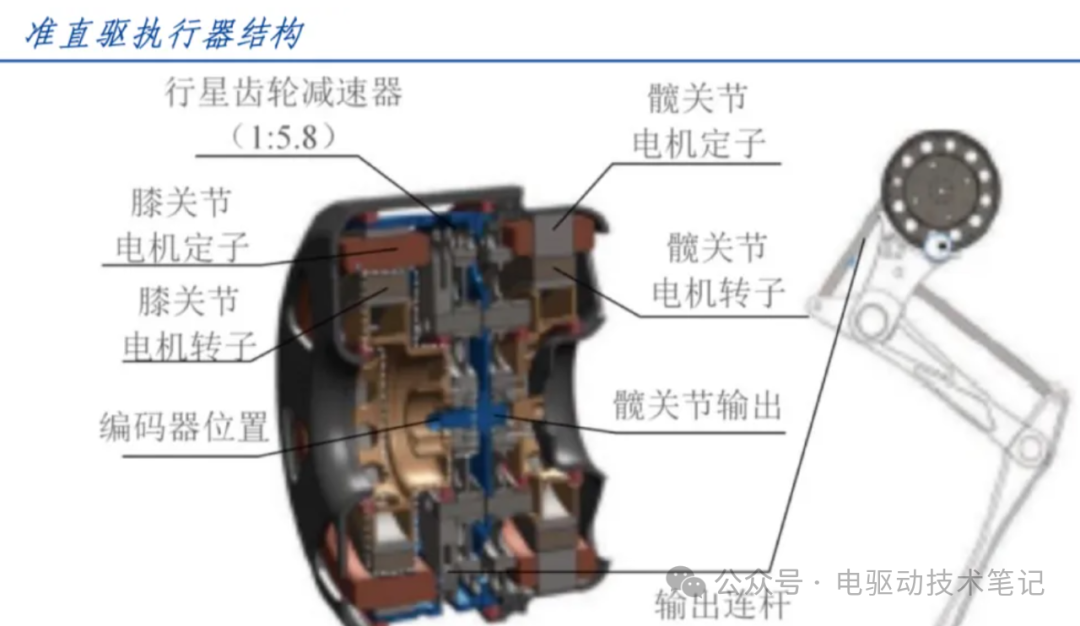
2. Structural InnovationsThe new generation of gear reduction modules breaks through performance bottlenecks throughdeep integration of electromechanics. One brand has integrated self-developed motor drivers and power management systems in quasi-direct drive joints, achieving megabit communication bandwidth and1kHz real-time control; another brand’sP1010A has solved the gear slipping problem in planetary architectures through a“gear-steel sleeve-pin” combination design, extending the lifespan by more than2 times.
Application Scenarios
Application Scenario Differentiation:
Direct Drive Solutions: Medical robots, laboratory precision positioning tables, etc. low-load high-precision scenarios, relying on their zero backlash and silent operation characteristics
Reduction Gear Solutions: Humanoid robot joints, industrial heavy-duty arms, etc. high dynamic and high impact scenarios(The image below is sourced from the internet)
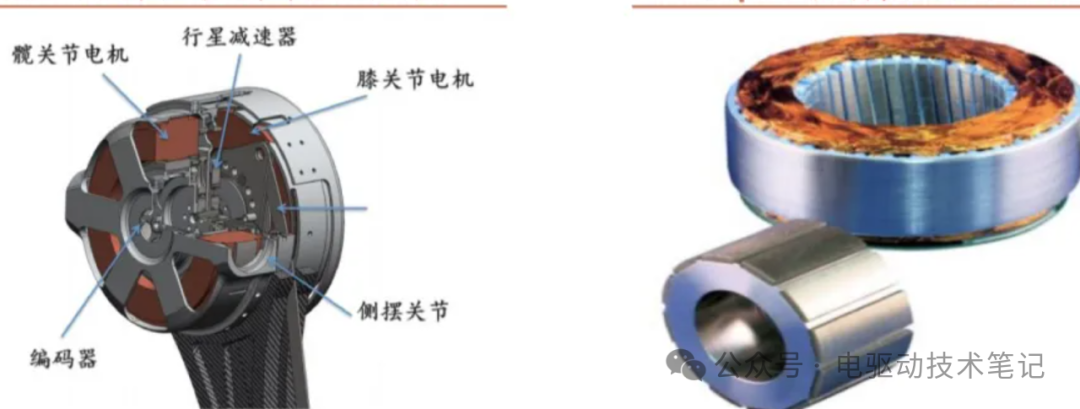
Direct Drive Joint Motors
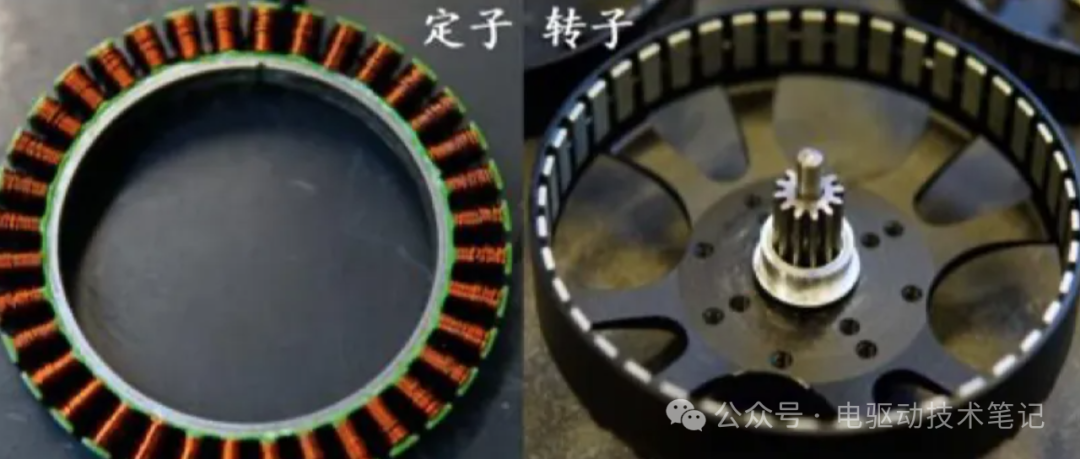
The core of direct drive joint motors lies in theirframeless design, eliminating the mechanical transmission chain.One brand’s direct drive motor series uses rare earth permanent magnet rotors and compact stators, with diameters ranging from54-100mm, and a hollow aperture reaching over50% of the motor’s outer diameter, supporting internal wiring. Electromagnetic design optimizes throughmultiple pole pairs (12 poles are common) andsine wave windings, suppressing cogging torque to below7.2mNm, with back electromotive force harmonic distortion<3%.
Performance Parameter Highlights:
Power Density:One brand’s10031 model has a peak power of750W, weighing only1.71kg, achieving a power density of439W/kg
Efficiency Characteristics: Rated point efficiency>85% (e.g., one brand’s7631 motor,308W 48V), with temperature rise controlled within60K.
Such motors are widely used in collaborative robot small joints (e.g.,6-7 axis wrist) and biomimetic dexterous hands .(The image below is sourced from the internet)
Joint Module Analysis
1.One brand’sP1010A planetary joint module
Peak torque120N·m, torque coefficient2.5N·m/A (exceeding the industry average by19% )
10:1Reduction ratio+wide voltage (18-60V) design, suitable for footed robots in jumping and falling scenarios
2.One brand’sPhyArc102 cycloidal joint
Torque density200N·m/kg, weighing only1kg, designed for lightweight humanoid robots
3.One brand’sRJS14 harmonic integrated module
Ultra-low power consumption (20W), supportsEtherCAT/CANopen, a hot item in education and research fields
4.One brand’squasi-hyperbolic moduleHYP-6C
Hollow aperture57mm, enhancing arm extension capabilities, improving flexibility in welding scenarios by40%(The image below is sourced from the internet)
Technical Trends
The future of joint modules will present adeep integration of electromechanics and simulation data optimization design dual trend, optimizing electromagnetic and mechanical structures through simulation data to create the most suitable joints.
As humanoid robots move towards mass production, cost-effective reduction gear solutions (planetary/harmonic) will dominate industrial scenarios, while direct drive + quasi-direct drive solutions will be irreplaceable in precision medical and laboratory equipment fields.
Benefits/Activities Recommendation
2025




[Disclaimer] The article represents the author’s independent views and does not reflect the position of the Humanoid Robot Alliance. If there are issues regarding the content, copyright, etc., please contact the Humanoid Robot Alliance within 30 days of publication for deletion or copyright negotiation. Email: [email protected]. Phone: 13866369365