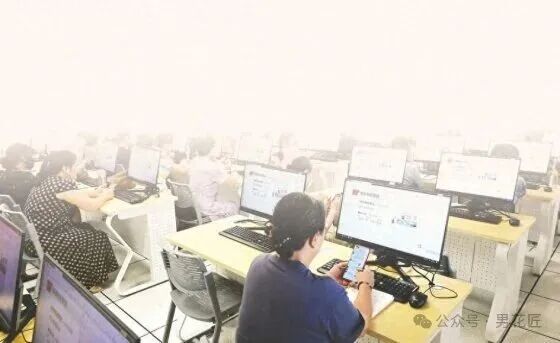
The era of the “senior phone” is over? The digital transformation journey of the elderly in the wave of digitization.
After the recent “Double 11” e-commerce battle, I noticed an interesting phenomenon: feature phone brands like Philips and K-Touch have also made it into the top 10 mobile phone sales.
This reminded me of the once-popular “senior phone” market; what is its fate today?
Will it continue to serve as exclusive equipment for the elderly, or will it be completely submerged by the wave of smart technology?
After reading this in-depth report, I realized that the digital lives of the elderly are quietly undergoing transformation.
As of September 2024, the number of internet users aged 60 and above in China has reached 329 million, with an average daily internet usage of over 4 hours!
This is no longer a “digitally disadvantaged group”; they are practically the “emerging force” in the digital world.
In fact, the senior phone market is experiencing a quiet differentiation.
On one hand, former mobile giants like Nokia, Philips, and Gionee are seeking survival in the feature phone market, focusing on simple, user-friendly, and affordable products; on the other hand, mainstream manufacturers like Huawei, Xiaomi, and OPPO are making smartphones more friendly through in-depth “age-friendly modifications”.
I remember when I returned to my hometown recently, I found that my neighbor, Mr. Li, was still using a button-style senior phone, while my aunt had already switched to the latest Huawei model and was teaching me some new features. These two choices reflect the real needs of elderly individuals from different age groups and with different internet habits.
Today’s “age-friendly” design is no longer just about enlarging fonts.
Take a look at the “senior mode” on high-end smartphones: voice assistants, dialect recognition, emergency calls, anti-mis-touch design, and one-click access to commonly used functions… These designs reflect a deep understanding of the lifestyle of the elderly, rather than simply “downgrading” features.
What’s even more noteworthy is that the digital needs of the elderly are also upgrading.
According to QuestMobile data, as of September 2024, the number of active users in the smart home and wearable app segments among the elderly has reached 47.237 million and 17.836 million, respectively!
This is not a group that “only knows how to make calls and send texts”; they are fully embracing smart living.
Interestingly, many elderly individuals are starting to resist the label of “senior phone”; they dislike being tagged as “digitally weak”.
A salesperson told me, “More and more elderly people are inquiring about high-end digital products, especially after the ‘national subsidy’ and trade-in policies, many seniors are proactively seeking to learn about new features and technologies.”
I believe that behind this transformation is a deep integration of technology and humanity.
For the elderly, smartphones have long ceased to be mere communication tools; they are now a “digital gateway” connecting social interactions, entertainment, health, and life services.
Many of them have found a stage to showcase themselves through short videos, have bridged the distance with family through video calls, and have enriched their retirement lives through various apps.
How will this market evolve in the future? I believe it will be a “dual-track parallel”—as the “post-50s” and “post-60s” become the mainstay of the elderly population, the dominant position of smart terminals will be further solidified; while feature phones will continue to exist, they will shift towards more niche and special scenarios.
Ultimately, the significance of technology lies not in pursuing the cutting edge, but in making life better.
Whether it’s a simple feature phone or a smartphone, what truly matters is that it meets the actual needs of the elderly, bringing them convenience and joy, which is the most valuable aspect.
What do you think is the biggest obstacle to the digital transformation of the elderly?
Is it the technical barrier, the usage habits, or psychological factors?