As pets transition from mere companions to family members, the pet health management market is beginning to embrace technological advancements. Among these, smart collars are seen as essential devices for data collection, expected to provide “early health warnings, scientific nurturing, and safety protection.”
Currently, the global penetration rate of smart pet collars is increasing, but most products only offer basic functions: step counting, positioning, and activity duration analysis. They lack precise behavior recognition, health risk analysis, health trend prediction, and emotional assessment, resulting in data that is “visible but unusable.”
This is precisely the direction that Pet Intelligence Technology is taking—empowering collar manufacturers and ecological service organizations through pet AI model capabilities, transforming smart collars from “data collection tools” into “health safety and behavior insight systems.”
1. The Dilemma of Traditional Collars: Data Without Understanding
Market research shows that by 2024, the global penetration rate of smart collars with behavior monitoring functions will be less than 8%, with over 70% of products still limited to exercise and positioning functions, lacking health inference capabilities. The data is fragmented and unstructured, leading to three structural pain points in the collar industry:
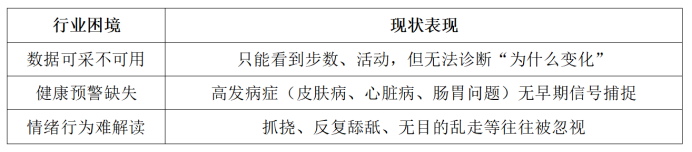
This means that for smart collars to truly realize their value, they must leverage pet-specific AI models to interpret, link, and deduce data.
Pet Intelligence Technology combines pet AI model capabilities to enable smart collars to interpret pet behavior, health, and emotions in real-time, helping to identify potential health issues and provide early warnings.
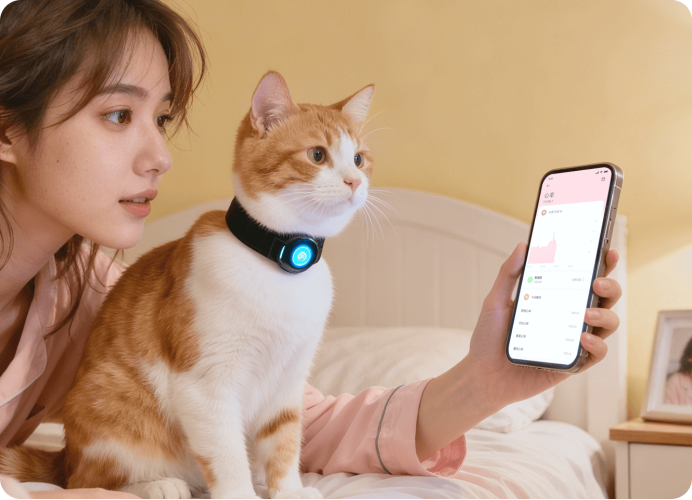
2. How Pet Intelligence AI Empowers Collars: Turning Data into Diagnosis and Warnings
The Pet Intelligence model integrates various sensor data (movement amplitude, gait, sleep patterns, abnormal behavior signals, positioning trajectories, etc.) with a physiological knowledge graph of pet behavior, achieving a transition from “seeing behavior” to “understanding behavior.”
● AI Health Recognition and Warnings: Capturing Early Signs of Illness
With collar empowerment, health monitoring is no longer just “digital statistics” but rather “health status assessment”:
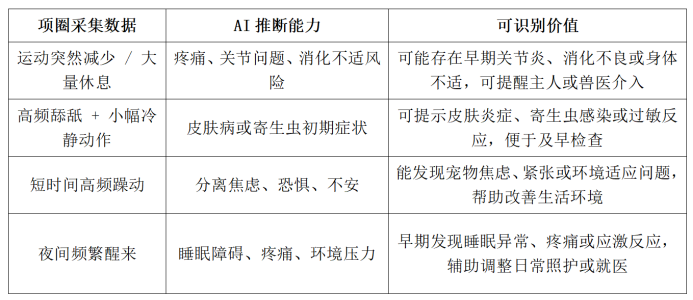
Data shows that over 60% of common pet diseases can be detected early through changes in behavior and activity patterns. — Source: Pet Health Behavior Big Data Research 2024 (with over 360,000 samples collected)
Pet Intelligence AI can convert collar data into warning levels (no risk/monitor/suggest medical attention) + cause speculation + behavioral basis explanation, providing references for pet owners, boarding facilities, or veterinarians.
● Sleep Monitoring: Not Just Duration, But Quality
Most collars can only tell you: “Slept for 8 hours.” Pet Intelligence AI will further inform you: whether the pet truly rested well.
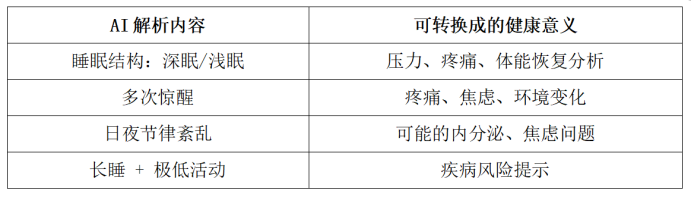
Especially for felines, changes in sleep structure can reflect health issues more than activity levels. This kind of deep insight is the value that traditional hardware cannot provide.
● Behavior and Emotion Recognition: Understanding Pets’ Inner Thoughts for the First Time
Through six-axis motion trajectories + micro-movement differences + AI model comparisons, Pet Intelligence maps action patterns to “emotional states and behavioral motivations.”
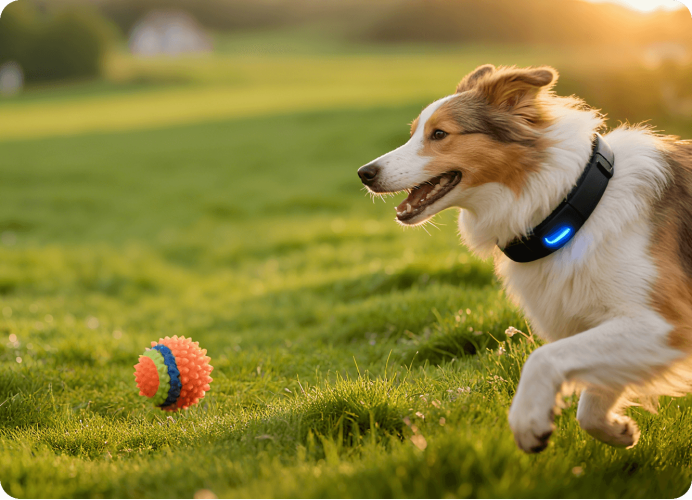
This allows the collar not only to record “what it did” but also to explain “why it did so.”
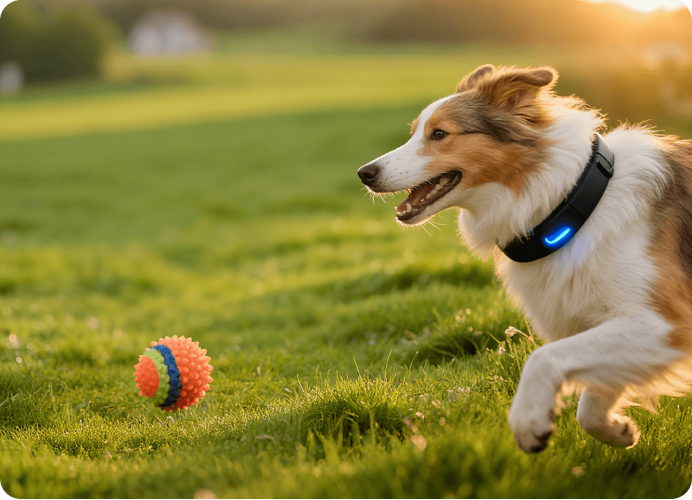
3. Combined with Positioning: AI Makes Lost Pets Easier to Recover
Positioning is not the bottleneck of the industry, but “decision-making after positioning” is what truly requires intelligence.
Pet Intelligence utilizes trajectory learning + behavior mapping + abnormal route reasoning to produce:
● Identification of regular pet routes (predicting living circles)
● Abnormal judgment of lost routes (whether taken away or frightened)
● Optimal recovery path suggestions (based on speed/direction and terrain)
● Night recovery strategies (lighting + navigation behavior suggestions)
This transforms the positioning function from “showing location” to “providing recovery plans.”
4. When Collars Have AI, They Are No Longer Just Accessories, But Digital Health Infrastructure for Pets
Pet Intelligence does not manufacture hardware but enables hardware to truly fulfill its industrial mission: data is no longer just a list but can be interpreted, warned, and provide actionable decisions.
The smart collar industry is transitioning from the “function era” to the “capability era,” where the role of Pet Intelligence’s large model is not as a manufacturer, but as an enabler, an ecological connector, and an interpreter of health value.
In the future, as more collars are empowered by AI, each pet will have its own health big data profile, personalized behavior portrait, and emotional curve.
This means that for the first time, the pet industry will truly possess the ability to “see pet needs and health signals.”
And this will change the entire business ecosystem related to pets.