
The energy industry has gradually become a driving force for social and economic development, serving not only as a support for national industrial development but also as an engine for industrial upgrading. However, the industrial equipment involved in fields such as photovoltaics and wind power is widely distributed in remote areas like deserts, deep seas, and plateaus. These regions often face challenges such as insufficient ground communication network coverage, leading to delayed production data transmission, difficulties in real-time monitoring of equipment status, and poor emergency communication, posing severe challenges to safety construction, production, and efficient operation. The maturity and application of low-orbit satellite IoT technology provide effective solutions to these dilemmas.
As one of the most representative enterprises in China’s commercial aerospace sector, Space-Time Dao Yu has achieved innovative results in low-orbit satellite constellation construction and operation, satellite manufacturing, and application. Through cooperation with telecommunications operators from over 20 countries worldwide, it has applied low-orbit satellite IoT technology across various industries. The global low-orbit satellite IoT constellation it has built—Jili Constellation—now covers multiple fields, including energy management, providing solid technical support for improving management efficiency and digital transformation in the energy industry, marking the increasing maturity of China’s commercial aerospace large-scale commercial application capabilities.
Building a Fully Covered, Efficiently Coordinated Low-Orbit Satellite IoT Network
In September of this year, with the successful launch of the sixth orbital plane of the Jili Constellation, the first phase of the constellation network was completed. Currently, Space-Time Dao Yu has 64 satellites in orbit, with a 100% reliability rate for all satellites and network reliability, achieving communication coverage for any location on the global surface except the North and South Poles. The constellation system has a communication capacity of 340 million times per day, serving approximately 20 million users.

Reportedly, in terms of communication performance, the Jili Constellation can provide stable and reliable transmission, with a single communication capacity of 1900 Bytes, supporting various types of service transmissions such as text messages, voice messages, and images. In terms of anti-interference, the constellation payload and terminals are equipped with advanced self-developed adaptive anti-interference algorithms, providing a strong anti-interference capability of 50dB. The signal interception resistance is strong, ensuring the security of communication information.
Relying on long-term large-scale R&D investment, Space-Time Dao Yu has achieved full-stack self-research capabilities in the space segment, ground segment, and application segment, from constellation system design verification, self-research of payload platforms, satellite mass production, autonomous management of satellite swarm measurement and control, to the development and mass production of application communication chips and various terminal modules. Compared to traditional satellite communication, the cost of satellite IoT communication is only one percent of that, allowing flexible settings for different scenarios regarding priority, real-time performance, and service frequency, covering diverse application needs in the energy industry, emergency communication, intelligent networking, engineering machinery, and marine fisheries.
Satellites Empowering the Digital Transformation of the Energy Industry
The energy industry is a typical scenario for the implementation of satellite IoT. This industry encompasses widely distributed facilities such as oil and gas fields, pipelines, power grids, wind power, and photovoltaic power stations. Traditional ground communication networks have coverage blind spots in offshore platforms and desert areas, making it difficult to meet the needs for monitoring, scheduling, and emergency communication. The deep integration of low-orbit satellite IoT constellations like the Jili Constellation can effectively resolve communication bottlenecks for such energy facilities.
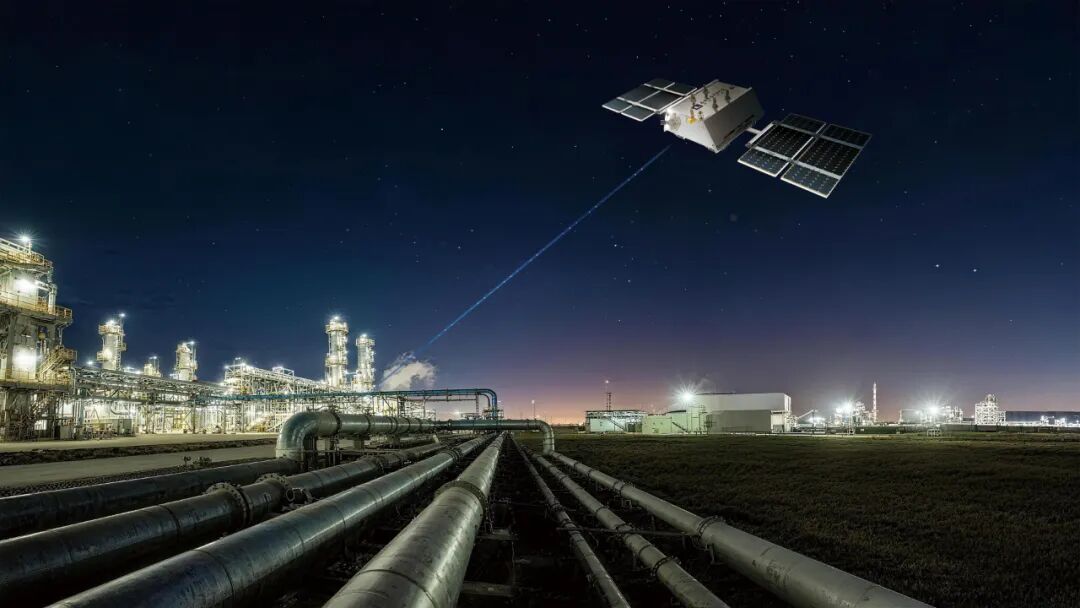
In long-distance oil and gas pipeline monitoring, sensors deployed at key nodes such as valve rooms can transmit pressure, temperature, and leakage data via satellite, enabling unattended monitoring and significantly improving pipeline safety and operational efficiency.
In the power grid system, satellite communication can effectively compensate for the shortcomings of ground network coverage. Relying on terminals deployed at infrastructure locations, it can remotely transmit information such as voltage, current, and equipment temperature, supporting intelligent scheduling and rapid fault location, and playing a critical role in emergency command when disasters disrupt ground communication.
In remote areas with wind power, photovoltaic, and other new energy stations, monitoring systems integrated with satellite communication can transmit power generation data, equipment status, and meteorological information, assisting power stations in achieving centralized and intelligent management, thereby improving power generation efficiency and extending equipment lifespan.
In fields such as coal mining and hydrological monitoring, satellite IoT can also achieve intelligent sensing and digital measurement, providing new technical ideas for energy digitization, especially in solving monitoring issues in areas without network coverage, reducing power consumption and costs.
Through the deep integration of satellite IoT, energy companies can maintain high-frequency monitoring and remote scheduling in environments without ground signal coverage, achieving a new model of energy management and providing solid support for the safe operation and green low-carbon transformation of energy.
Integration of Space and Earth, Multi-Industry Applications Flourishing
The ultimate goal of building and operating commercial satellite constellations always points to ground applications. With high reliability, global coverage, and low-cost service advantages, the Jili Constellation has been applied in multiple fields, demonstrating the immense potential of satellite technology in empowering the digital transformation of traditional industries.
Domestically, Space-Time Dao Yu has collaborated with companies such as China Unicom, Zoomlion, Geely Automobile, and Cao Cao Mobility to conduct verifications in scenarios like “Satellite + Intelligent Networking,” “Satellite + Marine Fisheries,” “Satellite + Engineering Machinery,” and “Satellite + Transportation Logistics,” achieving a success rate close to 100%.
Reportedly, in the international market, Space-Time Dao Yu is focusing on markets in the Middle East, Africa, Southeast Asia, South Asia, Central Asia, and Latin America, having signed cooperation agreements with operators from over 20 countries. In June 2024, the Jili Constellation completed its first overseas commercial deployment test in Oman, achieving a communication success rate of 99.15% and network availability exceeding 99.97%.
As the Jili Constellation completes commercial verification tests across multiple industries both domestically and internationally, satellite technology is transitioning from experimental validation to large-scale implementation, highlighting the core value of commercial satellite constellations in promoting industrial digitization and intelligent transformation. In the future, Space-Time Dao Yu will continue to rely on its global coverage capabilities and high-reliability communication advantages to deepen the integration of “Satellite + Industry” scenario applications, expanding into more fields such as energy, smart travel, transportation logistics, and agriculture, forestry, and animal husbandry, assisting various industries in achieving more efficient, safe, and intelligent operational management, and providing solid infrastructure support for the development of the global digital economy.
Written by丨Cui Han
EndFeel free to share with your friends!Produced by | China Energy News (cnenergy)Edited by丨Yan Zhiqiang