
Is there a way to perfectly avoid being checked for drunk driving by the police?
Of course there is!
Did you think I was going to teach you escape techniques?
NO, NO!
Actually, I want to talk to you about
“Alcohol Testing Devices”
Every driver has heard the slogan “Don’t drink and drive, and don’t drive after drinking,” yet there are still people recklessly, ignoring the warnings.

When the human body ingests alcohol, it impairs visual ability and dulls judgment, making it easy to cause high-frequency traffic accidents.
To improve the efficiency and proactivity of traffic management, police often use portable handheld alcohol testers for on-site qualitative testing.
Drivers only need to exhale for 3 seconds to easily complete the alcohol concentration test.
Working Principle of Alcohol Monitors
The construction of an alcohol tester is quite simple. By adding control components, power devices, and display devices around the ethanol sensor, and finally enclosing it in a shell, an alcohol tester is completed.
How does it detect ethanol gas?
The working principle of the ethanol sensor is to identify ethanol odor molecules and then measure their concentration.
Based on the working principle, it can be divided into semiconductor, electrochemical, catalytic combustion, and infrared types.
So why can exhalation detect whether someone is driving under the influence?
When a person drinks alcohol, it is absorbed into the bloodstream through the mouth, throat, stomach, and intestines, and then expelled through breathing. The ratio of alcohol concentration in the blood to that in exhaled air is approximately 2100:1.
This means that the amount of alcohol in 1 milliliter of blood is equivalent to 2100 milliliters of alcohol in exhaled air.
The higher the blood alcohol content, the higher the alcohol content in the exhaled air; as the gas concentration increases, the signal detected by the device also increases.
When the alcohol concentration in the driver’s exhaled air reaches the set value of the ethanol sensor, the system will issue a warning prompt.
Aigang Technology Alcohol Tester
The Aigang Technology alcohol tester uses a high-performance semiconductor ethanol sensor (NHC-3).
This is a new type of metal oxide ethanol sensor with a three-dimensional nano-honeycomb structure, typically using tin dioxide (SnO₂) as the semiconductor material.
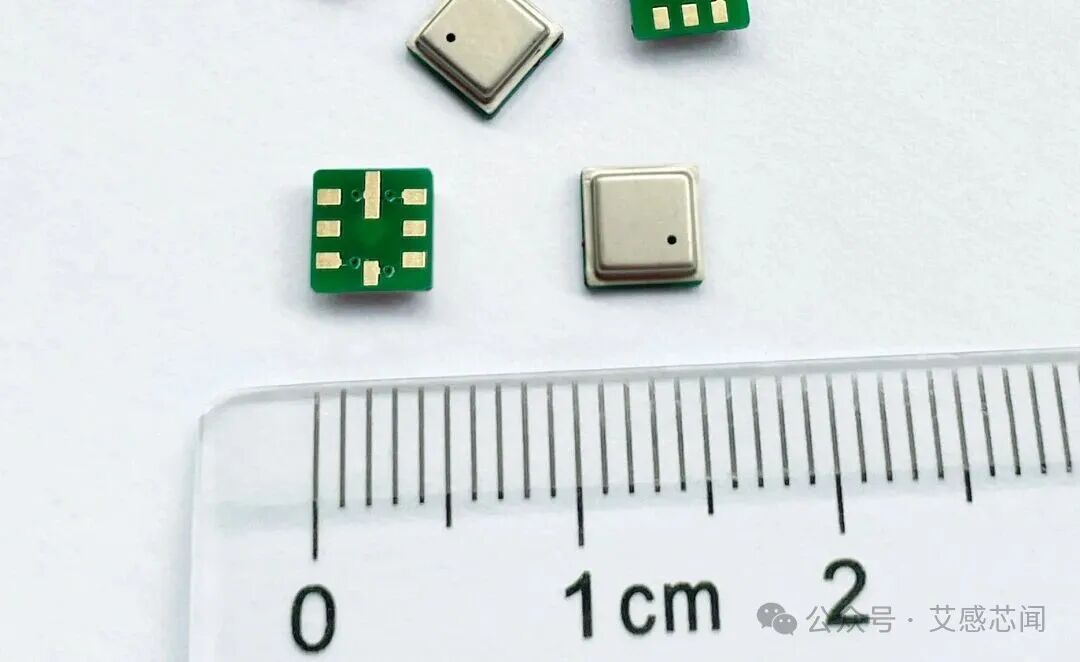
Aigang Technology Ethanol Sensor
Based on advanced NBHive® and NHC-nose® production processes, specific metal oxides and precious metal particles are deposited on the high specific surface area template of the three-dimensional nano-honeycomb.
When ethanol molecules adsorb onto the surface of the SnO₂ material, a chemical reaction occurs, changing the gas concentration and altering the resistance value of the semiconductor. The detection circuit then converts the resistance change into an electrical signal output, thus measuring the alcohol concentration.
It is very suitable for applications in traffic safety, smart home appliances, food monitoring, and smart industry.
Features of Aigang Technology Ethanol Sensor
1
High sensitivity, high stability, high resolution
2
Strong anti-interference capability, low cost
3
Miniaturized, low power consumption, long service life
4
Provides UART communication interface output
The Aigang Technology ethanol sensor has a wide detection range (0.1 ppm ~ 100 ppm) and a fast response speed (less than 10 seconds from detecting odor molecules to outputting results).
It also has advantages such as high sensitivity, miniaturization for easy integration, low power consumption, low cost, and lightweight.
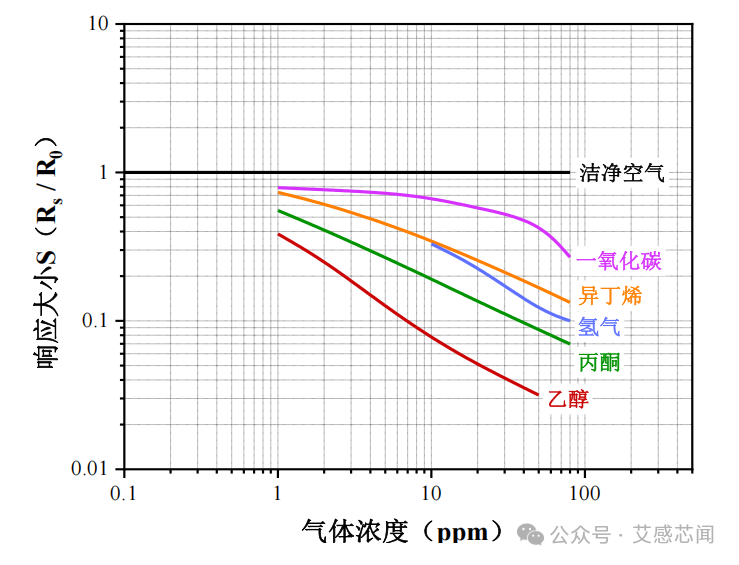
Sensitivity curve of the ethanol sensor to different gases (Image source: Aigang Technology)
The Y-axis represents the response size S of the sensor to different gases. Note: The sensitivity curve is tested under standard testing conditions, where the temperature is 25 ± 5 °C and humidity is 60 ± 5% RH.
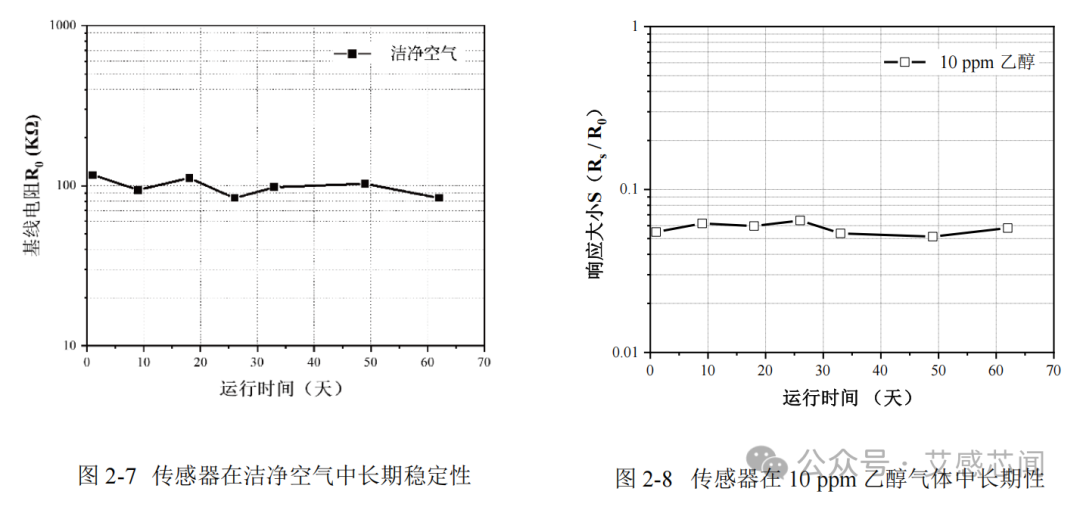
Stability testing of Aigang Technology ethanol sensor
To ensure the ethanol sensor is accurate and reliable for long-term use, Aigang Technology conducted stability tracking tests for over two months in clean air and 10 ppm ethanol gas, ensuring the device’s lifespan can exceed 5 years, helping users reduce costs and increase efficiency.
END
Previous Selections

Aigang Science Popularization | Highly Toxic, Self-igniting, Explosive! Special Gas Knowledge in Semiconductor Processing
Understanding the 2025 World Robot Conference in One Article
Touching! Despite 92% burns, he rushed back into the fire to save his wife; this “life-saving talisman” cannot be missing at home!
Introductory Science | Why Do Chips Need Packaging?
Aigang Technology


National High-tech Enterprise, deeply engaged in biomimetic olfactory chip technology for 23 years, creator of the “world’s smallest electronic nose.” Unique third-generation semiconductor technology with nano-honeycomb (NHC) provides gas detection solutions in complex environments for various industries.



Subscription Account
Video Account
Product Manual
Share, View, Like, I want them all


Click“Read the Original” to learn more
#Chip #OlfactoryChip #EthanolSensor #AlcoholDetection