Hello, I am Tan Ke.
The Assistant Secretary for Export Control at the U.S. Department of Commerce, Thea Kendler, made the following statement at a closed-door briefing in Silicon Valley.
“The so-called breakthroughs of China in semiconductor technology, such as 7 nm and even 5 nm, are merely ‘samples for leaders in the laboratory’, and they are still far from mass production and commercialization. As long as the blockade continues, they will not be able to produce usable advanced chips.”
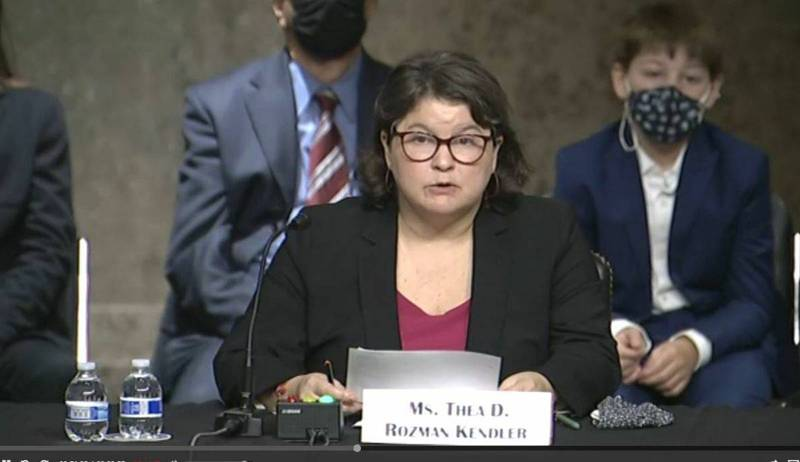
The U.S. blockade is indeed real. In recent years, the U.S. has intentionally restricted China in the field of cutting-edge technology, such as lithography machines and chips, due to China’s rapid development.
For a long time, we have indeed been ‘choked’ by them.
However, to say that as long as the U.S. blocks, China will never be able to produce its own chips is somewhat arrogant.
The Real Level of the Blockade
The latest weekly report from the Semiconductor Industry Association (SIA) provides a set of numbers that are embarrassing for Washington.
In 2024, the global shipment of AI servers is expected to reach 5.2 million units, with 62% equipped with NVIDIA’s H series GPUs, while Huawei’s Ascend 910B has entered the top three for the first time with an 8% market share.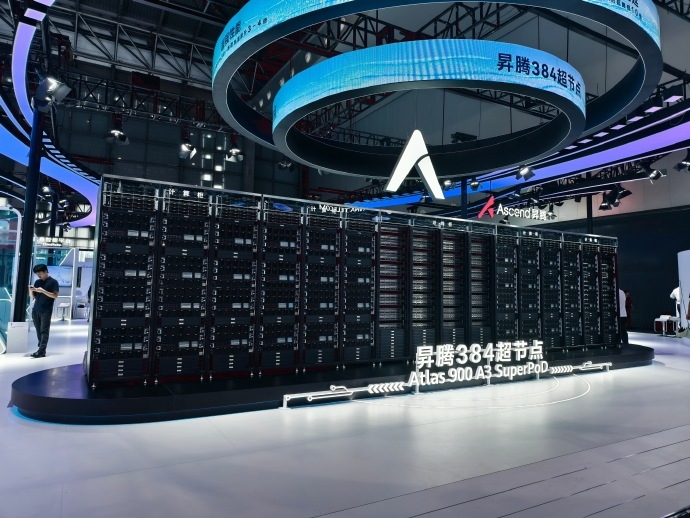
By 2025, the total production capacity of 12-inch wafer fabs in mainland China will reach 2.4 million pieces per month, a year-on-year increase of 33%, with 78% of the capacity in mature nodes of 28 nm and above, but nodes of 7 nm and below still account for less than 3%.
In other words, while the U.S. has indeed choked off the most advanced processes, it has allowed China to form a ‘capacity tsunami’ in mature nodes.
Leapfrogging Beyond the Blockade
The Lithography Machine Dilemma
ASML CEO Peter Wennink revealed in London that the U.S. has downgraded the DUV models banned for sale to China from NXT:2050i to NXT:1980Di, stating that ‘theoretically, even 45 nm should not be given’.
This is very clear; it is an absolute blockade.
However, Chinese companies have used the 1980Di with multiple exposure techniques to increase the yield of 7 nm chips from 35% to 55%, ‘equivalent to driving a Santana with the acceleration of a Tesla’.
Rare Earth Counterattack
In December last year, the Chinese Ministry of Commerce announced an embargo on gallium, germanium, antimony, and superhard materials to the U.S.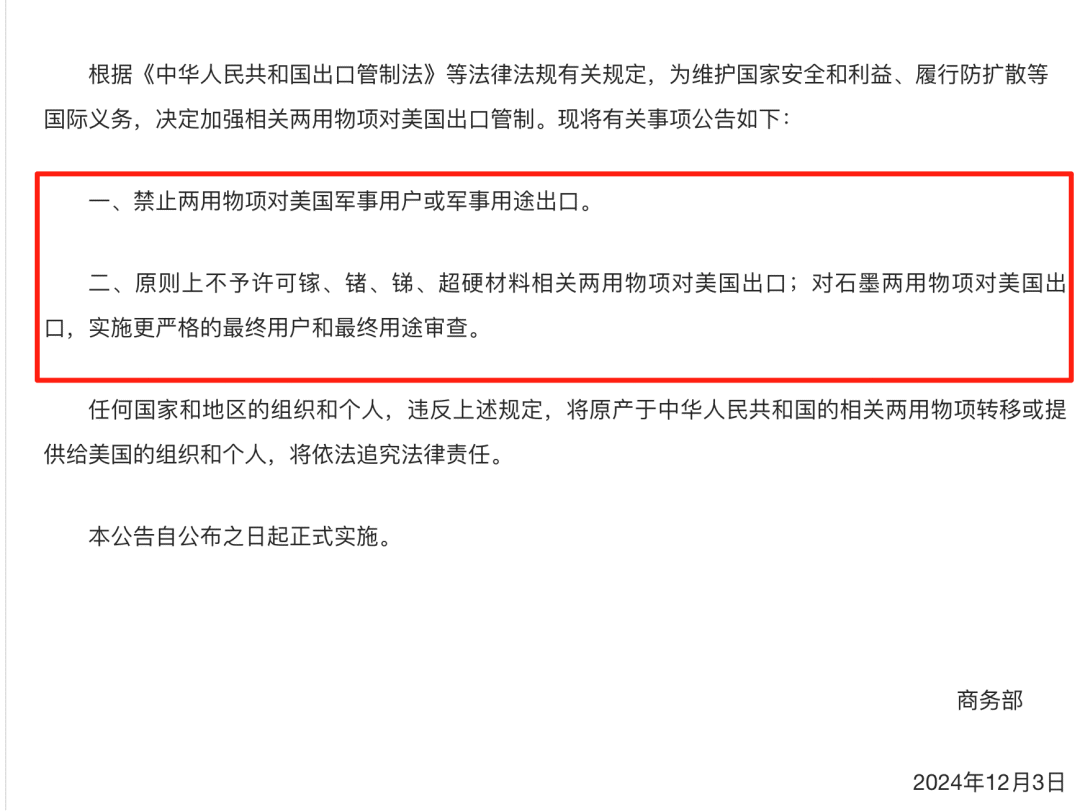
The U.S. Department of Defense’s 2023 report shows that 90% of the U.S. military’s gallium demand relies on China; the delivery times for gallium nitride radars from Raytheon and Lockheed Martin have been extended by 18 months.
Ford has had to halt production of the F-150 Lightning three times due to shortages of silicon carbide inverters.
Whose Future Will Be Rewritten?
First, let’s look at the U.S. mainland.
Taiwan Semiconductor Manufacturing Company (TSMC) is set to mass produce 4 nm chips in Arizona by 2025, but the cost per wafer is 30% higher than in Taiwan, and U.S. customers are queuing ‘just for the label of origin’.
Intel’s Ohio factory is about to start production, but CEO Pat Gelsinger admits: without orders from Chinese customers, the capacity utilization rate may be less than 60%.
Now, let’s look at the Yangtze River Delta region in China.
The 12-inch power device factory in Lingang, Shanghai, has already achieved over 40% penetration of domestic equipment, with 5 nm etching machines from Zhongwei and 14 nm thin film deposition equipment from North Huachuang entering the production line.
Huawei’s Ascend 910B has already supported the training of 8 large models worth hundreds of billions, with training costs 42% lower than NVIDIA’s solutions. The European Meteorological Agency is using it for a 10-day climate simulation, codenamed ‘Wind Whisperer’.
Blockade or Forced Progress?
The U.S. wants to lock down Chinese technology with a ‘small courtyard and high walls’, but it has locked itself into a larger courtyard.
When mature chips are globally in surplus, the U.S. automotive and home appliance industries will have to purchase Chinese 28 nm chips at a premium;
When China combines rare earths, graphite, gallium, and germanium into a ‘combination punch’, the U.S. military and new energy sectors will realize that the ‘last mile’ of the supply chain is in someone else’s hands.
As NVIDIA CEO Jensen Huang wrote in an internal memo: ‘We intended to close a door, but ended up helping our opponent tear down an entire wall.’ 
The tech war between China and the U.S. is far from over, but the balance has begun to subtly tilt.
The cards in the U.S. hand increasingly resemble ‘bans’;
the cards in China’s hand increasingly resemble ‘market + capacity + resources’.
Next, let’s see who blinks first?
If you find this article helpful, please give me a like and a heart. If you want to receive updates immediately, you can also give me a star ⭐