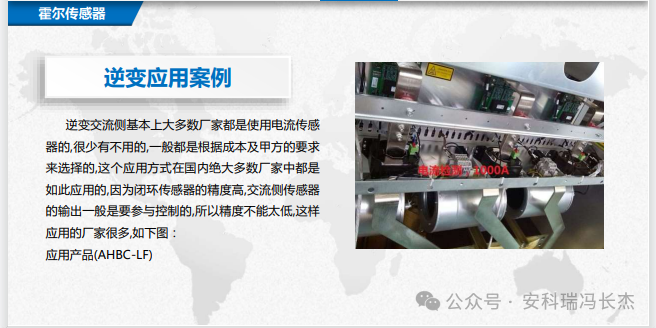
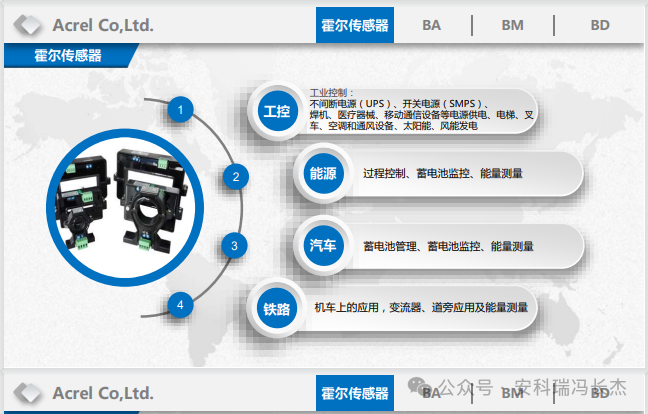
Background of Hall Sensor ApplicationsIn recent years, due to the development of power electronic devices and the application of new technologies such as variable frequency speed regulation, inversion, and chopping, the waveforms of voltage and current are no longer standard sine waves or direct current. Traditional current transformers are clearly unsuitable for measuring these waveforms. Therefore, many countries have successively conducted research and development on non-contact current and voltage sensors, among which Hall current and voltage sensors are regarded as representatives of this technology.Product Features of Hall SensorsHall sensors are suitable for isolation and conversion of complex signals such as AC, DC, and pulse. By utilizing the principle of the Hall effect, the converted signals can be directly collected and received by various acquisition devices such as AD, DSP, PLC, and secondary instruments. They are compact, have a long lifespan, are easy to install, have a fast response time, a wide current measurement range with high accuracy, strong overload capacity, good linearity, and strong anti-interference capabilities.Classification of Hall Sensors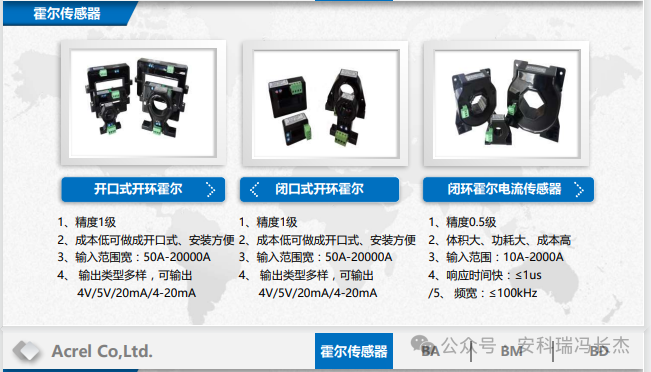 Application Scenarios of Hall Sensors
 Application Cases