The unique advantages of near-infrared light-controlled radical polymerization mainly stem from the deep tissue penetration capability, low scattering effect, and excellent biocompatibility of near-infrared light. However, its practical application has been limited by low polymerization efficiency and the difficulty in obtaining high molecular weight polymers. Although there has been progress in enzyme cascade catalysis and photoenzyme catalysis, issues such as efficiency loss due to spatial separation or reliance on short-wavelength light sources still hinder further development. To address these issues, Professor An Zesheng’s team has constructed a novel Supramolecular Near-Infrared Photoenzyme (SNIRPE) catalytic system and applied it to the controlled radical polymerization catalyzed by near-infrared light. With only 50 ppb of the near-infrared light catalyst, polymers with molecular weights exceeding 1,000,000 g/mol can be synthesized.
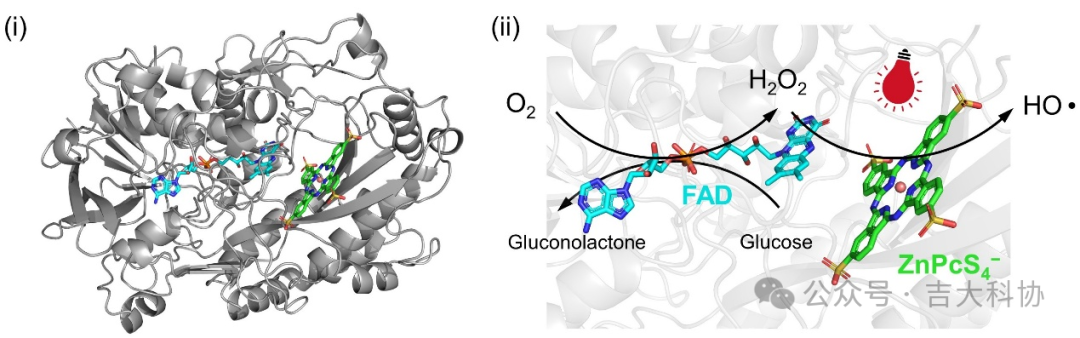
Figure 1. SNIRPE (i ) and its catalytic mechanism (ii )
What is SNIRPE?
SNIRPE (Supramolecular NIR Photoenzyme ) is a supramolecular photoenzyme system formed by the self-assembly of glucose oxidase (GOx ) and zinc phthalocyanine tetrasulfonate (ZnPcS4− ) through non-covalent interactions. The amino acid residues of GOx (such as Arg93, Arg333, Tyr66 etc.) interact with the sulfonic groups and central metal Zn of the near-infrared light catalyst ZnPcS4− , resulting in multiple non-covalent interactions that allow ZnPcS4− to spontaneously self-assemble into the cavity of GOx. GOx’s confinement effect on ZnPcS4− forms an internal cascade. Here, the O2 produced by GOx during deoxygenation can be immediately sensitized by ZnPcS4− into hydroxyl radicals, which can then initiate reversible addition-fragmentation chain transfer (RAFT ) polymerization.
Characteristics of SNIRPE catalyzed RAFT polymerization:
High throughput and scalability compatibility: The reaction system can be scaled up from milliliters to hundreds of milliliters, suitable for various polymerization methods (solution, emulsion, dispersion polymerization).
Ultrahigh molecular weight polymers: Polymers with molecular weights exceeding 1,000,000 g/mol can be synthesized, with precise structures and low dispersity.
Extremely low catalyst dosage: Only 50 ppb of ZnPcS4− is needed to drive the polymerization, with catalyst usage far below (3-4 orders of magnitude) existing near-infrared light-controlled radical polymerization systems.
Excellent biocompatibility and penetration: Near-infrared light can penetrate 5 mm thick pig skin tissue, achieving “remote polymerization” with potential biomedical applications.
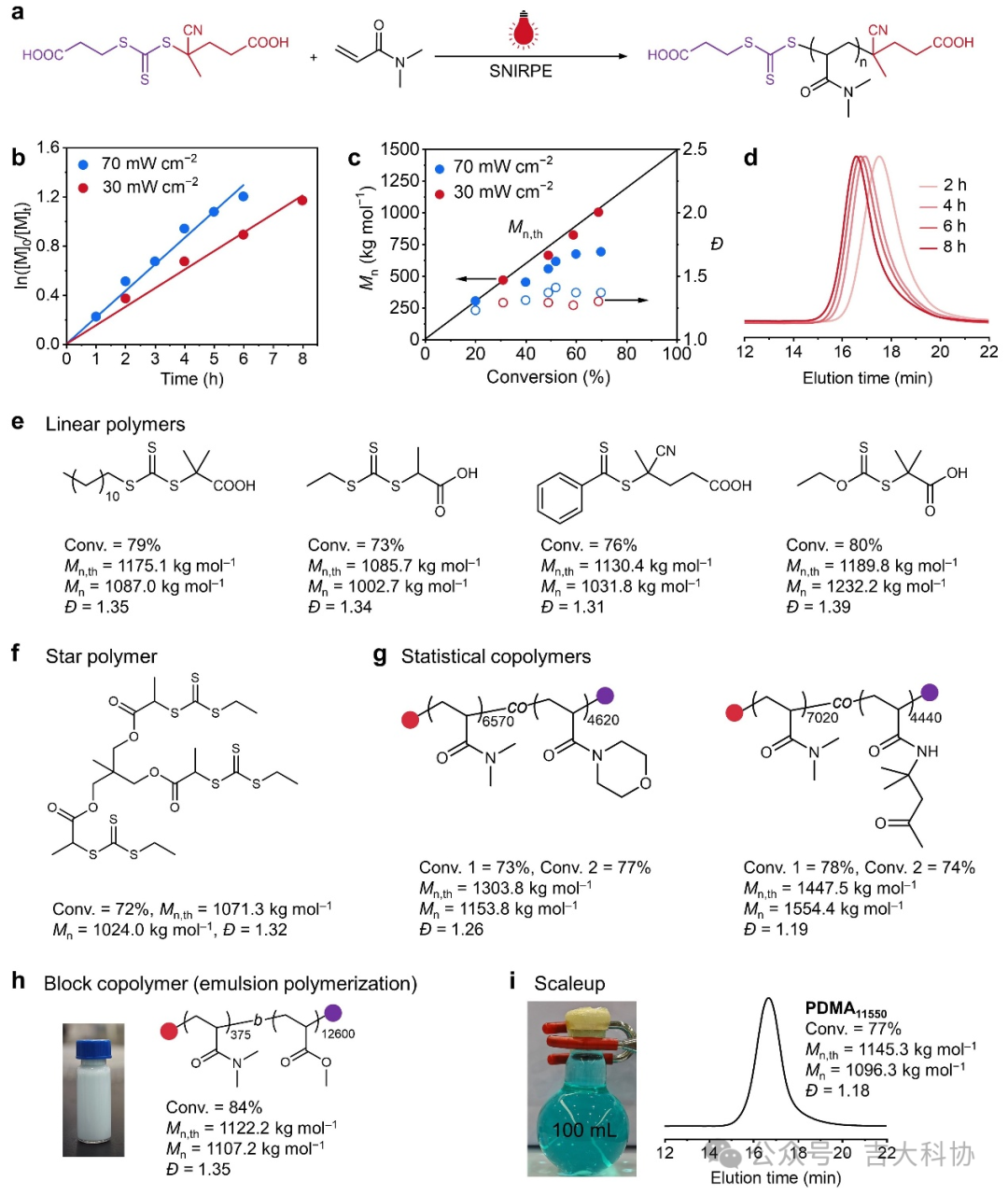
Figure 2. SNIRPE catalyzed RAFT polymerization can produce ultrahigh molecular weight polymers at high throughput.
In summary, the SNIRPE system cleverly combines enzyme catalysis with photochemistry to achieve precise synthesis of ultrahigh molecular weight polymers with extremely low catalyst usage, addressing the long-standing issues of low efficiency and molecular weight limitations in near-infrared light-controlled polymerization. In the future, this non-covalent designed supramolecular photoenzyme platform is expected to be extended to more enzyme-light sensitizer combinations, promoting the deep integration of cooperative catalysis in synthetic chemistry and biomedicine. The related paper titled “Near-Infrared Photoenzymatic Catalysis at ppb Levels Enables Ultrahigh-Molecular-Weight Polymers” was published in the Journal of the American Chemical Society. Dr. Li Ruoyu is the first author, and Professor An Zesheng is the corresponding author. The related content has applied for a Chinese invention patent (application number: 202311286340.0).
Paper link:
https://pubs.acs.org/doi/10.1021/jacs.5c11130