Recently, the National Development and Reform Commission and the National Energy Administration jointly issued implementation opinions on promoting the high-quality development of “Artificial Intelligence +” in the energy sector, specifically mentioning: Evaluation of power equipment status and intelligent operation and maintenance. Applications such as intelligent perception and early warning of equipment status, intelligent fault location and diagnosis, intelligent decision-making for equipment maintenance, intelligent prediction of disaster risks, and intelligent generation of maintenance work tickets will enhance the level of lean management of equipment.
In the solar photovoltaic industry, AI is quietly making progress.
In recent years, solar energy has developed rapidly. By 2024, the global installed capacity of photovoltaics is expected to reach a record 597 GW, a 33% increase from 449 GW in 2023. This growth will push the total global solar capacity beyond 2.2 TW, up from about 1.6 TW at the end of 2022. SolarPower Europe predicts that by 2025, solar capacity will grow another 10% to reach 655 GW. Currently, solar energy accounts for about 6.9% of global electricity supply, up from around 5.6% in 2023. Despite the rapid growth and enormous potential of solar energy, many companies, organizations, and industries remain reluctant to fully adopt it due to its intermittent output and efficiency limitations.
The performance of solar panels is influenced by various factors, including changing weather conditions, varying sunlight intensity, and the system’s ability to manage power delivery. If the generated electricity is not properly regulated, it can lead to energy waste, inefficiency, or unreliable power supply—concerns that users and businesses relying on stable energy cannot afford. In this context, fine-tuning the duty cycle (the ratio of the time the panels are on to the time they are off) is crucial for maximizing the energy utilization of solar panel systems.
On the other hand, machine learning (ML) and edge artificial intelligence (Edge AI) are revolutionizing efficiency across various industries by enabling smarter, data-driven decision-making. For example, in the renewable energy sector, machine learning optimizes solar panel performance by analyzing environmental conditions, predicting energy output, and enabling predictive maintenance to minimize downtime. Beyond solar energy, machine learning can enhance manufacturing efficiency through predictive maintenance and process automation, reduce energy waste in smart grids through real-time load forecasting, and improve agricultural productivity through precision agriculture technologies. In these diverse use cases, machine learning drives continuous improvement by transforming complex data into actionable insights, ultimately saving time, reducing costs, and enhancing sustainability.
In response to this trend, various controller manufacturers are integrating AI technology into MCUs/MPUs to meet the new demands of the photovoltaic inverter industry.
Infineon
The HTEC team utilized Infineon’s PSoC Edge processor to explore how to use deep neural networks (DNN) to predict the optimal duty cycle for DC-DC converters, focusing on identifying the most relevant input features to enhance performance and reliability.
Many such methods rely on measurement data such as solar irradiance and ambient temperature, as these parameters are closely related to the power output of solar panels. However, the integration of irradiance sensors also brings some drawbacks, including additional costs and the risk of inaccurate measurements due to factors such as dust accumulation or differences in sensor placement. To address this issue, some researchers have proposed indirectly estimating infrared irradiance values, but this increases modeling complexity and may introduce sources of error that could propagate through the MPPT algorithm.
Additionally, sensorless or low-sensor methods have been proposed, using only voltage and current measurement data directly provided by the solar panels. These internal signals are easily accessible, inherently synchronized with the operating conditions of the solar panels, and avoid many of the complexities associated with irradiance sensing.
Software implementing AI-based maximum power point tracking (MPPT) algorithms has been deployed on a custom hardware platform developed by HTEC. This platform securely connects the solar panel output to the DC-DC converter and includes all necessary sensing components for monitoring voltage, current, and ambient temperature. These signals serve as inputs to the DNN, which calculates the appropriate duty cycle in real-time. The platform also features Bluetooth communication capabilities, supporting human-machine interface (HMI) functions to provide users with real-time feedback on energy production and system status. Thus, while managing the duty cycle of the DC-DC converter, the system also provides information useful for predictive maintenance.
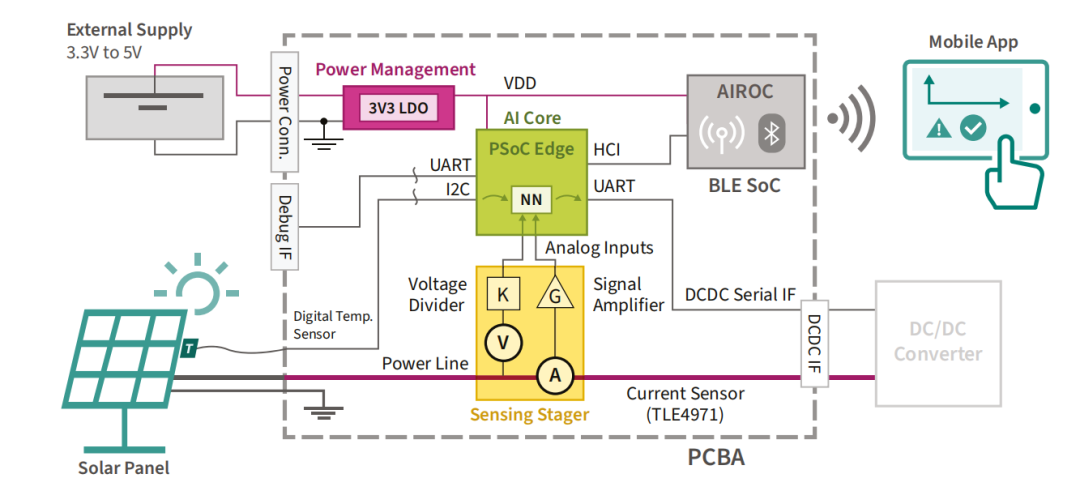
-
Power management module: Allocates power for the PSoC Edge and Bluetooth modules.
-
Bluetooth communication module: Handles wireless data transmission for HMI functions.
-
Sensing module: Measures the real-time voltage and current generated by the solar panels.
-
Processor module: PSoC Edge system-on-module (SOM): Executes all computational tasks, including AI inference and control logic.
The PSoC Edge E84 series Arm Cortex-M microcontroller is a high-performance, low-power, secure MCU equipped with ML acceleration capabilities, based on the high-performance Cortex-M55 core, supporting Helium DSP, and paired with the Arm Ethos-U55 NPU and low-power Cortex-M33 core, used in conjunction with Infineon’s ultra-low-power NNLite hardware acceleration platform.
The PSoC Edge can continuously analyze sensor data from monitoring sunlight intensity, panel temperature, and power output. This enables it to dynamically adjust the orientation of solar panels, track MPPT, and optimize inverter operation without the latency associated with cloud processing. Additionally, AI can detect energy consumption patterns and predict demand or shading events, further optimizing energy storage and distribution strategies.
To develop and validate the proposed AI-based maximum power point tracking (MPPT) solution, high-quality datasets are essential. The article uses a publicly available dataset from Humboldt State University, selecting high-frequency sampled data at one-minute intervals over three years, simulating the voltage and current output of photovoltaic panels based on parameters such as solar irradiance and temperature, generating corresponding duty cycles for the maximum power point as training labels. Auxiliary features such as voltage and current variations are also extracted, and after normalization and removal of nighttime data, reliable data support is provided for training.
In AI model construction, to address the slow convergence and power oscillation issues of traditional perturb and observe (P&O) methods, a multilayer perceptron (MLP) architecture is adopted, optimizing model performance through two phases: stepwise training and real-time training. Stepwise training allows the model to predict optimal electrical parameters based on instantaneous measurements, while real-time training introduces a feedback mechanism, using previous predictions as subsequent inputs, iteratively correcting to simulate real scenarios, ultimately achieving a low-latency, high-robustness MPPT solution suitable for embedded platform deployment, enhancing energy utilization efficiency of photovoltaic systems in dynamic environments.
To deploy the AI model on the PSoC Edge platform, the model must be converted from 32-bit floating-point format to 8-bit format. Given that the neural network architecture designed for the MPPT task is relatively compact, model quantization is primarily used as the optimization technique, without applying more advanced compression strategies such as model distillation, as their benefits on an already small model size are not significant. Model quantization reduces the memory footprint and computational requirements of the model by converting model parameters from 32-bit or 64-bit floating-point representations to lower precision formats such as 8-bit integers, making it more suitable for deployment on edge devices. Additionally, quantization-aware training (QAT) simulates the quantization environment during the training phase, mitigating the negative impact of precision loss on model accuracy and potentially enhancing generalization capabilities.
After model optimization, the AI algorithm is deployed on the Infineon PSoC Edge platform using the ModusToolbox development framework, which supports the deployment of 8-bit quantized models. Users only need to export the model in TensorFlow Lite (TFLite) format for seamless integration into the platform’s AI accelerator, or directly deploy floating-point Keras models, with the framework handling quantization optimization internally. The converted AI model is transformed into a C-compatible format, with weights and parameters stored as uint8 values to match the 8-bit architecture of the AI accelerator, achieving faster inference and lower memory usage. Performance evaluations show that while the power prediction error of the quantized model increased from 0.0109% to 0.6145%, the inference latency decreased from 3 ms to 0.3 ms, and the energy consumption per inference dropped from 68.904 µJ to 2.592 µJ, with performance on the PSoC Edge platform showing over 23 times lower latency and over 42 times lower energy consumption compared to solutions based on Arm Cortex-M4, fully demonstrating the advantages of this platform in deploying real-time efficient AI solutions for edge MPPT applications.
In addition to optimizing MPPT, real-time AI insights also bring additional benefits—predictive maintenance. The HTEC team developed a dedicated user interface that provides continuous insights into system performance based on AI model predictions. These predictions can be cross-referenced with actual power generation to identify significant discrepancies that may be caused by component performance degradation, allowing stakeholders to proactively schedule maintenance.
HTEC notes that future work could explore further optimization techniques, such as integrating more sensor data or utilizing advanced model compression methods to further enhance system accuracy and performance. Nevertheless, the current approach highlights the potential of AI-driven MPPT in embedded solar solutions, providing guidance for more efficient, sustainable energy management and smarter edge device maintenance practices.
STMicroelectronics
STMicroelectronics has launched an edge AI arc fault circuit interrupter (AFCI) solution based on STM32.
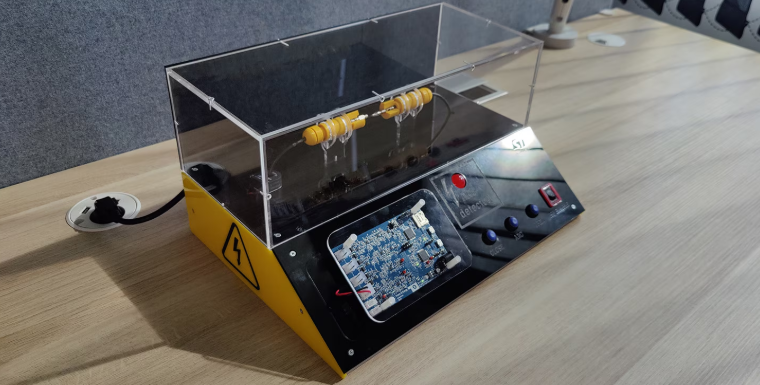
In the field of electrical safety, fires caused by arc faults account for as much as one-quarter, and the emergence of new application scenarios such as solar panels, power batteries, electric tools, and electric bicycles has raised higher innovation requirements for arc protection technology. Current rule-based algorithms can enhance the safety of electrical devices, but their environmental adaptability is limited and they have a high false positive rate, while cloud-based AI solutions, although accurate, face latency and privacy risks.
In this context, edge AI solutions become an ideal balance—requiring no network connection or external processing, they can perform data processing locally in real-time, achieving immediate detection and response to arcs while eliminating privacy security concerns, and significantly reducing false positive rates while improving system efficiency through continuous learning to adapt to different environments.
Choosing the NanoEdge AI Studio tool as the core of development, it offers a user-friendly interface and ease of use, automatically filtering and generating optimal models based on user data; if pre-trained neural networks are available, they can also be compressed and optimized for embedded environments using STM32Cube.AI.
In specific implementation, a custom AFCI board based on STM32G4 serves as the hardware carrier, first collecting about 1000 sets of normal operating signals, then collecting an equal number of arc fault signals, importing both types of data into the classification project of NanoEdge AI Studio, which automatically generates an adaptive AI library and integrates it into the code to achieve real-time monitoring of current and triggering alarms for arcs.
The solution employs a current sensor with a sampling rate of 150 kHz, processing two types of data (arc fault and no arc) with 2048×1 axes, ultimately achieving a 100% detection accuracy while occupying only 16.7 KB of RAM and 0.5 KB of Flash storage.
NXP
NXP’s MCX N series NPU arc detection technology is widely used in various scenarios requiring arc detection, such as:
Power systems: Used to monitor and detect arc faults in power systems, taking timely measures to prevent fault escalation.
Industrial control: Used in industrial automation and robotic control systems to detect potential arc risks, ensuring production safety.
Smart homes: Used in smart home systems to monitor arc conditions in circuits, enhancing the safety of household electricity use.
NXP has launched arc detection hardware and software solutions along with data collection training software to significantly accelerate the development speed of users’ arc detection products. The MCX N series MCU integrates an NPU, achieving industry-leading 4.8 Gops inference speed, accelerating the computation of convolutional neural networks. This enhances the real-time nature of arc fault detection.
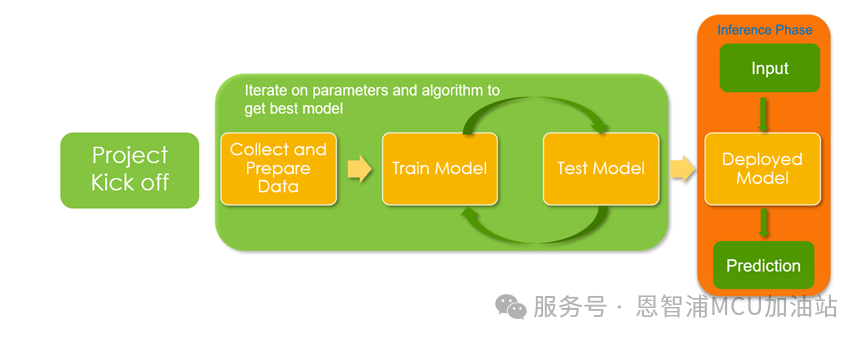
The AI-based arc fault detection implementation process consists of five stages: data collection, data training, model quantization, model validation, and deployment, all of which can be completed using the one-stop upper computer software provided by NXP.
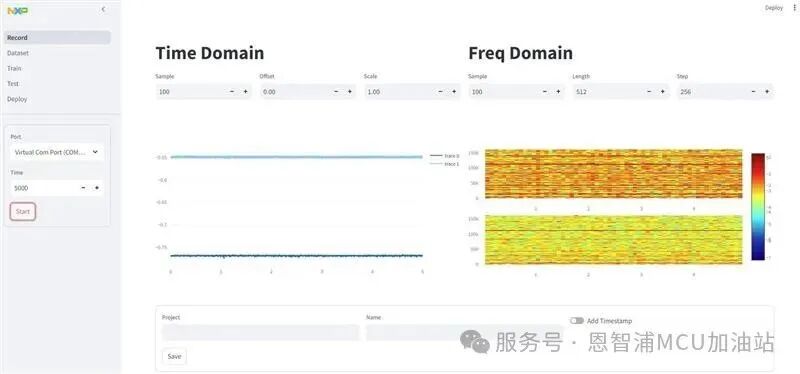
As shown in the figure below, a test platform is built according to UL1699B requirements, where the PV simulation source outputs through an arc generation device, inputting to the DC PV input terminal of the photovoltaic inverter. By connecting a transformer in series, the AC signal generated by the fault arc is detected. The acquisition board collects data, and the ADC integrated in the MCXN947 has a 16-bit resolution, supporting sampling rates of up to 2 Mbps at 16-bit resolution, making it very suitable for collecting arc signals, with the signal sampled by the ADC entering the MCU for processing.
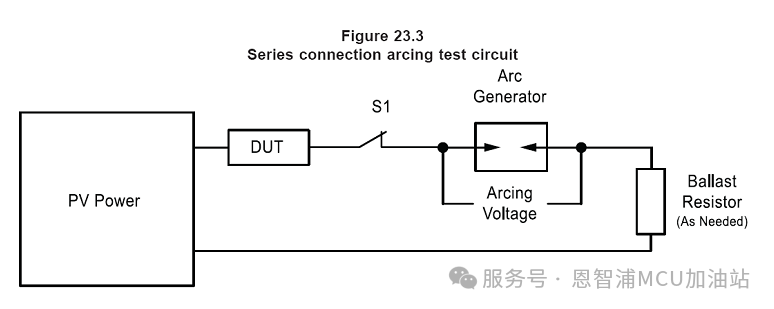
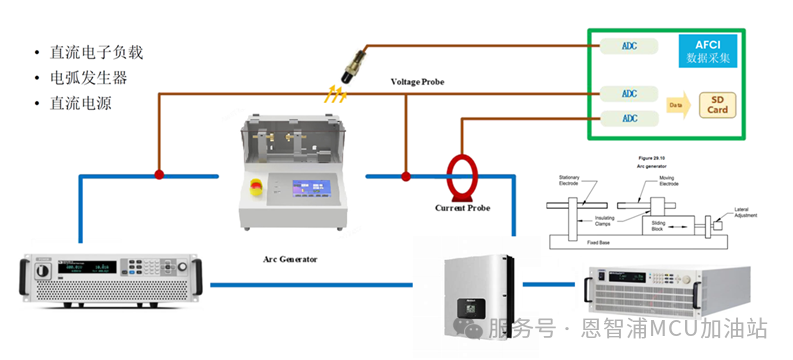
The acquisition board provided by NXP currently supports simultaneous detection of two arc signals, with the acquisition board serving as a sub-card plugged into the FRDM-MCXN947 board.
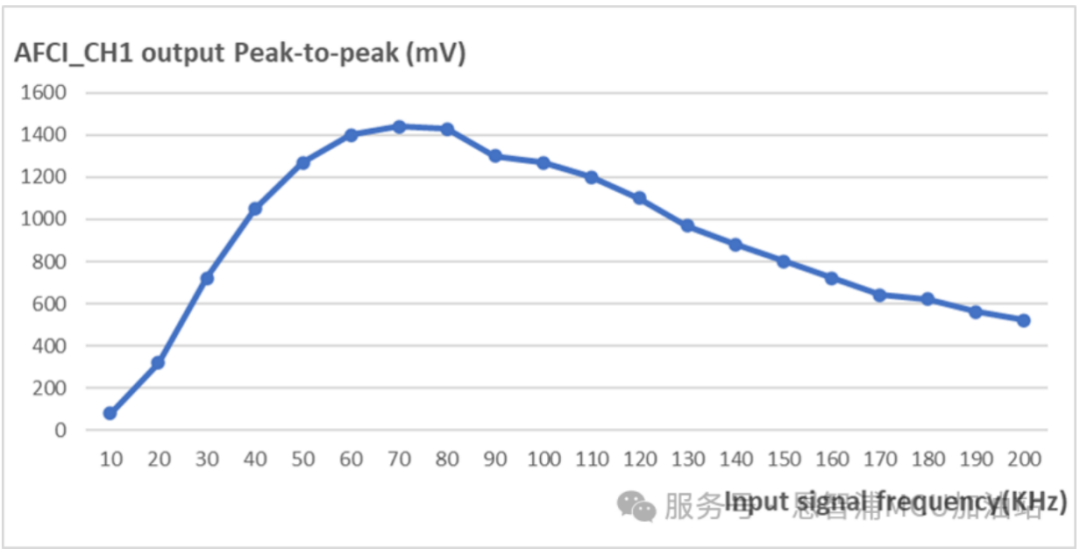
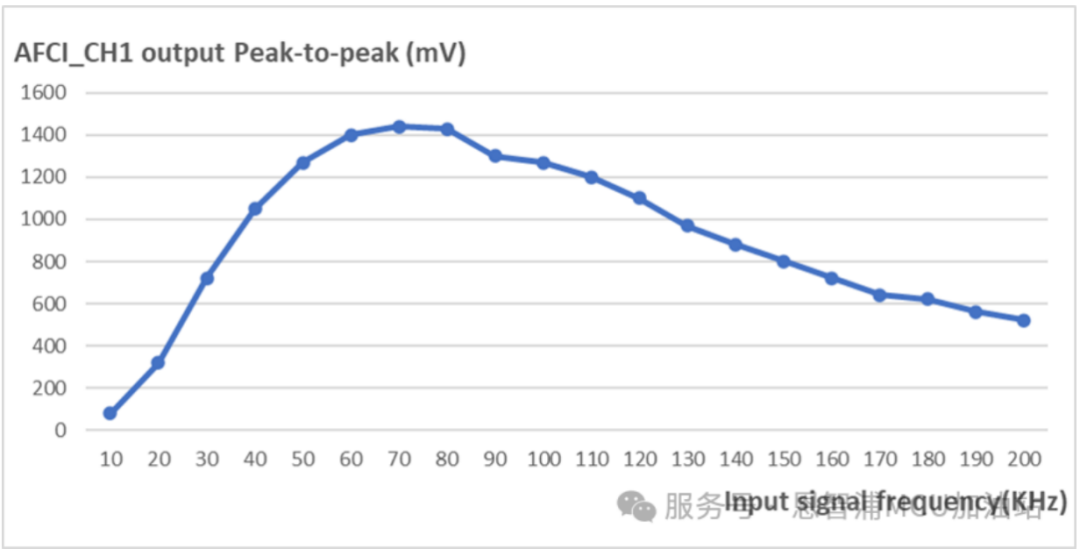
Regarding the design of the acquisition circuit, theoretical research shows that when a DC fault arc occurs, the harmonic energy of the DC current in the frequency range of 10 kHz to 100 kHz will significantly increase. Therefore, the designed circuit uses bandpass filtering to process the input signal. Its frequency characteristics are shown in the figure below:
The input signal of the sampling board is shown in the figure below, where the collected AC signal is mixed with the harmonic interference of the inverter itself and the generated DC arc signal.
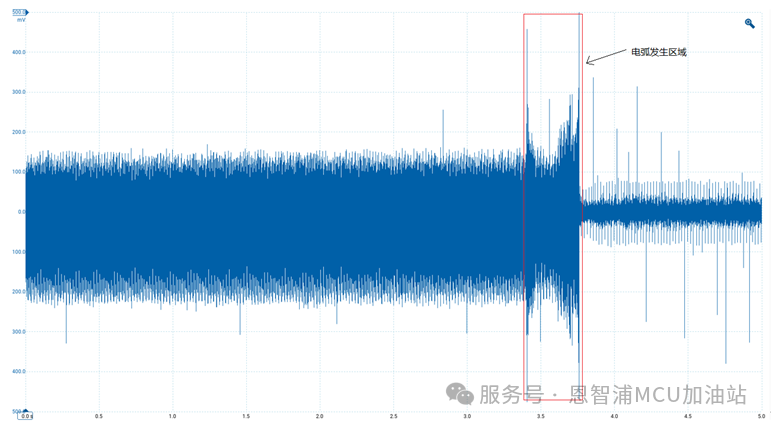
At the same time, in the application of frequency domain detection methods, to avoid coupling and interference between the characteristic frequency band of DC fault arcs and the harmonic distortion frequency band caused by the photovoltaic system’s own control, the frequency range of 10 kHz to 100 kHz was selected as the characteristic frequency band for analyzing and detecting DC fault arcs.
In principle, using FFT for harmonic calculation, taking 2048 points as segments for FFT computation, the MCXN947 has a PowerQuad module that can accelerate FFT calculations. The calculation results, after quantization, are sent to the NPU integrated in the MCXN947 for processing. The final classification results are obtained, effectively identifying scenarios with arcs.
During real-time operation, the detection results are printed via serial port, and currently, when an arc is detected, the output recognition matching degree is 99%.
Renesas Electronics
Fuchang Electronics has launched an edge AI arc fault detection system using Renesas Electronics RA6M4 MCU, capable of fast and efficient detection. This system is highly suitable for solar energy, smart energy, and DC systems, providing real-time safety monitoring with minimal resources. The AFCI solution utilizes the Future Design Center (FDC) AI Plus solution, which integrates FDC AI and Reality-AI solutions.
With the global promotion of NEC, IEC 60364-4-42, and UL 1699B standards, it is expected that annual shipments of AFCI will exceed 40 million units by 2030. Fuchang Electronics has developed a groundbreaking terminal AI system using Renesas Electronics RA6M4 MCU and Reality AI Tools®, achieving near-perfect detection in less than 4 ms with less than 100 kB of flash/RAM, virtually eliminating false positives while identifying dangerous DC and AC arcs that other devices cannot detect.
Main advantages:
-
AI-based time series recognition, supported by Renesas Reality-AI
Detection:
-
Arc faults (small and large arcs)
-
Open and closed circuits
-
Tampering and abnormal current curves
Ultra-fast detection
-
Inference time as low as 10-250 ms, including preprocessing and multi-window validation.
One-click learning
-
Onboard button helps automatically calibrate the circuit board based on the customer’s design environment.
-
Ability to copy calibrated data to other circuit boards.
-
No need for cloud AI/ML training
Target markets and applications
-
Solar inverters
-
Circuit breakers
-
Battery energy storage system (BESS) inverters
-
Electric vehicle DC chargers
-
Industrial switchgear
-
PDU for AI data centers
-
High-power battery tools, electric vehicles
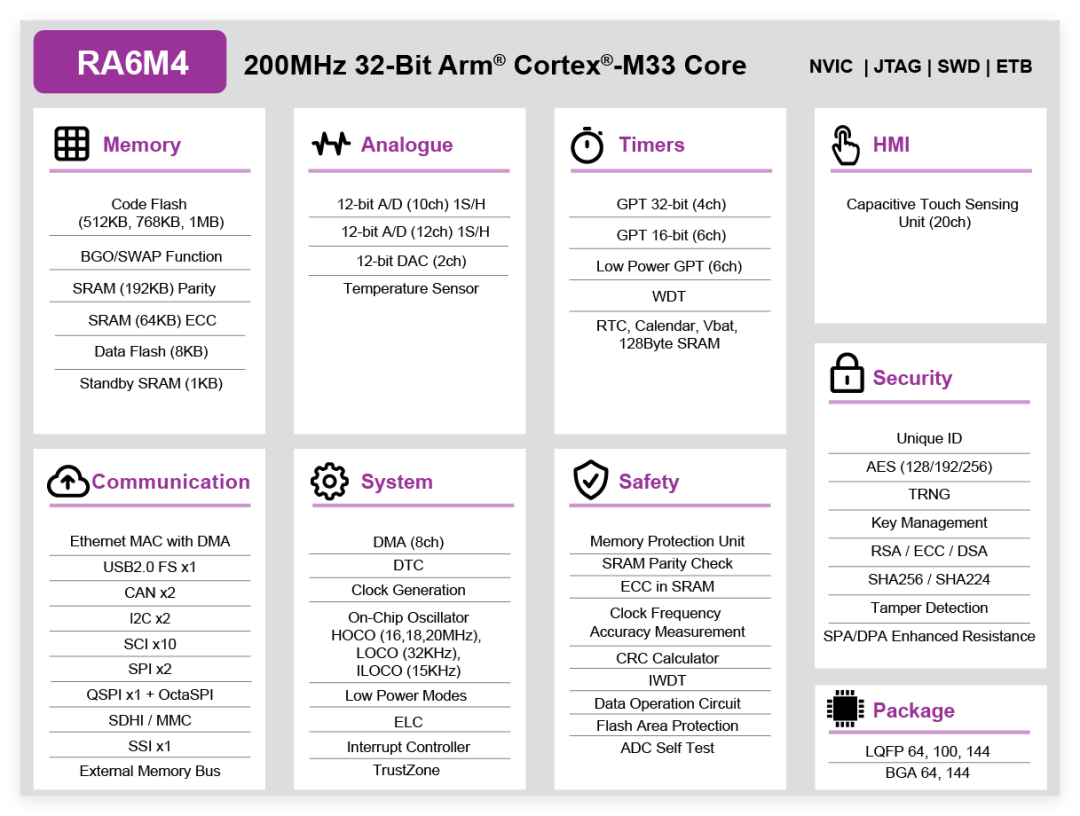
The Renesas Electronics RA6M4 microcontroller (MCU) product line features a high-performance Arm Cortex-M33 core with TrustZone® support. Combined with the on-chip Secure Crypto Engine (SCE), it provides the functionality of a secure chip. It integrates an Ethernet MAC with dedicated DMA, ensuring high data throughput. The RA6M4 is built on an efficient 40nm process and is supported by a flexible configuration software package (FSP) based on FreeRTOS, with the capability to extend to other real-time operating systems (RTOS) and middleware. The RA6M4 meets the demands of IoT applications, such as Ethernet, future-proof security features, large embedded RAM, and lower power consumption (running the CoreMark algorithm from flash as low as 99µA/MHz).
Texas Instruments
Although AI applications in motor drives, solar energy, and battery management real-time control systems have not frequently made headlines like new large language models, the application of edge AI in fault detection can significantly enhance system efficiency, safety, and productivity.
MCUs can enhance fault detection capabilities in high-voltage real-time control systems. Such MCUs run convolutional neural network (CNN) models using integrated neural network processing units (NPUs), effectively reducing latency and power consumption while integrating edge AI functionality into the same MCU that manages real-time control, helping to optimize system design and improve overall performance. In motor drives and solar systems, reliable operation hinges on fast and predictable fault detection, which not only reduces false positives but also enables real-time monitoring of motor bearing anomalies and actual faults.
MCUs with edge AI capabilities can monitor two types of faults: one is motor bearing faults, where timely detection of anomalies or performance degradation is crucial to prevent unexpected downtime, shorten downtime, and reduce maintenance costs; the other is solar arc faults, which are discharges that occur when current flows through unintended paths such as air, often caused by insulation failures or loose connections in solar systems, with the high temperatures generated potentially leading to fires or damage to electrical systems, making monitoring and detection of these faults essential for ensuring the safe and reliable operation of solar systems.
Traditional fault detection methods, such as motor bearing fault monitoring, rely on discrete detection across multiple devices and rule-based analysis, while solar arc fault detection employs frequency domain current signal analysis and threshold judgment. These methods not only require deep expertise but also have limited adaptability and sensitivity, making it difficult to ensure detection accuracy while increasing system complexity.
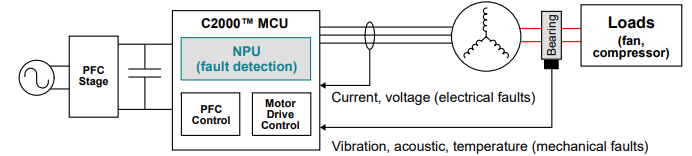
In contrast, fault detection based on integrated edge AI, using real-time MCUs such as TMS320F28P550SJ, can effectively improve fault detection rates, reduce false positives, and achieve more precise predictive maintenance. CNN models, with their ability to autonomously learn complex patterns from raw sensor data, can directly extract features from vibration signals, DC currents, and other data, enhancing model adaptability and reliability while reducing detection latency across various scenarios, including motor drives, solar energy, and battery management.
Conclusion
In applications such as motor drives and solar energy, real-time fault detection is the cornerstone of ensuring operational safety and long-term reliability. Edge AI, with its local real-time data processing capabilities, has revolutionized fault detection methods, significantly improving detection accuracy and reducing latency, providing strong support for the efficient and stable operation of systems.
· END ·
Follow the subscription account of EEWorld: "Robot Development Circle"
Reply "DS" to receive the complete version of "DeepSeek: From Beginner to Expert"

Scan to add the assistant and reply “robot”
Join the group to exchange experiences face-to-face with electronic engineers
*Cover image generated by AI